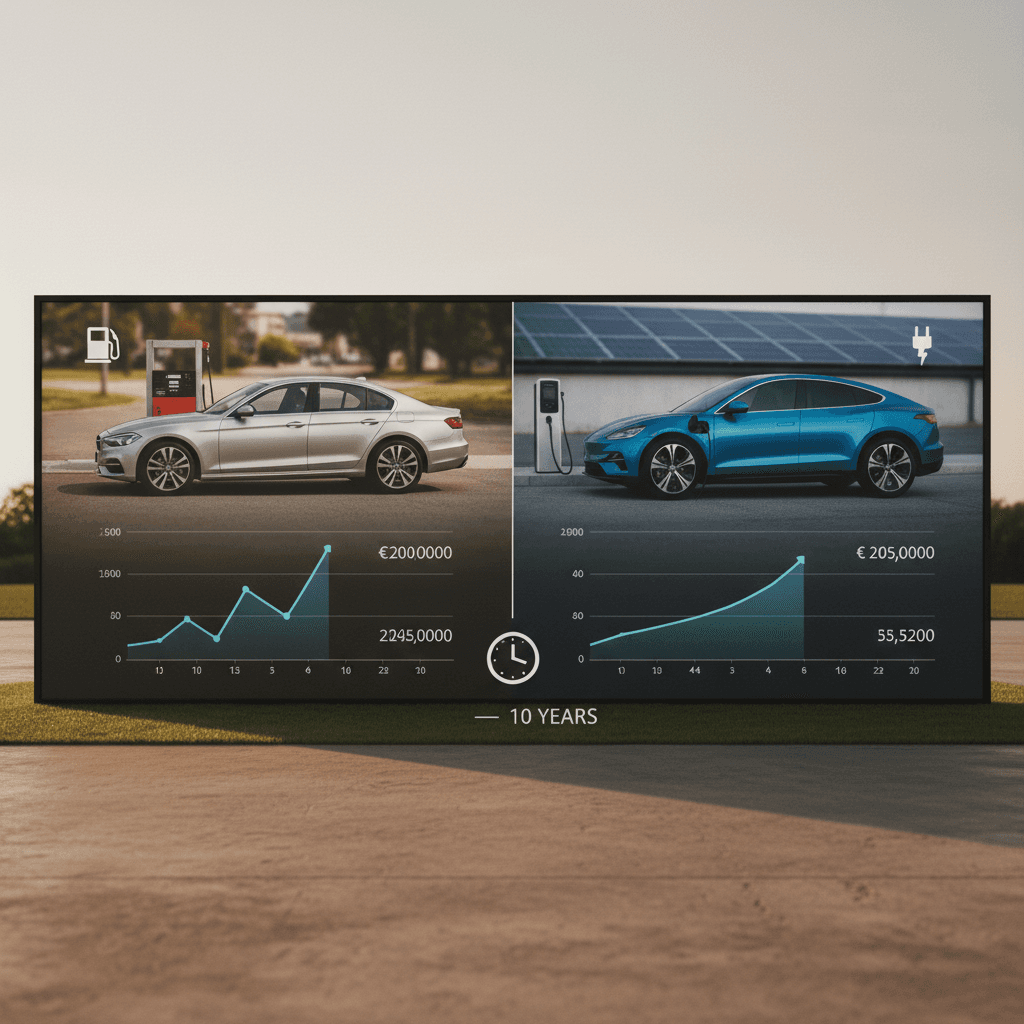
When you compare a gas car vs electric car 10 year cost, the sticker price is only the beginning. Fuel, maintenance, depreciation, battery health, and resale value all pile up, often in ways that surprise people on both sides of the EV debate.
Key idea
Why 10‑Year Cost Matters More Than Sticker Price
Most shoppers fixate on monthly payments and MSRP, but the real story is total cost of ownership (TCO) over the time you actually keep the car. For many U.S. drivers, that’s 8–12 years. Over that window, a gas car that’s cheaper to buy can quietly become more expensive to own than an EV once you add up fuel, oil changes, brakes, and repairs.
Fast Signals in the 10‑Year Cost Debate
We’ll walk through a realistic 10‑year example, then zoom out to the bigger forces that make one drivetrain cheaper than the other, and where buying a used EV with documented battery health can tilt the math strongly in your favor.
What Actually Drives 10‑Year Ownership Costs
The Big Buckets of 10‑Year Ownership Cost
Whether you drive gas or electric, these are the levers that matter.
Purchase price & depreciation
What you pay up front minus what you get back when you sell or trade in. EVs often cost more initially and depreciate faster early on, but that flattens out later.
Energy (fuel vs electricity)
Gas costs swing with oil prices and local taxes. Electricity is usually more stable and often cheaper per mile, especially with home charging and off‑peak rates.
Maintenance & repairs
Engines, transmissions, exhaust, and fluids make ICE cars complex. EVs skip most of that but add battery, inverter, and electronics as long‑term considerations.
Taxes, fees & insurance
State registration rules, EV surcharges, and insurance differences can move the needle but rarely outweigh energy and maintenance over 10 years.
Charging & infrastructure
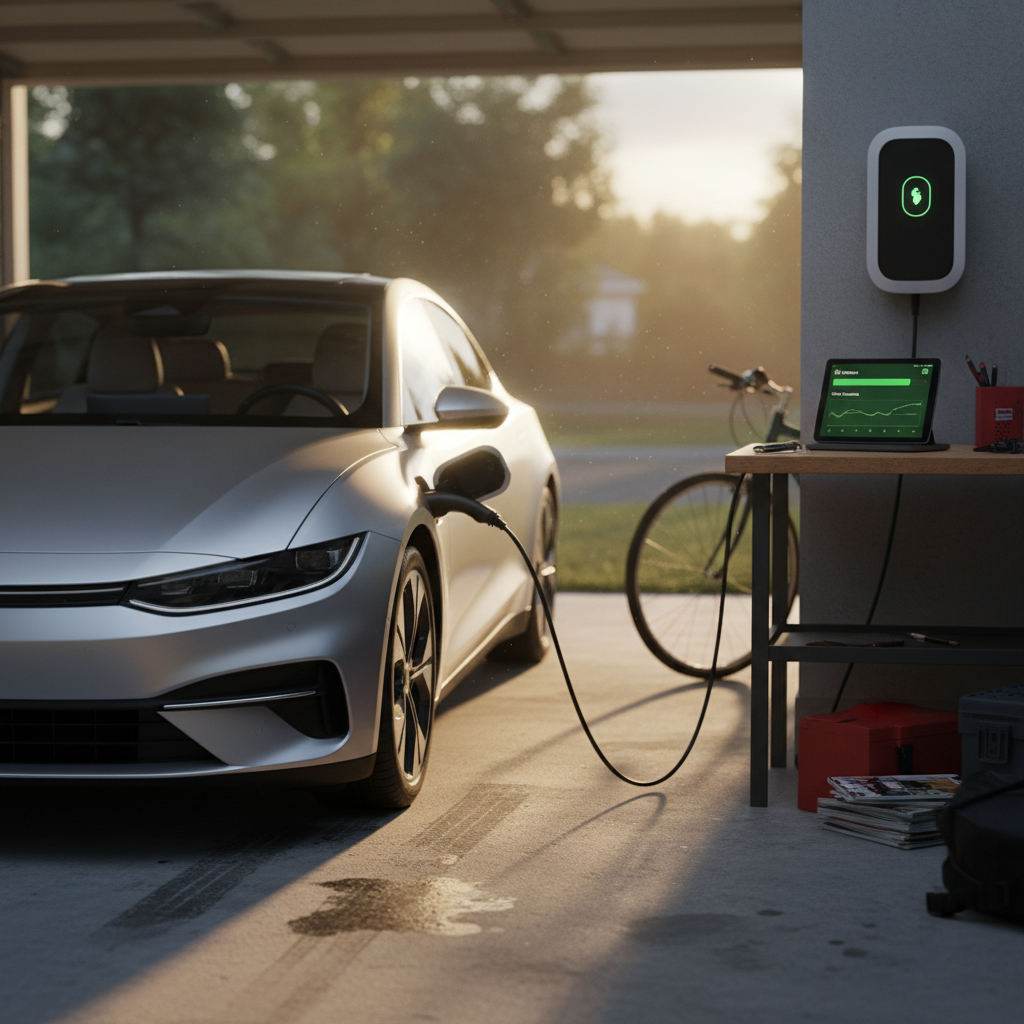
Home charger hardware and installation are real costs, but they’re usually paid back by fuel savings over a decade.
Incentives & resale value
Tax credits, rebates, and how in‑demand your car is in the used market all matter. A well‑specced EV with healthy range can command a strong price.
Think in cost per mile
Assumptions Behind Our 10‑Year Cost Example
To keep things concrete, we’ll model a typical U.S. driver and two popular vehicle types: a compact SUV EV and a similar gas compact SUV bought new in 2026. Your numbers will differ, but the directional results tend to hold across segments.
- Annual mileage: 12,000 miles (120,000 miles over 10 years).
- Gas vehicle efficiency: 30 mpg combined.
- EV efficiency: 28 kWh per 100 miles (0.28 kWh/mile).
- Gasoline price: $3.10 per gallon long‑term average (roughly recent national norms).
- Electricity price: $0.17 per kWh residential blended average.
- Purchase price (new 2026): $35,000 gas SUV, $42,000 comparable EV before incentives.
- Home Level 2 charger: $1,200 installed (hardware + electrician) in year one.
- Ownership horizon: You keep the vehicle the full 10 years, then sell it.
Caution on averages
Gas Car vs Electric Car: 10‑Year Cost Example
Let’s turn those assumptions into a side‑by‑side 10‑year cost comparison for a new gas SUV vs a new EV SUV. We’ll keep the math simple and conservative rather than trying to optimize every penny.
Illustrative 10‑Year Cost: New Gas SUV vs New EV SUV
Approximate costs over 10 years for a typical U.S. driver at 12,000 miles per year.
| Category | Gas SUV (10 yrs) | EV SUV (10 yrs) | How we got there |
|---|---|---|---|
| Fuel / Electricity | ~$12,400 | ~$5,700 | Gas: 120,000 miles ÷ 30 mpg × $3.10/gal ≈ $12,400. EV: 0.28 kWh/mile × 120,000 miles × $0.17/kWh ≈ $5,700. |
| Maintenance & Repairs | ~$9,000 | ~$4,500 | Gas: ~$900/yr average as the car ages. EV: roughly half, reflecting fewer moving parts and no oil changes. |
| Purchase Price (net of incentives) | $35,000 | $37,000 | Assume the EV gets ~$5,000 effective incentives or discounts vs a $42,000 MSRP; gas has no major incentives. |
| Home Charging Setup | $0 | $1,200 | Gas driver uses existing gas infrastructure; EV owner installs a home Level 2 charger once. |
| Registration, Taxes, Insurance | ~$13,000 | ~$13,500 | Assume broadly similar costs, with some states adding EV fees and EVs sometimes insuring slightly higher early on. |
| Total Cash Outlay (before resale) | ~$69,400 | ~$61,900 | Sum of the above categories over 10 years. |
| Estimated Value After 10 Years | $7,000 | $8,000 | Compact SUVs and EVs that start well‑equipped and are maintained reasonably can still be usable and sellable at year 10. |
| Net 10‑Year Cost (Outlay – Resale) | ≈$62,400 | ≈$53,900 | In this scenario, the EV is about $8,500 cheaper over 10 years, or roughly $70/month over the decade. |
Dollar figures rounded for clarity; your results will vary by model, location, and driving pattern.
EV comes out ahead in this scenario
Change the inputs, higher gas prices, cheaper off‑peak electricity, or a used EV purchase, and the gap can widen. In contrast, very cheap gas, high electricity rates, or an expensive EV with poor resale can shrink or erase the advantage.
Maintenance and Repairs: Where EVs Quietly Win
Gas car maintenance profile
- Oil changes 3–4 times per year.
- Transmission service and occasional cooling‑system work.
- Exhaust system components and emissions gear as the car ages.
- More wear on brakes, especially in city driving.
- Greater odds of expensive failures (turbo, transmission, engine work) in years 8–10.
EV maintenance profile
- No engine, transmission, or exhaust system to service.
- No oil changes and fewer fluids overall.
- Regenerative braking reduces brake wear dramatically.
- Common jobs: cabin air filters, tires, brake fluid, wiper blades.
- Potential big‑ticket items shift to electronics and battery, but those are often covered by longer warranties early on.
Used EV advantage
Over 10 years, that lower routine maintenance footprint is why many independent cost analyses show EVs spending thousands less at the shop than comparable gas models, particularly for drivers who rack up miles and keep vehicles past year seven, when ICE cars tend to need more serious work.
Battery Health, Replacement Risk, and Used EVs
The big fear with EVs is a five‑figure battery bill at exactly the wrong time. That’s understandable, but it’s also where you need to separate early‑EV horror stories from what’s typical of modern packs and good charging habits.
- Most modern EV batteries are warrantied for around 8 years and 100,000–150,000 miles against severe degradation.
- Real‑world data suggests many packs retain a large majority of their original range past 8 years if they aren’t fast‑charged constantly or overheated.
- Full pack replacements are expensive, but partial repairs, module replacements, and reconditioned packs are becoming more common options.
The real risk is buying blind
This is exactly why Recharged created the Recharged Score Report. For every used EV we sell, we run battery health diagnostics and bundle the results with market pricing, so you’re not guessing about how much useful life, and value, you’re actually buying.

Insurance, Taxes, and Other Ownership Costs
Insurance and taxes rarely flip the 10‑year outcome by themselves, but they’re worth understanding, especially because the patterns differ between EVs and gas cars.
How “Smaller” Costs Add Up Over a Decade
Important, but usually secondary to fuel and maintenance.
Insurance
EVs can cost more to insure early on due to higher repair costs and MSRPs. Over time, as the car depreciates and repair networks mature, the gap often narrows.
Taxes & registration
Some states add annual EV registration fees to make up for lost gas‑tax revenue. Others still offer reduced registration costs or local incentives.
Incentives & credits
Federal and state tax credits, rebates, HOV lane access, and utility incentives for home charging can easily be worth several thousand dollars across 10 years.
Gas taxes vs EV fees
New vs Used EV: How the 10‑Year Math Changes
So far we’ve compared new‑for‑new. But the sweetest spot in the market right now is often a 3–6‑year‑old used EV with good range, up‑to‑date software, and documented battery health. That’s where early depreciation has already done the hard work for you.
10‑Year Outlook: Used EV Today vs New Gas Car Today
Illustrative example starting in 2026: you buy a 3‑year‑old EV vs a brand‑new gas car and keep both for 10 years.
| Category | 3‑Year‑Old Used EV (2023 MY) | New 2026 Gas Car | Notes |
|---|---|---|---|
| Purchase price | $24,000 | $30,000 | Many 3‑year‑old EVs already shed 35–45% of their original MSRP. |
| Remaining battery warranty | 2–5 years left | N/A | You often still have factory battery coverage for the front half of your ownership window. |
| 10‑year fuel/energy cost | ≈$5,700 | ≈$12,400 | Same fuel vs electricity math as before, assuming 12,000 miles/year. |
| 10‑year maintenance & repairs | ≈$5,000 | ≈$9,000 | Used EVs will need more work than new ones but still avoid engine/transmission issues. |
| Expected resale value at your year 10 | $4,000 | $6,000 | Depends heavily on future battery health and market demand. |
| Net 10‑year cost (very rough) | Mid‑$40Ks | Low‑$50Ks | In many realistic scenarios, the used EV comes out ahead by $5,000–$10,000. |
Assumes similar size and segment; numbers are directional, not model‑specific.
Why used EVs are compelling now
Ready to find your next EV?
Browse VehiclesWhen a Gas Car Can Still Be Cheaper Over 10 Years
It’s absolutely possible to find cases where a gas car wins the 10‑year cost race. They’re less common than EV critics think, but they’re real, especially in certain regions and use cases.
Situations Where Gas May Win the 10‑Year Cost Battle
1. Very high electricity prices, cheap gas
If you live in a region with expensive residential electricity and relatively cheap gasoline, your per‑mile energy cost advantage for an EV can shrink or disappear, especially if you can’t charge off‑peak.
2. No home charging
Relying heavily on public fast charging is more expensive and less convenient than home charging. In that scenario, the EV’s energy‑cost advantage narrows and you’re paying for infrastructure you don’t own.
3. Ultra‑cheap, simple gas car
A modest, very reliable ICE car bought used and driven gently can still be brutally cost‑effective, particularly if you don’t drive many miles per year.
4. You swap cars every 3–4 years
If you tend to trade in quickly, you’re living entirely in the steepest part of the EV depreciation curve. In that short window, a gas car can be cheaper to own despite higher fuel and maintenance costs.
5. Mis‑matched EV purchase
Overpaying for an EV with weak range, outdated fast‑charging, or poor battery health can lock in high depreciation and limit your resale options.
Don’t ignore your actual use case
How to Estimate Your Own 10‑Year Costs
You don’t need a PhD or a spreadsheet addiction to get a good sense of your 10‑year ownership costs. A few back‑of‑the‑envelope calculations will put you in the right ballpark, and help you sanity‑check dealership payment quotes.
Simple 6‑Step 10‑Year Cost Framework
1. Estimate your 10‑year mileage
Take your annual miles (from your current odometer or insurance records) and multiply by 10. If you’re not sure, 12,000 miles/year is a decent national average.
2. Calculate fuel vs electricity cost per mile
For a gas car, divide local gas price by your realistic mpg. For an EV, multiply kWh/mile by your home electricity rate (and adjust if you charge a lot in public).
3. Multiply energy cost per mile by total miles
This gives you a rough 10‑year fuel/energy bill for each candidate vehicle. The gap between EV and gas here is often the biggest single lever in the whole equation.
4. Add estimated maintenance and repairs
Use owner forums, reliability data, or a conservative rule of thumb (e.g., $700–$1,000/year for mainstream gas cars, 30–50% less for many EVs).
5. Factor in purchase price, incentives, and resale
Subtract realistic incentives from MSRP or asking price, then estimate what the car might be worth at your planned sell date. This is where used EVs with good battery health can shine.
6. Sanity‑check with an expert
If you’re looking at a used EV, ask for <strong>battery diagnostics</strong> and a transparent history. Recharged bakes this into every transaction via the Recharged Score, and our EV specialists can help you run the long‑term math, not just the monthly payment.
“The right way to think about EV economics isn’t ‘are EVs always cheaper,’ but ‘for this driver, in this energy market, with this vehicle, what does 10 years actually look like?’
FAQs: Gas Car vs Electric Car 10‑Year Cost
Frequently Asked Questions
Bottom Line: 10‑Year Cost Takeaways
Look past the monthly payment and the online arguments, and the pattern is pretty clear: for many typical American drivers, a well‑chosen EV, especially a used one with documented battery health, beats a comparable gas car on 10‑year cost. The gap comes from cheaper energy and lower maintenance, not magic.
Where EVs still stumble is when purchase price, depreciation, and poor charging fit overwhelm those savings. That’s why the smartest move isn’t to declare a winner in the abstract, but to run the numbers for your own life: your mileage, your gas and electricity prices, your driveway, your time horizon.
If you’re ready to see how this plays out with real cars and real prices, explore Recharged’s inventory of used EVs, each with a Recharged Score battery‑health report, EV‑savvy financing options, trade‑in support, and fully digital buying plus optional delivery from our Experience Center in Richmond, VA. Over the next 10 years, the right EV can save you money, and a lot of time at the pump.