You’re not alone if you’re stuck on the question of electric car vs gas. In 2025, EVs are no longer science projects and gas cars are hardly dinosaurs, yet the numbers and narratives around both are noisy, political, and often outdated. Let’s turn down the volume and walk through what actually matters to your wallet and your daily life.
The short version
Electric vs Gas in Today’s Market
Electric Car vs Gas at a Glance
Electric cars: where they shine
- Low running costs if you drive a lot and charge mostly at home.
- Quieter, smoother driving with instant torque.
- Less routine maintenance, no oil changes, fewer moving parts.
- Zero tailpipe emissions and lower lifetime CO₂ in most regions.
Gas cars: where they still win
- Lower sticker prices and more choices at every budget.
- Refueling in 5 minutes almost anywhere.
- Less planning for very long road trips.
- Often cheaper if you drive few miles per year or can’t charge at home.
Think in total cost, not just price
Purchase Price and Incentives in 2025
Right now, new electric cars still tend to cost more than similar gas cars, but the gap is narrowing. Think of a compact crossover: a gas version might sit in the mid‑$30,000s, while the EV equivalent often nudges into the low‑to‑mid $40,000s before any incentives. Larger and premium EVs stretch that difference further.
Typical 2025 Price Ranges: New Electric vs Gas
Approximate U.S. transaction prices before incentives. Actual pricing varies by brand, trim, and market conditions.
| Segment | Typical Gas Price | Typical EV Price | Price Gap |
|---|---|---|---|
| Compact car | $25,000–$30,000 | $28,000–$35,000 | ~$3,000–$5,000 |
| Compact SUV | $30,000–$38,000 | $35,000–$45,000 | ~$5,000–$7,000 |
| Mid‑size SUV | $35,000–$45,000 | $40,000–$55,000 | ~$5,000–$10,000 |
| Luxury sedan/SUV | $50,000+ | $55,000–$90,000+ | Highly variable |
EVs usually carry a higher MSRP, but incentives and lower running costs can offset that over time.
Federal and state incentives still matter
There’s also policy noise in the background: proposals for new federal annual EV fees and changes to tax credits come up regularly. They’re worth watching, but they don’t change the core math: purchase price is only one chapter in the total‑cost story.
Running Costs: Fuel vs Electricity
This is the electric car vs gas battleground everyone talks about, and for good reason. At U.S. averages, electrons are simply cheaper than dinosaur juice.
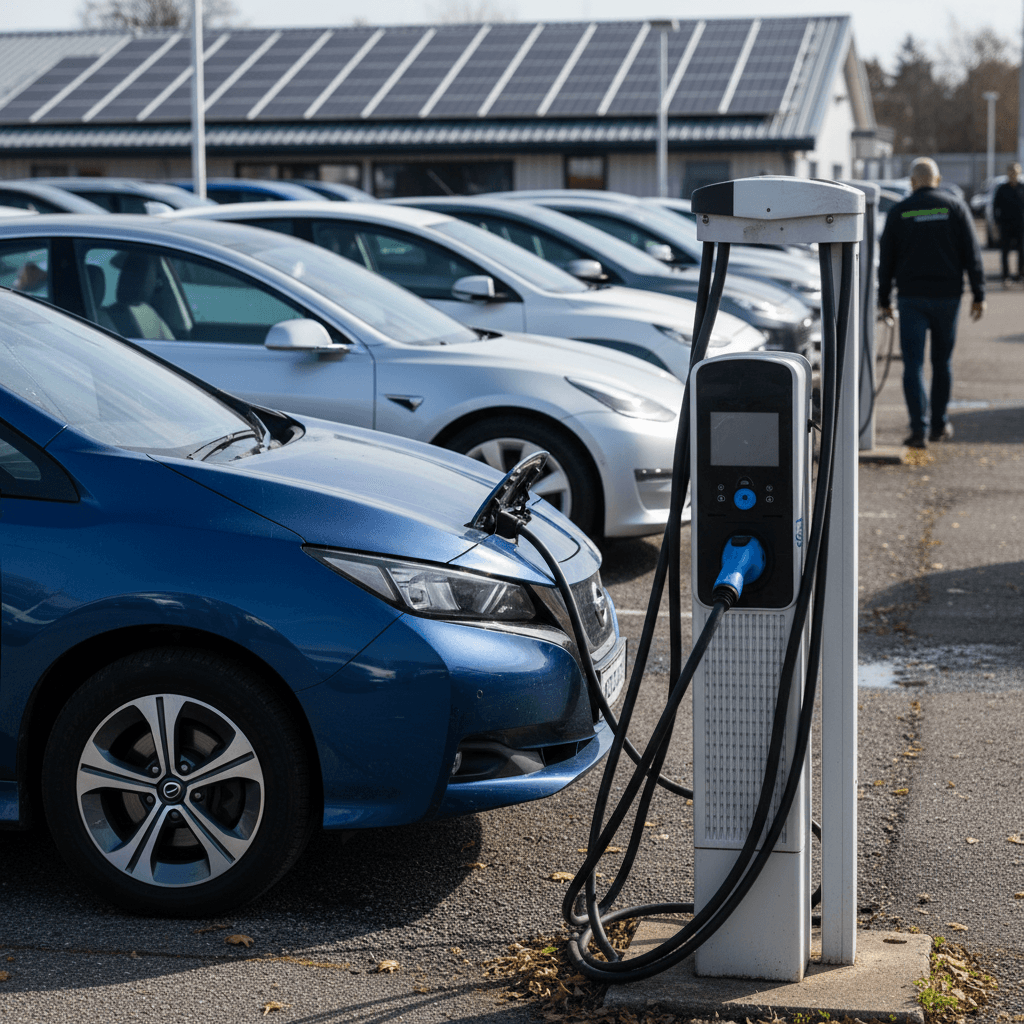
Typical Energy Cost per Mile (U.S. Averages)
Illustrative 2025 numbers using national‑average prices and mainstream efficiency figures.
| Vehicle type | Assumptions | Approx. energy cost per mile |
|---|---|---|
| Gas car | $3.20/gal, 30 mpg | ≈ $0.11/mile |
| Efficient gas hybrid | $3.20/gal, 45 mpg | ≈ $0.07/mile |
| EV (home charging) | $0.14/kWh, 3.3 mi/kWh | ≈ $0.04/mile |
| EV (mostly fast charging) | Public DC fast charging at highway rates | Often similar to, or slightly cheaper than, gas per mile |
Exact costs vary by region, but EVs usually win per mile when you can charge at home.
Home charging is the swing vote
For a typical driver doing 12,000–15,000 miles a year, it’s common to see $1,000+ in annual fuel savings with an EV versus a similar gas car, assuming home charging and average utility rates. Over five years, that’s thousands of dollars quietly slipping back into your pocket.
Maintenance, Reliability, and Repairs
Turn the hood latch and the story gets more lopsided. Electric cars do away with oil changes, spark plugs, exhaust systems, timing belts, and traditional multi‑gear transmissions. There’s a battery, electric motor, and not a lot else to fiddle with. For gas cars, those fiddly bits are a revenue stream for your local shop.
Maintenance: Electric vs Gas
Same driver, same roads, very different service schedules.
Electric car maintenance
- No engine oil, spark plugs, or timing-belt replacements.
- Regenerative braking makes brake pads last much longer.
- Most service is tires, cabin filters, and software updates.
- Many owners report 30–40% lower maintenance costs vs comparable gas cars.
Gas car maintenance
- Regular oil and filter changes, usually 2–4 times per year.
- Periodic spark plugs, belts, coolant, transmission service.
- More wear items over 100,000+ miles (exhaust, fuel system).
- Maintenance bills add up, especially if you drive a lot or keep the car long term.
The elephant: battery replacement
In day‑to‑day reality, most EV owners see fewer shop visits and lower routine bills than gas owners. Where EVs can sting is collision repair, body shops that can safely work around high‑voltage systems may charge more, and insurance companies know it.
Battery Life, Range, and Charging Reality
This is where the electric car vs gas debate stops being about spreadsheets and becomes about your actual lifestyle. Range, charging access, and your tolerance for planning are what decide whether an EV feels like liberation or homework.
- Modern mainstream EVs commonly deliver 230–320 miles of EPA‑rated range; some go further, some less.
- Cold weather, high speeds, and heavy loads can trim that range by 20–40%.
- Most daily driving is under 40 miles; for commuting and errands, even a modest‑range EV feels effortless.
- Long road trips demand planning around fast‑charging stops and, in some regions, patience for limited infrastructure.
The 95% rule of thumb
Emissions and Environment: How “Green” Is an EV?
Even if you’re primarily a dollars‑and‑sense buyer, it’s worth understanding the emissions side. EV critics love to point at coal‑heavy grids and battery factories; EV advocates point at smoggy freeways and climate reports. The truth is more boring and more useful: over its lifetime, an EV sold in the U.S. almost always emits less CO₂ than a comparable gas car, often much less.
- Yes, EVs have a higher manufacturing footprint, mostly due to battery production.
- But they typically break even on total emissions after tens of thousands of miles, then pull ahead.
- In regions with cleaner grids (think lots of wind, solar, hydro, or nuclear) the lifetime emissions advantage widens dramatically.
- No tailpipe also means no local NOx or particulate emissions in your neighborhood, which matters for air quality even if you’re not measuring CO₂ in your spare time.
Used EVs are extra-green
Resale Value and Depreciation
Here’s a twist: the same thing that makes EVs look scary to buy new, their tendency to depreciate faster than comparable gas cars, makes them oddly attractive on the used market. Someone else takes the big hit, you scoop up the value.
New Car Depreciation: EV vs Gas (High‑Level Patterns)
Patterns for mainstream models; specific nameplates can buck the trend either way.
| Ownership stage | Gas car trend | EV trend |
|---|---|---|
| Years 0–3 | Moderate depreciation | Often steeper depreciation as tech and incentives move fast |
| Years 4–8 | Slower depreciation if well‑maintained | Can stabilize if battery health is strong and range remains competitive |
| Beyond 8 years | Condition and maintenance history drive value | Battery health and warranty status are everything |
EVs often drop faster in the first few years, which hurts first owners and helps smart used‑car shoppers.
Why are some new EVs expensive to own?
When an Electric Car Clearly Beats Gas
Scenarios Where an EV Is the Smart Money
You drive 12,000+ miles a year
The more you drive, the more those lower per‑mile energy and maintenance costs matter. High‑mileage drivers can save thousands over a gas car across five years.
You have reliable home or workplace charging
This is the single biggest predictor of EV happiness. A driveway, garage, or regular workplace charger lets you ‘refuel’ while you sleep or work, at the lowest possible rates.
Your local electricity is reasonably priced
If you’re paying typical U.S. residential rates, and especially if your utility offers off‑peak discounts, an EV starts to look very good. If your rates are sky‑high, run the numbers carefully.
Your trips are mostly local
Commuting, school runs, errands, weekend stuff, this is EV paradise. You almost never think about range, and the car always leaves home with a full ‘tank.’
You care about air quality and climate
An EV gives you zero tailpipe emissions and lower lifetime CO₂ in most of the U.S. You’ll never visit a smog station again in states that exempt EVs.
You plan to keep the car a while
Ownership experiences tend to improve sharply after the loan is paid off. The longer you keep an EV with a healthy pack, the more its low running costs shine.
When a Gas Car Still Makes More Sense
Situations Where Gas Keeps the Edge
There’s no shame in sticking with gasoline if your life demands it.
Frequent long‑distance travel
No realistic home charging
Very high electricity prices
Ultra‑tight upfront budget
Heavy towing, specialized use
You keep cars only 2–3 years
Why a Used EV Can Be the Sweet Spot
Put it all together and a pattern emerges: New EVs are a mixed bag financially, but used EVs can be a quietly brilliant deal if you choose carefully. You get radically lower running costs, someone else’s depreciation, and, if you buy well, plenty of real‑world range left in the pack.
- Depreciation has already done its worst in the first few years, so you’re paying closer to the car’s true long‑term value.
- You still benefit from low fuel and maintenance costs, especially if you drive more than average.
- You can often buy more car for the money, a nicer, better‑equipped EV for the price of a basic gas model.
- Environmental impact is lower since you’re extending the life of an existing vehicle instead of commissioning a new one.
Check the battery, not just the bodywork
How Recharged Helps You Decide With Confidence
If you’re leaning electric but nervous about the unknowns, battery life, charging, resale, you don’t have to navigate this alone. Recharged exists to make used EV ownership simple and transparent.
What You Get With a Recharged EV
Designed for people who want the benefits of electric without the guesswork.
Recharged Score Report
Financing & trade‑in
Digital‑first, human‑backed
Ready to find your next EV?
Browse VehiclesAnd because Recharged focuses on used EVs specifically, our pricing, diagnostics, and support are built around the realities of electric ownership, not shoe‑horned in from gas‑car playbooks.
Electric vs Gas: Frequently Asked Questions
Electric Car vs Gas FAQ
Bottom Line: Electric Car vs Gas in 2025
Strip away the hype and you’re left with this: electric cars aren’t automatically better than gas, but they are often better for the right driver. If you have home charging, drive a decent number of miles each year, and choose your car carefully, an EV can be quieter, cleaner, and no more expensive to own, sometimes substantially cheaper. If you live on the road, lack a place to plug in, or every dollar of upfront price matters, a frugal gas car or hybrid still makes solid sense.
Where electric really shines today is in the used market. Let someone else wrestle with the showroom sticker shock and early depreciation. With tools like the Recharged Score Report, expert EV‑specialist support, and nationwide delivery, you can step into the part of the curve where the numbers and the experience finally line up. That’s not the future of driving; that’s available right now.