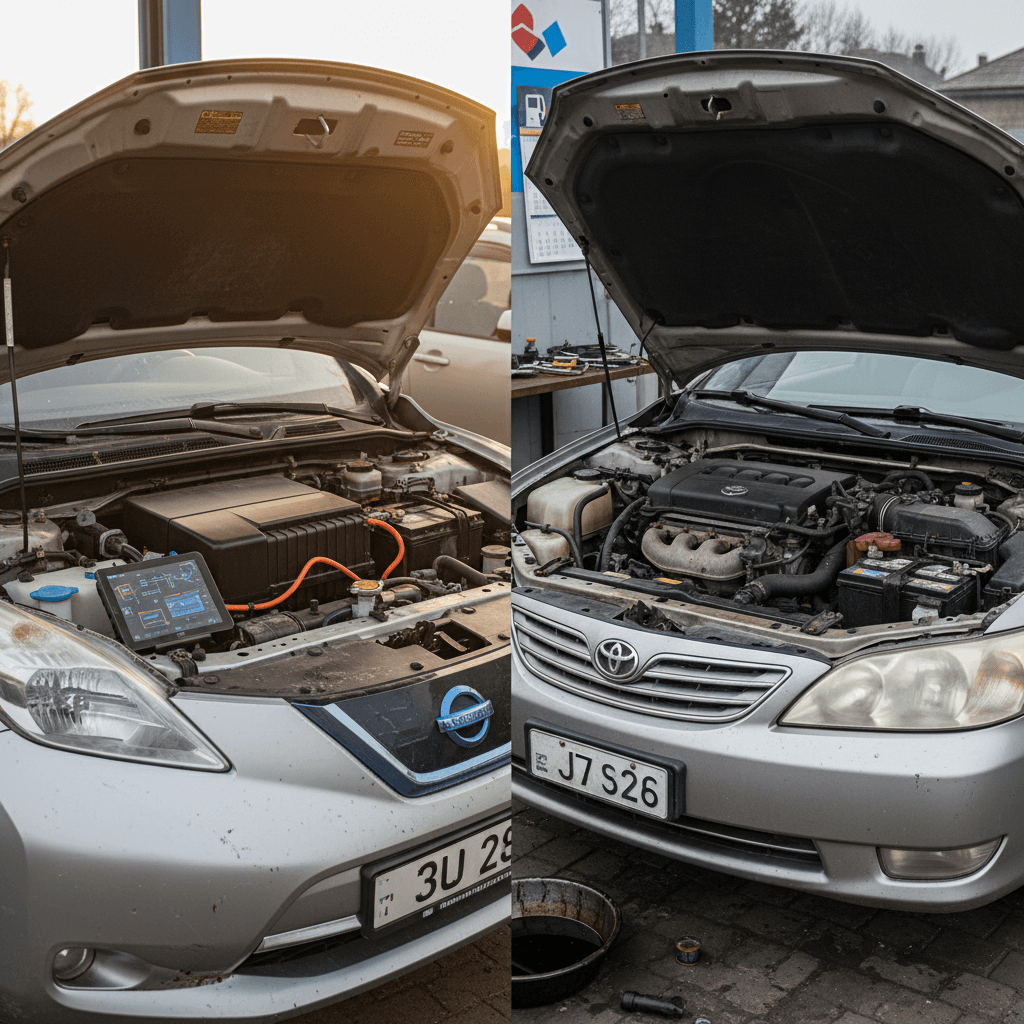
If you’re comparing electric car maintenance vs gas, you’re really asking two questions: what does it cost to keep each type running, and how much hassle is involved? In 2025, the answer is surprisingly clear on the service side, even if headlines about battery replacements and insurance costs sometimes muddy the picture.
Big picture in one sentence
How EV and gas car maintenance really differ
What gas cars need
- Oil and filter changes every 5,000–10,000 miles
- Spark plugs, timing belts/chains, and ignition components
- Complex multi‑speed transmissions with fluid and filters
- Exhaust system, catalytic converter, oxygen sensors
- Fuel system maintenance: pumps, injectors, filters
What EVs need instead
- No engine oil, spark plugs, timing belts, or exhaust
- Simple single‑speed gearbox with minimal fluid changes
- Fewer moving parts and much less heat and vibration
- Most routine service boils down to tires, filters, and inspections
- Software updates and remote diagnostics handle many issues
Rule of thumb
EV vs gas maintenance snapshot for 2025
Routine maintenance: electric car vs gas
Let’s start with the predictable stuff, what you’ll see on the service schedule for a typical gas car versus a typical EV. This is where the “quiet” advantage of electric shows up.
Typical annual maintenance, EV vs gas (mainstream mid‑size car)
These are representative 2025 ranges for vehicles driven around 12,000–15,000 miles per year. Exact numbers vary by model, region, and how you drive.
| Service item | Gas car (per year) | EV (per year) | Notes |
|---|---|---|---|
| Oil & filter changes | $150–300 | $0 | EVs don’t need engine oil. |
| Engine tune‑ups, spark plugs | $100–300 | $0 | Not present in EVs. |
| Transmission service | $150–300 | $0–50 | Simple reduction gear; fluid rarely changed. |
| Exhaust & emissions system | $100–300 (average over time) | $0 | EVs have no exhaust or catalytic converter. |
| Brake service | $200–400 | $50–150 | Regenerative braking dramatically cuts wear. |
| Tires, rotation & balance | $150–250 | $150–300 | EVs may wear tires faster if driven hard. |
| Fluids (coolant, etc.) | $100–200 | $50–150 | EVs still have coolant but fewer fluids overall. |
| Total annual estimate | $900–1,800 | $150–300 | Broad ranges, but the gap is consistent. |
EVs cut out several major recurring services that gas cars require.
Tires: the quiet EV line item
Unexpected repairs: what actually breaks
Routine maintenance is only half the story. The other half is unplanned repairs: the “check engine” light, the transmission that starts to slip, the catalytic converter a thief steals in the night. Here, the architecture of an EV really matters.
Failure points: gas vs electric powertrains
Fewer moving parts usually means fewer surprises, but not zero risk.
Gas car weak spots
- Engine internals: head gaskets, timing chains, turbos
- Transmission: clutches, valves, solenoids
- Emissions system: catalytic converter, oxygen sensors, EGR valves
- Fuel system: pumps, injectors, high‑pressure lines
- Dozens of seals and gaskets that can leak as the car ages
EV weak spots
- High‑voltage battery pack (rare but expensive if out of warranty)
- Onboard charger or DC fast‑charge hardware
- Electronic modules & sensors (often fixed via software)
- Suspension and steering wear just like gas cars
- Collision damage near the battery can drive up repair costs
Collision repairs: where EVs can sting
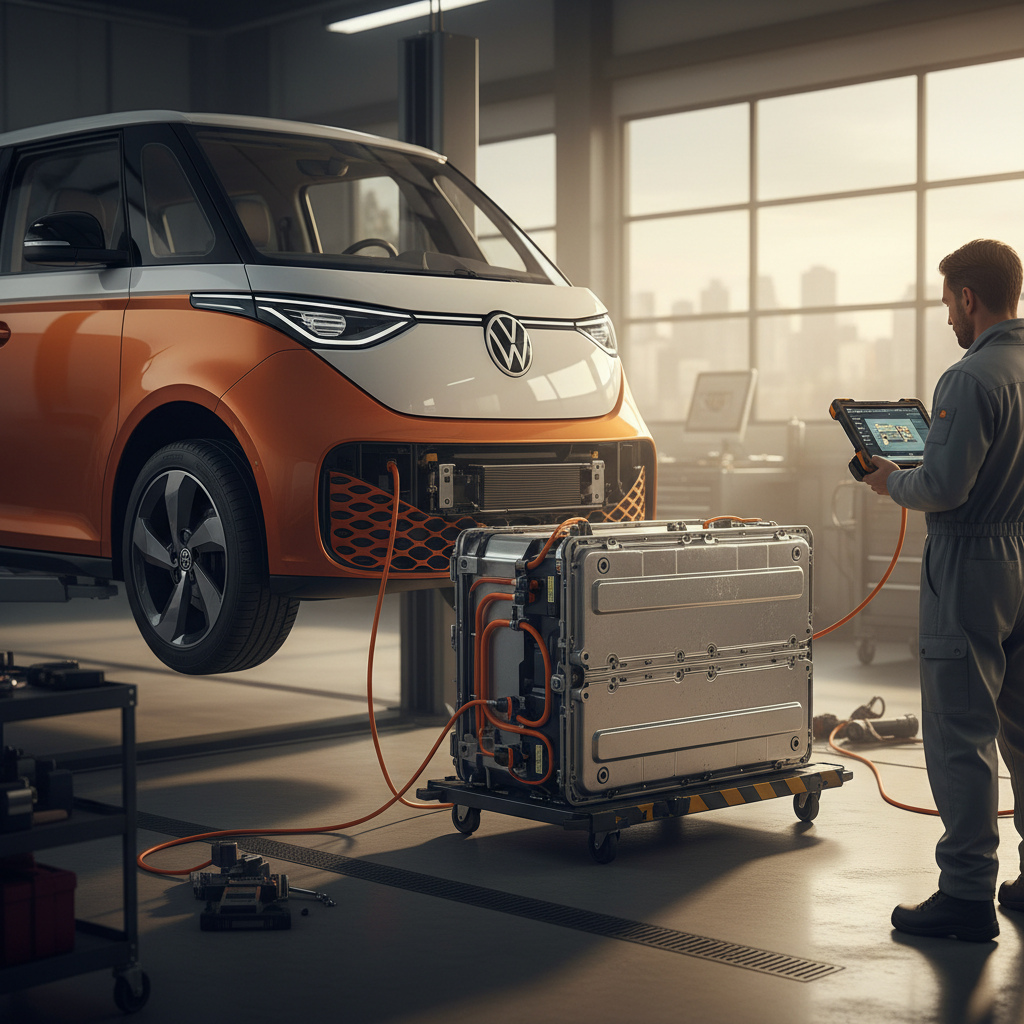
EV battery replacement: the elephant in the room
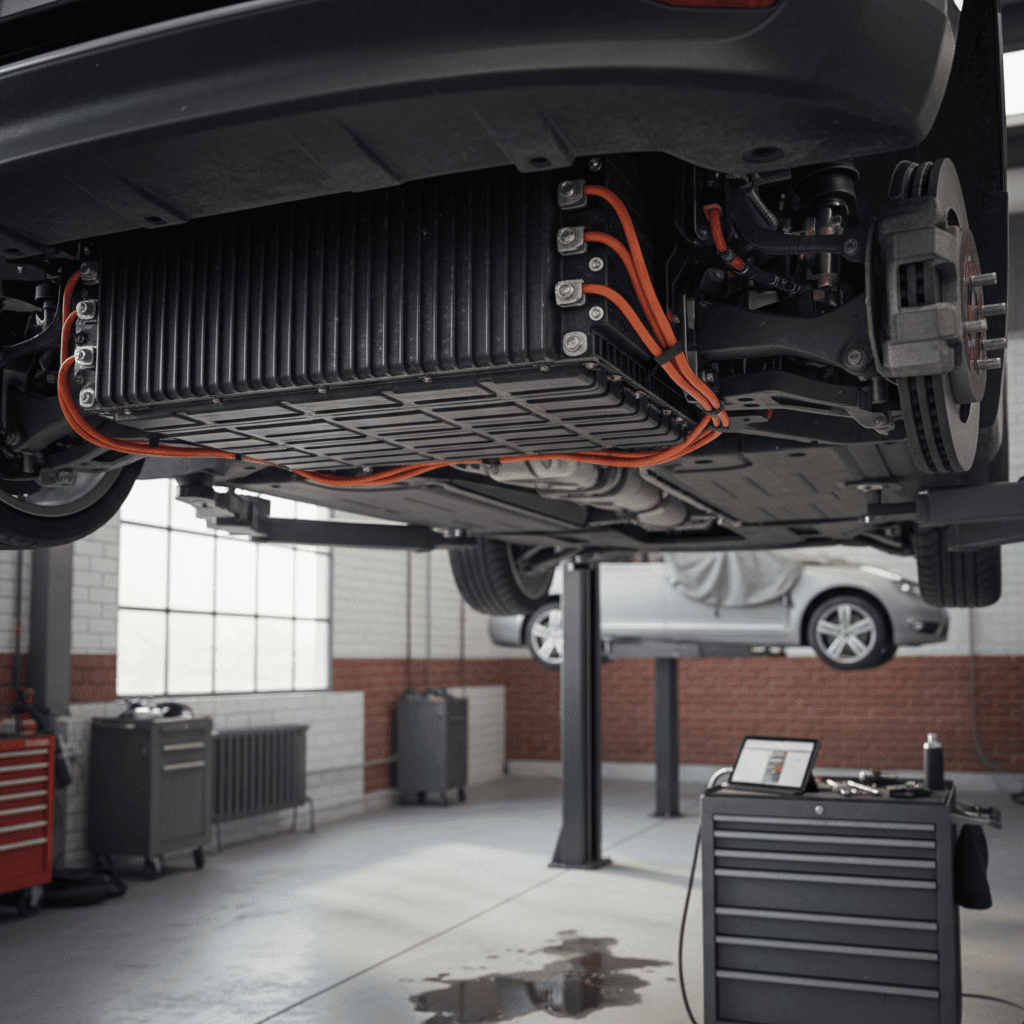
If you’re comparing electric car maintenance vs gas, the battery is probably your biggest fear. Replacement stories travel further than the far more common story of an EV quietly running for 10–15 years on its original pack.
- Across today’s fleet, only a small percentage of EVs ever need a full pack replacement, and most failures happen under warranty.
- Most manufacturers cover the battery for 8 years or around 100,000 miles (sometimes more) against major capacity loss or failure.
- Battery prices keep trending down, so a pack that would have cost $20,000 a few years ago may be several thousand dollars cheaper by the time you’d ever need one.
What EV battery replacement actually costs in 2025
Indicative ranges for out‑of‑warranty full pack replacements, including parts but not always labor. Real‑world quotes vary by model and market.
| Vehicle segment | Typical pack size | Approx. replacement range | Notes |
|---|---|---|---|
| Compact EV (Leaf, Bolt, etc.) | 30–65 kWh | $3,000–8,000 | Often the lowest-cost packs; refurbished options can be cheaper. |
| Mainstream mid‑size EV (Model 3, Ioniq 5, etc.) | 60–80 kWh | $8,000–15,000 | OEM replacements; third‑party refurbished packs can undercut this. |
| Luxury / long‑range EV | 90–130+ kWh | $12,000–20,000+ | Larger batteries mean higher material costs. |
| Electric trucks & large SUVs | 100–150+ kWh | $15,000–25,000+ | Heavier packs, more labor, and limited aftermarket alternatives so far. |
Battery replacements are expensive, but they’re also rare, and many options exist short of a brand‑new pack.
Warranty matters more than sticker price here
Time and convenience: fewer shop visits with EVs
Money isn’t the only cost that matters. Every time you sit in a waiting room for an oil change, you’re paying with your time. One underrated advantage of EVs is simply needing fewer in‑person service visits.
How EVs simplify the ownership experience
Fewer scheduled services
No oil changes, no tune‑ups, no timing belts. Many EVs follow a simple annual checkup plus mileage‑based inspections.
Remote diagnostics & over‑the‑air updates
Many issues are identified, or even fixed, without a shop visit. Software recalls become app notifications, not half a day at the dealer.
Less “break‑in” maintenance as cars age
Electric motors don’t slowly lose compression or clog up fuel systems. The powertrain often feels nearly the same at 100,000 miles as it did at 10,000.
Predictable wear items
Most of what you’ll replace on an EV is easy to understand: tires, wiper blades, cabin air filter, 12‑volt battery, maybe brake pads after many years.
Why this matters for used EVs
EV vs gas maintenance costs over 5–10 years
When you zoom out to a full ownership cycle, patterns become clearer. Industry data in 2024–2025 keeps landing in the same place: EVs cost less to operate, but new EVs can still be more expensive to own overall because of higher purchase prices, depreciation, and insurance.
Five‑year maintenance snapshot
- Many studies peg gas car maintenance around $0.08–0.10 per mile when you include both scheduled service and typical repairs.
- EV maintenance often falls closer to $0.04–0.06 per mile over similar timeframes.
- At 12,000–15,000 miles per year, that’s roughly $400–700 per year in savings on maintenance alone.
- Add fuel savings, especially if you can charge at home, and the operating‑cost gap widens further in favor of EVs.
But don’t ignore purchase price
- New EVs still tend to cost more up front than comparable gas models, even after recent price cuts.
- Higher MSRP and faster depreciation can outweigh maintenance and fuel savings in the first 3–5 years.
- That’s why used EVs are so compelling: someone else already paid the steepest part of the depreciation curve.
- The right question isn’t just “Is an EV cheaper?” but “At what age and price point does the EV win for my driving pattern?”
How to compare total cost of ownership
Used EVs: where maintenance savings really shine
If you’re looking at a $20,000–$35,000 budget, the best EV deals in 2025 are often on the used market. Values for many used EVs fell sharply in 2024, mainly because new‑car prices dropped and technology moved quickly. That hurts early adopters, but it’s great if you’re shopping today.
Why a used EV can be a smart maintenance play
Particularly when you combine a healthy battery with lower running costs.
Someone else paid the depreciation
You can see battery health up front
Lower ongoing costs
Where Recharged fits in
Ready to find your next EV?
Browse VehiclesHow to care for an EV and protect the battery
The maintenance checklist for an EV is shorter than for a gas car, but a few good habits go a long way, especially when it comes to battery life and long‑term value.
Simple habits that keep EV maintenance low
1. Rotate and align tires regularly
Follow your owner’s manual interval (often 6,000–8,000 miles). It improves range, safety, and avoids premature tire replacements.
2. Use scheduled charging when you can
Charging more slowly at home and avoiding constant 100% fast charges is gentler on the battery. Save DC fast charging for road trips and genuine needs.
3. Don’t panic about 80–90% charge limits
Keeping the battery around 30–80% for daily use can modestly improve long‑term health, but modern packs and thermal management are built to be robust.
4. Keep software up to date
Updates can improve efficiency, range estimation, and even fix bugs that might otherwise lead to warning lights or drivability issues.
5. Treat brakes like any other car
Regenerative braking cuts wear, but you still need periodic inspections to avoid corrosion or uneven pad wear, especially in salty or wet climates.
6. Store the car sensibly
If you won’t drive for weeks, leave the car around mid‑charge, park in moderate temperatures, and avoid letting it sit fully charged or completely empty.
Thermal extremes are hard on everything
When a gas car can still make sense
Despite the maintenance advantages of EVs, there are still situations where a gas car may be the pragmatic choice, especially if you’re thinking primarily in the short term.
- You drive very little (say under 5,000 miles a year), so fuel and maintenance savings are modest either way.
- You can’t easily install home charging and rely heavily on expensive public fast charging.
- You regularly tow heavy loads or drive in areas with limited charging infrastructure where today’s EV options feel like a compromise.
- You plan to own the car for only 2–3 years and care more about upfront price and depreciation than long‑run operating costs.
- You’re shopping at a very low price point where reliable used gas cars are plentiful, but used EV choices are still limited in your region.
It’s not EV vs gas in a vacuum
FAQ: electric car maintenance vs gas
Frequently asked questions about EV vs gas maintenance
Bottom line: is an EV cheaper to maintain?
If you isolate maintenance and operating costs, electric cars are clear winners over gas cars in 2025. Fewer moving parts, fewer fluids, and fewer scheduled services translate into real savings and less time spent at the shop. The caveats are mostly about rare but expensive events, major collision repairs or an out‑of‑warranty battery replacement, and about the higher purchase price of many new EVs.
Where the math gets especially attractive is in the used EV market, where someone else has already absorbed the steepest years of depreciation and you still get years of low‑maintenance driving. Match a healthy‑battery car with your charging situation and driving pattern, and the ownership equation tilts decisively toward electric.
If you’re ready to explore that for yourself, Recharged can help you compare specific used EVs against your current gas car, walk you through maintenance expectations, and even pre‑qualify you for financing with no impact on your credit. That way you’re not just choosing between EV and gas in the abstract, you’re choosing the right car, at the right total cost, for how you actually drive.