If you live near the ocean, you already know that salty air is tough on metal. When you add an electric car into that equation, it’s natural to wonder whether driving an electric car in salt air coastal areas is asking for trouble, especially with a battery pack worth tens of thousands of dollars riding under the floor.
Key takeaway for coastal EV owners
Electric cars and salt air: what’s really different?
At a high level, an EV’s body shell, suspension, and brakes are made from the same types of metals as a gasoline car. Salt-laden air and road spray cause electrochemical corrosion on those exposed metals whether there’s an engine or a battery under the hood.
What EVs share with gas cars
- Steel and aluminum body panels that can rust or pit when paint is compromised.
- Undercarriage parts (subframes, control arms, fasteners, exhaust hangers on PHEVs) exposed to spray.
- Brake lines, rotors, calipers, and parking-brake mechanisms that corrode faster near the coast.
- 12-volt electrical connectors and grounds that hate moisture and salt deposits.
What’s unique to EVs
- High-voltage battery pack and cabling are typically well-sealed, but any saltwater intrusion can create serious fire risk after flooding.
- More sensors, harnesses, and control modules under the car and in wheel wells.
- Regenerative braking means friction brakes are used less, so rotors can rust faster and stick if neglected.
- Extra curb weight can stress suspension components that are already dealing with corrosion.
Flooding is a different risk category
How salt air actually damages an electric car
Salt air is simply moist air carrying tiny salt particles. When that salty moisture lands on metal, it creates an electrolytic solution that accelerates corrosion, especially where dissimilar metals meet (bolts, brackets, electrical connections). For EVs, there are a few high-priority areas to watch.
Main salt damage pathways on an EV
Understanding these helps you focus your inspections where they matter most.
12‑volt system & connectors
Salt and humidity attack 12‑volt battery terminals, ground straps, and low-voltage connectors long before they threaten the high-voltage pack. Corrosion here can trigger warning lights, sensor errors, or no-start conditions.
Undercarriage & suspension
Subframes, control arms, sway-bar links, fasteners, and brake lines sit right in the spray path. Surface rust is normal over time, but unchecked scaling can eventually weaken parts or make future repairs difficult and costly.
Brakes & parking mechanisms
In coastal environments, rotors can rust overnight. On EVs that rely heavily on regen, friction brakes may not clean themselves off, leading to sticking calipers or seized parking brakes if you never exercise them.
Salt doesn’t usually attack all at once. It builds up as a thin film on the car, then draws and holds moisture against metal. Over months and years, that film creeps into seams, spot welds, and tiny paint chips, starting hidden rust that only becomes obvious later on.
Think in time, not miles
Risk levels by distance from the coast
Not all “coastal” situations are equal. An EV parked 200 yards from the surf is living a very different life than one that only hits the beach on weekends. Salt particles in the air can travel a mile or more inland, but concentration and exposure time drop as you get farther from the water.
How salt air risk changes with distance from the ocean
Approximate exposure levels for daily‑driven vehicles when no extra protection is used.
| Distance from coast | Salt exposure level | Typical issues | Suggested care cadence |
|---|---|---|---|
| Beachfront (0–0.5 miles) | Extreme | Rapid surface rust, stained rotors, hardware corrosion, cloudy trim in 1–2 years | Undercarriage rinse every 1–2 weeks; full inspection twice a year |
| Near coastal (0.5–3 miles) | High | Visible underbody rust in 3–5 years, faster brake and hardware aging | Wash including underbody every 2–3 weeks; rust check annually |
| Inland coastal (3–10 miles) | Moderate | Slow underbody corrosion, mostly cosmetic for many years | Monthly wash with underbody rinse; inspection every 1–2 years |
| Occasional beach trips | Low–moderate | Spot rust where sand and salt accumulate if never rinsed | Rinse undercarriage and wheel wells after each trip |
Use this as a planning tool, not a precise scientific scale, microclimates and driving habits matter.
Road salt vs. sea salt
A practical maintenance routine for coastal EV owners
The best news about driving an electric car in salt air coastal areas is that most of the protection strategies are simple, cheap, and easy to build into your routine. You don’t need exotic products, just consistency and a little attention to detail.
Coastal EV maintenance checklist
1. Wash and rinse the undercarriage regularly
Near the beach, washing once a week or every other week is ideal. Make sure the wash includes a <strong>thorough underbody rinse</strong> and wheel wells to flush away salt film and sand.
2. Dry instead of letting salt water bake on
After rinsing, avoid letting the car air‑dry in direct sun. Use microfiber towels or a blower to remove standing water so salt doesn’t concentrate in seams as it evaporates.
3. Exercise the friction brakes
Once or twice a week, turn regen down (if your car allows it) and do several firm stops from moderate speeds to scrub rust off the rotors. This helps prevent noisy, uneven, or seized brakes.
4. Inspect rubber seals and grommets
Salt and UV can harden door, hatch, and charge‑port seals. Check them for cracks and keep them clean so they keep water and salt out of the cabin and electronics.
5. Check 12‑volt battery and terminals yearly
Have a technician test the 12‑volt battery and clean any corrosion on the terminals and grounds. Many “mysterious” EV problems in coastal areas start with a tired 12‑volt system.
6. Get a professional underbody inspection
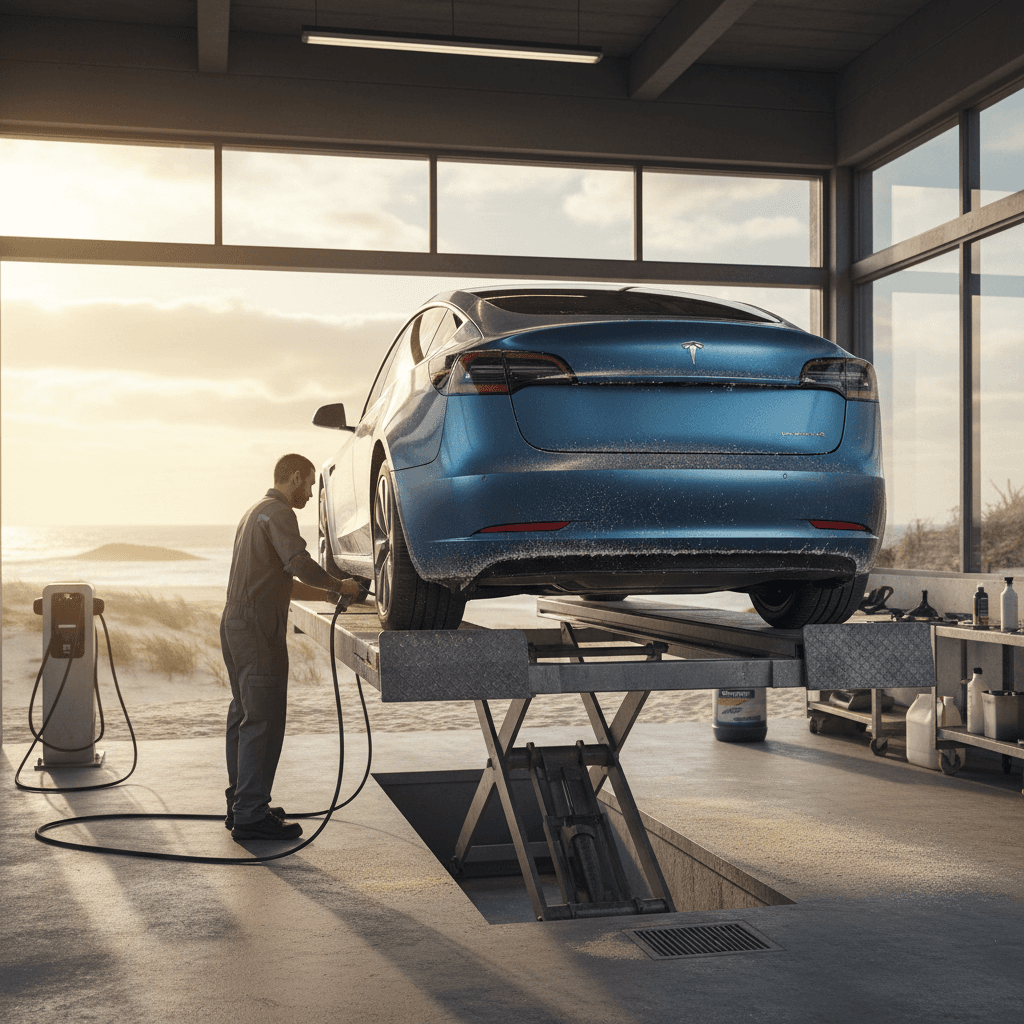
Every 1–2 years, especially within a mile or two of the coast, have a shop put the car on a lift and document underbody rust, brake lines, and suspension condition with photos.
Why this matters for resale
Ready to find your next EV?
Browse Vehicles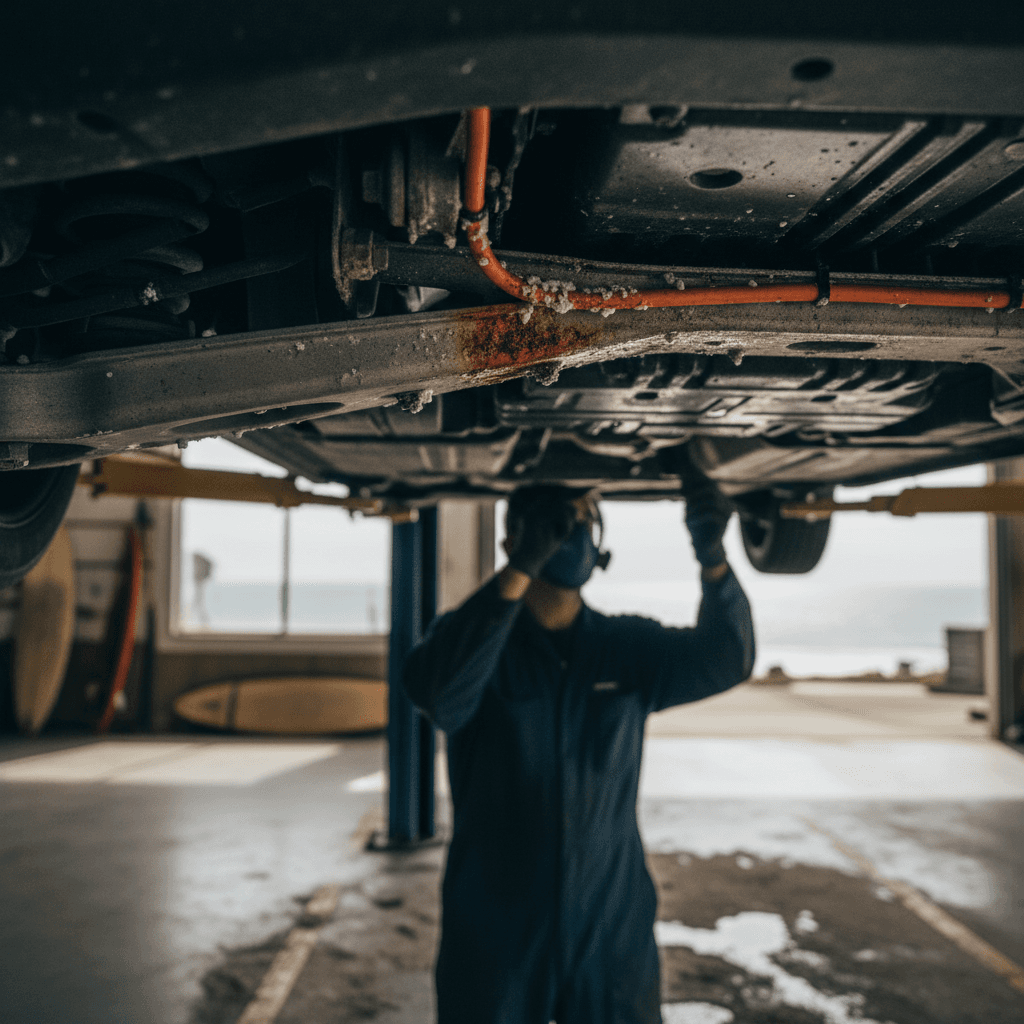
Protecting paint, body, and undercarriage from corrosion
Because salt starts its work on the surface, smart protection layers go a long way. You don’t have to buy every coating on the market, but a few targeted steps can delay rust for years and keep your EV looking fresh in harsh seaside sun.
Four smart protection layers for coastal EVs
Pick the level that matches your proximity to the ocean and how long you plan to keep the car.
Regular wax or sealant
Reapply every 3–4 months. A good wax or polymer sealant creates a sacrificial layer that salt and UV attack instead of your clear coat.
UV protection for trim
Use trim conditioners on black plastic and rubber to slow fading and cracking. Once trim dries and cracks, it traps salt and moisture.
Touch‑up chips quickly
Any chip down to bare metal in a salty climate is urgent. Touch‑up paint and clear coat keep rust from starting in those exposed spots.
Rustproofing & undercoating
In high‑exposure zones, professional cavity wax and underbody coating can slow structural rust on subframes and hidden seams.
Be careful with DIY undercoating
What about the battery pack and high-voltage system?
For normal coastal use, driving on wet, salty roads and parking in sea air, the high‑voltage battery pack on a modern EV is designed to stay sealed and isolated. Automakers validate enclosures and high‑voltage components in salt‑spray and humidity chambers precisely because coastal markets are so important.
- The pack casing is typically aluminum or steel, sealed with gaskets and fasteners designed to keep out water and salt spray.
- High‑voltage cables use thick insulation and weather‑sealed connectors, routed away from direct spray whenever possible.
- Safety systems monitor insulation resistance; if moisture compromises isolation, the car will usually throw a fault and refuse to drive or charge.
Saltwater flooding is a battery safety red flag
Outside of those extreme flooding scenarios, the bigger electrical concern in coastal areas is still the low‑voltage side: corroded grounds, connectors, and control modules located low in the car. That’s one more reason why clean, intact shielding and regular inspections under the vehicle matter.
Parking, storage, and driving habits that matter
How and where you park often makes as much difference as how often you wash. Two neighbors with identical EVs can have very different corrosion stories after five years simply because one parks indoors and the other in a windy beachfront lot.
Parking & storage tips
- Garage when you can. Even a basic carport that blocks direct ocean wind cuts down on salt deposition dramatically.
- Avoid parking inches from the surf. That picture‑perfect oceanfront parallel space also comes with intense salt spray and sand blasting.
- Use a breathable cover. If you must park outside near the beach, a high‑quality, breathable car cover rated for coastal use can reduce salt build‑up.
- Don’t store long‑term while dirty. Rinse the undercarriage and wash the body before leaving the car parked for weeks at a time.
Driving habits that help
- Rinse after beach days. If you’ve driven on sandy or sea‑spray‑heavy roads, give the car a rinse as soon as it’s convenient.
- Skip the waterline photo shoot. Driving through wet sand and saltwater puddles does real damage, and EVs are not designed for surf.
- Occasionally take a longer drive. Getting everything warm and dry helps clear condensation from hidden areas.
- Listen for new noises. Creaks or clunks from underneath can be early signs of corroded bushings or hardware.
Buying a used electric car from coastal areas
If you’re shopping used, especially online, it’s smart to ask where an EV has lived and how close that is to the ocean. A coastal car isn’t automatically a bad buy, but you want a clear picture of what salt exposure you’re inheriting.
Used coastal EV inspection checklist
1. Ask for a location history, not just a Carfax
Registration records and service invoices can reveal if a car spent years in a beach town or just had the occasional seaside vacation.
2. Get detailed underbody photos
Look for flaky rust on subframes, brake lines, and fasteners, not just light surface discoloration. Heavy scaling, swollen seams, or missing metal are red flags.
3. Inspect brakes and parking brake function
On a test drive, listen for grinding or squealing and verify that the parking brake applies and releases smoothly. Sticking calipers are common on neglected coastal EVs.
4. Check door, hatch, and charge‑port seals
Hardened, cracked, or greenish seals can indicate long‑term salt exposure and future leak paths into electronics or the cabin.
5. Review charging and electrical fault history
Repeated mysterious electrical faults or charging issues in service records can sometimes be traced back to corrosion in connectors or modules.
6. Use an independent EV‑savvy inspection
If you’re buying remotely, hire an inspector or buy from a seller that provides <strong>transparent battery health and underbody documentation</strong>, not just glamour shots of the exterior.
How Recharged handles coastal vehicles
Costs, warranties, and long-term value in salty climates
Salt exposure is mostly a slow‑burn cost: you pay through more frequent brake jobs, suspension work, and potentially reduced resale value if corrosion gets ahead of you. On the flip side, EVs save substantially on fuel and engine maintenance, which gives you some budget room to invest in preventative care.
Coastal EV ownership: where the money really goes
Think total cost of ownership, not just rust
FAQ: Electric cars in salt air coastal areas
Frequently asked questions about EVs in salty coastal climates
Bottom line: Are EVs a good fit for coastal drivers?
For most people, an electric car is a perfectly sensible choice in a coastal area, as long as you respect what salt air does to metal over time. The battery pack is usually not the weak link; it’s the undercarriage, brakes, and low‑voltage hardware that suffer when cars sit unwashed in sea breeze for years.
If you’re willing to build a simple wash routine, invest in occasional inspections, and pay attention to parking and storage, you can capture all the benefits of EV ownership, lower running costs, quiet driving, instant torque, without letting salt quietly destroy your investment.
And if you’re shopping used, especially in coastal markets, look for transparent documentation of both battery health and corrosion. That’s exactly why Recharged includes a Recharged Score Report, expert EV guidance, and nationwide delivery support: so you can get the right electric car for your lifestyle, whether you’re a few blocks from the beach or hundreds of miles inland.