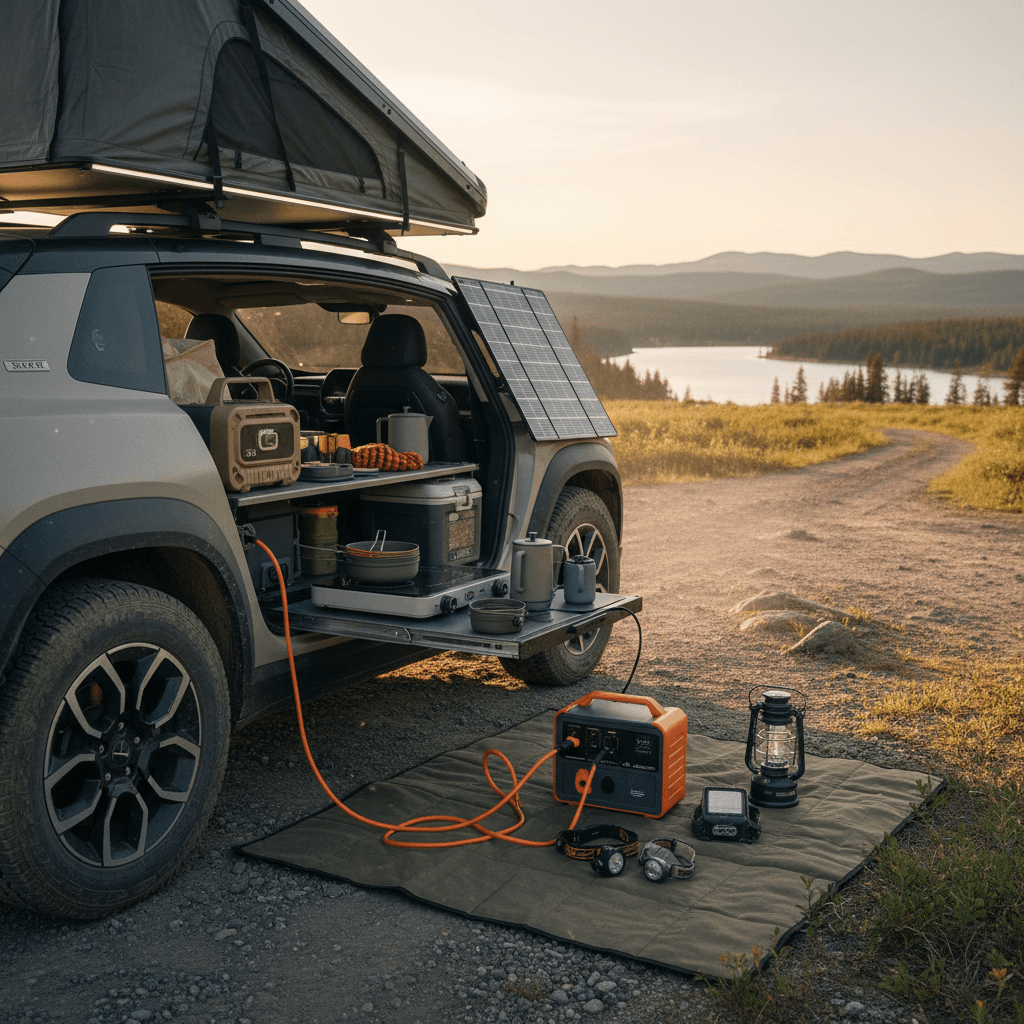
If you’ve ever stared at your electric car at the trailhead and thought, “I could just sleep in that,” you’re not wrong. With the right electric car for camping setup, your EV can become a quiet, climate‑controlled mini camper that powers lights, fans, and even your coffee maker, without a noisy generator.
Good News for EV Campers
Why EVs Make Surprisingly Great Campers
Key Advantages of EV Camping
What an electric car does better than a gas rig at the campground
Silent, Fume‑Free Nights
Built‑In Giant Battery
Instant Heat or A/C
The Catch: Range & Charging
Plan Your Trip: Range, Charging, and Where to Sleep
Before you start fine‑tuning mattress thickness, you need a basic plan: how far you’ll drive, where you’ll charge, and whether you’re sleeping inside the car or in a tent next to it. This is where EVs are different from gas rigs, but not harder, just more deliberate.
- Estimate your total driving miles for each day, including side trips to trailheads or stores.
- Look up your EV’s realistic efficiency (mi/kWh). Most efficient EVs do about 4–5 mi/kWh; heavier or lifted vehicles may be closer to 3–3.5 mi/kWh.
- Multiply miles by energy use to estimate kWh needed per day, then add 20–30% buffer for hills, headwinds, and cold weather.
- Use apps like PlugShare, A Better Routeplanner, or your car’s built‑in navigation to pin Level 3 fast chargers and any campgrounds with 240V hookups.
- Decide: are you booking developed sites with power, or boondocking and relying on your battery plus public fast chargers on travel days?
Think in "Travel Days" vs. "Camp Days"
Choosing and Prepping the Right EV for Camping
You can camp in almost any EV, from compact hatchbacks to three‑row SUVs. But some features make life a lot easier when you’re living out of the back for a weekend.
EV Features That Matter for Camping
What to look for when you’re shopping, especially in the used market
Flat, Long Cargo Area
Vehicle‑to‑Load or Onboard Outlets
Camp/Utility Mode
Prepping a Used EV for Camping
If you’re eyeing a used EV specifically for camping duty, pay close attention to battery health and real‑world range. A car that started life with 270 miles of EPA range but now manages 210 on the highway will change which campsites feel comfortable.
With Recharged, every used EV comes with a Recharged Score Report that includes verified battery health and fair‑market pricing, so you can see at a glance whether that road‑trip range matches your camping ambitions.
Ground Clearance & Traction
You don’t need rock‑crawler specs to reach most U.S. campgrounds, but a little extra ground clearance and all‑weather tires help on washboard roads. Some EVs, like adventure‑oriented trims of the Hyundai Ioniq 5 or off‑road‑ready Rivian R1T, add terrain modes that manage traction on dirt and gravel.
If you plan to tow a small camper or gear trailer, check the EV’s towing rating and remember that towing can cut effective range dramatically.
Sleeping Setup: How to Turn Your EV Into a Bed
Now for the fun part: building a sleeping setup that doesn’t destroy your back. There’s no universal recipe, but most electric car camping setups fall into three patterns.
Common EV Sleeping Setups
Pros and cons of the three most popular approaches
| Setup | Where You Sleep | Best For | Pros | Cons |
|---|---|---|---|---|
| Full Inside Bed | Rear seats folded, head to rear hatch, feet toward front seats | Stealth camping, bad weather | Warm, secure, easy to manage overnight climate control | Tighter for tall campers; storage must move to front seats |
| Cargo‑Area + Roof Box | Inside bed plus bulky gear on roof | Couples with lots of gear | Maximizes interior sleeping space; keeps messy items outside | Roof box adds drag and reduces range a bit |
| Tent Beside EV | Ground or rooftop tent, EV used as power hub and lounge | Families, longer stays | More room, traditional camping feel, easy in/out | Less stealthy, more setup time, weather exposure |
Choose the layout that matches your body, your gear, and your tolerance for contortionism.
Dialing In a Comfortable In‑Car Bed
Measure your usable length and width
Fold the rear seats, slide the fronts forward, and measure from the hatch to the back of the front seats. Aim for at least your height plus 2–3 inches.
Choose the right mattress solution
Common tricks: tri‑fold memory‑foam camping mattresses, inflatable SUV‑specific air beds, or two stacked backpacking pads. Test at home before your trip.
Fill the gaps and level the floor
Many EVs have a step between cargo area and folded seatbacks. Fill it with foam blocks, a folded blanket, or custom plywood platform so your spine isn’t bridging a gap all night.
Plan smart storage overnight
Use soft duffel bags that can slide into rear footwells or the front seats once you’re in bed. Hard bins live best in the frunk or under a hatch‑area shelf.
Add privacy and light control
DIY Reflectix window inserts, magnetic blackout curtains, or simple windshield sunshades keep light out and prying eyes away.
Think about condensation
Crack a window slightly or use vent visors. EVs don’t need open windows for exhaust, but your breath will still condense on cold glass overnight.
Powering Your Campsite From Your EV
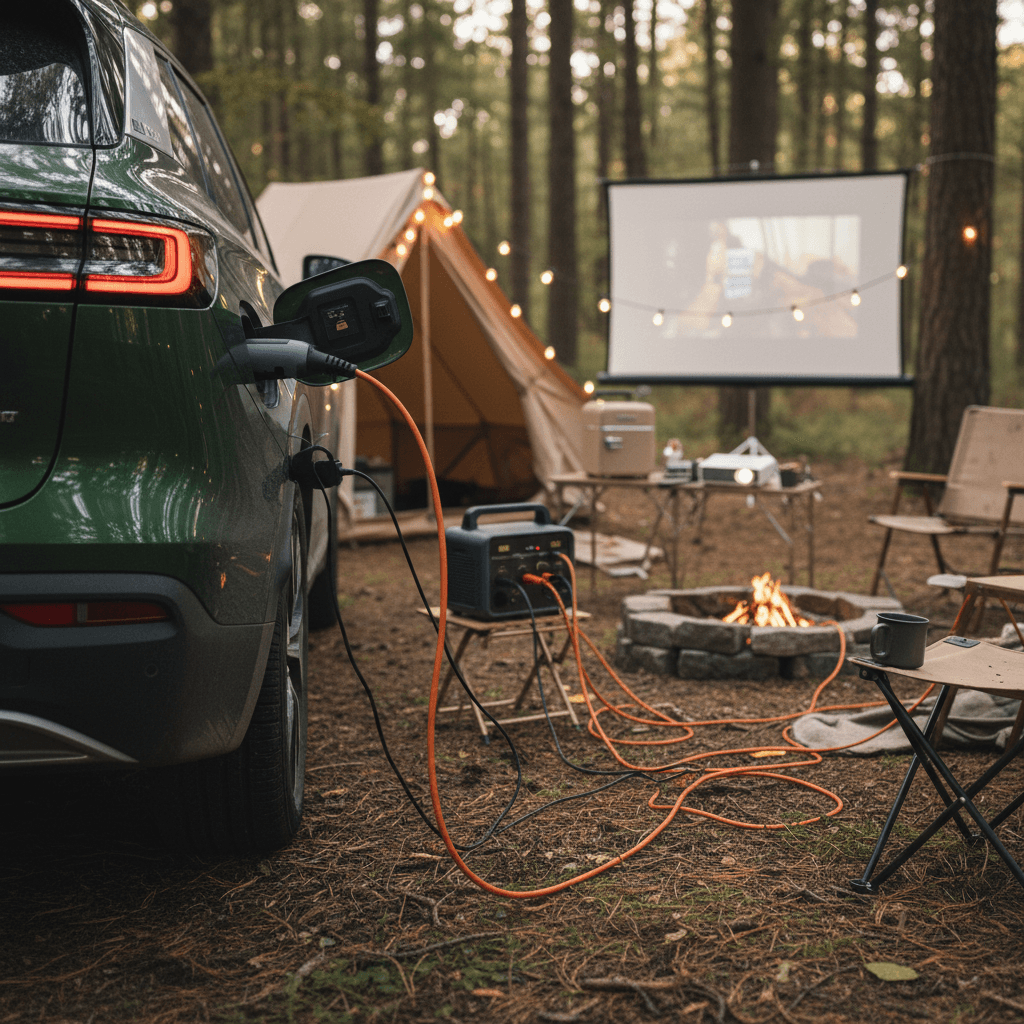
The magic of an electric car for camping setup is that your vehicle is both bedroom and power station. How you tap into that battery makes a big difference in comfort and how much range you have left for the drive home.
Typical EV Power Outputs for Camping
V2L vs. Simple Outlets
- Prioritize low‑draw gear: LED lights, efficient 12V fridges, USB fans, and induction cooktops used briefly.
- Avoid running high‑draw appliances (hair dryers, resistance heaters) for long stretches, they eat battery and can trip breakers.
- Consider a small portable power station (500–1500 Wh) that you top up from the EV during the day; then run lights and charging from that box at night.
- Know your EV’s limits: check the manual for maximum output per outlet and total system output so you don’t overdo it.
Staying Comfortable: Climate Control and Camp Mode
One of the biggest perks of EV camping is safe, engine‑off climate control. Many modern EVs include a dedicated Camp or Utility Mode that keeps the HVAC and 12V systems running off the main battery for hours.
How Much Battery Does Overnight Climate Use?
Real‑world owners report that Camp or Utility Mode typically uses roughly 5–10% of a full battery pack overnight, depending on temperature, wind, and how warm or cool you keep the cabin. In mild weather, it can be less; in sub‑freezing temps, expect more.
The key is to arrive at camp with a healthy buffer, 70–80% state of charge if you’re far from a fast charger, a bit less if there’s one down the road in the morning.
Smart Camp‑Mode Habits
- Pre‑heat or pre‑cool the cabin while you’re still plugged into a charger, then start Camp Mode.
- Set a realistic temperature, 68°F, not 75°F, and use blankets or sleeping bags to do the rest.
- Run seat heaters when available; they use less power than heating the entire air volume.
- On hot nights, combine a modest A/C setting with a small USB fan pointed at your face.
Avoid Draining the Battery to the Bottom
Essential Gear Checklist for an EV Camping Setup
Core Gear for Electric Car Camping
Comfortable, Packable Mattress
A tri‑fold foam mattress cut to fit your cargo area is the single biggest quality‑of‑sleep upgrade you can buy.
Warm‑Weather and Cold‑Weather Bedding
Mix lightweight sheets with a 3‑season sleeping bag or comforter so you can adapt to changing temperatures without cranking HVAC all night.
Soft Storage & Organization
Use duffels and packing cubes that can squish into footwells. Label bags (sleep, cook, clothes, tools) so bedtime doesn’t turn into a gear excavation.
Lighting & Small Electronics
USB‑rechargeable lanterns, headlamps, and a couple of long USB‑C cables keep your interior tidy and well lit without hunting for charging bricks.
Window Covers & Privacy
Reflectix or fabric inserts cut to your windows provide insulation, privacy, and a big improvement in how “finished” your setup feels.
Basic Repair & Recovery Kit
Tire plug kit, compressor, tow strap, compact shovel, and a small first‑aid kit, especially if you’re exploring forest roads.
Pack With Charging Stops in Mind
Safety First: What to Do and What to Avoid
Electric vehicles are inherently well‑suited to camping, no fuel fumes, fewer moving parts, and robust battery management systems. Still, there are a few non‑negotiables if you’re going to sleep in or around your EV.
Smart Safety Habits for EV Camping
A quick rundown of what to prioritize and what to skip
Do
- Park on level, firm ground and chock wheels if the site isn’t perfectly flat.
- Know your local rules, some campgrounds restrict vehicles in certain tent areas.
- Keep a clear path to the driver’s seat and keys accessible in case you need to move quickly.
- Use only outdoor‑rated extension cords and outlets if plugging into campground power.
Don’t
- Run DIY inverters or power strips beyond their rated capacity.
- Block exhaust vents or HVAC intakes with bedding or gear.
- Sleep with the car in anything other than Park, with parking brake set.
- Rely on an EV with known battery or charging issues for remote trips.
Never Defeat Safety Systems
Example Electric Car Camping Setups
To make this less abstract, here are a few real‑world electric car camping setups that work well in 2025–2026, plus the kind of used EVs you might look for if camping is high on your priority list.
Three Sample EV Camping Profiles
Match your style, then adapt the details to your own car
Solo Weekender in a Compact EV
Family Basecamp in a Crossover or SUV
Overland‑Style Setup in an Electric Truck
Where Recharged Fits In
Ready to find your next EV?
Browse VehiclesEV Camping FAQ
Electric Car Camping: Frequently Asked Questions
Bringing It All Together
An electric car for camping setup doesn’t require a van conversion or a six‑figure adventure rig. It’s a thoughtful combination of range planning, a comfortable sleeping layout, smart use of your EV’s battery, and a realistic understanding of your car’s limits. Do that well, and your EV becomes a quiet, clean, incredibly capable campsite on wheels.
If you’re still shopping for the right EV, think about how you actually camp: solo overnights, family basecamps, or remote trailheads. Then look for range, cargo space, and power features that support that life. Recharged can help you compare used EVs with verified battery health, transparent pricing, and EV‑savvy guidance, so when you back into that first campsite, the only thing left to figure out is which trail you’re hiking in the morning.