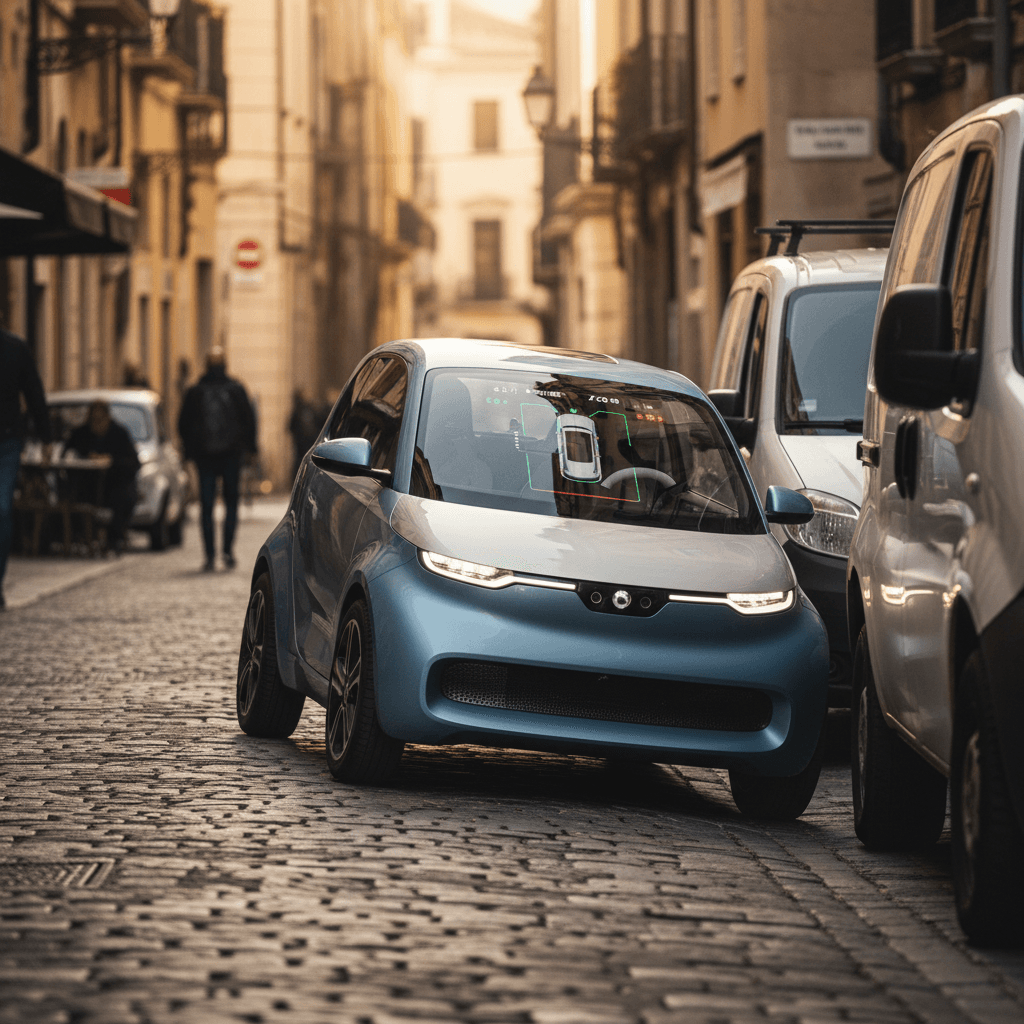
If you live in a city, share a tight driveway, or spend way too long circling for street parking, the **electric car easiest to park** isn’t the one with the biggest battery, it’s the one that shrinks the stress of tight spaces. The good news: between genuinely tiny EVs and smart parking tech, you can get something that actually fits your life, not just your Instagram feed.
Quick answer
Why “easiest to park” matters more with EVs
Electric cars tend to be **heavier and often wider** than comparable gas cars because of their batteries. That extra width can make narrow alleys, old parking garages, and tight parallel spots feel a lot more stressful. On top of that, many popular EVs in the U.S. are **crossovers or SUVs**, which sacrifice maneuverability for space and style.
- City drivers may park multiple times a day, home, work, errands, which turns a small annoyance into a daily pain point.
- Heavier EVs can feel cumbersome at low speeds if the steering and visibility aren’t dialed in.
- Tight garages and older apartment lots were never designed for modern crossover dimensions.
The trap of buying “too much car”
What actually makes an electric car easy to park?
When you strip away the marketing, an **easy‑to‑park EV** comes down to a handful of tangible traits you can measure or feel on a test drive. You don’t need to be an engineer; you just need to know what to look for.
5 factors that matter more than you think
Use these to compare any two EVs for parking ease
Overall length
Width & mirrors
Turning circle
Visibility
Cameras & sensors
Steering feel
How to compare specs quickly
The smallest electric cars you can buy in the U.S.
Globally, there are ultra‑tiny EVs that border on golf carts, but in early 2026 the **U.S. market** for genuinely small electric cars is still limited. Here are the standouts that are easiest to park because of their physical size, not just their software.
City-friendly EVs: size and parking highlights
Approximate size and parking‑friendly features for some of the easiest‑to‑park electric cars available new in the U.S.
| Model (EV) | New or Used Focus | Approx. Length | Approx. Width | Parking Standouts |
|---|---|---|---|---|
| Fiat 500e | New (2024–) | ≈143 in | ≈66 in | Shortest new EV in the U.S., tiny footprint that slips into scooter‑sized gaps, very easy parallel parking. |
| Mini Cooper SE / new Mini Cooper Electric | New or used | ≈152–153 in | ≈68 in | Short length, quick steering, tight turning circle; feels at home in old city streets. |
| Volvo EX30 | New | ≈166 in | ≈74 in | Shorter than most crossovers, boxy shape makes it easy to place; strong camera and sensor suite. |
| Hyundai Kona Electric | New or used | ≈166–171 in | ≈71 in | Still compact, especially in earlier generations; light steering and good visibility. |
| Kia Niro EV | New or used | ≈172 in | ≈72 in | Slightly larger but very maneuverable; good compromise if you need more space but still city‑friendly. |
Dimensions are approximate and can vary slightly by model year and trim. Always check exact specs for the specific car you’re considering.
Ultra‑tiny EVs… mostly not here (yet)
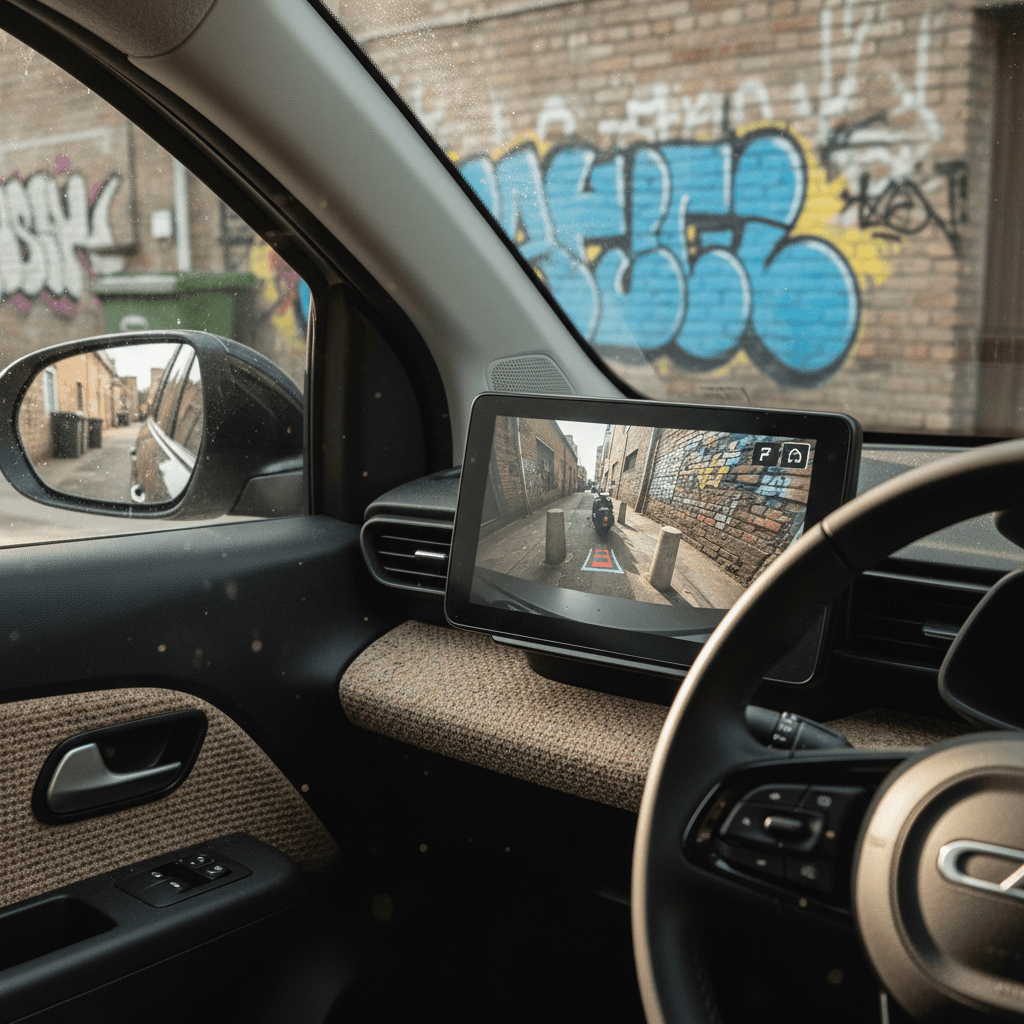
Parking tech that makes any EV feel smaller
Physical size is only half the story. Many modern EVs come loaded with **driver‑assist tech** that can turn a mildly intimidating crossover into something you can slot into a tight parallel space without breaking a sweat.
Parking features worth paying for
If you hate parking, these can be game‑changers
High‑resolution backup camera
Front & rear sensors
360º or “bird’s‑eye” camera
Automatic parking assist
Rear‑axle steering (on some EVs)
Parking memory & cameras for home
Best combo for stress‑free parking
Size specs vs real life: how small is “small enough”?
Looking at numbers on a spec sheet can be abstract. The trick is to relate **length and width** to the spaces you actually use: your garage, your street, your office lot. Here’s a way to think about it:
Length: front‑to‑back room
- Under ~165 inches – Feels genuinely tiny. Great for parallel parking in tight city neighborhoods and older garages. Think Fiat 500e or Mini Electric.
- 165–175 inches – Still compact, similar to a small hatchback. Good balance of maneuverability and interior space.
- Over ~180 inches – You’re in compact‑to‑midsize crossover territory. Parking ease depends a lot more on cameras and sensors.
Width: side‑to‑side clearance
- Under ~70 inches – Threading through old city streets and garage columns feels relaxed. Easier to keep away from curbs.
- 70–74 inches – Modern “normal.” Still fine in most places, but tighter garages and alleys start to feel snug.
- Over ~74 inches – Expect more mirror‑to‑mirror negotiations and careful door opening in narrow spaces.
Measure your life, not just the car
Used small EVs that are especially easy to park
Because the U.S. hasn’t embraced tiny new cars in a big way, some of the **best‑to‑park EVs now are found on the used market**. These can be great values if you understand battery health and range trade‑offs.
Standout used EVs for tight parking
These models punch above their weight in city maneuverability
smart EQ fortwo (and earlier electric fortwo)
BMW i3
Fiat 500e (first generation)
Nissan Leaf (earlier generations)
Watch battery health on older city EVs
Test‑drive checklist: how to judge parking ease in 10 minutes
You don’t need a full afternoon to figure out whether an EV will be easy to live with in your neighborhood. During a test drive, deliberately spend a few minutes on **nothing but low‑speed maneuvering and parking**.
City parking test: 8 quick checks
1. Practice parallel parking twice
Ask the salesperson to take you to a quiet side street and do at least two parallel parks on each side of the road. Pay attention to how many corrections you need and how confident you feel judging distance to the curb.
2. Turn the wheel lock‑to‑lock
In an empty lot, do a slow U‑turn from a stop with the steering at full lock. Does the car feel like it pivots tightly, or do you need extra corrections? That’s your real‑world turning circle.
3. Check the backup camera in bright sun and shade
Glare can wash out lower‑quality displays. Make sure you can still see curbs, lines, and pedestrians clearly at different angles.
4. Test sensors with real obstacles
Slowly approach a curb, wall, or parked car. Do the beeps and on‑screen warnings start early enough to feel helpful, not so late that you’re already nervous?
5. Sit low, sit high
Adjust the seat and steering wheel to your realistic driving position. In both high and low positions, can you clearly see the front corners and the edges of the hood?
6. Try a tight parking‑garage simulation
If possible, drive down a narrow lane or between parked cars to mimic your daily parking situation. Listen for your own instinct, are you relaxed or holding your breath?
7. Have a second driver try it
If someone else in your household is more nervous about parking, let them do a few maneuvers. Their comfort level may be the deciding factor.
8. Imagine doing this every day
After the test, ask yourself: would I be okay doing these same maneuvers **twice a day for the next 5–7 years**? If that feels exhausting, the car may be too big for your life even if the numbers look fine.
FAQ: Parking small and easy‑to‑live‑with EVs
Frequently asked questions about easy‑to‑park EVs
How Recharged helps you find an EV that fits your life (and parking spot)
If you’re shopping used, figuring out which electric car is **easiest to park** is only half the puzzle. You also need to know whether its **battery is healthy**, whether the price is fair, and how it will fit into your day‑to‑day routine.
See how a used EV has really been treated
Every vehicle on Recharged comes with a Recharged Score Report that includes verified battery health diagnostics, service history, and fair‑market pricing. That’s especially important with older city EVs that may have seen lots of fast‑charging and urban stop‑and‑go.
Our EV specialists can also help you compare models like the BMW i3, Nissan Leaf, or Mini Electric specifically on **parking and maneuverability**, not just range and features.
Shop around your constraints, not just your wish list
Have a narrow townhouse garage, tight condo parking, or a brutal parallel‑parking situation? Tell us. Recharged can help you identify EVs that physically fit your space and your budget, arrange financing, handle your trade‑in, and even coordinate nationwide delivery or a visit to our Experience Center in Richmond, VA.
The goal isn’t just to get you into an EV, it’s to get you into one you won’t dread parking every single day.
When you’re choosing an electric car, don’t let range and screen size drown out the simple but crucial question: **How easy will this be to park where I actually live and drive?** Start with realistic dimensions, add the right parking tech, and, if you’re shopping used, insist on clear battery‑health information. Do that, and the "electric car easiest to park" won’t be a unicorn, it’ll just be the EV that quietly makes every arrival and departure a little less stressful.