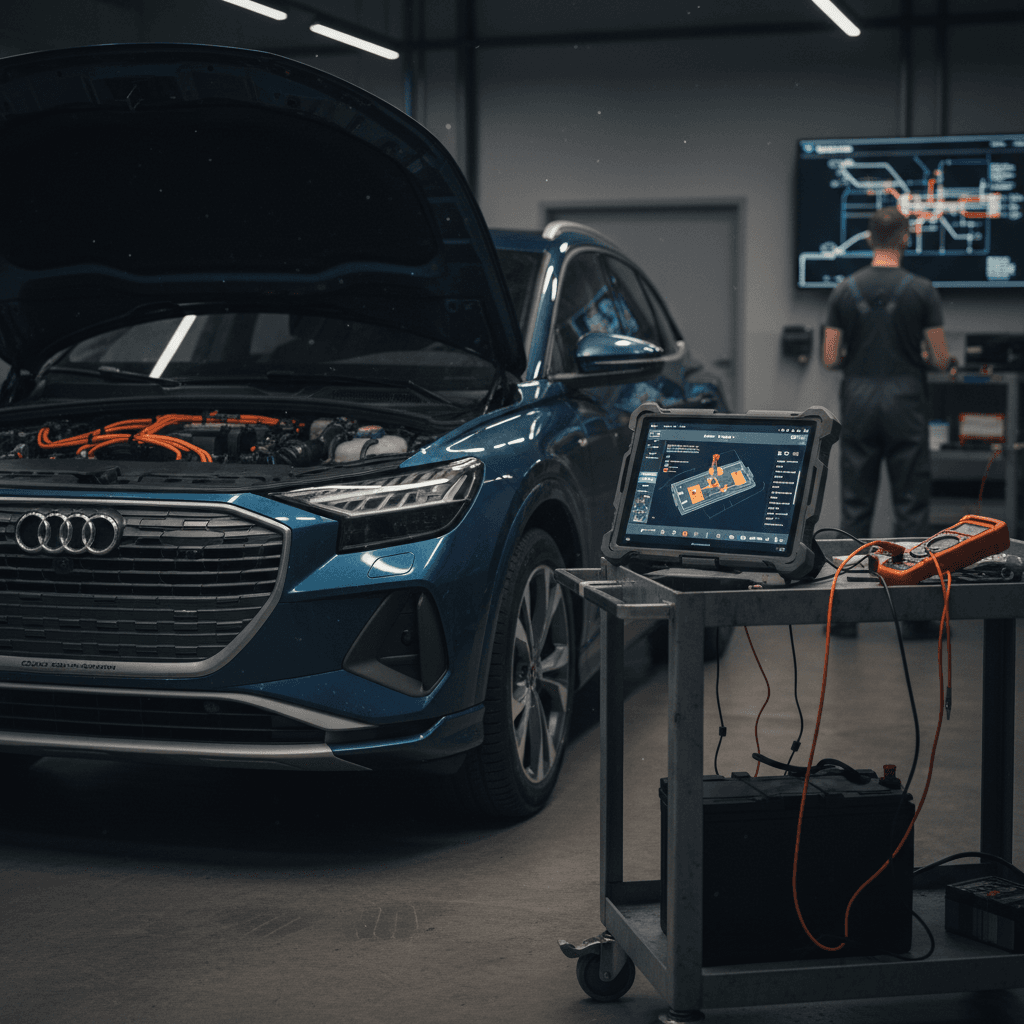
If you own or are shopping for a 2023 Audi Q4 e-tron, you’ve probably heard about recalls affecting this compact luxury EV and its Volkswagen ID.4 platform twin. This guide pulls together the most important information into one clear 2023 Audi Q4 e-tron recalls list so you can see what’s been fixed, what still needs attention, and how it all affects you as an owner or used-EV shopper.
Model scope
Overview: 2023 Audi Q4 e-tron recalls at a glance
Key recall takeaways for 2023 Audi Q4 e-tron
Recalls on the 2023 Q4 e-tron have focused less on its high‑voltage battery pack and more on software and safety systems, especially the digital gear display and side-curtain airbags. That’s good news in one sense: most fixes are software updates or minor parts, not major hardware surgery.
Important context
All known 2023 Audi Q4 e-tron recalls list
Here’s a high-level view of the most significant recall activity that has affected the 2023 Audi Q4 e-tron and Q4 Sportback e-tron in the U.S. We’ll unpack each item in more detail right after the table.
2023 Audi Q4 e-tron – major U.S. recall campaigns
Summary of key recall themes that have affected 2022–2023 Q4 e-tron models built on the VW MEB platform. Exact coverage depends on build date and VIN.
| Recall theme | Likely campaign identifiers* | Model years involved | Main risk | Typical remedy |
|---|---|---|---|---|
| Gear indicator display may not clearly show “N” | NHTSA campaign related to 97H3 / Audi 454R | 2022–2023 Q4 e-tron & Q4 Sportback | Driver may not realize the selected gear, increasing rollaway or crash risk | Instrument-cluster software update to correct gear display behavior |
| Curtain airbag can damage door seal metal insert | NHTSA campaign issued in 2023 for 2022–2023 Q4 e-tron | 2022–2023 Q4 e-tron & Q4 Sportback | Metal in door seal could be exposed during airbag deployment, raising injury risk | Install protective tape or revised seal at B‑pillar area |
| Rollaway risk tied to display/gear indication behavior | NHTSA campaign announced in 2025 for ID.4 and Q4 e-tron | 2022–2023 Q4 e-tron & Q4 Sportback | Vehicle could move unexpectedly if gear selection isn’t clearly indicated | Software update and compliance fix to meet gear‑display standards |
Always verify with your VIN on NHTSA.gov or Audi’s recall lookup before assuming your Q4 e-tron is or is not included.
About campaign numbers
Recall 1: Gear indicator display error (97H3 / 454R)
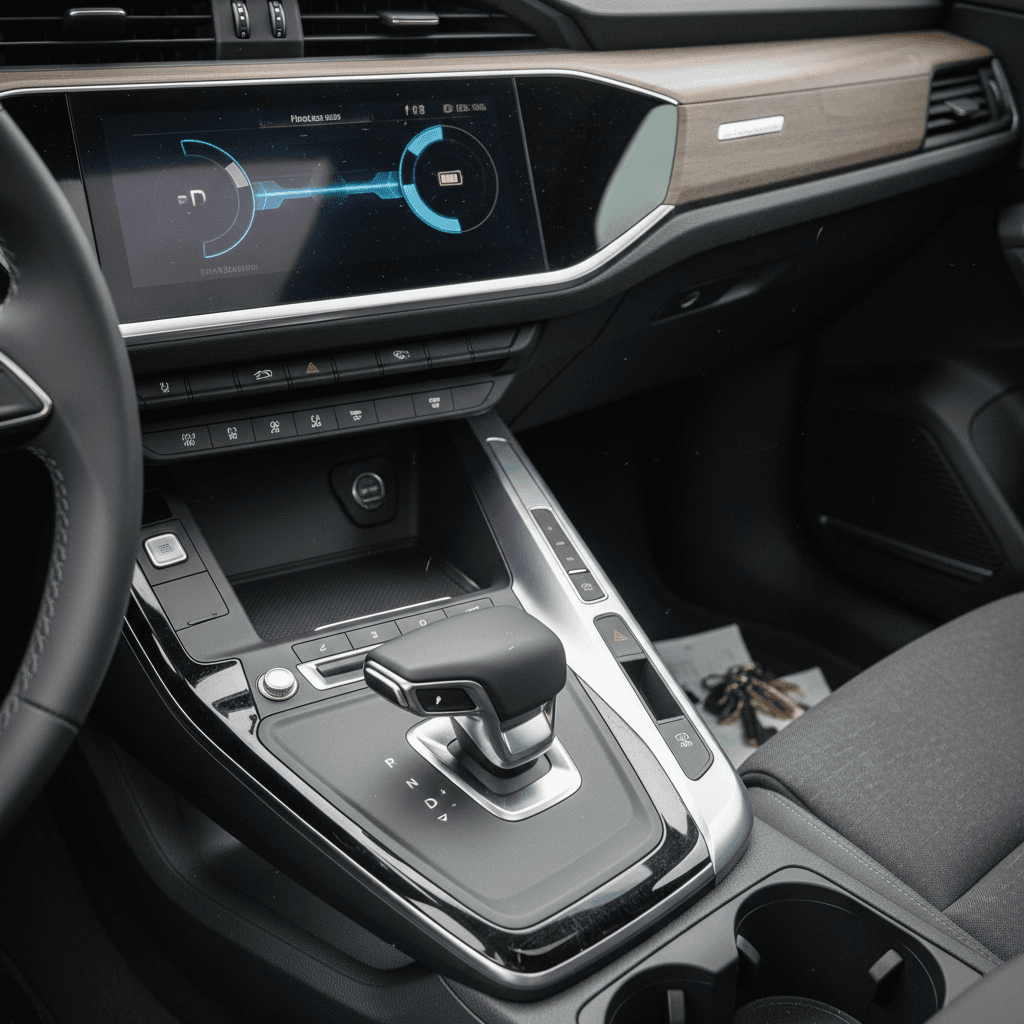
One of the best‑publicized issues on the 2023 Q4 e-tron involves the gear position display in the digital instrument cluster. In certain conditions, the cluster may not show the neutral “N” position clearly enough. That sounds like a small user‑interface quirk, but U.S. safety rules require clear indication of the selected gear to prevent confusion and possible rollaway events.
- Applies to many 2022–2023 Audi Q4 e-tron and Q4 Sportback e-tron vehicles.
- Linked to Volkswagen ID.4 models because they share the same software architecture.
- Addresses non‑compliance with federal standards for gear‑selection indication.
Why it matters
The fix is relatively straightforward: Audi dealers install updated instrument‑cluster software. Your vehicle keeps its original hardware; the update changes how and when the gear position is displayed. In most cases, this is a short dealer visit and is free of charge as part of the recall.
Recall 2: Curtain airbag door-seal damage risk
Another important campaign focuses on the side‑curtain airbags and the door seals around the B‑pillar. Under certain crash conditions where the curtain airbag deploys, the fabric can contact a metal insert inside the door seal. Testing showed that the airbag could tear the seal and potentially expose the metal piece, which might increase the risk of injury to occupants in a crash.
- Covers many 2022 and 2023 Q4 e-tron and Q4 Sportback e-tron models.
- Triggered by internal crash testing where the curtain airbag damaged the seal.
- Fix typically involves adding protective tape or revising the door seal around the B‑pillar.
Good news for owners
Recall 3: Rollaway risk tied to gear display
In early 2025, Volkswagen Group announced another safety campaign combining prior concerns around the instrument cluster and gear indication with a more explicit focus on rollaway risk. Once again, the 2022–2023 Audi Q4 e-tron and Q4 Sportback are swept in alongside VW ID.4 models.
The core issue is similar: if drivers can’t reliably see the selected gear state, they might exit the vehicle without it securely in Park. Audi’s remedy centers on another software update to the cluster and related control units, plus documentation updates needed to satisfy federal regulators.
Simple habit that adds safety
Other software and electrical issues to know about
Because the Q4 e-tron rides on the VW Group MEB platform, it shares quite a bit of software and electronic architecture with the Volkswagen ID.4. Owners have reported glitches, infotainment freezes, warning lights, occasional charging errors, that don’t always rise to the level of a formal NHTSA recall.
Annoying software bugs
- Random warning messages that clear when the car is restarted.
- Occasional lag or crashes in the MMI infotainment system.
- Settings that don’t "stick" after key cycles.
These are often addressed through technical service bulletins (TSBs) or routine software updates, not recalls.
True safety recalls
- Issues that create a clear safety risk or violate U.S. safety standards.
- Formally registered with NHTSA and visible in the VIN recall lookup.
- Repairs must be performed free of charge at franchised dealers.
Don’t confuse small glitches with recall‑level safety campaigns, but do mention both when you’re shopping a used Q4 e-tron.
TSBs vs. recalls
How to check if your 2023 Q4 e-tron has an open recall
Because recall eligibility depends on the exact VIN and build date, the only reliable way to know your status is to run your specific vehicle through official tools. Here’s how to do it in a few minutes.
Step-by-step: Check your 2023 Q4 e-tron for recalls
1. Locate your VIN
You’ll find the 17‑digit VIN at the base of the windshield on the driver’s side, on the driver’s door jamb label, and on your registration or insurance card.
2. Use the NHTSA recall lookup
Go to the official NHTSA recall lookup site and enter your VIN. It will show any <strong>open safety recalls</strong> that haven’t yet been completed on your vehicle.
3. Check Audi’s own recall tool
Audi also offers a VIN lookup on its owner website. This can surface brand‑specific campaigns that may not yet display elsewhere.
4. Call an Audi dealer’s service department
Ask a service advisor to run your VIN. Request a printout or email listing <strong>all completed and open campaigns</strong>, including TSBs if possible.
5. Keep documentation
Whenever a recall is completed, keep the repair order in your records. This matters for <strong>resale value</strong> and for your own peace of mind.
6. Repeat once or twice a year
New recalls can be added years after a car was built. Make recall checks part of your regular ownership routine, especially before long trips.
Pro tip for used‑EV shoppers
What these recalls mean for used Q4 e-tron buyers
A few recalls on a modern EV isn’t unusual, in fact, it’s almost expected with today’s software‑heavy vehicles. For a used‑EV shopper, the real question isn’t "Has this 2023 Q4 e-tron ever been recalled?" but rather, "Have the recalls been handled correctly?"
How recalls affect your buying decision
Think in terms of risk, not headlines.
Safety confidence
If all recall work is documented and complete, you’re buying a Q4 e-tron that’s actually safer than when it left the factory.
Paper trail
Thorough repair records show that previous owners were attentive and proactive. That’s a positive signal in the used market.
Negotiation leverage
If recalls or TSBs are outstanding, you can ask the seller to complete repairs first or adjust the price to reflect your time and hassle.
Because the most prominent 2023 Q4 e-tron recalls focus on software and safety systems, not catastrophic battery or drivetrain failures, the model can still be a very smart used EV buy, provided you confirm that recall and TSB work is up to date and that the high‑voltage battery is healthy.
Where Recharged fits in
Questions to ask the seller or dealer
When you’re standing in front of a used 2023 Q4 e-tron, a few smart questions can quickly separate well‑cared‑for examples from problem children. Use this as your on‑the‑spot script.
Essential questions about recalls and reliability
1. “Have all recalls been completed?”
Ask for <strong>printed service records</strong> or screenshots from Audi’s system confirming that recall campaigns are closed on this VIN.
2. “Any recent software updates?”
Well‑maintained Q4 e-trons often receive periodic <strong>software updates and TSB fixes</strong>. Evidence of these visits is a good sign.
3. “Any history of warning lights or no‑start issues?”
Recurring electrical gremlins, unexplained warning lights, or random no‑start incidents deserve a closer look before you commit.
4. “How is the battery health?”
Ask for real‑world range numbers and, ideally, a <strong>third‑party battery health report</strong>. On Recharged, this is included in the Recharged Score.
5. “Has the car ever been stranded?”
If the owner mentions being towed due to electronic or charging issues, ask for repair orders that show a <strong>clear, permanent fix</strong>.
6. “Can I see the NHTSA report?”
Savvy sellers may have already pulled a NHTSA recall summary. It’s another small signal that you’re dealing with a conscientious owner.
Don’t skip your own homework
How recalls affect resale value and ownership
If you’re already driving a 2023 Audi Q4 e-tron, you might be wondering whether these recalls are quietly eroding the value of your car. The reality is more nuanced, and often less scary, than the headlines suggest.
When recalls don’t hurt value
- Issues are software‑based and fixed quickly.
- Repairs are documented with dealer paperwork.
- The market sees similar recall activity on competing EVs.
In this scenario, your Q4 e-tron can remain price‑competitive with other premium compact EVs.
When recalls can drag on price
- Open recalls remain unaddressed when you go to sell.
- There’s a pattern of repeat visits for the same issue.
- Local buyers have heard about “problem cars” with this model.
Here, finishing all recall work and presenting a clean history file can help recover value.
How Recharged helps sellers
Ready to find your next EV?
Browse VehiclesFAQ: 2023 Audi Q4 e-tron recalls
Frequently asked questions about 2023 Q4 e-tron recalls
Bottom line on 2023 Audi Q4 e-tron recalls
The 2023 Audi Q4 e-tron is part of a highly sophisticated, software‑driven EV platform. With that sophistication comes a predictable reality: recalls and software fixes are part of life, especially in the early model years. For the Q4 e-tron, those recalls have focused on gear‑indicator behavior, rollaway risk, and curtain airbag interaction with door seals, important issues, but ones that can be addressed through dealer campaigns rather than major surgery.
If you’re already an owner, your job is simple: stay current on recall notices, schedule repairs promptly, and keep all paperwork. If you’re shopping used, focus less on how many recalls the 2023 Q4 e-tron has been through and more on whether a specific car has a clean, complete history with a healthy battery and up‑to‑date software. That’s exactly the kind of transparency Recharged is built to provide, with battery‑health diagnostics, recall and service insight, financing, trade‑in options, and even nationwide delivery when you find the right EV for your driveway.