If you’re shopping for an EV charger, you’ll quickly discover that “electric car charger suppliers” covers a lot more than just a box on the wall. Between hardware manufacturers, software platforms, network operators, and installers, it’s easy to get lost, and to overpay or choose equipment that doesn’t fit your needs.
Quick definition
Why electric car charger suppliers matter in 2025
EV charging supply is scaling fast
Underneath those big numbers is a simple reality: your choice of charger supplier directly shapes your day‑to‑day EV experience. A good supplier means predictable charging speeds, transparent pricing, usable apps, and support when something breaks. A bad supplier can mean unreliable hardware, confusing billing, and stranded drivers.
Hidden risk
The four types of electric car charger suppliers
Know which type of supplier you’re dealing with
Most real‑world projects combine at least two of these.
1. Hardware OEMs
These companies design and manufacture the physical chargers, wallboxes, pedestals, or DC cabinets.
- Examples: ABB, Siemens, Delta, BTC Power, Wallbox, Enphase
- Sell via distributors, installers, or directly to businesses.
- Key value: electrical safety, reliability, certifications.
2. Software platform providers
They supply the cloud platform that controls charging, handles payments, and surfaces data.
- Examples: ChargePoint, EV Connect, Shell Recharge Solutions
- Often hardware‑agnostic (OCPP compliant).
- Key value: uptime monitoring, billing, user access control.
3. Charging networks (CPOs)
Charge point operators own or operate public or semi‑public stations.
- Examples: Tesla Supercharger, Electrify America, EVgo, bp pulse, Flo
- Monetize via per‑kWh or per‑minute charging fees.
- Key value: coverage, reliability, roaming.
4. Installers & EPCs
Electrical contractors and engineering firms that design, permit, and install hardware.
- Examples: regional electrical contractors, design‑build firms.
- May bundle hardware and software from preferred suppliers.
- Key value: safe installation, local code compliance.
Understanding these categories helps you ask sharper questions. When someone pitches you a “turnkey charger solution,” you can unpack which parts they truly control and which pieces they’re reselling from other electric car charger suppliers.
Leading home EV charger suppliers (Level 2)
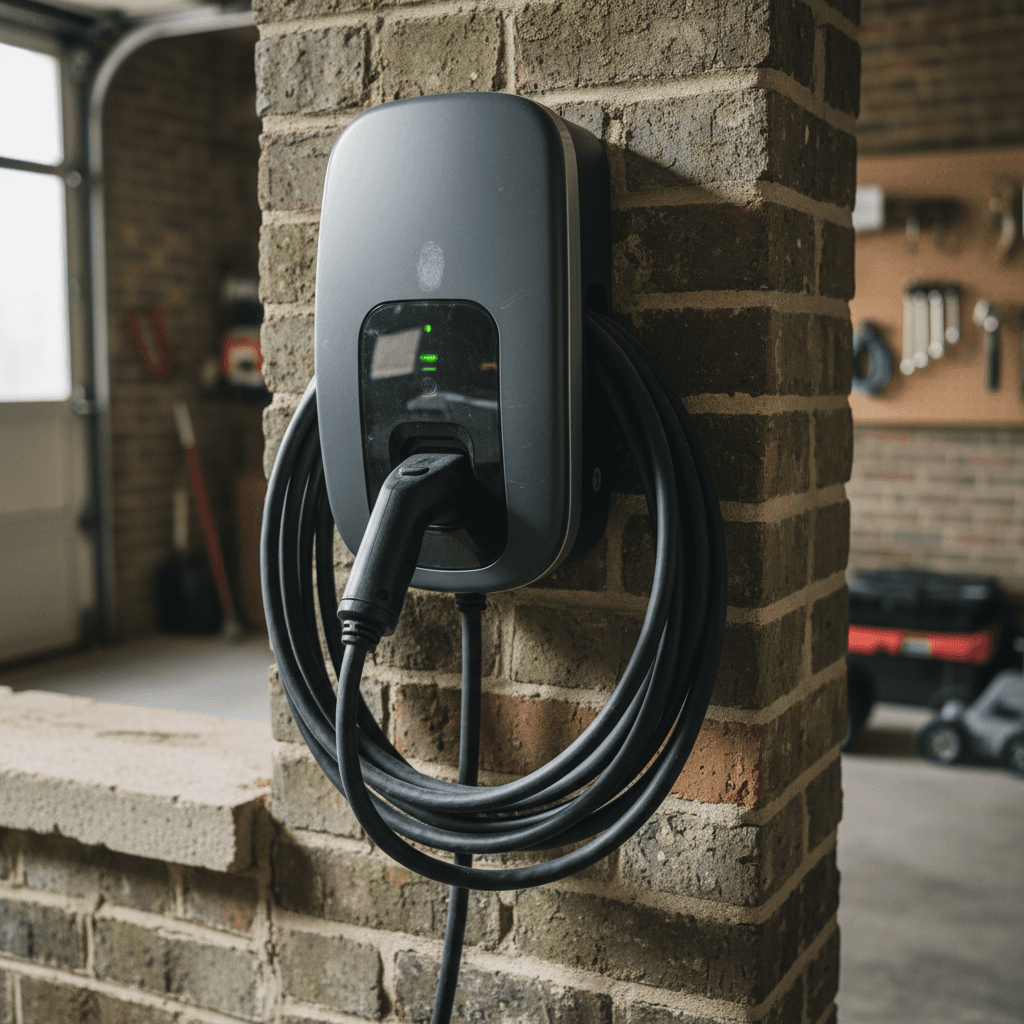
For most individual drivers, the most important electric car charger supplier is the one that powers your home. That usually means a 240‑volt Level 2 wallbox rated between 32 and 48 amps, adding roughly 20–40 miles of range per hour depending on your vehicle.
Representative home Level 2 charger brands
These are examples of well‑known suppliers active in the U.S. home charging market in 2025. Always confirm current compatibility and pricing.
| Brand | Typical Use Case | Max Amps | Smart Features | Notes |
|---|---|---|---|---|
| ChargePoint Home Flex | Flexible home install | 50A | Wi‑Fi, app, scheduling | Backed by a large public‑charging network brand. |
| Wallbox Pulsar Plus | Compact home charger | 40–48A | App, load management | Small footprint, popular with solar homes. |
| Enphase / Qcells / Solar‑linked brands | Solar‑integrated homes | 32–50A | Solar optimization, app | Good if you already have their inverter or storage. |
| Tesla Wall Connector | Tesla‑heavy households | 48A | App (through vehicle), load sharing | Great for Tesla‑only homes; NACS plug standard. |
| Emporia / Grizzl‑E / generic OCPP units | Budget‑conscious buyers | 32–48A | Varies by model | Often cheaper, but support quality varies. |
Brand selection evolves quickly; use this as a starting point, not a final shopping list.
Match the charger to your panel and car
- Amperage & circuit size: 40A chargers typically require a 50A breaker; 48A units often need a 60A breaker.
- Connector standard: In North America, NACS (Tesla plug) is rapidly becoming standard, but many existing chargers still use J1772. Make sure your cable matches your vehicles, or budget for adapters.
- Smart vs dumb: Smart chargers cost more, but let you schedule off‑peak charging, monitor energy use, and sometimes participate in utility programs that pay you to shift load.
Safety first
Commercial and DC fast charger suppliers
If you’re planning charging for a business, multi‑family property, or fleet, you’ll deal with a different set of electric car charger suppliers. The hardware is bigger, the stakes are higher, and the decision lasts a decade or more.
Key commercial & DC fast charger supplier groups
Most projects blend a hardware OEM with a software/network provider.
Hardware OEMs
Design and build the stations themselves.
- Examples: ABB, Siemens, Delta, BTC Power, Tritium
- Offer modular power stacks, liquid‑cooled cables, and multi‑standard connectors.
Software & CPO platforms
Provide the brains and business layer.
- Examples: ChargePoint, EVgo, Electrify America’s platform, Shell Recharge Solutions
- Manage access control, billing, diagnostics, and roaming.
Turnkey developers
Deliver “charging‑as‑a‑service.”
- Examples: regional EPCs, oil & convenience store partners, utility‑backed programs.
- They may own the assets or lease them to you.
At DC fast‑charging power levels, 150 kW and up, quality gaps between suppliers become very obvious. Differences in cooling, cable design, and power module architecture show up in uptime statistics and service costs. When you choose a supplier here, you’re really buying a 10‑year relationship, not just steel and silicon.
Look for OCPP and open standards
How to evaluate electric car charger suppliers
1. Technical fit
- Connector support: Does the hardware support the plugs you need today (CCS, NACS, J1772) and the ones you’ll need over the next 5–10 years?
- Power levels: Is the unit sized to your vehicles and electrical service, or is the supplier overselling kW you can’t actually use?
- Grid constraints: Can the system manage load across multiple chargers to avoid demand charges or breaker trips?
- Vehicle interoperability: Has the supplier tested with the brands in your fleet, Tesla, Ford, GM, Hyundai, Rivian, etc.?
2. Reliability & uptime
- Published uptime: Serious commercial suppliers track and share uptime metrics, not just marketing claims.
- Remote monitoring: Can they diagnose and reboot chargers remotely before rolling a truck?
- Spare‑parts logistics: Are common failure parts stocked regionally, or shipped from overseas with multi‑week delays?
- Service level agreements: For businesses, ask for written SLAs with response and resolution targets.
Practical supplier evaluation checklist
Ask for a live demo, not just a brochure
Have the supplier walk you through a live charger session, firmware update, and remote reboot on their platform. You’ll learn more in 15 minutes of real clicks than in any slide deck.
Verify certifications and incentives eligibility
Confirm UL/ETL listings, utility program eligibility, and whether the product qualifies for federal, state, or local incentives. Many rebates require using approved electric car charger suppliers.
Demand a clear upgrade path
Ask how firmware updates are delivered, whether the unit can be re‑connectorized (for example, to NACS), and what happens when 4G/5G modems become obsolete.
Check references in your exact use case
If you’re deploying workplace chargers, speak to at least one existing customer with a similar setup using the same hardware and software combination.
Map total cost of ownership
Look beyond list price: include installation, networking fees, software subscriptions, maintenance contracts, and expected hardware life.
Red‑flag question
Pricing, warranties, and total cost of ownership
One of the biggest mistakes buyers make with electric car charger suppliers is treating them like commodity hardware vendors. In reality, the sticker price of the charger is often only a minority of your cost over the product’s life.
Key cost components when comparing suppliers
Use this table as a framework when you compare quotes from different charger suppliers.
| Cost Category | Home Level 2 | Commercial Level 2 | DC Fast Charging |
|---|---|---|---|
| Hardware unit | $400–$900 | $1,500–$4,000 | $40,000–$150,000+ per port |
| Installation | $300–$2,000+ | $2,000–$10,000 per site | $50,000–$250,000+ per site |
| Networking & software | Often $0–$10/mo | $5–$25/port/mo | $20–$80/port/mo |
| Maintenance & service | Minimal; ad‑hoc | Annual service optional | Critical; budget % of capex annually |
| Energy & demand charges | Residential tariffs | Commercial tariffs; demand risk | High demand‑charge exposure without smart controls |
Total cost of ownership (TCO) matters more than upfront discounting.
Don’t ignore warranties
- Clarify who owns the data and customer relationship if you’re running public chargers.
- Model worst‑case demand charge scenarios for DC fast charging if you’re on commercial tariffs.
- Where possible, use suppliers that support remote firmware updates so fixes don’t require site visits.
Supplier checklist for homeowners, businesses, and fleets
Different buyers, different ideal suppliers
Homeowners
Prioritize UL‑listed Level 2 chargers from reputable brands with at least a 3‑year warranty.
Check your panel capacity before shopping high‑amp units; sometimes a 32A charger plus a panel upgrade later is smarter than forcing 48A onto a stressed system.
Choose NACS if your driveway is Tesla‑heavy and your next EV is likely to support NACS; otherwise ensure robust adapter options.
Look for simple, reliable apps, scheduling, usage tracking, and firmware updates are enough for most households.
Workplaces & multifamily properties
Favor OCPP‑compliant hardware so you’re not locked into a single software vendor.
Choose suppliers with proven access‑control options: RFID cards, app‑based access, or integration with your building systems.
Ask about load management so you can add more ports over time without immediately upgrading your service connection.
Clarify how guests, residents, and employees will be billed, and who sets pricing rules.
Fleets & logistics
Start with route and duty‑cycle modeling, then size charger power and quantity accordingly.
Favor suppliers with strong telematics and fleet‑management integrations, charging data should feed into your existing tools.
Plan for redundancy: one failed DC charger shouldn’t strand your operation.
Consider “charging‑as‑a‑service” models where a supplier builds and operates the site for a predictable monthly fee.
Beware of over‑promising pilots
Where Recharged fits into your charging journey
Recharged isn’t a charger manufacturer, we’re focused on making EV ownership simple and transparent when you’re buying or selling a used EV. But because charging is such a big part of the ownership experience, our EV specialists spend a lot of time helping customers make sense of electric car charger suppliers and installation options.
- Every vehicle on Recharged comes with a Recharged Score Report so you understand real‑world battery health before you invest in home or workplace charging.
- During your purchase, our team can help you decide whether a Level 1, Level 2, or nearby public charging mix makes the most sense for your driving pattern.
- If you’re planning to add workplace or fleet charging alongside a used EV purchase, our experts can help you ask the right questions of local installers and equipment suppliers.
- Because the entire buying experience is digital, with optional delivery and trade‑in support, you can plan your charging setup in parallel instead of figuring it out after the fact.
Bringing it together
Ready to find your next EV?
Browse VehiclesFAQ: Electric car charger suppliers
Frequently asked questions
Electric car charger suppliers are no longer a niche concern, they’re one of the most important links in the EV value chain. Whether you’re installing a single home wallbox or planning a multi‑site DC fast‑charging rollout, the supplier you choose will shape your costs, reliability, and driver experience for years. Take the time to understand which type of supplier you’re dealing with, demand transparency on uptime and support, and think in terms of total cost of ownership rather than up‑front discounts. And if you’re still at the stage of picking the right used EV, letting Recharged help you align the car, the battery, and the charging plan will make every decision that follows a lot easier.