If you’re eyeing a used Tesla Model Y, you’re probably wondering what these cars are really like after about two years of daily driving. Do the batteries still hold up? Are repair bills ugly? Does the minimalist interior still feel special, or just spartan? Let’s walk through a long‑term, owner‑style review based on real‑world data and what we see every day in the used‑EV market.
Why two years matters
Tesla Model Y after 2 years: at a glance
Typical 2‑year Tesla Model Y snapshot
Think of this as the owner report card at the 24‑month mark. Overall, the Tesla Model Y still feels modern, quick, and efficient. The battery is usually in good shape, the software is more capable than when the car was new, and most owners haven’t touched the brake pads. The main downsides by year two are tire wear, insurance costs, and occasional build‑quality gremlins rather than catastrophic mechanical failures.
What a “typical” 2‑year-old Model Y looks like
Odometer & usage
- 20,000–35,000 miles is common at two years for U.S. drivers.
- City commuters may be closer to 15,000–20,000; road‑warriors can be well over 40,000.
- Plenty of cars have mostly home charging with a handful of Supercharger road trips each year.
Condition & wear
- Interior materials generally hold up well, minimal wear on seats and steering wheel if cared for.
- Expect curb rash on the 20" or 21" wheels, especially Performance models.
- Paint chips on the nose and hood are common; panel gaps are mostly a cosmetic complaint, not a functional issue, on later builds.
Where Recharged fits in
Battery health & range after two years
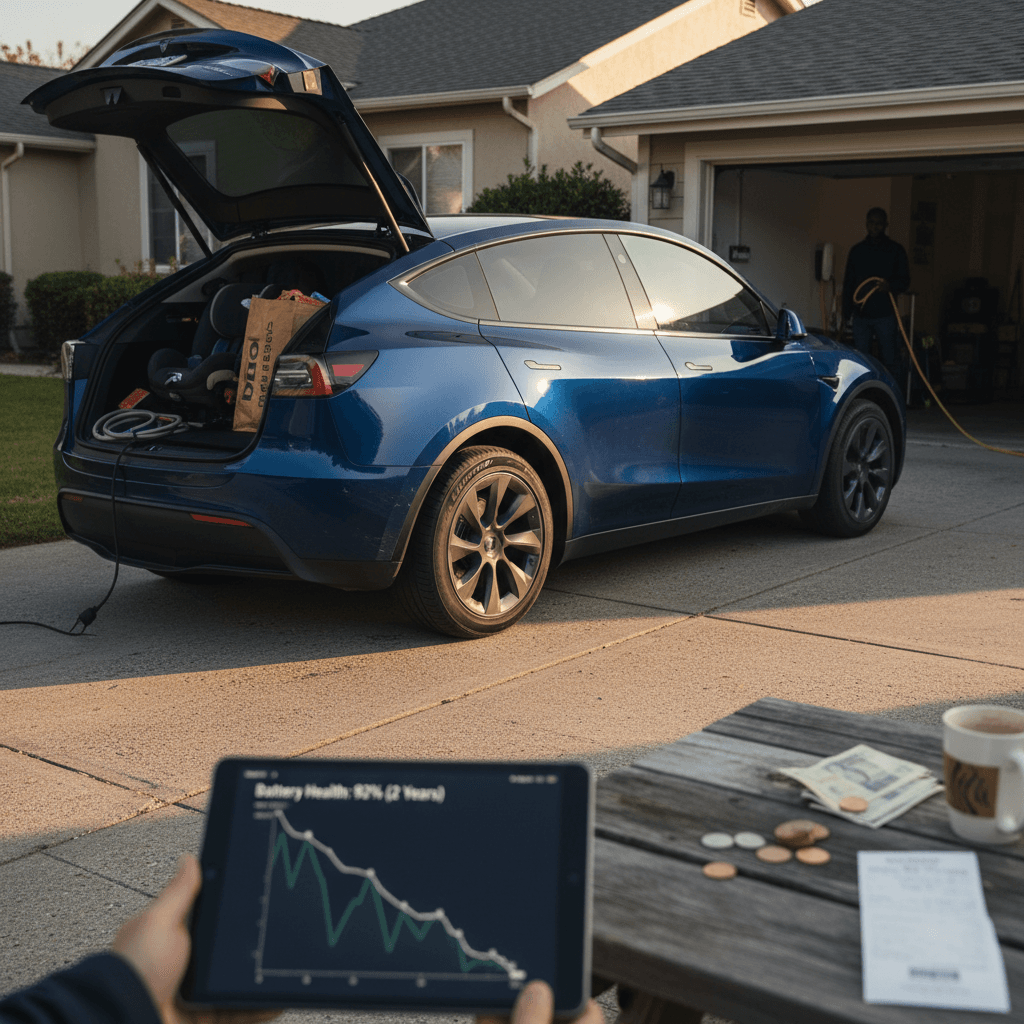
Battery anxiety is usually the first question. The good news: real‑world data from thousands of Teslas shows that the first 1–2 years bring a small but noticeable drop in range, then the curve tends to flatten out. For Model Y, that early dip is typically in the single digits as a percentage, annoying on paper, but rarely a deal‑breaker in daily life.
- Most owners see roughly 5–10% capacity loss in the first 50,000–60,000 miles, which often corresponds to the first 2–3 years.
- Plenty of 2‑year‑old Model Ys with 20,000–40,000 miles report around 88–93% battery retention after running Tesla’s built‑in battery test.
- Higher degradation (say 12–15% by year two) usually tracks with hot climates, frequent fast charging, or very high mileage.
Hot‑climate caution
Realistic range from a 2‑year‑old Model Y
What you can expect today vs. the original EPA rating
Long Range AWD
Originally rated around 330 miles (depending on year and wheel size). After two years with ~8% degradation, expect something closer to 300–305 miles on a full charge in mild weather.
Performance
EPA ratings hover in the low‑300‑mile range. A modest 5–8% drop still leaves you with roughly 280–295 miles of indicated range when new and healthy.
Standard Range / RWD
These cars start lower, often in the mid‑200s. After two years, you might see an indicated 230–240 miles at 100% if the pack has been well cared for.
Battery‑friendly charging habits
Charging experience: home, public, and road trips
By year two, most owners have settled into a rhythm: plug in at home, wake up with a full “tank,” and only think about charging on road trips. That’s where the Model Y shines.
How 2‑year owners typically charge
What it feels like to live with day to day
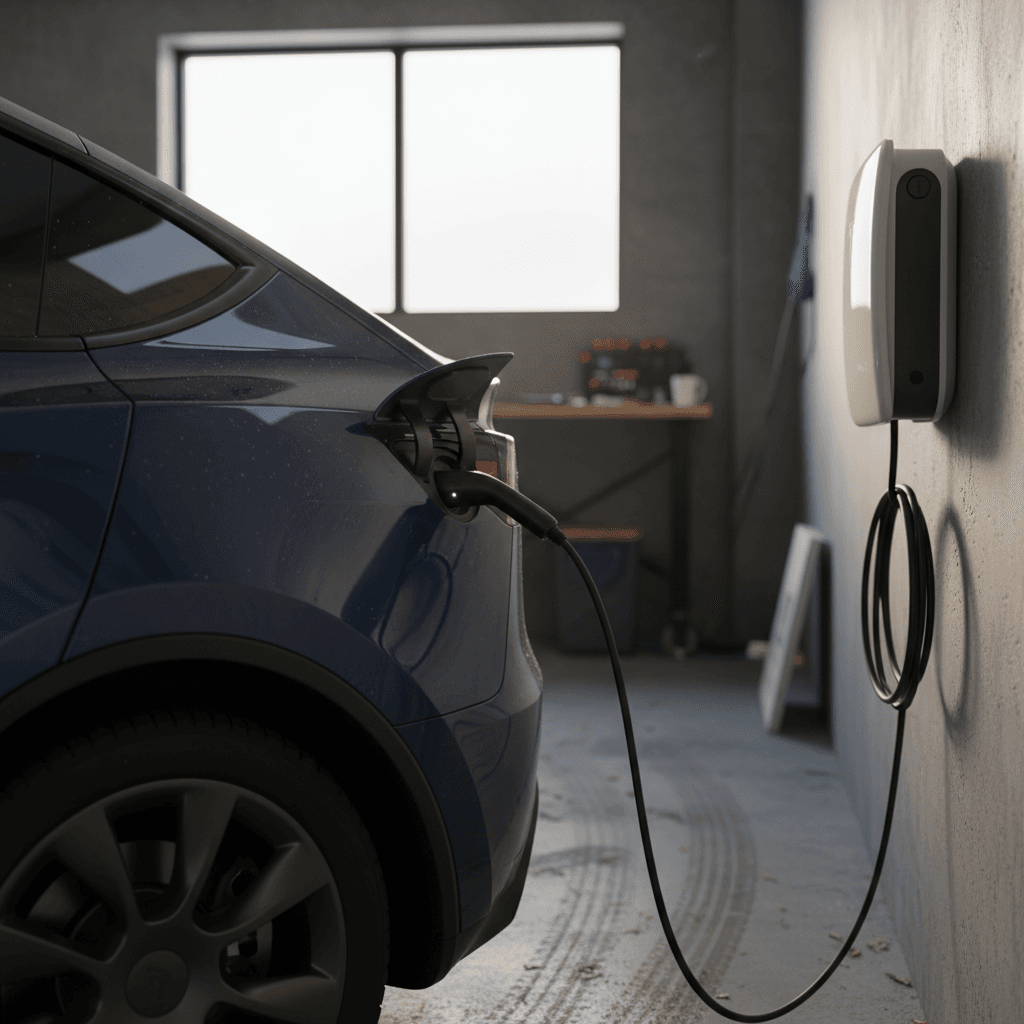
Home Level 2 (240V)
This is the sweet spot. A 32–48A Level 2 charger adds 25–40 miles of range per hour, so even a nearly empty battery is full by morning.
Most owners say home charging is the #1 reason they’d never go back to gas.
Public Level 2
By year two, this becomes background noise for most owners, nice to have at work or shopping centers, but rarely essential if home charging is available.
Supercharging on road trips
It’s entirely normal by year two to have taken several road trips. With today’s Supercharger and third‑party fast‑charging networks, a Model Y is a comfortable road‑trip family hauler, though winter and headwinds still eat range.
Non‑Tesla charging is getting easier
Real‑world costs: maintenance, insurance & electricity
Two years in, the Model Y’s running‑cost story is mostly about tires and insurance. The car itself doesn’t ask for much: no oil changes, no transmission fluid, no timing belts. But it is heavy, powerful, and quick, great for smiles, not so great for tire life.
Typical annual costs for a 2‑year‑old Tesla Model Y
Approximate U.S. averages for a driver covering around 12,000 miles per year.
| Category | What to Expect by Year Two | Approximate Annual Cost |
|---|---|---|
| Routine maintenance | Tire rotations, cabin air filter every 2 years, brake service in salty climates | $400–$600 |
| Tires | High‑grip EV tires often last 25,000–35,000 miles depending on driving style | $600–$1,200 when they’re due |
| Insurance | Full coverage in the U.S. often runs higher than a comparable gas crossover | $2,500–$3,200 |
| Electricity | Home charging at average residential rates for 12,000 miles/year | $450–$650 |
| Unexpected repairs | Most owners report few major repairs by year two; small trim or sensor issues are more typical | Highly variable; often $0–$500 |
Your costs will vary with driving style, where you live, and electricity rates, but this gives a realistic ballpark.
Where EVs quietly save you money
The ownership math after two years usually looks like this: you pay more up front and in insurance than a conventional compact SUV, but you claw back a lot of that in lower running costs and a quieter mechanical life, especially if you drive more than average or have high local gasoline prices.
Comfort, interior space & family duty
The Model Y was designed as a do‑everything crossover, and that’s how owners use it. Two years on, most complaints aren’t about space or power, they’re about ride quality and interior minimalism.
How the Model Y holds up as a family car
Two years with kids, pets, and Costco runs
Space & practicality
- Huge hatch opening and a deep under‑floor well make the Model Y feel bigger than its footprint.
- Plenty of room for rear‑facing car seats; the flat floor helps with kiddo foot room.
- With seats folded, it swallows bikes, strollers, and flat‑pack furniture without drama.
Ride & noise
- Later‑build cars are generally quieter and better screwed together, but the ride can still feel firm and busy on rough pavement.
- Owners coming from German luxury brands often notice more road noise and less cabin isolation.
- On smooth highway, it’s a relaxed, quiet cruiser; broken city streets are where the suspension feels least polished.
Try before you buy, especially for ride quality
Reliability and common issues by year two
EVs eliminate entire categories of trouble, no engine, no traditional transmission, but Teslas are not issue‑free. Two years in, you’re far more likely to see annoyances than breakdowns, especially if recall work and software updates have been kept up to date.
- Early build quality quirks: panel alignment, wind noise from door seals, and minor trim rattles crop up in owner reports, though most are fixable under warranty.
- Door handles, latches, and windows: a handful of owners see issues with window indexing or handles, usually corrected by service visits or software updates.
- Sensors and cameras: occasional phantom warnings, park‑assist quirks, or camera calibration needs, especially after glass replacement.
- Tires and alignment: feathered tire wear or inner‑edge wear can show up early if alignment isn’t perfect, worth checking on any used example.
- Recalls and service campaigns: like all modern cars, the Model Y has seen its share of recalls, some fixed via over‑the‑air software, others requiring a service visit. Make sure any used car you’re eyeing is current on these.
Service is mostly app‑based
Software, Autopilot & everyday usability
One of the Model Y’s biggest strengths over two years is that it often feels more capable than when it was new. Over‑the‑air updates quietly add features, tweak driving behavior, and refine the interface. The flip side is that you’re living with a car that changes its personality a bit over time.
What owners like by year two
- The giant center screen rarely feels dated; it’s fast, bright, and responsive.
- Route planning with built‑in charging stops makes long trips almost idiot‑proof.
- Autopilot on the highway removes a lot of fatigue, especially in stop‑and‑go traffic.
- New features, improved visualizations, better voice commands, small interface tweaks, just appear over time.
What frustrates some owners
- Changes to Autopilot behavior or user‑interface elements can arrive overnight, not always in ways you’d choose.
- Some owners miss physical buttons for basic functions like wipers or drive‑mode selection.
- Phone‑as‑key is great… until your phone battery dies or the app misbehaves.
Is a 2‑year‑old Model Y a good used buy?
In most cases, yes, a 2‑year‑old Tesla Model Y is a very compelling used EV, especially if you value low running costs and a modern tech experience over cushy ride quality and rich interior materials.
Pros and cons of a 2‑year‑old Model Y
What long‑term owners love, and what they tolerate
What’s great by year two
- Battery is usually in excellent health with years of warranty remaining.
- Charging at home turns daily driving into a non‑event.
- Software and driver‑assist features are more capable than day one.
- Strong performance, especially in Dual Motor and Performance trims.
- Huge cargo space and flexible interior for family or hobby duty.
What might bug you
- Firm ride and road noise on rough surfaces.
- Insurance costs that often outpace comparable gas crossovers.
- Tire wear if you enjoy that instant torque a little too often.
- Sporadic fit‑and‑finish complaints and small rattles.
- Living inside an ever‑changing software ecosystem you don’t fully control.
Why a used Model Y from Recharged is different
Checklist: what to check on a 2‑year‑old Model Y
Essential checks before you buy a 2‑year‑old Model Y
1. Verify battery health and range
Ask for recent battery health data or a full diagnostic. On a roughly 2‑year‑old Model Y, you want to see <strong>high‑80s to low‑90s percent capacity</strong> in most climates and use cases, plus a consistent history of software updates.
2. Review charging history
Cars that lived almost exclusively on DC fast charging or in extreme heat deserve extra scrutiny. Look for a mix of home Level 2 charging and occasional Supercharging, plus no warning messages related to the high‑voltage system.
3. Inspect tires, brakes & alignment
Check for uneven tire wear, especially inner‑edge wear on the rears. A two‑year car shouldn’t need brakes yet under normal driving, but make sure there’s plenty of pad left and no pulsing or grinding when stopping.
4. Look and listen for build‑quality issues
Drive the car over rough pavement with the radio off. Listen for rattles, buzzing from the dash, or wind noise around the mirrors and door seals. Check panel alignment, door closing effort, and glass for chips or distortion.
5. Confirm warranty and recall status
A 2‑year‑old Model Y should still have <strong>substantial factory warranty</strong> left on both the vehicle and battery. Verify recall completion and open service campaigns through Tesla or a trusted EV specialist.
6. Test all tech and driver‑assist features
Make sure Autopilot engages reliably, cameras and sensors are free of faults, Bluetooth and phone‑as‑key work smoothly, and basic controls like wipers, climate, and seat heaters respond quickly from the screen.
7. Match the car to your lifestyle
If you regularly drive on broken city streets or very long, cold‑weather highway trips, take a thorough test drive in those conditions. Make sure the ride, seats, and real‑world range are a fit, not just impressive in the spec sheet.
FAQ: Tesla Model Y after two years of ownership
Frequently asked questions about 2‑year‑old Model Ys
Bottom line: who the Model Y really suits after two years
After two years, the Tesla Model Y has largely proven what early owners suspected: it’s an efficient, fast, and practical electric crossover whose biggest strengths are its powertrain and software, not its plushness. If you value quiet mechanical life, low running costs, and one‑pedal driving more than creamy ride quality and deep‑pile carpeting, a 2‑year‑old Model Y is a very smart place to be.
The key is to buy the right example: one with healthy battery metrics, even tire wear, clean history, and current software and recall work. That’s exactly what platforms like Recharged are built for. With a Recharged Score Report, expert EV guidance, and options for financing, trade‑in, and nationwide delivery, stepping into a used Model Y can feel less like a gamble and more like what it should be: a confident, modern upgrade to your everyday drive.