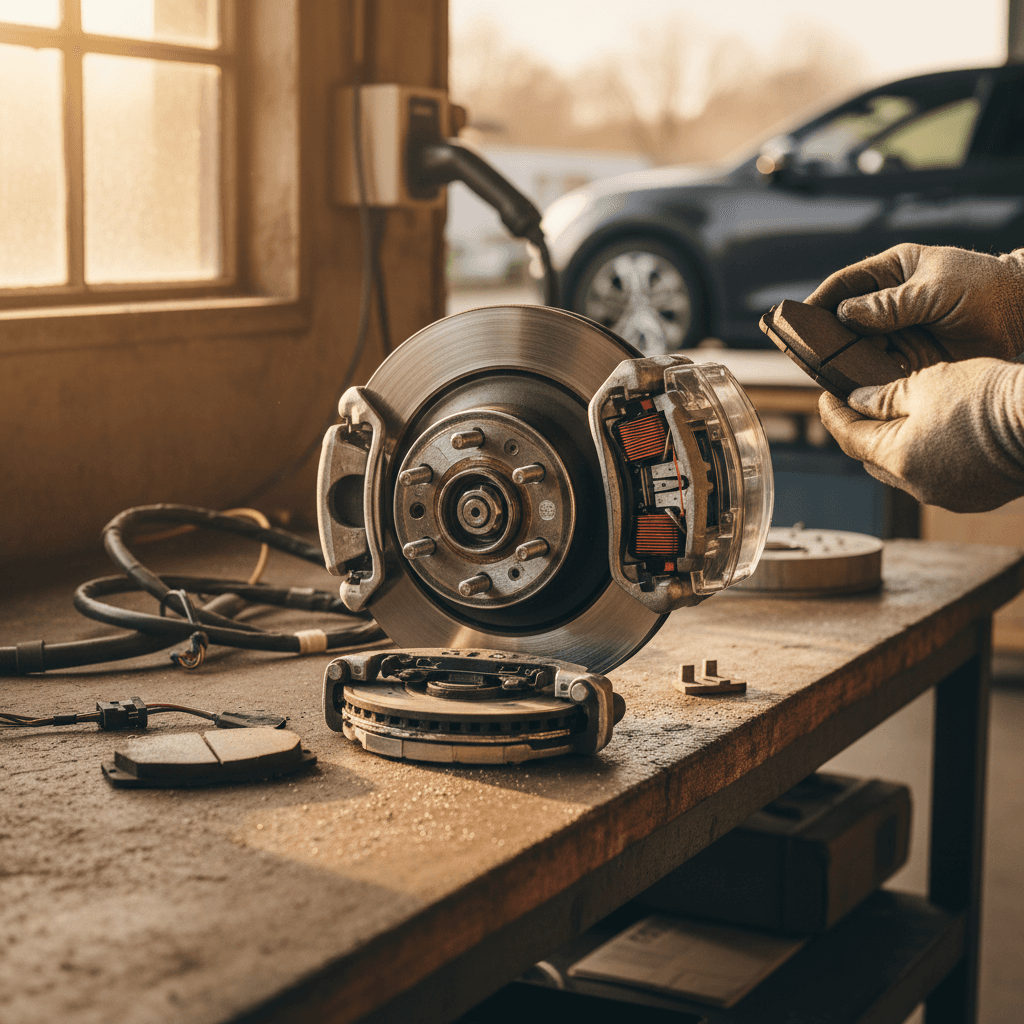
An electric car braking system looks familiar on the outside, there’s still a brake pedal, pads, rotors, and fluid, but under the skin it works very differently from a gasoline car. Electric vehicles blend powerful regenerative braking from the drive motor with conventional friction brakes, which changes how the car slows down, how often you service the brakes, and what you should look for when you buy a used EV.
Big picture
How an electric car braking system is different
Gas car braking 101
In a gasoline car, pressing the brake pedal sends hydraulic pressure to calipers at each wheel. The pads clamp the spinning rotor, converting kinetic energy into heat. All of the energy you used to get the car moving is simply wasted as hot brakes.
- Single system: hydraulic friction brakes do all the work
- More heat, more wear, more frequent pad and rotor replacements
- Brake feel is consistent but energy is never recovered
Electric car braking 101
In an EV, there are effectively two braking systems working together:
- Regenerative braking: the drive motor acts as a generator and feeds power back into the battery.
- Friction braking: conventional pads and rotors step in when you need stronger or emergency braking, or when the battery can’t accept more charge.
The car’s software blends the two so you feel a smooth, predictable stop while the vehicle maximizes energy recovery in the background.
Why EV braking is such a big deal
Think of it like engine braking, on steroids
Regenerative braking explained step by step
The heart of any modern electric car braking system is regenerative braking. It uses the same electric motor that drives the wheels to slow the car down, and in the process it recovers energy that would otherwise be wasted.
- You lift off the accelerator. In many EVs, regen begins the moment you ease off the pedal, even before you touch the brake.
- The motor becomes a generator. The control electronics reverse how the motor is used, so the spinning wheels turn the motor and produce electricity instead of consuming it.
- Electrical resistance creates drag. As the motor generates power, it resists turning. That resistance feels like strong engine braking and slows the wheels.
- Recovered energy flows into the battery. The current goes through the power electronics and into the high‑voltage battery pack, topping it up by a small amount each time.
- Friction brakes blend in as needed. If you brake harder than regen alone can handle, or the battery is full, the system adds conventional hydraulic braking to finish the job.
Regen can’t do everything
Why EVs still need traditional friction brakes
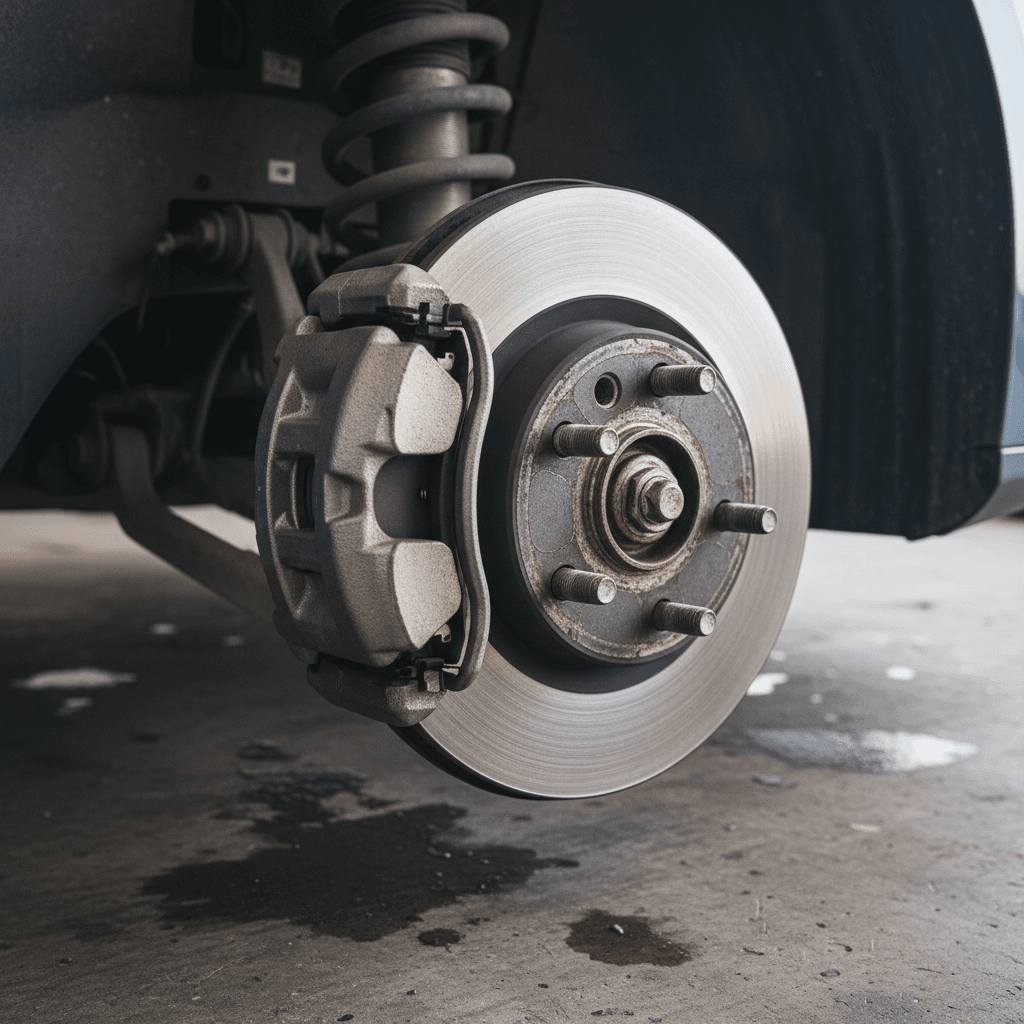
Despite the tech headlines, an electric car braking system is still built around a familiar hydraulic setup. Regenerative braking is the first line of defense, but friction brakes remain the safety net that guarantees consistent stopping in any situation.
What friction brakes handle in an EV
Regen handles everyday slowing; friction brakes handle the edge cases.
Emergency stops
Long downhill grades
Low speeds & low grip
Don’t ignore your friction brakes just because you drive an EV
How much range regenerative braking can really save
No, regenerative braking doesn’t create free energy, but it does claw back a meaningful share of what you’d otherwise lose every time you slow down. The exact benefit depends on your route, driving style, and vehicle, but there are some practical ranges you can expect.
Real‑world impact of regenerative braking
Approximate range benefit you can expect from regen in different driving conditions, assuming typical modern EVs with adjustable regen settings.
| Driving environment | Typical regen benefit | What that looks like in practice |
|---|---|---|
| Stop‑and‑go city | 10–20% extra range | A 250‑mile rated EV might realistically see 25–50 miles of additional effective range over a day of urban driving. |
| Mixed suburban | 5–10% extra range | Plenty of start‑and‑stop, but also steady cruising, so regen plays a smaller role overall. |
| Mostly highway | 0–5% extra range | Highways involve fewer hard stops, so there’s less kinetic energy available to recapture. Aerodynamics matter more here than regen. |
These are broad, real‑world estimates, your results will vary by model, temperature, and driving style.
How to maximize regen in daily driving
Brake feel, modes, and one-pedal driving
If you’re coming from a gas car, the way an electric car braking system feels can be surprising at first. The car might start slowing the moment you release the accelerator, and some models let you drive almost entirely with one pedal in city traffic.
- Normal or low regen: Coasting feels similar to a gas car in gear. You’ll use the brake pedal more often, and regen is gentler.
- High or max regen: Lifting off the accelerator produces strong deceleration. In many EVs, this enables "one‑pedal driving" down to a near stop.
- Blended braking: When you push the pedal, the car’s control system first dials up regen, then layers in friction braking seamlessly as needed.
- Drive modes: Eco, Normal, and Sport modes often change regen strength as well as throttle response. Eco usually emphasizes stronger regen for efficiency.
Give yourself a learning curve
Maintenance: EV brakes vs. gas-car brakes
One of the unsung advantages of an electric car braking system is lower maintenance. Because regen handles so much day‑to‑day slowing, pads and rotors wear far more slowly than they do on comparable gasoline vehicles.
Typical brake maintenance intervals
Exact numbers vary by brand, but the pattern is clear: EV brakes work less, last longer.
Gasoline cars
- Brake pads often replaced every 25,000–35,000 miles on heavier or city‑driven vehicles.
- Rotors frequently resurfaced or replaced with the pads.
- Brake fluid change typically every 2–3 years.
Electric vehicles
- Pad life of 50,000–70,000 miles is common; some owners see 100,000+ miles before the first brake job.
- Rotors wear more slowly but are more prone to rust if not exercised.
- Brake fluid age limits still apply, most manufacturers recommend a change around every 3–5 years.
Where the savings show up
Common EV brake issues and how to avoid them
Regen is a win for efficiency and maintenance, but it changes how friction brakes age. Because the pads and rotors are used less often, they don’t self‑clean as effectively. That opens the door to a few EV‑specific brake issues you should know about.
Watch for these EV brake problems
1. Rotor rust and pitting
Light surface rust after a rainstorm is normal and usually clears the next time you use the brakes hard. But on EVs that rely heavily on regen, rotors can stay rusty longer and eventually pit. Occasional firm stops in a safe area can help scrub them clean.
2. Sticking calipers or sliders
Less frequent motion means caliper pins and slides can seize if moisture and salt get involved. Regular inspections and lubrication during tire rotations go a long way toward preventing this.
3. Uneven pad wear or glazing
Pads that rarely get hot can glaze over or wear unevenly, causing squeaks or reduced bite when friction brakes are needed most. If you notice noise or a pulsing pedal, get things checked sooner rather than later.
4. Old brake fluid
Brake fluid still absorbs moisture over time, which can lower boiling point and corrode internal components. Follow your EV’s time‑based fluid change interval even if mileage is low.
City commuters: you’re most at risk for rusty brakes
Buying a used EV? Brake system checklist
If you’re shopping the used market, especially through a digital retailer like Recharged, understanding how an electric car braking system ages will help you separate the well‑maintained cars from the ones that have only seen software updates and fast charges.
Used EV brake inspection checklist
1. Visual rotor inspection
Look through the wheels or ask for photos of the rotors. Light, even surface rust is fine. Deep grooves, heavy scaling, or flaky rust around the edges can signal neglect and future costs.
2. Pad thickness and condition
Ask for a measurement or service record. On many EVs, original pads can still be healthy beyond 60,000 miles, but they shouldn’t be cracked, glazed, or worn unevenly.
3. Test drive brake feel
During the drive, pay attention to the transition from regen to friction. You want a smooth, predictable pedal with no grabbing, pulsing, or loud squeals when you brake more firmly.
4. Check service history
Look for recorded brake fluid changes and at least periodic brake inspections. A car that went 5–6 years with no documented brake service at all deserves a closer look.
5. Ask how the car was driven
Highway‑heavy miles are kinder to brakes than endless stop‑and‑go plus winter road salt. If possible, talk to the previous owner or seller about typical use.
6. Lean on third‑party diagnostics
With Recharged, every used EV comes with a Recharged Score report that includes verified battery health and condition notes from a specialist inspection, brakes included, so you’re not guessing about hidden wear.
How Recharged helps here
Electric car braking system FAQ
Frequently asked questions about EV braking
Key takeaways for everyday drivers
An electric car braking system gives you something gas cars never could: the ability to turn slowing down into usable energy. Regenerative braking extends range and stretches brake life, while conventional pads and rotors remain on call for hard stops and low‑speed control. As an owner, your job is to understand the basics, schedule periodic inspections, and give the friction brakes a workout often enough to stay clean and healthy.
If you’re moving into your first EV, or shopping the used market, the way a car brakes tells you a lot about how it was driven and maintained. That’s why Recharged pairs every vehicle with a transparent Recharged Score report, EV‑specialist support, financing, and nationwide delivery. You get the efficiency and smoothness of modern EV braking with the confidence that the hardware behind it has been checked by people who understand how these systems age.