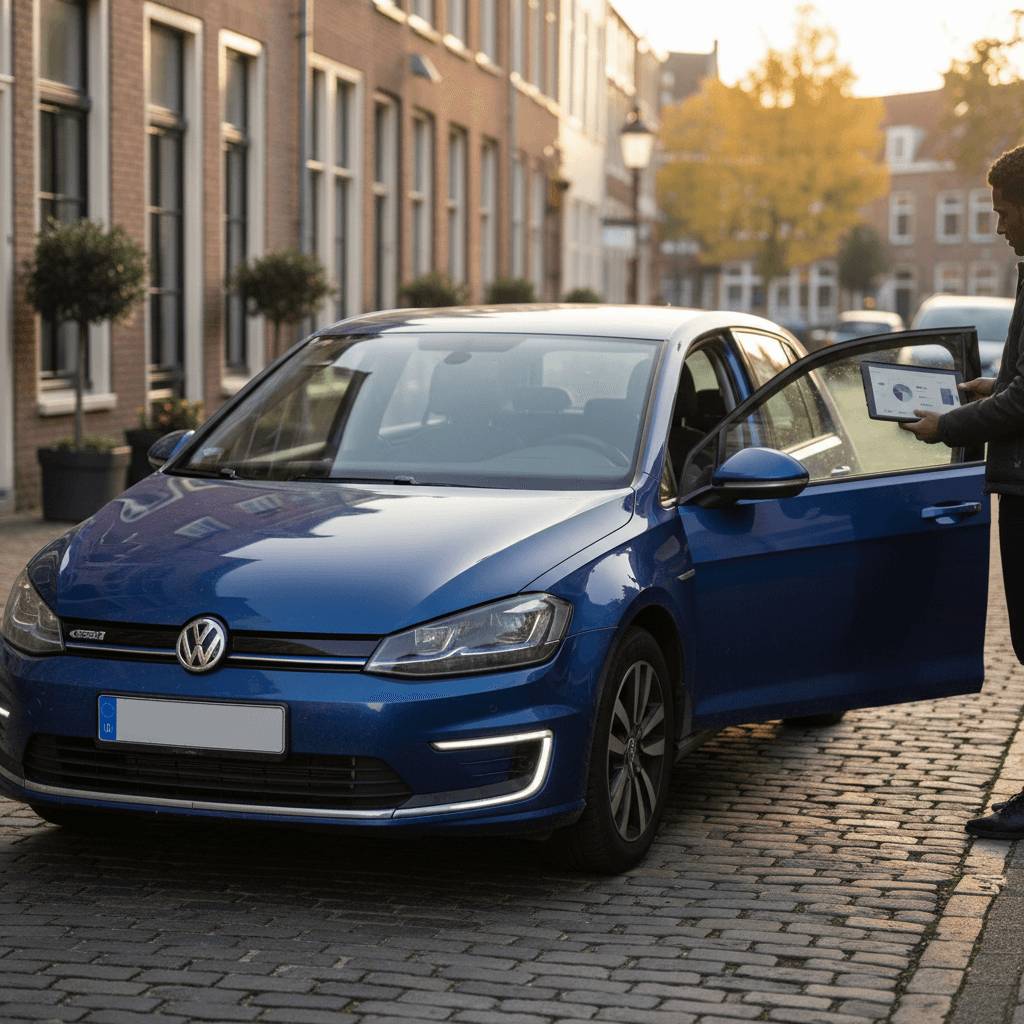
If you’re hunting for an e‑Golf for sale, you’re looking at one of the most under‑appreciated used EVs on the market. It’s a normal Golf first, solid, quiet, and Germanic, then an electric car, which is exactly what many people want for city and suburban duty.
Quick take
Why the e‑Golf is interesting again
Volkswagen sold the e‑Golf in the U.S. from the 2015 to 2019 model years, and quietly kept building them in Europe through 2020. On paper it was outgunned by longer‑range rivals almost immediately. But as a used buy today, things look very different: prices have fallen hard, while the basic qualities, a refined chassis, high‑quality interior, and simple hatchback practicality, still shine.
Three reasons shoppers search “e‑Golf for sale” in 2025
Where this compact EV still makes a lot of sense
It drives like a real car
The e‑Golf isn’t a science experiment. It’s a regular Mk7 Golf with an electric drivetrain, so it feels planted, quiet, and grown‑up in a way many early compliance EVs never did.
Short range, big savings
With EPA range between roughly 83 and 125 miles depending on year, it’s not a road‑tripper. But for 20–40 mile daily commutes, that limited range translates into very low used prices.
Depreciation is your friend
Because new‑car shoppers flock to 250‑mile crossovers, older city EVs like the e‑Golf are heavily discounted on the used market compared with their original MSRP.
Who the e‑Golf fits best
Model years, batteries, and real‑world range
There are really two e‑Golfs: the early, short‑range cars and the later, somewhat‑less‑short‑range cars. Knowing which is which is the single biggest factor when you’re scanning e‑Golfs for sale online.
VW e‑Golf model years at a glance
Battery sizes and EPA range ratings by generation
| Model years | Battery (gross) | EPA range (mi) | Motor power | Notes |
|---|---|---|---|---|
| 2015–2016 | 24.2 kWh | 83 mi | ~115 hp | First generation, smaller pack |
| 2017–2019 | 35.8 kWh | ~125 mi | ~134 hp | Updated battery + more power |
Later cars get a bigger pack and more power, but every e‑Golf is fundamentally a city‑focused EV.
Real‑world e‑Golf range and efficiency
Don’t shop by EPA number alone
Early cars: 2015–2016
- 24.2 kWh pack, EPA‑rated at 83 miles.
- Great for short hops, but you’ll feel the limits on cold days or at highway speed.
- Many examples now show noticeable degradation; it’s not unusual to see 50–70 miles of usable range.
Updated cars: 2017–2019
- 35.8 kWh pack, EPA‑rated around 125 miles.
- More power, faster onboard charging (up to 7.2 kW on many trims).
- Still a city EV, but much more forgiving for 60–80 mile days or winter driving.
What an e‑Golf is really like to drive
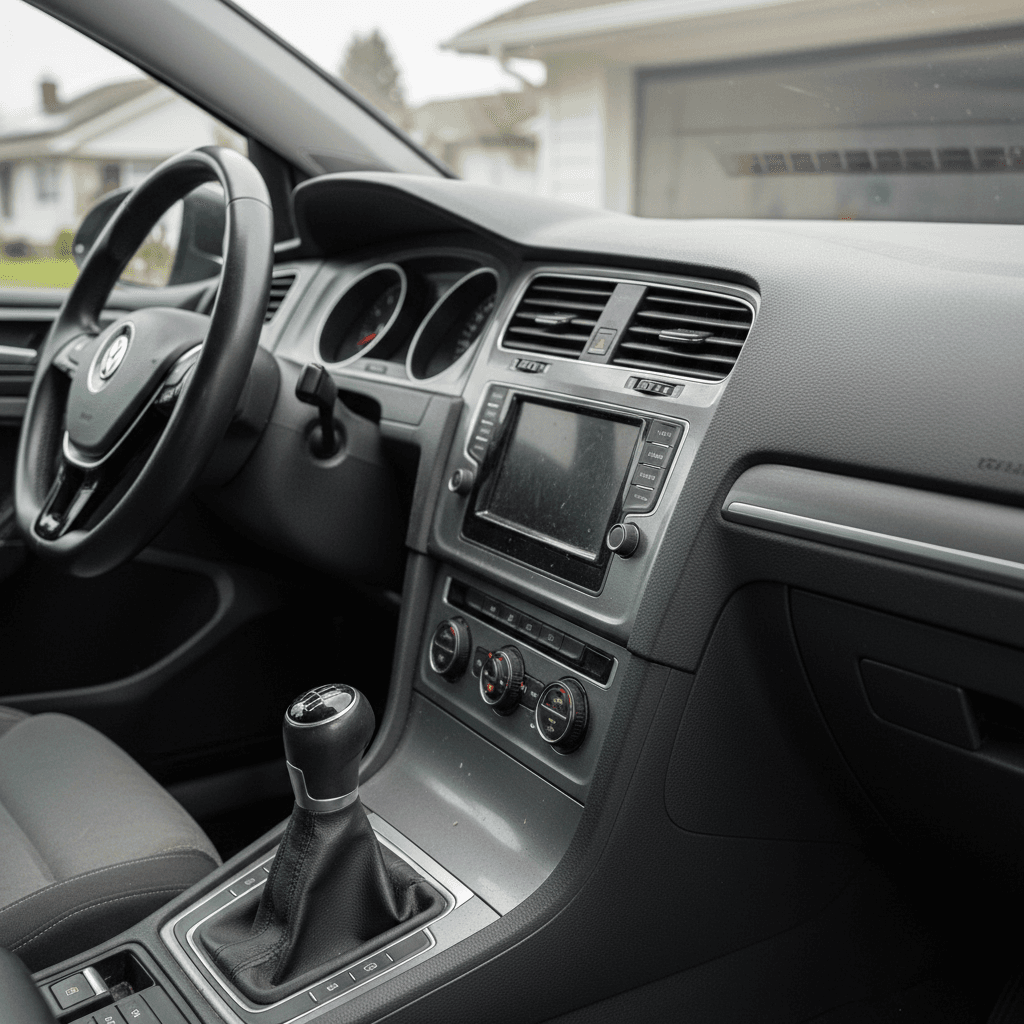
Drive an e‑Golf and you realize how far ahead Volkswagen’s MQB platform was. The car feels buttoned‑down in that familiar Golf way: accurate steering, a supple ride, and an underlying seriousness that makes a Corolla feel like lawn furniture. The electric motor just makes it better, instant torque, no shifting, and silence around town.
Driving experience: the good, the surprising, the compromises
How a used e‑Golf feels from behind the wheel
City and suburbia: its sweet spot
At 0–30 mph the e‑Golf is eager and smooth. It slips through traffic, parks anywhere, and feels more upscale than most cars you’ll find at the same used‑EV price.
Highway: fine, but not heroic
Stability is good and there’s enough power for American on‑ramps, but this isn’t a 500‑mile interstate cruiser. Plan to stop and charge on longer drives.
Cabin and cargo
You still get a proper 5‑door hatchback with decent rear‑seat space and a usable cargo area. The battery lives under the floor, so the trunk is basically a regular Golf’s.
Where the e‑Golf really shines
Common e‑Golf issues and battery life
Under the skin, the e‑Golf is still a Golf, which means most of the non‑EV wear items are familiar: suspension bushings, brakes, infotainment glitches. The questions that matter most when you see an e‑Golf for sale are about the high‑voltage battery and charging hardware.
- Battery degradation, especially on early 24.2 kWh cars driven in hot climates or fast‑charged frequently.
- Onboard charger failures on some cars, which can turn home charging into a headache until repaired.
- DC fast‑charge hardware issues on cars that see heavy public‑charging use.
- Infotainment system bugs and aging navigation head units, annoying, not fatal.
- Usual used‑car items: worn tires, neglected brake fluid, aging 12‑V battery.
Battery health is the deal‑breaker
Real‑world owner data shows a wide spread: some later e‑Golfs still report close to their original range, while heavily used early cars may be down to roughly half. That’s why objective testing, like the Recharged Score battery diagnostics we run on every vehicle we list, is worth far more than the seller’s anecdote of “still shows full bars.”
Price check: what e‑Golfs sell for used
Exact numbers move with the broader used‑car market, but in the U.S. you’ll typically see e‑Golfs slotted below long‑range Teslas and Hyundai/Kia models and roughly in line with other early‑generation EVs like the BMW i3 and Nissan Leaf. Trim, mileage, battery condition, and whether the car has DC fast charging all move the needle.
Typical U.S. used‑market positioning for e‑Golf
Where e‑Golf tends to land relative to similar used EVs
| Vehicle | Original EPA range | Used price band* | Notes |
|---|---|---|---|
| VW e‑Golf (2015–2016) | 83 mi | Usually at the lower end of the EV market | Short range and age push prices down. |
| VW e‑Golf (2017–2019) | ~125 mi | Moderate, often below newer 200+ mile EVs | More usable range but still a city car. |
| Nissan Leaf (30–40 kWh) | 107–150 mi | Similar or slightly cheaper | More common, more battery‑degradation horror stories. |
| BMW i3 (60–94 Ah BEV) | 81–153 mi | Often higher than e‑Golf | Quirkier design, carbon shell, premium cabin. |
| Chevy Bolt EV (60 kWh) | 238 mi | Noticeably higher | Much longer range, newer tech. |
Use this as a directional guide, always compare local listings and battery condition.
Why cheap isn’t always a bargain
Must‑check items before you buy
Pre‑purchase checklist for a used e‑Golf
1. Confirm battery health, not just mileage
Ask for a recent, objective battery report showing estimated usable capacity and projected range. On Recharged, this is built into the <strong>Recharged Score</strong> so you’re not guessing.
2. Verify DC fast‑charging (CCS) hardware
Not every e‑Golf was optioned with DC fast charging. Check for the CCS combo port and verify it actually connects and charges at a public fast charger if possible.
3. Check onboard charger specs
Later e‑Golfs can charge at up to 7.2 kW on Level 2. That means much faster overnight refills than the early 3.7 kW cars. If you’ll rely on home charging, this matters every single day.
4. Inspect tires, brakes, and suspension
Because EVs are heavy and deliver instant torque, they can be hard on tires and suspension bushings. A test drive over rough pavement will reveal clunks, shudders, or uneven tire noise.
5. Test all charging modes
Plug into a Level 1 (120 V) outlet, your home Level 2 if available, and a public DC fast charger. Watch for warning lights, unusually slow speeds, or charging sessions that abort early.
6. Scan for software updates and recalls
Check that infotainment and EV‑specific software updates have been applied and recall work completed. A dealer service history printout is ideal.
Leverage expert inspections
e‑Golf vs other affordable used EVs
e‑Golf vs Nissan Leaf
- Driving feel: e‑Golf is more refined and conventional; the Leaf is softer and a bit looser.
- Battery longevity: early Leafs are notorious for degradation; e‑Golf packs tend to hold up better, though early ones still lose range.
- Charging: Leaf uses CHAdeMO fast‑charge, which is slowly fading; e‑Golf’s CCS is the more future‑proof standard for now.
e‑Golf vs BMW i3
- Style and image: the i3 is a rolling concept car; the e‑Golf hides in plain sight.
- Interior: i3 feels more boutique, but the Golf cabin will age more gracefully and is easier to live with.
- Range: spec‑for‑spec they’re similar, but i3s with range extenders add complexity you’ll never find in an e‑Golf.
Is the e‑Golf the right cheap EV for you?
Match the car to your use case
Urban dweller
You live in or near a city, have a driveway or garage, and drive 20–40 miles a day. An e‑Golf can quietly erase your fuel bill.
Suburban commuter
Your round‑trip commute is under ~60 miles and you can charge overnight. A later‑battery e‑Golf will feel almost like owning a normal Golf, minus the gas stops.
Road‑trip family
If you’re trying to replace a big family road‑trip SUV, look elsewhere or plan on keeping a second long‑range vehicle around.
How Recharged evaluates used e‑Golfs
Because the e‑Golf is a range‑sensitive car, we treat every example like a battery science project. When a seller brings an e‑Golf for sale to Recharged, whether via trade‑in, instant offer, or consignment, we run it through our EV‑specific inspection and Recharged Score process.
- We plug into the high‑voltage system to read detailed battery data, not just the dash gauge.
- We perform a controlled charge and discharge to validate usable capacity and estimate real‑world range.
- We verify all charging modes (Level 1, Level 2, DC fast) and log charge rates.
- We road‑test for EV‑specific noises like inverter whine or regen‑brake shudder.
- We benchmark pricing against current market data for similar e‑Golfs nationwide.
Why this matters for you
Ready to find your next EV?
Browse VehiclesFAQ: buying a VW e‑Golf for sale
Frequently asked questions about e‑Golf for sale
Bottom line: is an e‑Golf right for you?
If you’re expecting Model 3 road‑trip range for used‑Leaf money, the e‑Golf will disappoint you. But if what you really want is a well‑built European hatchback that quietly takes the drama out of your daily driving, a carefully chosen e‑Golf for sale is one of the sharpest tools in the affordable‑EV drawer.
Focus on the later‑battery cars if you can, insist on objective battery health data, and be honest about your actual mileage needs. Do that, and an e‑Golf becomes what the best used cars always are: yesterday’s over‑engineering, at today’s sensible prices. And if you’d rather have experts sweat the details, you can always browse Recharged’s inventory of used EVs, every one with verified battery health and support from specialists who know these cars inside out.