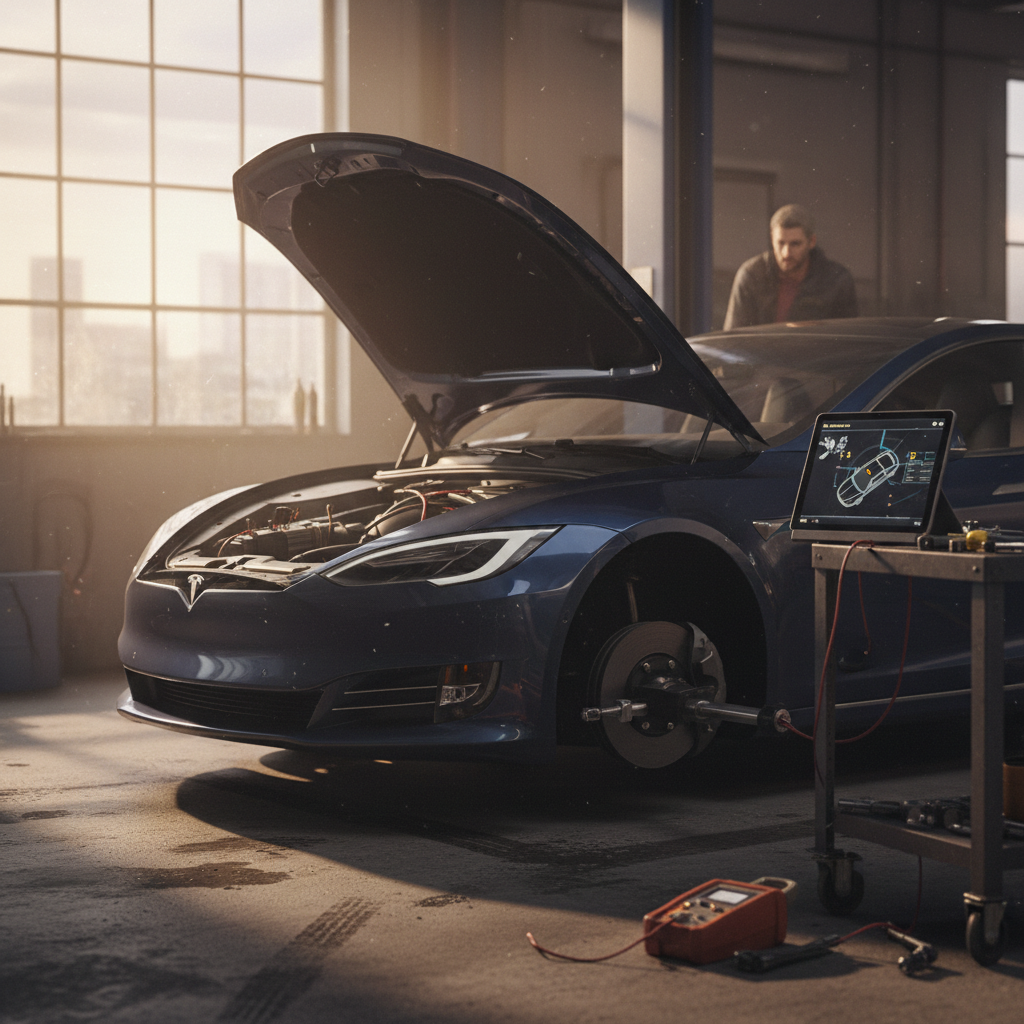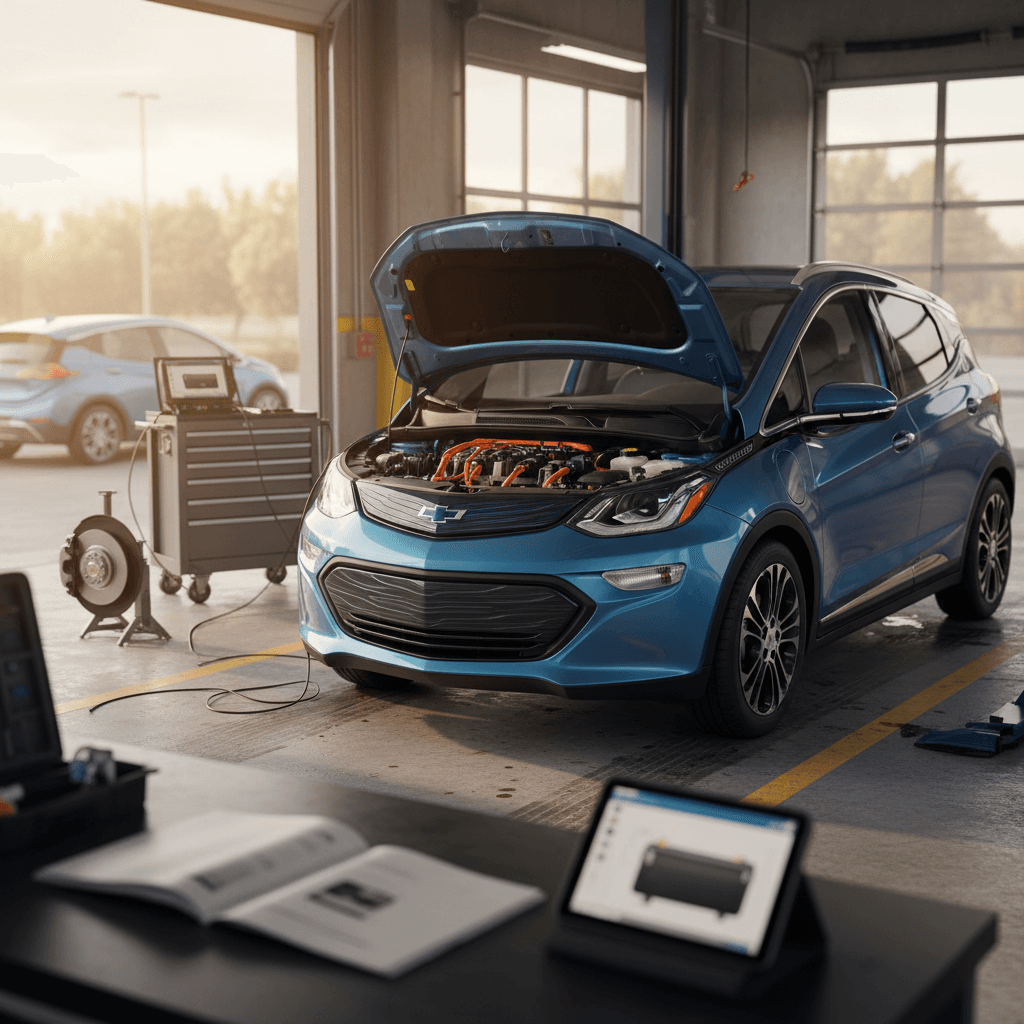
If you’ve heard that electric vehicles are “low maintenance,” you’re not wrong, but it’s not the whole story. EVs do require less routine maintenance than gas cars, yet when something big goes wrong, repairs can be more expensive. In this guide, we’ll break down what EVs actually need, how often, and what it really costs so you can decide if an EV (or a used EV) fits your budget and lifestyle.
Bottom Line Up Front
Do EVs Really Require Less Maintenance? The Short Answer
Compared with a traditional gasoline car, a battery-electric vehicle (BEV) has far fewer moving parts. There’s no engine oil, no spark plugs, no exhaust system, and no multi-speed automatic transmission. That simplicity translates into fewer scheduled services and, over time, lower maintenance costs for most owners.
How EV Maintenance Stacks Up Today
So yes, in normal day-to-day driving, EVs require less maintenance than gas vehicles. But that doesn’t mean they’re maintenance-free, or that every EV automatically saves you money. Your driving habits, local labor rates, and which model you choose all play a role.
Why EVs Usually Need Less Routine Service
Three Big Reasons EVs Are Easier to Live With
Fewer parts, fewer fluids, fewer surprises, most of the time.
1. Simpler Drivetrain
2. Far Fewer Fluids
3. Regenerative Braking
Daily Driving Tip
What Maintenance Do EVs Still Require?
EV owners sometimes swing too far in the other direction and assume there’s nothing to maintain at all. In reality, you’ll still be visiting a service bay from time to time, just for a shorter list of items than your neighbor with the V6 crossover.
Typical EV Maintenance vs Gas Car
Here’s what most EVs still need, and what you can usually stop worrying about once you go electric.
| System / Item | EV Needs | Gas Car Needs | Notes |
|---|---|---|---|
| Engine oil & filter | Not required | Change every 5,000–10,000 miles | Major ongoing cost that simply disappears with an EV. |
| Spark plugs & ignition | Not required | Replace every 60,000–100,000 miles | Another routine service line item you avoid in an EV. |
| Transmission service | Simple single-speed unit, rarely serviced | Automatic transmission fluid & filter changes | Most EVs don’t have conventional multi-speed transmissions. |
| Coolant | Battery & inverter coolant checks, periodic replacement | Engine cooling system service | Intervals are often longer on EVs but still important for battery health. |
| Brake pads & rotors | Wear much more slowly thanks to regen braking | Frequent pad/rotor replacements, especially in stop-and-go driving | EVs can go very long distances on original brakes if driven smoothly. |
| 12V battery | Still needs periodic replacement | Still needs periodic replacement | Both EVs and gas cars use a low-voltage battery for accessories. |
| Cabin air filter | Replace every 1–2 years | Replace every 1–2 years | Same story for both types, keeps the HVAC system happy. |
| Tires | Rotate and replace as needed | Rotate and replace as needed | EVs are heavier and torquier, so tire wear can be higher if you drive hard. |
Always check your owner’s manual for the specific schedule for your vehicle.
Don’t Forget the Basics
Maintenance Costs: EV vs Gas Car
Once you strip out oil changes, spark plugs, engine air filters, and transmission services, the math starts to favor EVs. Multiple recent analyses in the U.S. have found that EV owners spend roughly 30–60% less on routine maintenance than owners of comparable gas vehicles over the first several years.
Typical Annual Maintenance
- EV: Around $900 per year on average, mostly tires, brake inspections, and periodic fluid checks.
- Gas car: Roughly $1,200 per year when you factor in oil changes, more frequent brake work, engine-related services, and similar wear items.
- Five-year picture: It’s common to see EV owners save $1,000–$1,500 or more on maintenance alone, before counting fuel savings.
Where the Savings Come From
- Fewer scheduled services and shorter service menus.
- Less frequent brake replacement thanks to regenerative braking.
- No engine-related repairs like timing belts, exhaust systems, or fuel pumps.
- Fewer surprise failures tied to complex emission systems.
These are averages, not guarantees. High-performance or luxury EVs can still be expensive to service, just like high-end gas cars.
Where Used EVs Really Shine
Repairs, Crashes, and Those Scary EV Repair Bills
This is where the conversation gets more nuanced. Routine maintenance is one thing; repairs after a collision or major component failure are another. Insurance and collision-industry data from 2023–2024 show that when EVs are repairable after a crash, the average repair bill is roughly 25–30% higher than for comparable gas cars.
Why Some EV Repairs Cost More
Fewer visits overall, but pricier when something serious happens.
High-Voltage Systems
OEM Parts Only
Complex Body Structures
Reality Check on Insurance
For everyday ownership, that means you’ll likely spend less at the service counter over the years, but if you’re unlucky enough to have a serious crash, the bill (or the insurance claim) can be bigger than you might expect compared with a conventional car.
How Maintenance Ties Into EV Battery Life
The battery pack is the most expensive single component in an EV, and the good news is most packs are aging more gracefully than early skeptics predicted. Large data sets suggest that many modern EV batteries lose only a small percentage of capacity per year when driven and charged normally.
- Most EVs sold in the U.S. today carry an 8–10 year / 100,000-mile (or more) battery warranty.
- Real-world fleet data points to average degradation in the low single digits per year, depending on climate and charging habits.
- Thermal management, cooling/heating the pack, is a key reason modern EV batteries last as long as they do. That system still needs periodic coolant checks or changes.
Battery-Friendly Habits
Used EV Buyers: Maintenance & Inspection Checklist
If you’re shopping for a used EV, the maintenance story shifts from theory to reality. You’re no longer asking what the car should cost to maintain, you’re asking how the last owner treated it. That’s where documentation and independent verification matter.
7 Things to Check Before You Buy a Used EV
1. Battery Health Documentation
Ask for recent battery health reports or range screenshots. With Recharged, every vehicle comes with a <strong>Recharged Score Report</strong> that includes verified battery health so you’re not guessing about the pack’s condition.
2. Service History
Look for records of cabin filter replacements, brake fluid service, tire rotations, and any warranty repairs. A thin history on an older EV is a red flag, just as it is with a gas car.
3. Tire Condition and Type
EVs are heavier and can be harder on tires. Check for uneven wear that might indicate alignment issues, and confirm the car is on EV-rated tires if required by the manufacturer.
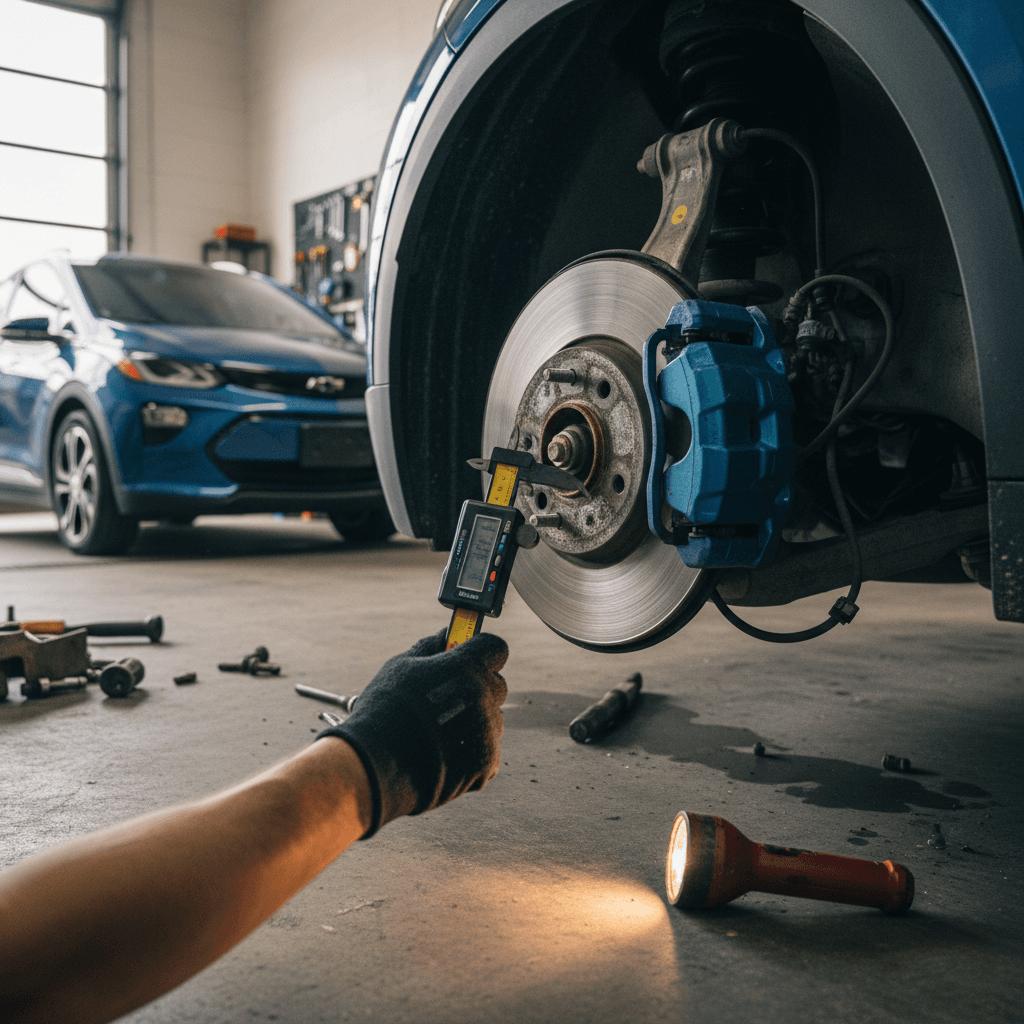
4. Brake System Inspection
Even though brakes wear slowly, they can seize or corrode if the car sits for long periods. Make sure a technician checks pad thickness, rotor condition, and parking brake operation.
5. Charging Port & Onboard Charger
Inspect the charge port for damage or corrosion and confirm that the vehicle charges properly at Level 1 (120V), Level 2 (240V), and, if equipped, at DC fast chargers.
6. Software & Recalls
Verify that major software updates have been completed and that all recalls have been performed. EVs rely heavily on software, and updates can affect everything from range to charging behavior.
7. Underbody & Corrosion
Have the underbody inspected for rust, damage to battery shields, or impact marks, especially if you live where roads are salted in winter.
How Recharged Helps
How Often Should You Service an EV?
Service schedules vary by brand, but most EVs sold in the U.S. use longer intervals than comparable gas cars. Instead of visiting a service bay every 5,000–7,500 miles for oil changes, you’re usually looking at yearly or mileage-based checkups focused on safety and wear items.
- Every month or so: Check tire pressure (many EVs let you see this on the screen) and look for any warning lights.
- Every 6–12 months: Rotate tires, check brakes, inspect suspension and steering components, and verify that all driver-assistance systems are working properly.
- Every 2 years or so: Replace the cabin air filter and have a technician inspect the cooling system and high-voltage components per the manufacturer’s schedule.
- Every 4–5 years: Replace brake fluid and perform more in-depth cooling system service as recommended by the automaker.
Don’t Skip Scheduled Checks
EV Maintenance FAQs
Frequently Asked Questions About EV Maintenance
Key Takeaways: When Do EVs Truly Save You Money?
So, do EVs require less maintenance? For most drivers, the answer is yes. You’ll skip oil changes, see your mechanic less often, and spend fewer Saturdays in dealership waiting rooms. At the same time, it’s smart to go in with eyes open about higher collision repair costs, insurance, and the importance of battery health, especially when you’re shopping used.
- EVs typically deliver meaningful savings on routine maintenance compared with similar gas cars.
- Tires, brakes, and basic inspections still matter; they’re just spaced out differently than they are on a traditional maintenance schedule.
- Big-ticket repairs can be pricier on some EVs, so choosing the right model and getting solid insurance coverage is important.
- When buying used, verified battery health and a clear maintenance history are worth their weight in gold.
- Platforms like Recharged make used EV ownership easier by combining vehicle listings with transparent battery diagnostics, pricing insights, and EV-specialist support from start to finish.
If you’re ready to put the math to work for you, start by comparing a few used EVs against the gas car you’re driving today. Look at maintenance, energy costs, and your real mileage, not just the sticker price. The savings may be closer than you think, and the right EV could cost less to keep on the road than any gas car you’ve owned.