If you grew up with automatic transmissions and 3,000‑mile oil changes, it’s natural to ask: do electric cars need transmission fluid at all? The answer is a little more nuanced than a simple yes or no, and understanding it will help you budget for maintenance and shop smarter for a used EV.
Quick takeaway
Do electric cars need transmission fluid? The short answer
- Yes, there is lubricating fluid in most EV drive units or reduction gearboxes.
- No, it’s not the same job as the multi‑gear automatic transmission fluid in an internal‑combustion car.
- For many modern EVs, this fluid is sealed and considered “lifetime” under normal use, so you won’t see a routine transmission service on the maintenance schedule.
- Some older or performance‑oriented EVs (for example, early Tesla Model S) do have specified service intervals for their drive‑unit fluid, usually handled by the dealer or EV specialist.
So instead of asking, “Does my EV need transmission fluid changes every 30,000–60,000 miles?” a better question is, “What fluids does my specific electric car use, and what does the manufacturer actually recommend?” We’ll walk through that, then translate it into what you should care about as an owner or a used‑EV buyer.
How EV drivetrains differ from gas-car transmissions
Gasoline car: Complex multi-speed transmission
- Engine produces usable power over a narrow RPM band.
- Needs a multi‑speed automatic or manual transmission with clutches, valve bodies, torque converters, and many internal passages.
- Automatic transmission fluid (ATF) does several jobs: lubrication, cooling, and hydraulic control.
- More moving parts, more heat, more wear, and that means regular fluid changes.
Electric car: Single-speed reduction gearbox
- Electric motor makes near‑instant torque over a very wide RPM range.
- Most EVs use a single‑speed reduction gear that “gears down” motor speed to wheel speed.
- Inside is a compact set of gears and bearings, bathed in specialized oil or ATF‑type fluid.
- No torque converter, no gear shifts, and far fewer moving parts, so less stress on the fluid.
Tip for first-time EV owners
What fluids electric cars actually use
Key fluids in a typical battery electric vehicle
Good news: there are fewer of them, and they usually last longer
Drive-unit / gearbox fluid
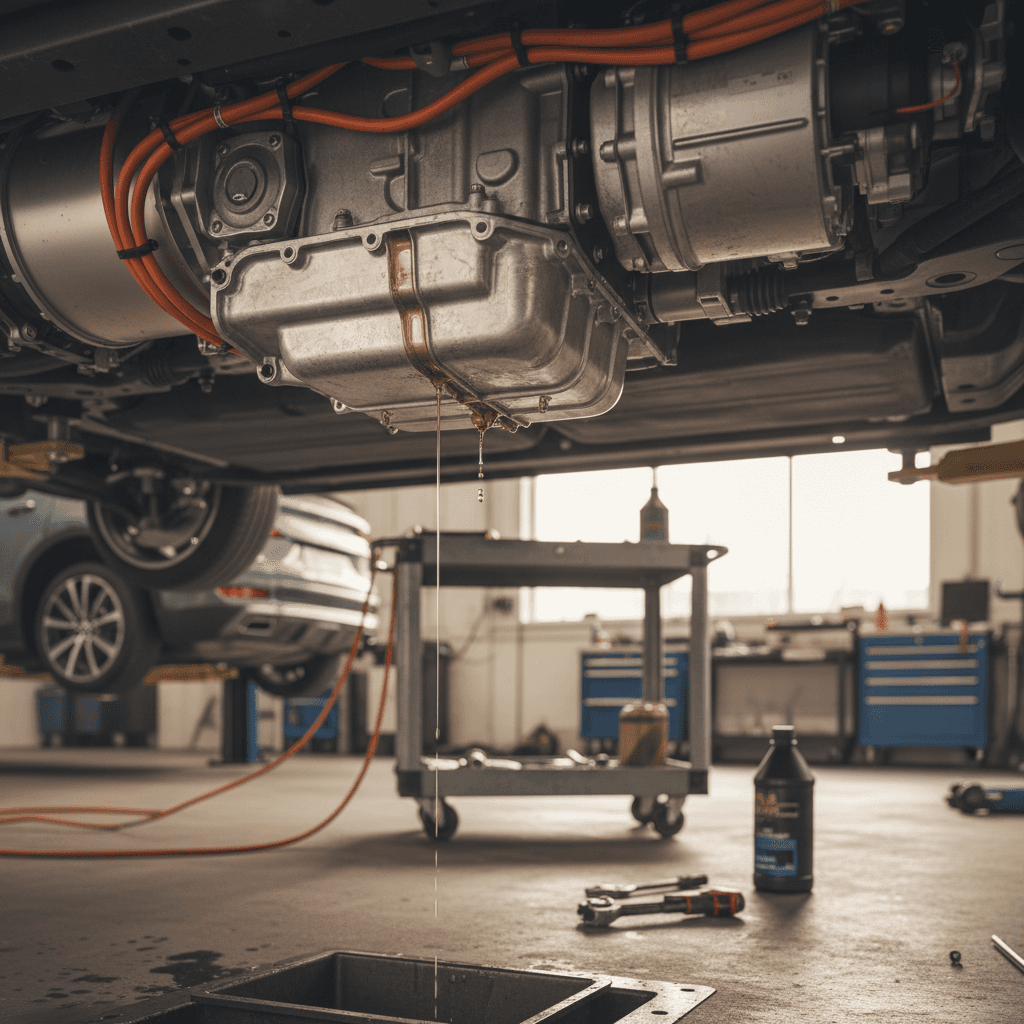
This is the closest thing an EV has to transmission fluid. It lubricates gears, bearings, and sometimes differential components inside the drive unit. In many modern EVs it’s filled for life or only serviced in special circumstances.
Battery & power electronics coolant
Liquid coolant circulates around the battery pack, inverter, and sometimes the motor to keep temperatures in the ideal range. Service intervals vary by manufacturer and model, often in the 4–10 year range, and typically handled by a dealer or EV specialist.
Brake & other conventional fluids
EVs still need brake fluid, windshield washer fluid, and sometimes refrigerant service for the A/C system. Regenerative braking reduces pad wear, but the hydraulic system still ages with time and moisture, so periodic brake‑fluid testing or replacement is recommended.
Some brands may also use small amounts of lubricant in differential assemblies or wheel bearings, but these are typically sealed and not consumer‑serviceable. The important takeaway is that an EV absolutely uses fluids, but far fewer, and on much longer intervals, than a comparable gas vehicle.
Do Teslas and other EVs have gearbox or drive-unit fluid?
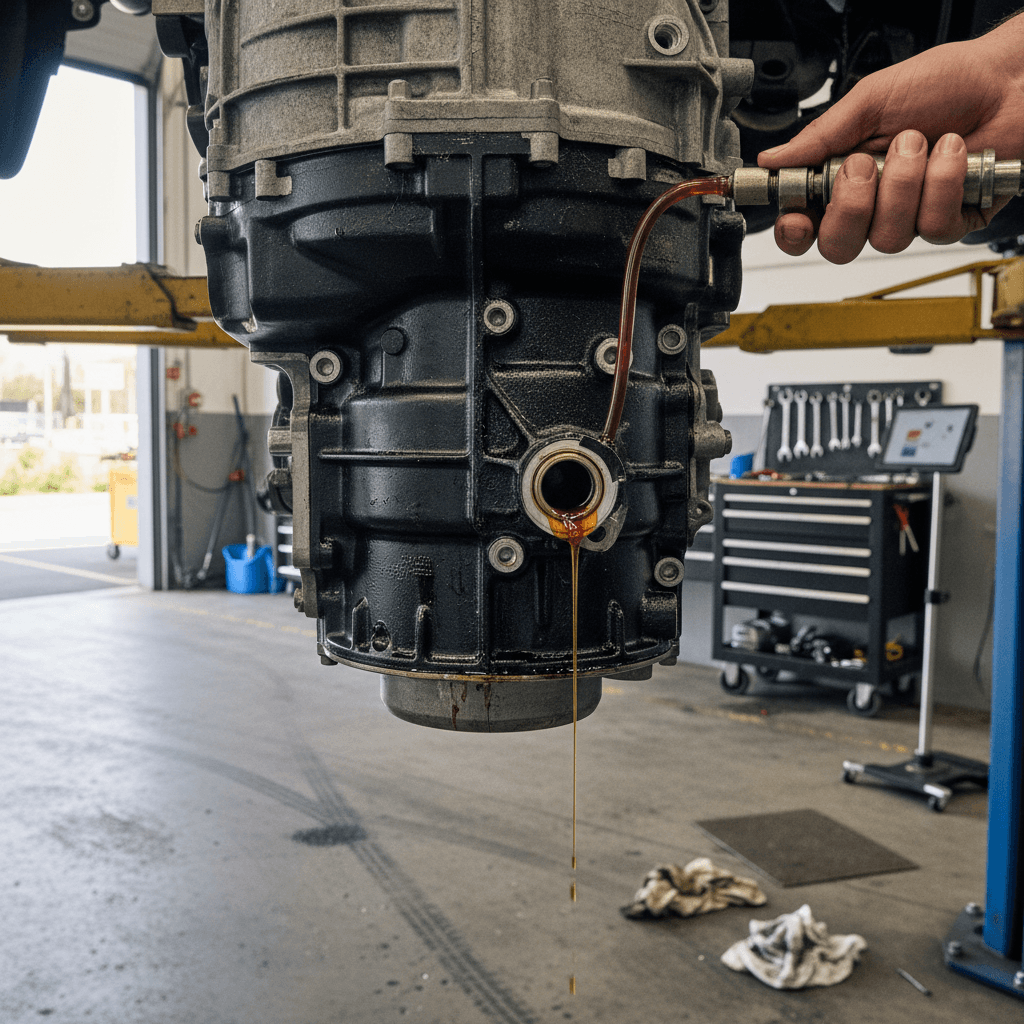
Yes. Whether you’re looking at a Tesla, a Hyundai Ioniq 5, a Chevy Bolt, or most other battery EVs, there is some type of lubricant inside the drive unit or reduction gearbox. Manufacturers use different formulations, often ATF‑like fluids or dedicated EV gear oils, but the principle is the same: keep gears and bearings cool and protected under high torque.
How common EV brands treat drive-unit or “transmission” fluid
Always verify details in your owner’s manual or with an EV‑specialist service center.
| Brand / example model | Transmission type | Is there fluid? | Typical approach to service |
|---|---|---|---|
| Tesla Model 3 / Y | Single‑speed drive unit | Yes – specialized gearbox fluid | Treated as lifetime fluid under normal use; usually only serviced during repairs or in special cases. |
| Tesla early Model S / performance models | Single‑speed gearbox | Yes – ATF‑type fluid | Some early service schedules called for fluid changes at specific mileage; now often inspected or serviced only as needed. |
| Hyundai Ioniq 5 / Kia EV6 | Single‑speed reduction gear | Yes – gear oil | Generally not listed for routine service; may be inspected or replaced if noise or leakage occurs. |
| Chevrolet Bolt EV | Single‑speed reduction gear | Yes – lubricant | Usually described as filled for life; no regular change interval on most maintenance charts. |
| VW ID.4 / similar | Single‑speed gearbox | Yes – lubricant | Typically sealed system; fluid service only for faults, leaks, or specialized maintenance. |
Examples are general patterns only; specific model years and trims can differ.
Why you won’t see it on the service menu
EV maintenance: How often (if ever) does this fluid need to be changed?
Here’s the key point for owners: follow the maintenance schedule for your specific vehicle first, not generic advice from a quick‑lube shop. That said, we can lay out some practical guidelines.
Practical guidelines for EV gearbox / drive-unit fluid
1. Read the owner’s manual first
Look under maintenance, drivetrain, or fluids. If the fluid is listed as “lifetime” or only mentioned in connection with repairs, you likely don’t have a routine service interval to worry about.
2. Treat it like a differential, not a traditional transmission
For most EVs, the drive unit fluid leads a much easier life than ATF in a gas car’s multi‑speed gearbox. There’s no combustion byproduct contamination and fewer heat cycles, so long‑life fills make sense.
3. Consider a precautionary change at high mileage
If you plan to keep an EV well past 100,000 miles and a qualified EV shop offers a drive‑unit fluid service, some owners choose to change it in the 80,000–120,000‑mile range as cheap insurance, especially in hot climates or heavy‑duty use.
4. Use only the exact specified fluid
EV drive units are engineered around very specific viscosity and friction characteristics. Always use the exact fluid part number or specification your manufacturer calls for; “close enough” doesn’t cut it here.
5. Don’t DIY if it requires special procedures
Many modern EVs require special tools or procedures (like controlled fill levels, software modes, or service‑position jacking) to service drive‑unit fluid safely. This is typically a job for a <strong>dealer or EV‑specialist shop</strong>.
Be careful with “universal” transmission services
Hybrids vs. pure EVs: Very different transmission fluid stories
A lot of confusion comes from lumping hybrids and full EVs together. They are not the same. Most hybrids still have conventional or specialized transmissions that absolutely do use serviceable transmission fluid.
How different electrified drivetrains handle transmission fluid
The badge might say “electric” or “hybrid,” but the maintenance picture can be completely different.
Conventional and plug-in hybrids (HEV / PHEV)
- Pair a gasoline engine with an electric motor.
- Often use a traditional automatic, CVT, or e‑CVT with multiple gearsets and clutches.
- These units use automatic transmission fluid that typically needs to be changed on a schedule, sometimes 30,000–100,000 miles depending on the manufacturer.
- If you own a hybrid SUV or sedan, don’t assume EV rules apply; check the transmission section in the manual.
Battery electric vehicles (BEVs)
- No combustion engine at all; traction comes solely from one or more electric motors.
- Use a single‑speed reduction gear or direct drive, usually in a sealed housing.
- Have lubricant inside, but many are treated as lifetime fills and aren’t serviced on a routine basis.
- Maintenance checklist focuses more on tires, brake fluid, cabin filters, and coolant than on transmission fluid.
Don’t apply hybrid advice to a BEV
What this means for ownership costs and used EV buyers
Why fewer fluid services matter for your wallet
From a budgeting standpoint, not having routine transmission services is one of the quiet advantages of an EV. Instead of paying for fluid exchanges every few years, most owners focus on tires, occasional brake‑fluid checks, and long‑interval coolant or cabin‑filter service.
- Verified battery health and projected range.
- Service and mileage history, so you can see how the car was used.
- Notes on any major drivetrain work, including drive‑unit replacements or fluid‑related repairs when documented.
Signs your EV may need drivetrain fluid service
Even if there’s no scheduled transmission fluid change, problems can still develop, especially at high mileage, after impact damage, or in harsh use. You don’t need to obsess over it, but you should pay attention to a few warning signs.
Warning signs to watch for
New whining or grinding noises under acceleration
A healthy EV is usually quiet. If you hear a rising or falling whine, growl, or rumbling that changes with speed, not motor pitch alone, have the drive unit inspected. It could be a bearing or gear issue that also affects fluid condition.
Visible leaks near drive units or axles
Look under the car where the axles meet the drive unit. Oily spots, reddish or amber fluid, or wet seals may indicate a leak. EVs don’t “sweat” oil the way old gas cars did, so any fluid on the ground deserves attention.
Overheating or power‑limit warnings
If the car frequently reduces power or shows drivetrain temperature warnings in normal driving, there may be an issue with cooling or lubrication. Don’t keep pushing it, schedule service.
Service bulletin or campaign notices
Manufacturers occasionally update recommendations as they gather real‑world data. If there’s a technical service bulletin (TSB) or campaign related to drive‑unit fluid or seals, get it addressed promptly.
Harsh or unusual behavior after repairs
If the drive unit, seals, or half shafts were recently serviced and you notice new noises or shudder, verify that the correct fluid type and level were used by a qualified EV technician.
Where an EV specialist helps
Ready to find your next EV?
Browse VehiclesFAQ: Electric cars and transmission fluid
Frequently asked questions about EVs and transmission fluid
Bottom line: How to think about “transmission fluid” in an EV
Electric cars do use lubricating fluid in their drivetrains, but they don’t have the complex, service‑hungry automatic transmissions you’re used to in gas vehicles. In most modern EVs, that fluid lives inside a compact, sealed drive unit and is either treated as lifetime fill or serviced only in special situations, after a leak, repair, or at very high mileage with an EV‑savvy shop.
For you as a driver or shopper, that translates into lower routine maintenance costs and one less line item on the service schedule to worry about. Focus your attention on battery health, tire condition, brake fluid, and documented repairs instead of chasing generic “transmission services” that may not apply.
If you’re considering a used EV, buying through Recharged means every vehicle comes with a transparent Recharged Score Report, financing options, trade‑in support, and EV‑specialist guidance. That way, you’re not just guessing how an unfamiliar drivetrain was treated, you’re making a confident, informed decision about your next electric car.