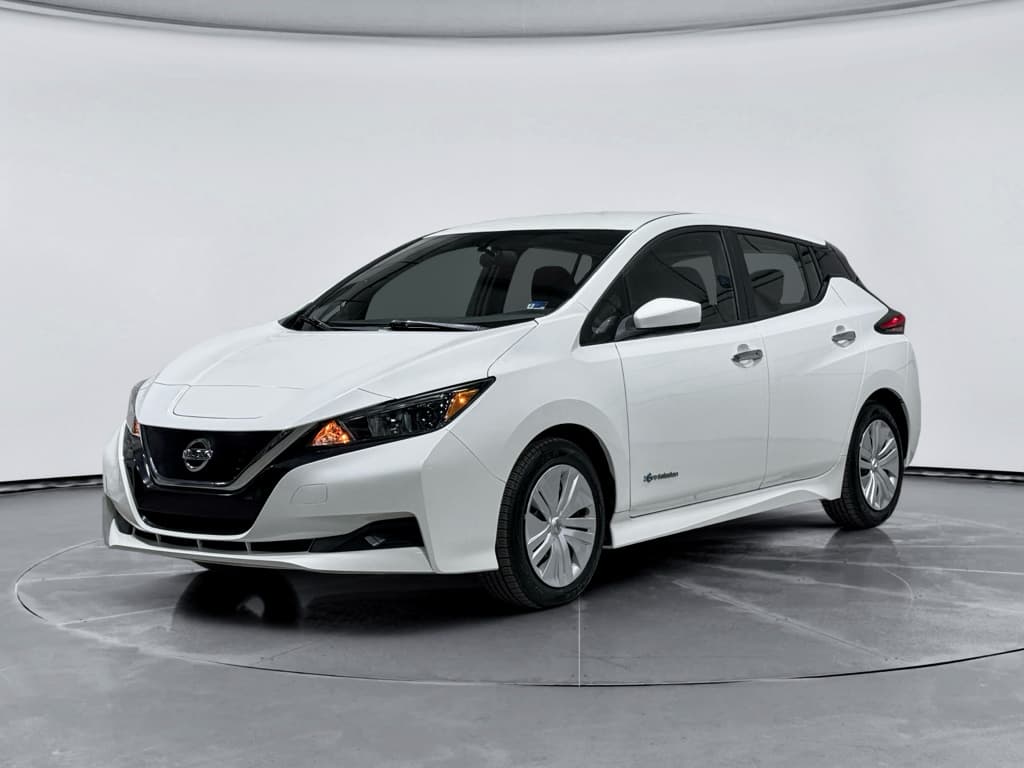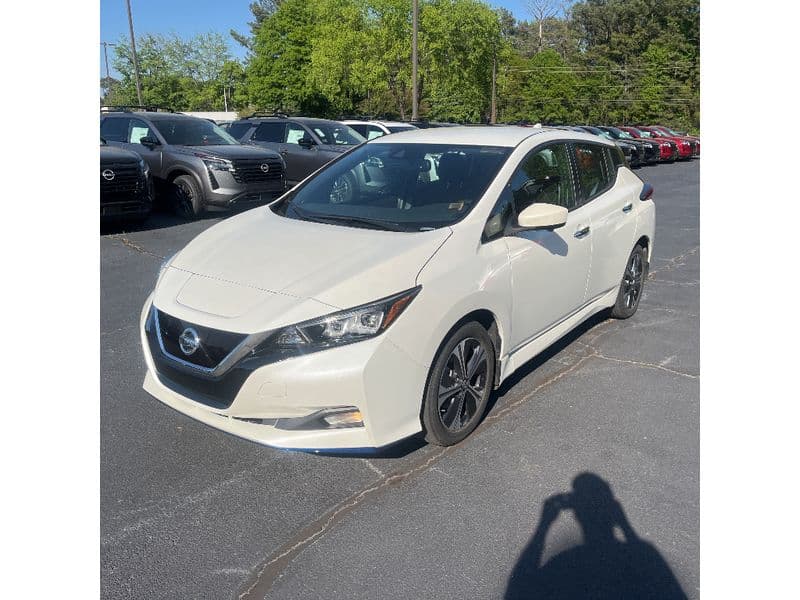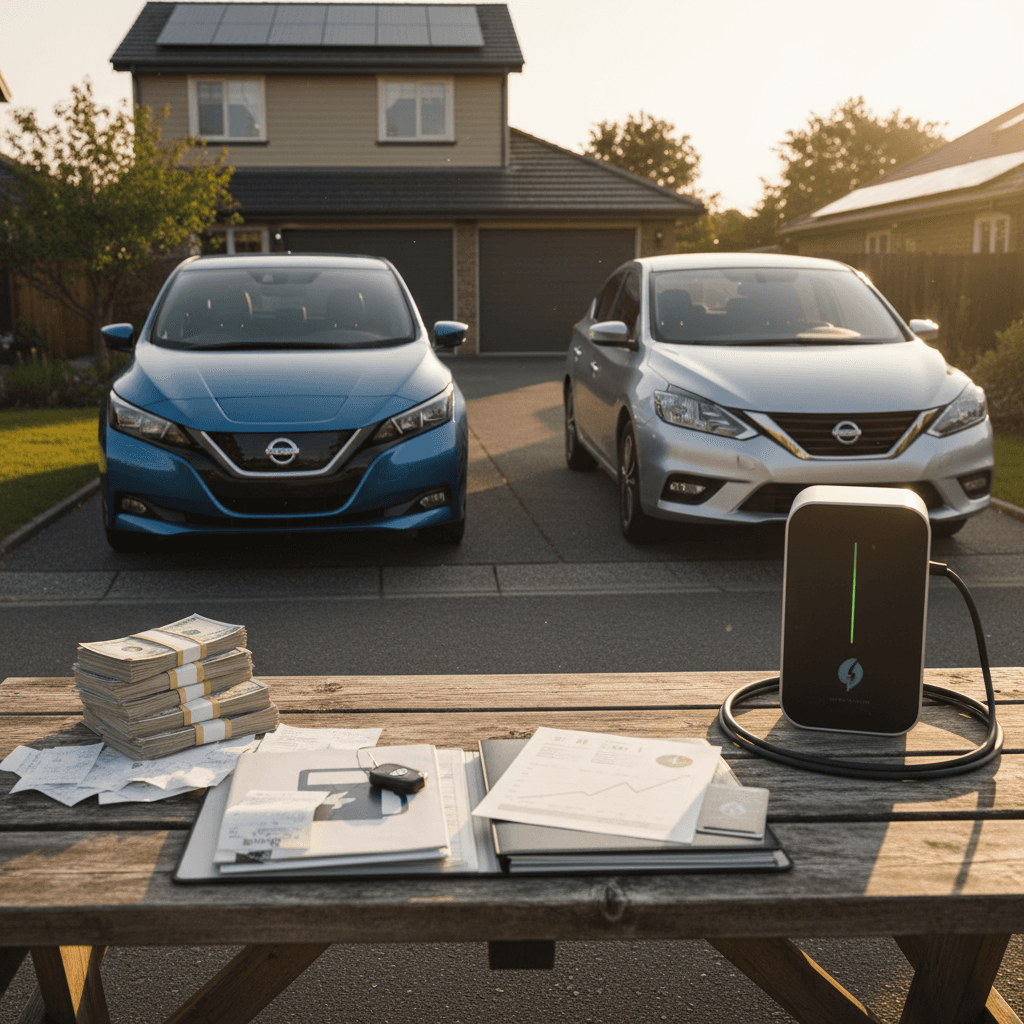
If you’re comparing a Nissan Leaf’s total cost vs a gas car equivalent, you’re already ahead of the game. Sticker price is loud and obvious; the real money is hiding in fuel, maintenance, and how well the car holds its value over time, especially if you’re looking at a used Leaf.
What this guide does (and doesn’t) do
Why total cost matters more than sticker price
The Leaf’s great party trick is that it often looks average at first glance and quietly beats gas cars over five years. A used Leaf can be thousands cheaper to run, even if you pay similar money up front. That’s because you’re trading gasoline and oil changes for cheap electricity and very little routine service.
- Purchase price and depreciation (what you pay minus what you get back at resale)
- Fuel vs electricity costs (your monthly “energy bill” to move the car)
- Maintenance and repairs (oil changes, brakes, exhaust vs EV simplicity)
- Insurance, taxes, and fees (the quiet line items)
- Battery health and range (unique to used EVs like the Leaf)
Think in monthly total, not just payment
Setting up a fair Nissan Leaf vs gas comparison
To keep this honest, let’s frame a typical U.S. commuter scenario. We’ll assume you’re shopping used, because that’s where the Leaf really punches above its weight, and exactly where Recharged operates.
Baseline assumptions for our 5-year cost comparison
These are not hard predictions, just a realistic framework for comparing a used Leaf to a similar gasoline compact.
| Factor | Nissan Leaf (used) | Gas compact equivalent |
|---|---|---|
| Model year / mileage | 2019 Leaf SV (~45,000 miles) | 2019 Corolla / Civic / Elantra (~45,000 miles) |
| Annual miles | 12,000 miles | 12,000 miles |
| Ownership period | 5 years | 5 years |
| Gas price | $3.75 per gallon | $3.75 per gallon |
| Electricity price | $0.15 per kWh (home charging) | N/A |
| Driving mix | Mostly city/suburban commuting | Same |
If your commute or local electricity prices are very different, you can adjust the numbers mentally, but the pattern usually holds.
Your local reality may differ
Purchase price and depreciation: used Leaf vs gas
Used Nissan Leafs tend to be cheaper to buy than equivalent gas compacts of the same age and mileage. Early Leafs especially have taken their depreciation hit already, in part because shoppers fear battery degradation more than they should. That fear is your opportunity, if you verify battery health.
Typical used pricing snapshot (2026-ish market, U.S.)
Over five years, both cars lose value, but the Leaf has already done a lot of its falling. A well‑priced, healthy‑battery Leaf bought used can have gentler depreciation from this point forward than the same‑year gas compact.
Example: 2019 Nissan Leaf SV
- Purchase: about $14,000
- After 5 years: perhaps $7,000 resale value
- 5‑year depreciation cost: roughly $7,000
Example: 2019 Gas Compact
- Purchase: about $17,000
- After 5 years: perhaps $9,000 resale value
- 5‑year depreciation cost: roughly $8,000
Where Recharged fits in
Ready to find your next EV?
Browse VehiclesFuel vs electricity costs: how much you really save
This is where the Leaf stops playing nice. Gasoline is the subscription you never wanted. Electricity, especially home charging, is more like a discounted pre‑paid plan.
5-year energy cost: Nissan Leaf vs gas compact
Based on 12,000 miles per year, average U.S. prices, and realistic efficiency for a Leaf and a small gas car.
| Metric | Nissan Leaf (used) | Gas compact equivalent |
|---|---|---|
| Efficiency | ~30 kWh / 100 miles | ~35 mpg |
| Annual miles | 12,000 miles | 12,000 miles |
| Electricity / gas price | $0.15 per kWh | $3.75 per gallon |
| Annual energy use | 3,600 kWh | ~343 gallons |
| Annual energy cost | ≈ $540 | ≈ $1,285 |
| 5‑year energy cost | ≈ $2,700 | ≈ $6,425 |
Your actual numbers vary, these are ballpark figures that illustrate the relationship, not a guarantee.
What if you can charge off‑peak?
Maintenance and repairs: where EVs sneak ahead
A Leaf doesn’t have oil, spark plugs, timing belts, exhaust systems, or a multi‑gear automatic transmission. It does have coolant, tires, suspension parts, and brake fluid, and all of that still needs love. But the routine cadence of owning a gas car simply isn’t there.
Typical 5-year maintenance & repair picture
Assuming normal driving and no major accidents.
Nissan Leaf (used)
- No oil changes, no exhaust work
- Brake wear is often lower thanks to regen
- Tires, cabin filters, coolant service still apply
- Risk items: onboard charger, battery cooling, aging electronics
- Illustrative 5‑year budget: $2,000–$2,500
Gas compact equivalent
- Oil changes every 5–7k miles
- Transmission service, belts, possibly exhaust work
- Same tires, similar suspension wear
- Risk items: transmission, catalytic converter, engine gaskets
- Illustrative 5‑year budget: $3,000–$3,500
Used EVs aren’t maintenance‑free
Insurance, taxes, and fees: quiet costs in the background
Insurance on a Leaf vs a gas compact is usually within shouting distance, with local factors (your ZIP code, driving record, and coverage level) doing most of the steering. Some states add small annual EV registration surcharges; others offer discounts on tolls or HOV access that indirectly save you money.
Nissan Leaf (used)
- Replacement cost can be higher than a cheap gas car, but you may offset that with lower miles and commuting risk.
- Some insurers offer small discounts for EVs or advanced safety features.
- Illustrative 5‑year insurance spend: similar to a gas compact if purchase prices are close.
Gas compact equivalent
- Huge insurance data sets and standard parts make these cars straightforward to price.
- If the gas car is slightly more expensive to buy, that can nudge premiums up.
- Illustrative 5‑year insurance spend: roughly in the same band as the Leaf.
Check EV fees in your state

Battery health: the big “what if” for used Leafs
With a used Leaf, battery health is the whole ballgame. The Leaf’s earlier generations in particular are more vulnerable to heat and time than some newer EVs. A healthy pack still delivers a perfectly usable daily range; a tired pack turns your car into an overqualified golf cart.
- Battery capacity loss reduces range and, eventually, resale value.
- Out‑of‑warranty battery replacement is expensive enough to blow up the math.
- Not all degradation is equal, climate, charging habits, and mileage matter.
Don’t buy a Leaf blind
This is why Recharged built the Recharged Score: every EV we list, including Leafs, gets a battery health diagnostic, range verification, and pricing benchmark. It turns “Does this Leaf still have a real‑world 120 miles in it?” from a guess into a data point.
5-year total cost of ownership: Leaf vs gas summary
Let’s pull the big pieces together into an illustrative 5‑year picture. Again, these are not promises; they’re a way to see how the moving parts stack up for a typical commuter.
Illustrative 5-year total cost: used Nissan Leaf vs gas compact
Assumes you buy used in good condition, drive 12,000 miles per year, charge mostly at home, and experience no catastrophic failures in either car.
| Cost category (5 years) | Nissan Leaf (used) | Gas compact equivalent |
|---|---|---|
| Purchase price | $14,000 | $17,000 |
| Resale value after 5 years | + $7,000 | + $9,000 |
| Net depreciation cost | $7,000 | $8,000 |
| Energy (fuel / electricity) | ≈ $2,700 | ≈ $6,425 |
| Maintenance & repairs | ≈ $2,200 | ≈ $3,250 |
| Insurance (illustrative) | ≈ $5,000 | ≈ $5,000 |
| Registration / fees (incl. some EV surcharges) | ≈ $1,250 | ≈ $1,100 |
| Estimated 5‑year total | ≈ $18,150 | ≈ $23,775 |
All amounts are rough, rounded estimates for comparison only.
Bottom line from the math
Who actually wins, and for what kind of driver?
When a Leaf makes more sense vs a gas car
Think about your own driving pattern before you pick a side.
Short-to-medium daily commute
City & suburban drivers
Frequent road‑trippers
Leaf wins when…
- You have dedicated home charging (or reliable workplace charging).
- Your daily driving is predictable and mostly within the Leaf’s real‑world range.
- You plan to keep the car 5 years or more and care about running costs.
- You’re buying used and can verify battery health up front.
Gas compact wins when…
- You routinely do long highway trips in areas with sparse charging.
- You cannot install home charging and must rely heavily on public DC fast charge.
- Your local electricity is unusually expensive while gas is cheap.
- You value single‑tank range over quiet, low‑cost commuting.
How to shop smart for a used Nissan Leaf
Used Nissan Leaf buying checklist
1. Start with your range reality
Map your regular week: commute, errands, kid duty. A healthy 40 kWh Leaf can easily cover most U.S. commutes. If your typical day is 20–60 miles, you’re squarely in the Leaf’s comfort zone.
2. Verify battery health, not just mileage
Two Leafs with the same mileage can have very different battery States of Health. Look for documented diagnostics, not just the dash’s bar display. A <strong>Recharged Score</strong> report gives you this up front.
3. Confirm charging access at home
Even a standard outlet can work for light use, but a 240V Level 2 setup turns living with a Leaf into a non‑event. If you rent, talk to your landlord before you fall in love with any EV.
4. Check local electricity and gas rates
Run your own math with your local utility prices. If your power is expensive but gas is dirt‑cheap, adjust expectations; the Leaf may still win, but by a slimmer margin.
5. Look at total cost, not just the price tag
When you compare listings, mentally add five years of fuel, maintenance, and likely resale value. A slightly more expensive Leaf with a strong battery can be cheaper in the long run than a bargain with a tired pack.
6. Use experts when you can
Buying a used EV is still new territory. Platforms like <strong>Recharged</strong> bundle battery diagnostics, fair pricing, financing, and trade‑in options so you’re not learning the hard lessons alone.
FAQ: Nissan Leaf total cost vs gas car
Frequently asked questions
Bottom line: is a Nissan Leaf worth it vs gas?
If your life looks like most American commutes, moderate miles, predictable routes, and a driveway or garage, the Nissan Leaf’s total cost vs a gas car equivalent tilts quietly and convincingly in the Leaf’s favor. You spend less on energy, dodge much of the mechanical drama, and, in many used‑Leaf scenarios, start from a lower purchase price.
The catch is judgment: you need a Leaf with a healthy battery and a charging plan that suits your daily rhythm. That’s exactly where tools like the Recharged Score Report, expert EV support, and transparent used‑EV pricing earn their keep. Get those variables right and the Leaf stops being a science‑project curiosity and becomes what it really is, one of the cheapest, calmest ways to move yourself around town.
When you’re ready to run the numbers on an actual car instead of a hypothetical one, you can browse used Leafs on Recharged, see each vehicle’s verified battery health, trade in your gas car, and pre‑qualify for financing in a few clicks. The math is compelling. Now it’s about whether your driving life is ready to cash in on it.