You don’t Google “diagnostic shops near me” because you’re bored. Something’s blinking, chiming, or feeling wrong, and you want answers that aren’t delivered in hieroglyphic OBD-II fault codes. In 2025, a good diagnostic shop is less “grease-stained garage” and more “urgent‑care clinic for your car or EV”, and choosing the right one can save you hundreds, sometimes thousands.
Quick definition
Why “diagnostic shops near me” matters more than ever
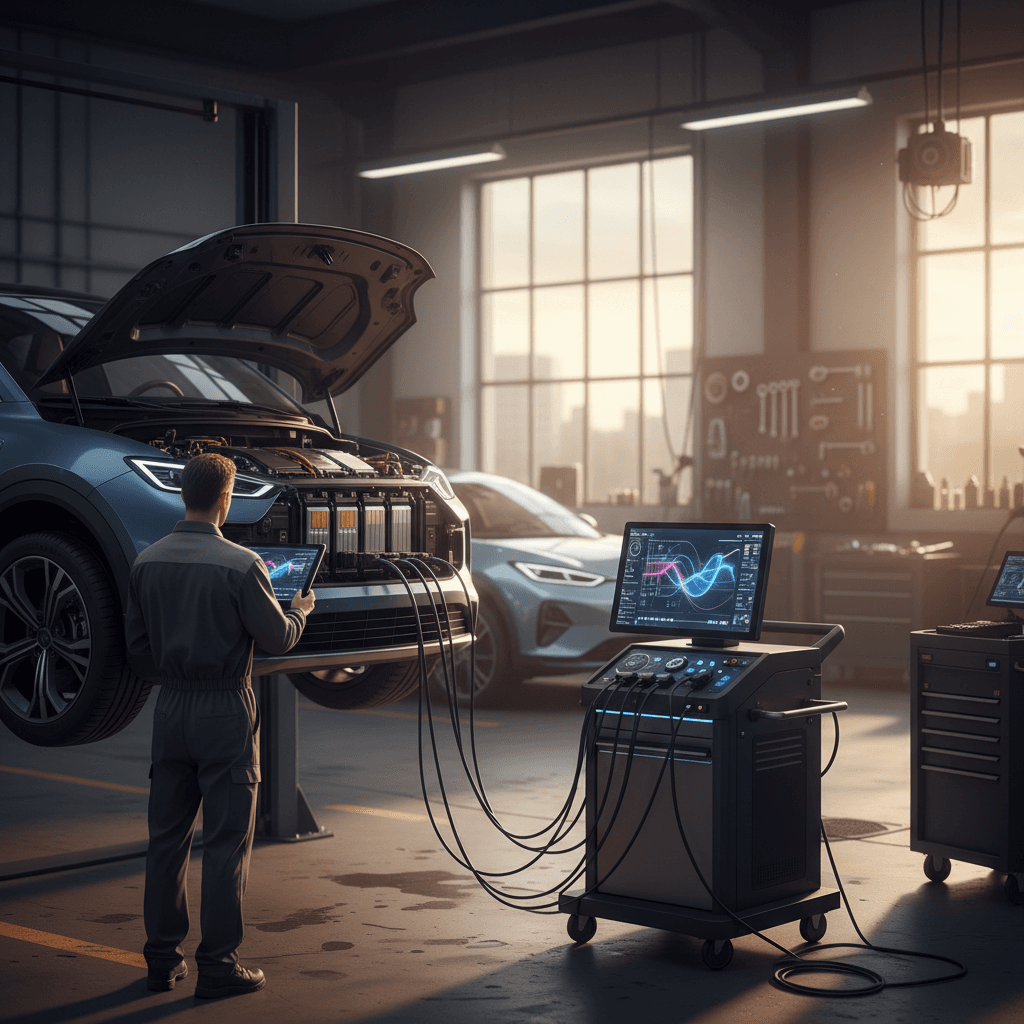
Modern vehicles are rolling data centers. Even basic sedans have dozens of computers; EVs and hybrids add high‑voltage battery packs, inverters, DC‑DC converters, and thermal management systems. A $25 code reader might tell you what set the fault; a proper diagnostic shop tells you why, before you start throwing parts and money at the problem.
Diagnostics and repair: why it pays to be precise
Think of diagnostics as tuition, not a tax
What a car diagnostic test actually includes
When you search for a diagnostic shop near me, you’re usually buying time, 40–90 minutes of a technician’s brain, guided by factory procedures and expensive scan tools. A proper diagnostic session is more than a kid at a parts store reading a code for free.
- Computer scan of all relevant modules (engine, transmission, ABS, airbag, hybrid/EV systems, body control).
- Freeze‑frame and live‑data review to see what the sensors were doing when the fault set.
- Visual checks of wiring, connectors, fuses, relays, and obvious mechanical issues.
- Technical Service Bulletin (TSB) search for known problems and software updates.
- Following a step‑by‑step test plan: pin‑testing circuits, smoke‑testing for leaks, road testing with live data logging.
- Preparing a written estimate for repair, including parts, labor, and possible alternatives.
Code read ≠ diagnosis
How much diagnostics should cost in 2025
Pricing is not uniform, but across U.S. markets in 2025, diagnostic fees have converged into some fairly predictable bands. Knowing these ranges makes it easier to spot a fair quote, and the occasional money‑grab.
Typical 2025 diagnostic pricing in the U.S.
Ballpark ranges for a single diagnostic session, actual prices depend on region, brand, and complexity.
| Provider type | What you usually get | Typical price range |
|---|---|---|
| Auto‑parts store | Basic OBD-II code read, no hands‑on testing | $0–$50 |
| Independent shop | Full scan, basic testing, estimate | $80–$180 |
| Dealership (mainstream brands) | Factory scan tool, TSB/updates, brand specialist | $120–$220 |
| Dealership (luxury/European) | High‑end diagnostics, complex modules | $180–$300+ |
| Hybrid/EV specialty or dealer | High‑voltage diagnostics, battery checks | $200–$400+ |
Always confirm whether the fee includes just code reading or full troubleshooting with a written estimate.
Why is the fee all over the place?
Types of diagnostic shops near you (and who they’re best for)
Four main places to get diagnostics done
Each has a role; the trick is matching your situation to the right one.
Dealership service
Best for: Late‑model cars under warranty, complex software issues, recalls.
- Factory scan tools and technical support
- Up‑to‑date TSBs and recalls
- Usually higher hourly rates
Independent shop
Best for: Out‑of‑warranty cars, most daily‑driver issues.
- Lower labor rates than dealers
- Good value if they specialize in your brand
- Skill level varies, check reviews
Mobile mechanic
Best for: No‑start issues, convenience, simple drivability problems.
- They come to you
- Limited by what they can do on‑site
- Great for triage, not engine rebuilds
Auto‑parts store
Best for: Quick check of a basic warning light.
- Often free code reads
- No real troubleshooting
- Expect a sales pitch on parts
When a dealership makes sense
If your vehicle is still under factory warranty or has open recalls, the dealership is often the best, and cheapest, place to start. Warranty and recall work is covered, and the dealer can apply software updates that independents may not have access to.
When an independent shop is the smarter play
For older cars and many routine issues, a well‑reviewed independent shop can deliver the same or better diagnostic quality for less money. Many independents invest in OEM‑level tools for the brands they see most often.
How to actually find good diagnostic shops near you
Typing “diagnostic shops near me” into a search bar is the easy part. The hard part is filtering the results so you don’t end up paying dealer money for parts‑store quality work. Here’s a practical process that works whether you’re driving a ten‑year‑old crossover or a nearly new EV.
Checklist: choosing the right diagnostic shop
1. Start with specialty, not proximity
A shop that sees your make and powertrain every day will diagnose it faster and more accurately than the closest generic garage. Look for brand specialists or EV/hybrid experience in their description.
2. Read recent, detailed reviews
Don’t just look at star ratings. Scan for comments mentioning diagnostics, electrical issues, tricky problems, and whether the shop explained findings clearly.
3. Ask for their diagnostic process
A good shop can describe, in plain English, what their diagnostic fee covers: scan, testing, test drive, written estimate. If they say “we just plug in the computer,” keep looking.
4. Confirm the fee and what it includes
Before you book, ask: How much is the diagnostic? Does it apply toward the repair if I proceed? What if the issue is intermittent and takes longer to find?
5. Check certifications and equipment
ASE‑certified techs, hybrid/EV training, and modern scan tools are all good signs. Old equipment and vague answers about EVs are waving red flags.
6. Get the results in writing
Insist on a printed or emailed report with codes, test results, and recommendations. It’s your leverage if you want a second opinion, or if you’re evaluating a used car or EV.
Where Recharged fits in
Ready to find your next EV?
Browse Vehicles
Diagnostic shops for EVs and hybrids
EVs and hybrids change the diagnostic game. You still have traditional systems, suspension, brakes, HVAC, but the expensive bits are now battery packs, high‑voltage cabling, and power electronics. Not every neighborhood shop is ready for that, and not every EV issue belongs at a dealership.
What’s different about EV and hybrid diagnostics
Same idea, find the root cause, but with higher stakes and higher voltage.
High‑voltage safety
Techs need special training and PPE to work around 400–800V systems. That additional training and risk is one reason EV diagnostics often cost more.
Battery health focus
For EVs, the battery is the value. Good diagnostic shops can pull detailed state‑of‑health (SOH) data, cell balance info, and thermal history.
Thermal systems
EVs rely on liquid cooling and heating for the battery and electronics. Diagnosing range loss often means checking pumps, valves, and software logic, not just the pack itself.
Questions to ask an EV diagnostic shop
Using diagnostics when buying a used EV
If you’re EV‑curious and browsing used listings, diagnostics are more than a repair tool, they’re a negotiation weapon. A clean diagnostic report and strong battery health can easily swing thousands of dollars in value either way.
Pre‑purchase diagnostic inspection
For a used EV bought privately, paying a shop for a pre‑purchase diagnostic is money well spent. You want:
- Full system scan (including high‑voltage modules)
- Battery state‑of‑health and degradation data
- Service and fault history
- Brake, suspension, and tire assessment
How Recharged streamlines this
When you shop on Recharged, every vehicle already has a Recharged Score with verified battery health, pricing analysis, and inspection findings. Instead of scheduling your own diagnostic visit, you start with the data and talk through it with an EV specialist.
Use the report to negotiate
Red flags and common mistakes to avoid
- Choosing a shop solely because it’s closest, not because it understands your brand or EV.
- Accepting a vague estimate like “we’ll see what we find” with no cap on diagnostic time.
- Letting a free code read turn into a parts cannon, replacing components without testing.
- Skipping diagnostics before buying a used EV or hybrid because “it feels fine on the test drive.”
- Not asking for your scan report and notes; you paid for that information.
The most expensive phrase in car repair
FAQ: Diagnostic shops near me
Frequently asked questions
The bottom line: treat diagnostics like an investment
When you search for diagnostic shops near me, you’re really searching for clarity. A good diagnostic shop won’t just clear a warning light; it will explain what happened, why it matters, and what your options are in plain language. In the EV era, that clarity is even more valuable, because a single battery decision can swing the long‑term cost of ownership by thousands.
Use diagnostics strategically: to catch problems early, to decide whether an aging car deserves another repair, or to evaluate a used EV before you buy. And if you’d rather let someone else sweat the diagnostic details, remember that every vehicle on Recharged comes pre‑vetted with a Recharged Score and verified battery health, plus financing, trade‑in options, and nationwide delivery. Either way, the more you treat diagnostics as an investment in information, not just another fee, the better decisions you’ll make.