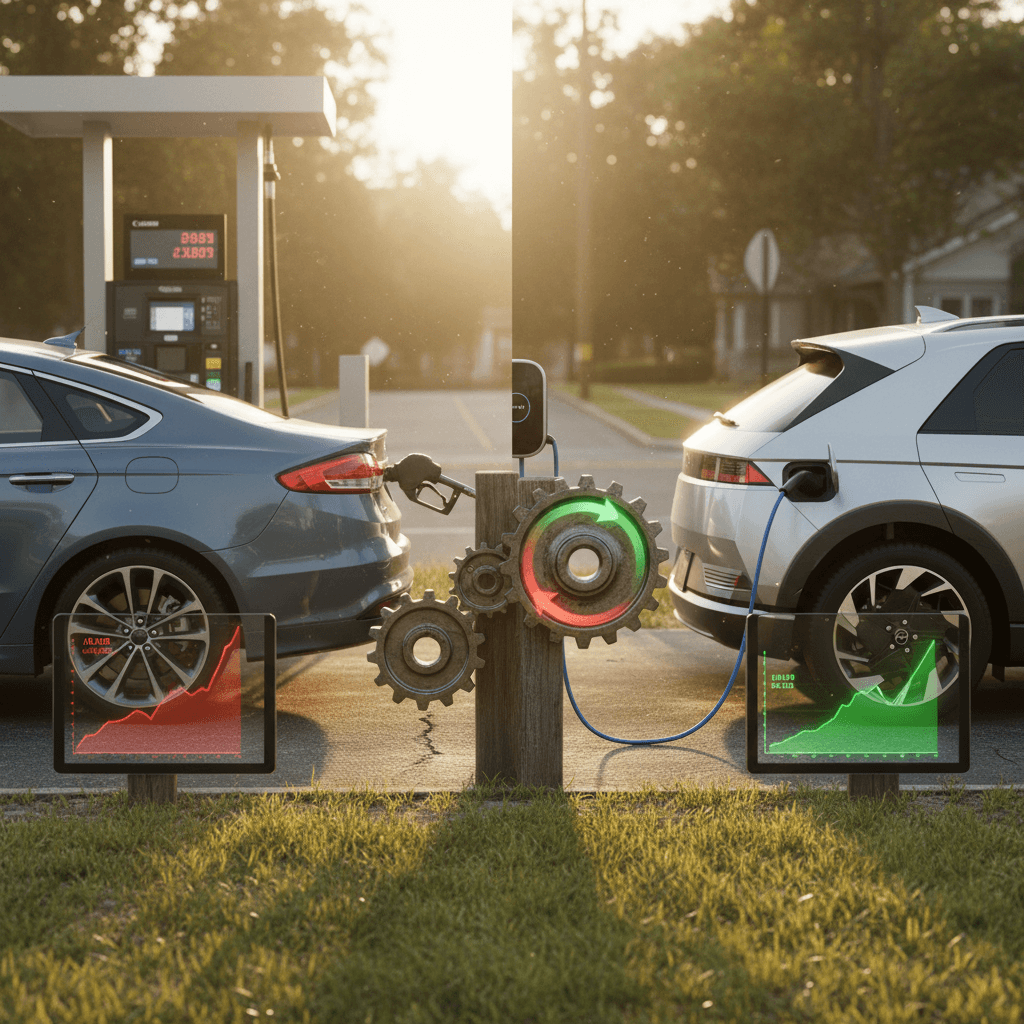
If you’re trying to decide between a gas car and an electric vehicle in 2026, the most useful number isn’t MPG or kWh, it’s **cost per mile**. Once you know what you actually pay every time you roll the odometer forward, gas vs electric becomes a simple dollars‑and‑cents comparison.
Quick answer for 2026
Why cost per mile matters in 2026
Sticker price gets all the attention, but over several years of ownership **fuel or electricity often costs more than the car’s price tag**. That’s especially true if you commute daily or rack up highway miles. Looking at cost per mile lets you compare a used EV against a newer gas car on equal footing, and it helps you decide whether home charging, workplace charging, or relying on fast chargers makes financial sense.
What "cost per mile" actually tells you
Three questions you can answer with a single number
Monthly budget impact
Multiply cost per mile by your monthly miles to estimate your **real fuel or electricity bill**.
Gas vs EV value
Compare a **gas car you already own** to an EV you’re considering, without guessing about MPG or efficiency charts.
Road‑trip planning
Understand how much a **1,000‑mile trip** will cost in a gas car vs an EV using fast chargers.
Think in miles, not gallons or kWh
How to calculate cost per mile: gas vs electric
Gasoline vehicle formula
The basic formula is straightforward:
Gas cost per mile = Gas price per gallon ÷ Miles per gallon
Example:
• Gas price: $3.75 per gallon
• Car efficiency: 30 mpg
Cost per mile = 3.75 ÷ 30 = $0.125 per mile (12.5¢/mi)
Electric vehicle formula
For EVs, you use electricity cost and energy consumption:
EV cost per mile = (Electricity price per kWh × kWh per 100 miles) ÷ 100
Example:
• Home electricity: $0.16 per kWh
• EV efficiency: 28 kWh/100 mi
Cost per mile = (0.16 × 28) ÷ 100 ≈ $0.045 per mile (4.5¢/mi)
Watch the small print on electricity rates
Typical 2026 numbers many U.S. drivers are seeing
2026 benchmark costs per mile
Let’s plug some realistic 2026 numbers into those formulas so you can see where gas and electric usually land. These aren’t promises, they’re **benchmarks** to help you ballpark your own situation.
Gas vs electric cost per mile: sample 2026 scenarios
Approximate energy cost per mile based on common real‑world assumptions in 2026. Your actual numbers will depend on your local fuel and electricity prices, driving style, and specific vehicle.
| Scenario | Assumptions (2026 typical) | Approx. cost per mile |
|---|---|---|
| Average gas commuter | $3.75/gal, 30 mpg mixed driving | ≈ $0.13/mi (13¢) |
| Less efficient SUV | $3.75/gal, 22 mpg | ≈ $0.17/mi (17¢) |
| Efficient hybrid | $3.75/gal, 48 mpg | ≈ $0.08/mi (8¢) |
| EV, mostly home charging | $0.16/kWh, 28 kWh/100 mi | ≈ $0.045/mi (4.5¢) |
| EV, cheap off‑peak home charging | $0.10/kWh, 28 kWh/100 mi | ≈ $0.028/mi (2.8¢) |
| EV, mixed public Level 2 + some DC fast charging | Blended $0.25/kWh, 30 kWh/100 mi | ≈ $0.075/mi (7.5¢) |
| EV, heavy DC fast charging only | $0.40/kWh, 32 kWh/100 mi | ≈ $0.13/mi (13¢) |
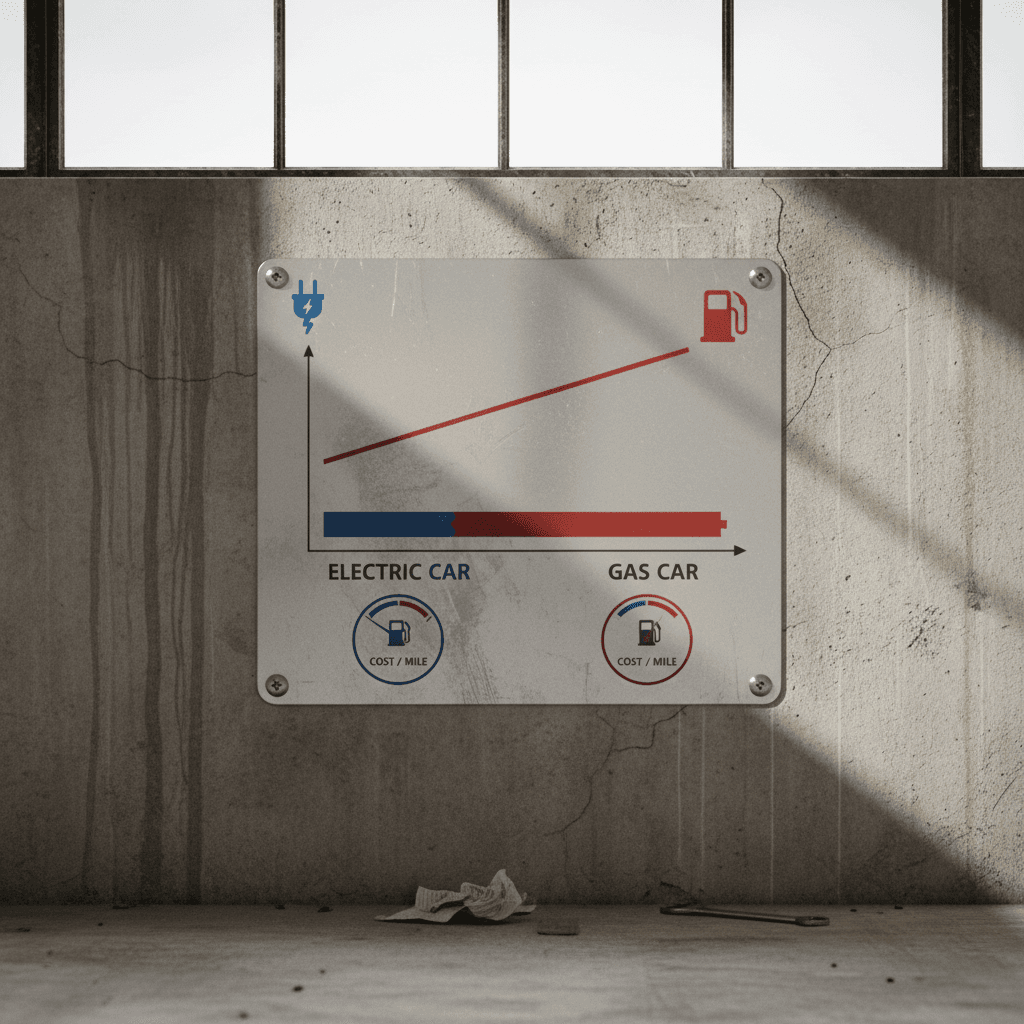
Notice how home charging delivers the lowest cost per mile, while fast charging still typically undercuts gas.
When gas and electric look similar
Home charging vs public fast charging costs
Electricity is like airfare, **it depends heavily on where, when, and how you buy it**. The same EV can cost half as much per mile to run if you mostly charge at home instead of relying on public fast chargers along the highway.
Home charging: lowest cost per mile for most drivers
If you can install Level 2 charging at home or already have a 240V outlet, you’re in the best position.
- Typical rate: $0.13–$0.20/kWh regular, lower off‑peak
- Mid‑size EV: 26–30 kWh/100 mi in mixed driving
- Ballpark cost: about 3–6¢ per mile
At this level, an EV can cut your “fuel” cost to **one‑third or less** of a comparable gas car.
Public DC fast charging: faster, but more expensive
Fast chargers offer convenience and speed, but you pay for it.
- Typical rate: around $0.35–$0.50/kWh in many corridors
- Higher speeds + highway driving = 30–36 kWh/100 mi
- Ballpark cost: roughly 11–18¢ per mile
That still often undercuts a 25 mpg gas SUV at $4/gal, but the gap is smaller than with home charging.
Blend your charging to save
How driving style and weather change the math
Both gas cars and EVs have a headline efficiency rating, but that number assumes a test cycle that might not look much like your commute. In the real world, **speed, climate, and driving style** all move your cost‑per‑mile needle.
Key factors that move your cost per mile
These affect MPG and kWh/100 miles more than most people realize
Highway speed
Jumping from 65 mph to 80 mph hurts efficiency in **both gas cars and EVs**. Expect more energy use, and a higher cost per mile, at higher cruising speeds.
Cold weather
EVs use energy to heat the cabin and battery; gas cars use engine waste heat. In sub‑freezing temps, many EVs need **20–40% more energy**, raising cost per mile.
Driving style & load
Aggressive acceleration, heavy cargo, rooftop boxes, and big wheels all increase consumption. The smoother you drive, the less you’ll pay per mile, regardless of powertrain.
Winter EV reality check
Cost per mile and the case for used EVs
New EV prices can feel steep, but **used electric vehicles combine lower purchase price with low cost per mile**, and that’s where things get interesting for value‑minded buyers. When you can buy a 3–5‑year‑old EV for the price of a newer gas compact, yet pay half (or less) per mile in energy, total ownership costs start to tilt strongly in favor of electric.
Example: used EV vs newer gas sedan
Imagine you drive 12,000 miles per year and you’re choosing between:
- A used EV you mostly charge at home for 5¢/mi
- A newer gas sedan that averages 30 mpg at $3.75/gal (~12.5¢/mi)
Annual energy cost:
• EV: 12,000 × $0.05 = $600
• Gas: 12,000 × $0.125 = $1,500
That’s a difference of about **$900 per year** in your favor.
How Recharged fits into the picture
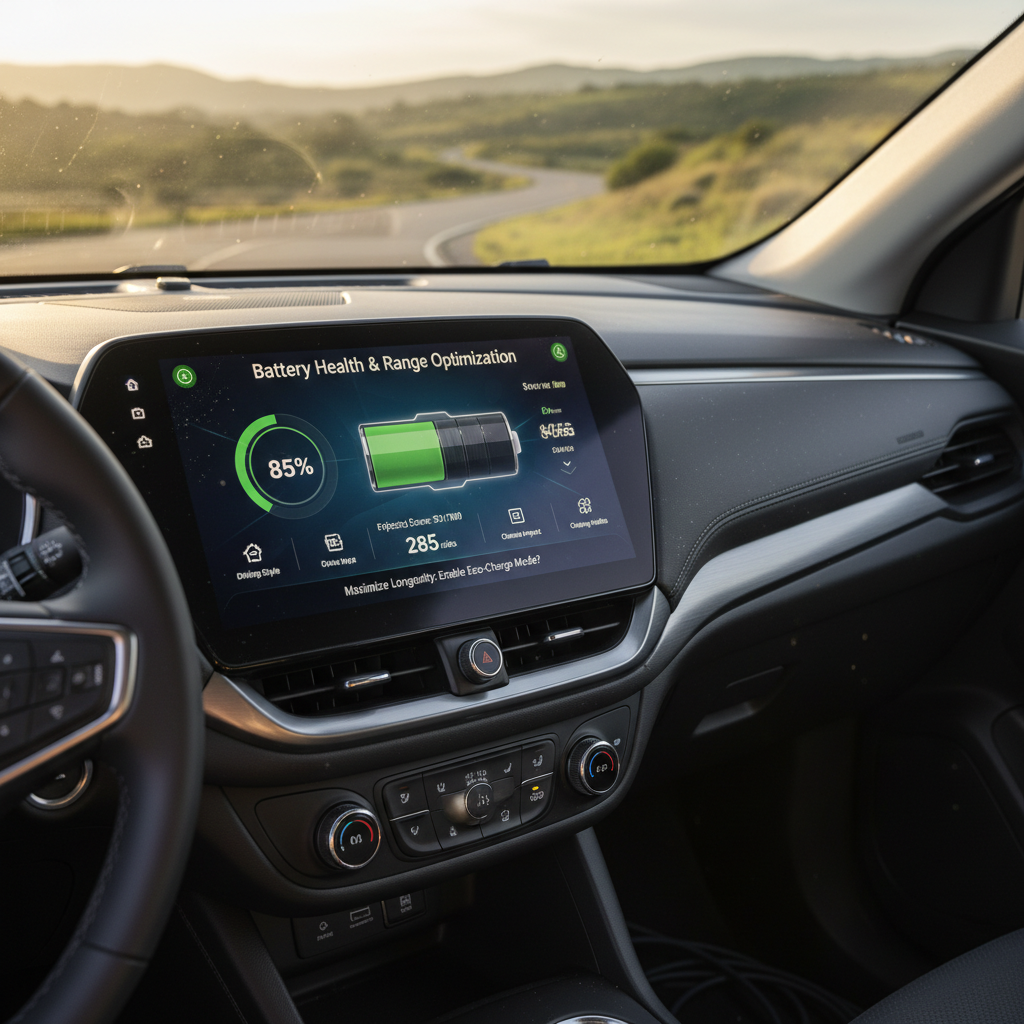
With used EVs, the big question is, "What shape is the battery really in?" At Recharged, every vehicle comes with a Recharged Score Report that includes verified battery health, fair‑market pricing, and projected range. That helps you understand not just **what you’ll pay per mile today**, but how that might change over the years you own the car.
You can browse vehicles entirely online, get financing, or even trade in a gas car, then have your EV delivered, no haggling, no guesswork about the battery.
When the savings start to add up
Checklist: 7 ways to lower your EV cost per mile
Turn your EV into a cost‑per‑mile champ
1. Use scheduled charging
Set your EV or home charger to top up during **off‑peak or EV‑discount hours**. In many regions, shifting most of your charging to nighttime can shave several cents off each kWh, dropping your cost per mile immediately.
2. Prioritize home or workplace charging
Treat DC fast charging like airport food, fine when you need it, expensive as a habit. Aim to get at least **70–90% of your miles** from home or workplace Level 2 charging if possible.
3. Keep your tires properly inflated
Underinflated tires hurt efficiency in gas cars and EVs alike. Checking tire pressure monthly and keeping it at the recommended level gives you **free miles** for the same energy.
4. Precondition while plugged in
In cold or hot weather, use your EV’s climate preconditioning while the car is still plugged in. That way, much of the cabin heating or cooling energy comes from the grid, not your battery, improving real‑world efficiency.
5. Avoid chronic high‑speed driving
Cruising at 80+ mph can significantly raise kWh/100 miles. When conditions allow, backing down even **5–10 mph** can save meaningful energy and lower your cost per mile without adding much time to your trip.
6. Plan efficient routes
Navigation apps increasingly offer **"eco" routes** that avoid steep climbs or heavy stop‑and‑go traffic. A slightly slower but smoother route can use less energy than the nominally “shortest” path.
7. Choose the right EV for your needs
Bigger batteries and performance models are great, but they often use more energy per mile. If your priority is low cost per mile, consider a **moderate‑range, efficient EV**, especially on the used market where prices can be very compelling.
Gas vs EV cost per mile FAQ (2026)
Frequently asked questions about gas vs EV cost per mile
Bottom line: Which is cheaper in 2026?
In 2026, if you drive a typical number of miles and can plug in at home or work, an electric vehicle will almost always **beat a comparable gas car on cost per mile**, often by a wide margin. Even when you factor in occasional road‑trip fast charging, you’re usually paying less per mile for energy, and potentially less for maintenance as well.
The exceptions are drivers without reliable access to affordable charging, or those who log very few miles each year. For everyone else, especially higher‑mileage commuters, the math is increasingly clear: **cost per mile favors electric**, and a well‑chosen used EV can tilt the equation even further in your favor.
If you’re ready to see how that might look in your own driveway, you can explore used EVs with verified battery health, transparent pricing, and expert help from start to finish on Recharged, then plug your own numbers into the formulas in this guide and watch your cost per mile shrink.