If you own a Chevy Blazer EV and you’re thinking about moving on, a private sale can put more money in your pocket than a quick dealer trade. But selling a new‑generation EV isn’t the same as selling a gas SUV. Buyers will grill you on battery health, charging history, and software updates, especially given the Blazer EV’s high profile and early software recalls. This guide walks you step‑by‑step through how to sell a Chevy Blazer EV in a private sale, with practical EV‑specific tips and a backup plan if you decide you’d rather have Recharged handle the heavy lifting.
Good news for Blazer EV owners
Why a private sale for a Chevy Blazer EV?
More money than a trade‑in
Dealers have to leave room for reconditioning, profit, and auction risk. In a private sale, that same spread often becomes your money instead of theirs, especially on a nearly new Blazer EV RS or SS with desirable options like Super Cruise.
EV shoppers do their homework
EV buyers are typically tech‑savvy and research‑driven. They’re willing to pay a premium for a well‑documented Blazer EV with strong battery health, clear charging records, and honest disclosure about software history.
But it’s more work than selling a gas SUV
Step 1: Know your Blazer EV and today’s market
Before you can price or pitch your Blazer EV, you need a clear handle on what you’re selling and how it fits into the 2025 EV market. With the Blazer EV, trim level, drive layout, and software history matter as much as miles and paint color.
- Confirm exact trim and drivetrain: 2LT, RS, or SS; front‑wheel drive, all‑wheel drive, or performance AWD.
- Note key specs buyers care about: EPA‑estimated range, 0–60 performance (especially on SS with Wide Open Watts mode), and whether Super Cruise is equipped.
- Gather all original paperwork: window sticker or build sheet, purchase or lease agreement, and any extended warranty or protection products.
Where to research Blazer EV resale values
Use multiple sources, EV pricing is moving fast
Main valuation sites
Start with big sites that track used pricing, Kelley Blue Book, Edmunds, NADAguides, and plug in your year, trim, miles, and ZIP. Treat their numbers as directional, not gospel.
EV‑specific marketplaces
Scan listings on EV‑focused marketplaces and classifieds to see what similar Blazer EVs are actually advertised for. Pay attention to options like Super Cruise, wheel packages, and AWD.
Local competition check
Search for other Blazer EVs or similar electric SUVs (Model Y, Mach‑E, Ioniq 5) for sale within 200 miles. Buyers will compare your SUV against those directly.
Use Recharged for an instant reality check
Step 2: Set a realistic asking price
Once you know the ballpark, you need a smart asking price strategy. With newer EVs like the Blazer, the market can move quickly as incentives, new models, and software updates roll out, so your price needs to acknowledge that reality without giving away your SUV.
Pricing strategy for a private‑sale Blazer EV
Use this as a starting point, then refine based on local data.
| Scenario | Suggested Ask vs. Dealer Offer | Notes |
|---|---|---|
| Like‑new, low‑miles RS or SS | $3,000–$5,000 above best dealer offer | Private buyers will pay for range, styling, and performance if battery health is excellent. |
| Average‑miles daily‑driver 2LT or RS | $2,000–$3,000 above best dealer offer | Most common case. Strong documentation makes the upper end realistic. |
| High‑miles, cosmetic issues, or recall history | $500–$1,500 above best dealer offer | Focus on transparency and stress pricing value rather than perfection. |
Adjust your price based on condition, battery health, and software history.
Don’t chase a falling market
Step 3: Document battery health and charging history
Battery confidence is the number‑one question in any used‑EV sale. The Blazer EV’s Ultium pack is robust, but buyers can’t see that by kicking the tires. Your job is to turn the invisible, state of health, charging habits, software history, into something they can understand and trust.
Battery and charging documents to assemble
1. Current battery health snapshot
Gather screenshots or photos of range estimates at different states of charge and driving modes. If you’ve had a professional battery test, like a <strong>Recharged Score battery health report</strong>, feature that prominently in your listing.
2. Charging habits summary
Write a short description of how you charge: mostly home Level 2, occasional DC fast charging on trips, typical state‑of‑charge window. Buyers want to hear you avoided regularly charging to 100% and living at very low states of charge.
3. Service and recall history
Print or download your Chevy service records, including any <strong>software updates, recall work, and TSBs</strong> done on the Blazer EV. This is critical given the model’s early software issues and stop‑sale periods.
4. Remaining factory warranty coverage
Note the in‑service date and list remaining bumper‑to‑bumper and battery warranty coverage. Make it easy for a shopper to see how many years and miles of coverage they’re buying along with the SUV.
Why a professional battery report helps your price
Step 4: Prep your Blazer EV so it shows like new
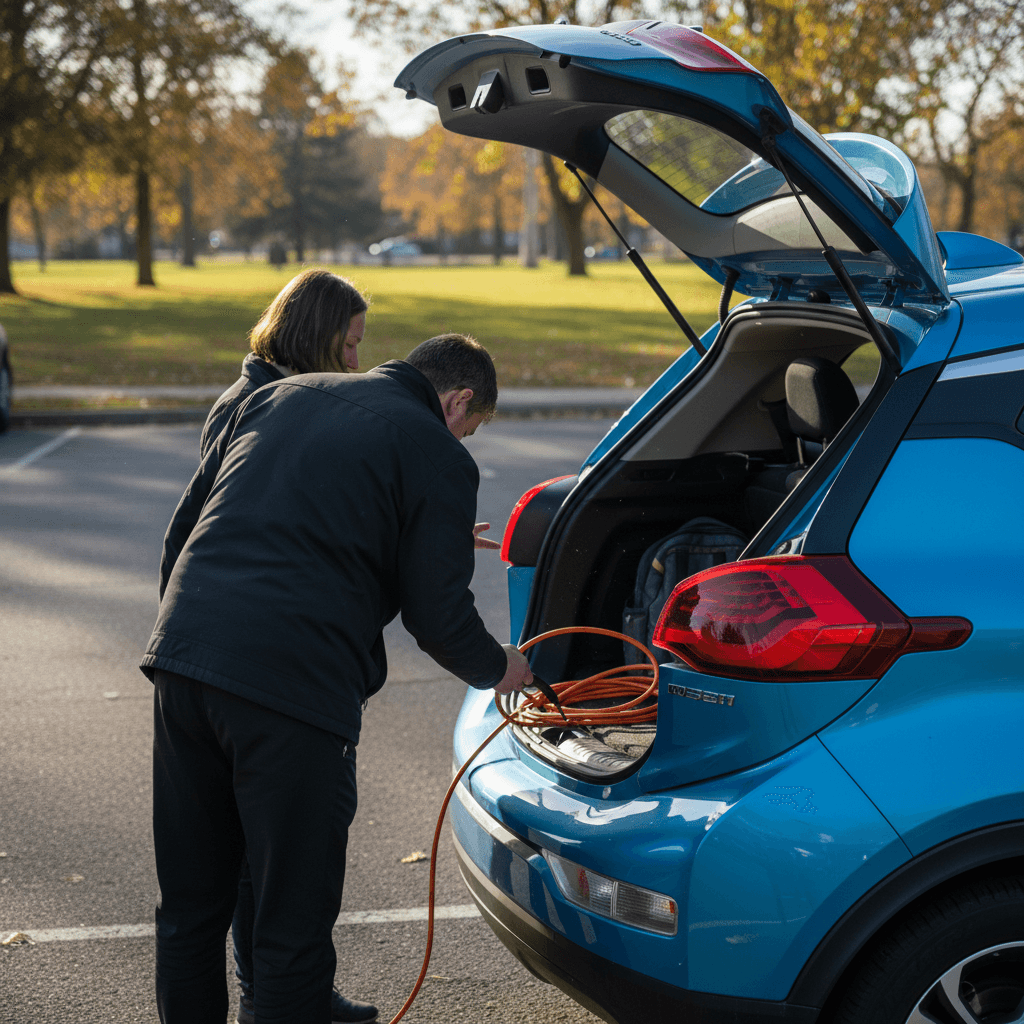
Presentation sells cars, and it’s doubly true with EVs. Shoppers expect a futuristic, tech‑forward SUV like the Blazer EV to be clean, quiet, and free of obvious issues. You don’t have to make it perfect, but you do need to make it look cared for.
- Detail the exterior: wash, clay, and wax if needed. Touch up small chips; repair curb‑rashed wheels or be ready to disclose them.
- Restore the interior: deep‑clean seats and carpets, wipe down the big center screen and trims, remove personal items and charging clutter.
- Fix inexpensive annoyances: burned‑out bulbs, worn wipers, basic alignment issues, or a cracked windshield can spook buyers and hurt offers more than the repair cost.
- Have both keys, manuals, and the OEM charge cable neatly presented in a bag or box during showings.
Stage it like a dealer would
Step 5: Create a listing that actually sells
A good listing does three things: it builds trust, it answers EV‑specific questions upfront, and it stands out in search results. Most owners throw up a few grainy photos and a two‑line description; you’re going to do better than that.
Key ingredients of a strong Blazer EV listing
Think like a buyer who has never owned an EV before
Pro‑level photos
Shoot 20–30 clear, well‑lit photos: full exterior from all corners, interior, close‑ups of wheels, tires, and any flaws, instrument cluster with odometer, and charging screens showing range at a given state of charge.
Transparent description
Open with the basics (year, trim, miles, drivetrain), then add battery and charging details, service/recall history, options (Super Cruise, wheel packages), and why you’re selling. Disclose flaws clearly.
EV‑specific FAQs
Include answers to common questions: typical real‑world range, where you charge, what home‑charging setup you use, and which public networks you’ve used successfully.
Where to advertise a Chevy Blazer EV privately
General classifieds and marketplaces
List on large, general platforms your local buyers already use. Filter inquiries aggressively and be prepared for basic EV questions.
EV‑focused marketplaces
Consider EV‑exclusive sites where buyers are already shopping for electric models and may better understand the value of a Blazer EV’s range and tech.
Your regional EV groups
If your area has active EV owners’ clubs or online groups, ask whether they allow "for sale" posts. These audiences often understand charging, incentives, and warranty much better than the average shopper.
Step 6: Screen buyers and host EV test drives safely
A polished listing should generate attention. The next challenge is turning messages into safe, serious showings, without wasting your evenings explaining what kilowatts are to tire‑kickers.
- Pre‑screen by message: ask whether they’ve driven EVs before, how they plan to charge, and whether they’re pre‑approved or paying cash.
- Insist on meeting in a safe, public place with cameras, many sellers pick a bank or police‑station parking lot for first meetings.
- Verify their driver’s license and take a photo of it before any test drive. If possible, bring a friend or family member.
- For the drive, walk them through starting the Blazer EV, selecting drive modes, and using one‑pedal or regen settings. Many gas‑car habits don’t carry over.
- Limit long, solo drives. Ideally, ride along so you can answer questions about charging, range, and features on the spot.
Never let someone drive off alone with your title
Step 7: Negotiate like a pro on a modern EV
Negotiating on an EV is different from haggling over a decade‑old gas crossover. You’ll hear questions about battery degradation, software stability, and whether to worry about future tech changes. Anticipate those, and you’ll control the conversation instead of reacting to it.
Use battery and service data as leverage
Instead of arguing feelings, point to facts: documented range, service records, recall work completed, and any third‑party battery health report. Buyers paying a fair price for a Blazer EV want reassurance more than a token discount.
Handle "EV fear" objections calmly
When someone worries about future charging standards or software glitches, explain how over‑the‑air updates, warranty coverage, and the growing charging network mitigate those risks. If they still want a big discount for speculative fears, they’re probably not your buyer.
Keep a firm, fair walk‑away number
Step 8: Paperwork, payment, and tax considerations
When you’ve agreed on a price, treat the closing just as carefully as the negotiation. EVs add a few wrinkles, like explaining federal and state incentives, to the usual used‑car paperwork routine, and you want everything buttoned up to avoid surprises for either party.
Closing checklist for a Chevy Blazer EV private sale
1. Confirm your state’s title process
Check your DMV website to confirm how to transfer a title in your state, whether you hold a paper title or an electronic one. Some states require a notarized bill of sale or specific odometer language.
2. Handle any outstanding loan
If you still owe money, coordinate the payoff with your lender. Many sellers meet buyers at the lender’s branch so funds can be wired, the lien released, and paperwork handled in one visit.
3. Accept only safe forms of payment
Cashier’s checks verified at the issuing bank while you’re there, or an in‑person wire transfer, are your safest bets. Avoid personal checks, long‑distance buyers who won’t meet, or overpayment "shipping" scams.
4. Explain incentives honestly
Federal and many state EV incentives typically apply <strong>only to purchases from licensed dealers</strong>, not private sales. Be upfront so the buyer doesn’t build a deal around a tax credit they can’t claim.
5. Cancel insurance and remove digital access
After you hand over the keys and title, cancel or transfer your insurance and remove the Blazer EV from any connected apps or online accounts.
Prefer a guided, paperwork‑handled sale?
When a private sale *isn’t* worth it
For many Blazer EV owners, a private sale is the right move. But there are very real situations where the extra 5–10% you might squeeze out simply isn’t worth the time, hassle, or risk.
Scenarios where Recharged may beat a private sale
You still get market‑driven pricing without the headaches
You’re time‑constrained or relocating
If you’re moving, changing jobs, or simply don’t have weeks to answer messages and host test drives, an instant offer or consignment sale through Recharged can free up your schedule while still reflecting current market pricing.
You’re worried about risk and logistics
If meeting strangers with high‑value EVs, handling five‑figure payments, or arranging out‑of‑state paperwork makes you uneasy, Recharged’s EV‑specialist team and Experience Center in Richmond, VA can absorb that risk for you.
Ready to find your next EV?
Browse VehiclesWhat Recharged adds on top of price
FAQ: Selling a Chevy Blazer EV privately
Frequently asked questions about Blazer EV private sales
Bottom line: Should you sell your Blazer EV privately?
Selling a Chevy Blazer EV in a private sale is absolutely doable, and potentially very rewarding, if you’re willing to prepare. Understand your trim and the current market, price realistically, document battery health and service history, and create a listing that answers EV‑specific questions before a shopper even messages you. Handle showings, test drives, and payment with the same care you’d expect from a professional retailer.
If that sounds like more time or risk than you want to shoulder, you’re not out of options. Recharged was built specifically to make buying and selling used EVs simple and transparent. With financing, trade‑ins, instant offers or consignment, nationwide delivery, and a Recharged Score Report on every vehicle, it can give you much of the extra value of a private sale with far less work. Either way, go into the process informed, and your Blazer EV can be your ticket to an excellent next EV, or a healthier savings account.