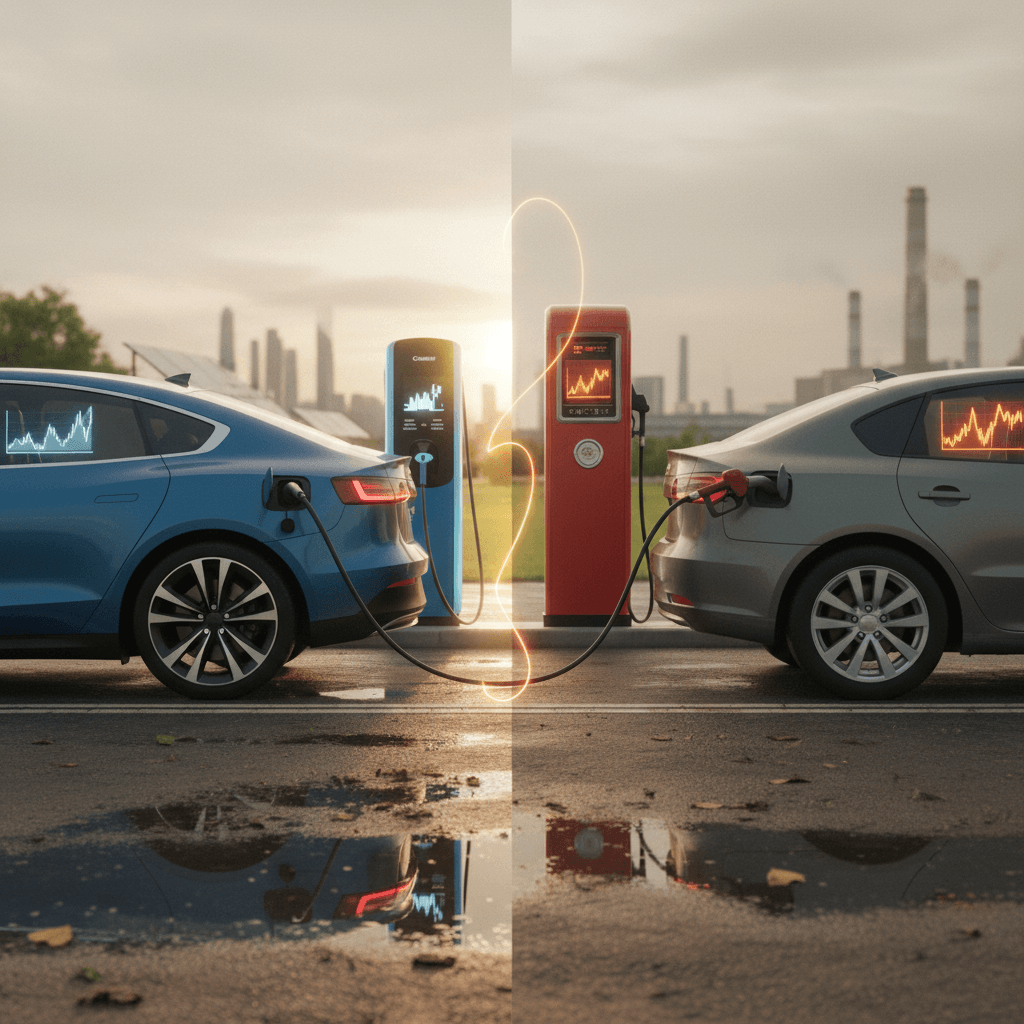
When you strip away the marketing and the memes, the real showdown between an electric car and a gasoline car comes down to one quiet question: how much does each mile actually cost you? In 2025, with U.S. electricity averaging around 17–19¢/kWh and gasoline hovering near $3.10 per gallon, the math is clearer than ever, and it’s surprisingly friendly to electric cars when you charge smart.
Quick answer
Electric vs gasoline: the big picture on cost per mile
Typical 2025 cost per mile (United States)
Those ranges are averages. If you live in California with 30+¢/kWh electricity and drive a big, boxy EV, your cost per mile will creep up. If you live in the Midwest with 13¢/kWh power and drive a very efficient electric hatchback, you’ll be closer to the low end. Gasoline has its own swings too, California drivers are used to $4+ per gallon while other states dip below $3.
Use cost per mile as your truth serum
How to calculate electric car cost per mile
EV math looks different at first, but it boils down to two pieces: how efficiently your car turns electricity into motion, and what you pay for each kilowatt-hour (kWh). The good news: you can calculate it with a napkin and a ballpoint pen.
- Find your EV’s efficiency. In U.S. terms, you’ll usually see kWh per 100 miles or miles per kWh on the window sticker or in the trip computer.
- Check your electricity price. Look at your bill for the rate in cents per kWh. Many households are around 15–20¢/kWh right now, but some states are lower and some coastal states are much higher.
- Plug into this formula: Cost per mile = (Electricity price per kWh × kWh per 100 miles) ÷ 100.
Sample EV formula
Cost per mile = (0.17 × 27) ÷ 100 ≈ 4.6¢ per mile.
Efficient compact EV
Think small hatchback or sedan that averages 25 kWh/100 mi (~4 mi/kWh).
- At 15¢/kWh: (0.15 × 25) ÷ 100 = 3.8¢/mi
- At 20¢/kWh: (0.20 × 25) ÷ 100 = 5.0¢/mi
Larger SUV-style EV
A roomy, all‑wheel‑drive SUV might run around 33 kWh/100 mi (~3 mi/kWh).
- At 15¢/kWh: (0.15 × 33) ÷ 100 = 5.0¢/mi
- At 20¢/kWh: (0.20 × 33) ÷ 100 = 6.6¢/mi
Watch those tiers and fees
How to calculate gasoline cost per mile
Gasoline cost is more familiar: you see the price on every street corner. The math is even simpler than with an EV.
- Find your car’s fuel economy in miles per gallon (mpg). The window sticker is a start, but your real‑world average from the trip computer is better.
- Check the price of regular gas in your area. Nationally, 2024–2025 has averaged around $3.00–$3.30 per gallon, though some states run far higher.
- Use this formula: Cost per mile = Gas price per gallon ÷ mpg.
Sample gas formula
Cost per mile = 3.10 ÷ 31 ≈ 10¢ per mile.
Gasoline car cost per mile at different mpg
How fuel economy changes your cost per mile at three common gas prices.
| MPG | $2.75/gal | $3.10/gal | $3.50/gal |
|---|---|---|---|
| 22 mpg | 12.5¢/mi | 14.1¢/mi | 15.9¢/mi |
| 28 mpg | 9.8¢/mi | 11.1¢/mi | 12.5¢/mi |
| 32 mpg | 8.6¢/mi | 9.7¢/mi | 10.9¢/mi |
| 40 mpg | 6.9¢/mi | 7.8¢/mi | 8.8¢/mi |
Lower mpg hits your wallet hard, EVs avoid that penalty in stop‑and‑go driving.
Real‑world 2025 examples: EV vs gas side by side
Let’s pull this together with three common scenarios. These aren’t lab numbers; they’re grounded in typical 2025 U.S. energy prices and realistic efficiency for modern vehicles.
Three typical driver scenarios
Same miles, very different fuel bills
Suburban commuter
12,000 miles/year
Mix of city and highway, home overnight charging.
- EV: 4.5¢/mi → ~$540/year
- Gas (30 mpg, $3.10/gal): 10.3¢/mi → ~$1,236/year
- Annual savings: ≈ $700
High‑mileage road warrior
20,000 miles/year
Sales, service, or long commutes.
- EV: 5¢/mi (aerodynamic sedan) → ~$1,000/year
- Gas (28 mpg, $3.10/gal): 11.1¢/mi → ~$2,220/year
- Annual savings: ≈ $1,200
Apartment driver
8,000 miles/year
No home charger, mostly public DC fast charging.
- EV: 10¢/mi (40¢/kWh, 4 mi/kWh) → ~$800/year
- Gas (30 mpg, $3.10/gal): 10.3¢/mi → ~$824/year
- Annual savings: small, but still competitive
Where EVs really shine
5 factors that really move your cost per mile
Cost drivers to watch
1. Your electricity rate
Going from 13¢ to 30¢ per kWh can <strong>more than double</strong> your EV’s cost per mile. Check your current rate, any time‑of‑use options, and whether EV‑specific plans are available.
2. Home vs public charging mix
A driver who charges 90% at home and 10% on road trips will pay far less per mile than someone who relies mainly on public fast chargers at 40–55¢/kWh.
3. Vehicle efficiency
Just like mpg, EVs vary. Sleek sedans and hatchbacks often run 25–27 kWh/100 mi, while large SUVs can push 35+ kWh/100 mi. That’s the difference between roughly 4¢ and 7¢ per mile at the same power price.
4. Driving style and climate
Hard acceleration, high speeds, and very cold or very hot weather all raise energy use for EVs and gas cars. Smooth driving and using seat heaters instead of blasting the cabin heat can trim your EV’s energy burn.
5. Annual miles driven
The more you drive, the more those per‑mile savings matter. If you only drive 5,000 miles a year, fuel is a smaller slice of your budget than it is for a 20,000‑mile commuter.
Hunt for off‑peak rates
Home charging vs public fast charging costs
Not all EV miles cost the same. Think of home charging as your everyday grocery store and public DC fast charging as the airport convenience kiosk. Same basic product, very different price tag.
Typical cost per mile: home vs DC fast charging
Assuming a reasonably efficient EV at 4 mi/kWh.
| Charging Type | Price per kWh | Miles per kWh | Approx. Cost per Mile |
|---|---|---|---|
| Home, average‑cost state | $0.17 | 4 mi/kWh | 4.3¢/mi |
| Home, low‑cost state | $0.13 | 4 mi/kWh | 3.3¢/mi |
| Home, high‑cost state | $0.30 | 4 mi/kWh | 7.5¢/mi |
| DC fast charger (membership) | $0.35 | 3.5 mi/kWh | 10.0¢/mi |
| DC fast charger (walk‑up) | $0.45 | 3.5 mi/kWh | 12.9¢/mi |
Home charging is where EVs deliver their biggest advantage over gasoline.
Don’t treat DC fast charging like a gas station
Beyond fuel: maintenance, insurance, and total cost
Cost per mile isn’t only about fuel or electricity. Maintenance, repairs, insurance, and depreciation all play supporting roles. This is where EVs quietly save you money in the background.
Cost per mile: what gas cars pay that EVs mostly skip
Lower fuel is just the start
Routine maintenance
- No oil changes
- Fewer fluids
- Brake pads last longer thanks to regenerative braking
Over 100,000 miles, it’s common for EV maintenance to cost hundreds or even a few thousand dollars less than a comparable gas car.
Repairs & wear items
EVs have fewer moving parts in the powertrain, no exhaust, no transmission with dozens of gears, no timing belts, fewer failure points.
That doesn’t make them repair‑proof, but it does reduce the list of expensive surprises that chew up your cost per mile in an older gasoline car.
Insurance and depreciation
Used EVs, battery health, and your cost per mile
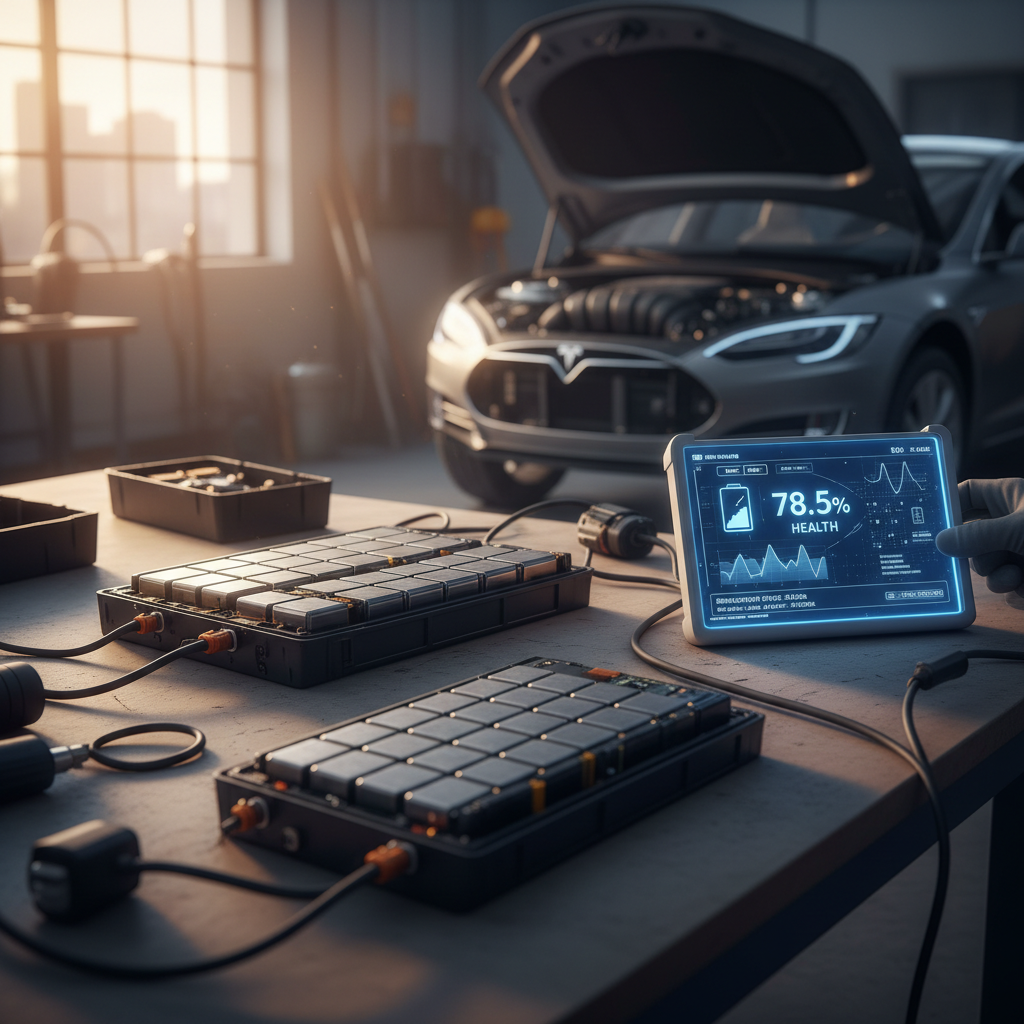
If you’re cost‑conscious, a used EV can be the sweet spot: lower purchase price plus that 3–6¢‑per‑mile electricity. The catch, and it’s a big one, is battery health. A tired battery doesn’t just shorten range; it can also raise your cost per mile if you find yourself fast‑charging more often or avoiding cheaper home charging because the car can’t cover your usual routes.
How Recharged helps on the used side
Why battery health matters for cost per mile
- Less usable capacity means more frequent charging stops, especially on road trips, where you’re relying on higher‑priced fast chargers.
- Healthy batteries let you do more of your charging at home, where electricity is cheaper and more predictable.
- A stronger battery typically means better resale value, lowering your overall cost per mile over the years you own the car.
What to look for in a used EV
- A transparent battery health report, not just a guess based on miles.
- Charging history, has the car lived on DC fast chargers or mostly on gentler Level 2 home charging?
- Software updates that can improve efficiency and charging behavior over time.
If you buy or sell through Recharged, EV‑specialist advisors walk you through these details step by step.
FAQ: cost per mile for electric cars vs gasoline
Frequently asked questions
So…should you switch to an EV?
If you’ve been wondering about the cost per mile of an electric car vs gasoline, here’s the short verdict: for most U.S. drivers who can charge at home, an EV quietly undercuts a comparable gas car by several cents per mile, year after year. That gap widens the more you drive, and it only grows when you factor in lower maintenance and the calmer ride of fixed electricity prices versus jumpy gas stations.
The key is choosing the right car, the right charging setup, and a battery you can trust, especially if you’re shopping used. That’s exactly where Recharged comes in, with transparent battery‑health reports, fair market pricing, financing, trade‑in options, and EV‑specialist support from first question to final signature. If you’re ready to turn those numbers into a real‑world car in your driveway, your next low‑cost‑per‑mile EV might already be waiting for you online.