If you’ve started Googling the cost of a Tesla motor, you’re probably trying to answer one of two questions: “What happens if the motor fails?” or “Is buying this used Tesla a smart move?” In 2025, a Tesla “motor” is usually sold as a complete drive unit (motor, inverter, and reduction gear), and the cost can range from under $2,000 on the used market to well over $10,000 installed at a service center.
Quick definitions
Tesla motor cost at a glance
Typical Tesla motor (drive unit) cost ranges in 2025
Those ranges are broad on purpose. A high-mileage used Model 3 rear motor pulled from a salvage car might sell for around $1,300–$1,600 plus shipping, while a fully installed, warrantied drive unit in a Model S or X can run well into five figures. The details, model, configuration, where you source the part, and who installs it, drive most of the variation.
Tesla motor vs. drive unit: what you’re actually paying for
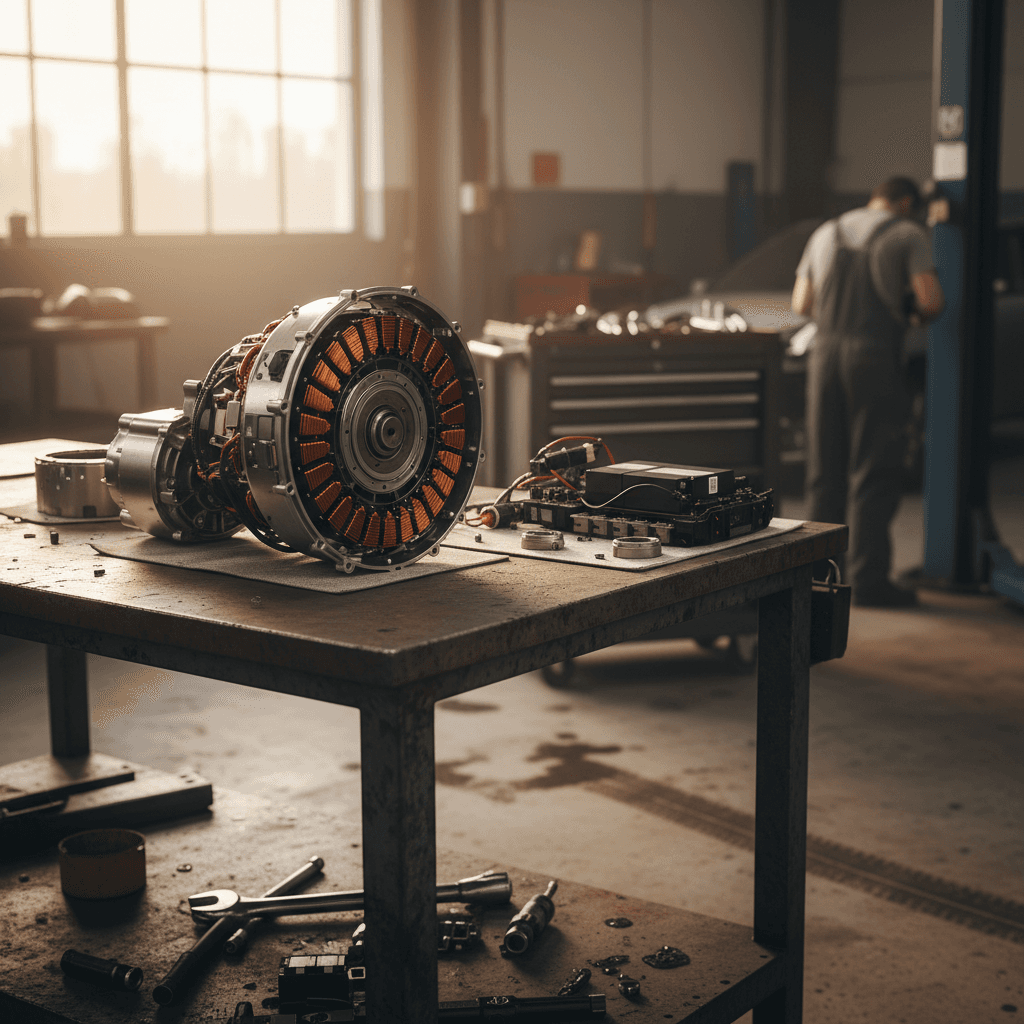
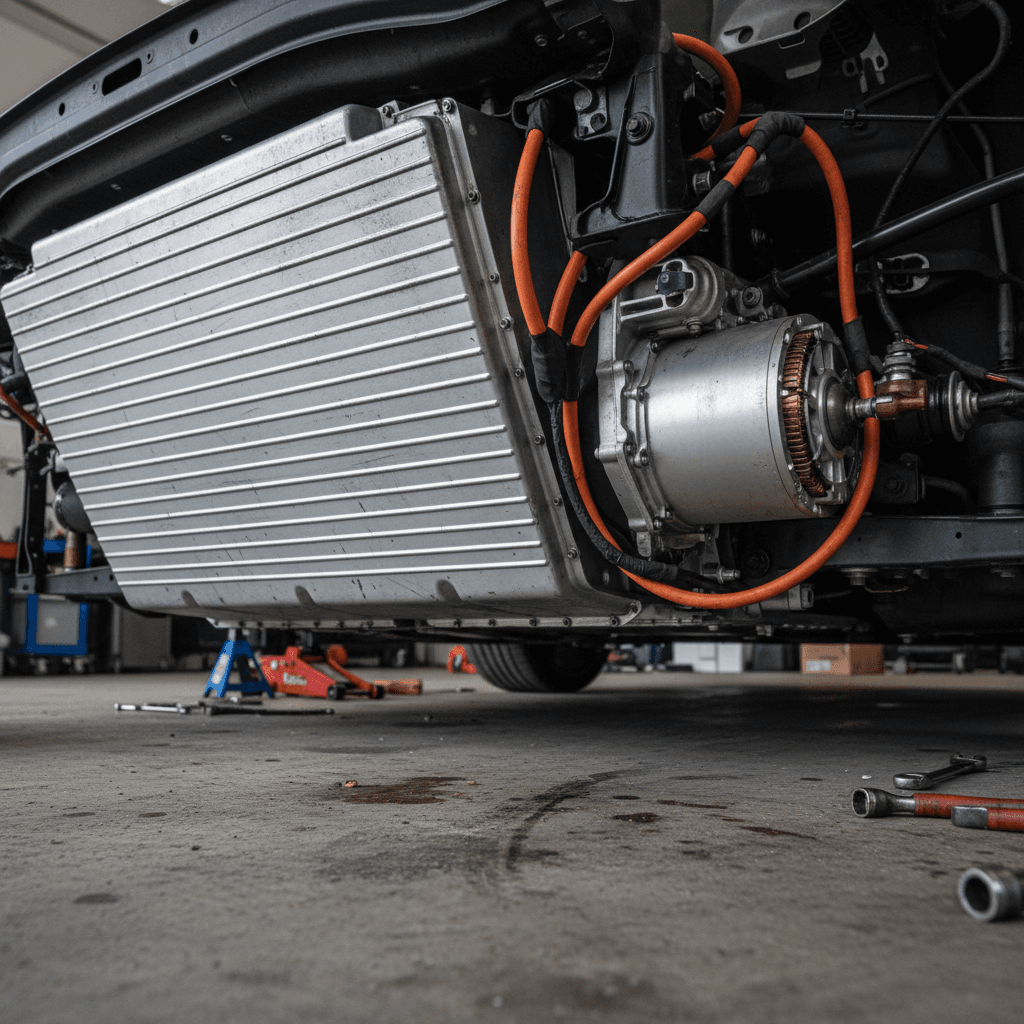
What’s inside a Tesla "motor"?
- Electric motor: Rotor and stator that actually spin the wheels.
- Inverter: Power electronics that convert DC battery power to AC for the motor.
- Single-speed reduction gear: Replaces a conventional transmission.
- Cooling system interfaces: To keep temperatures under control.
In practice, shops and dismantlers rarely sell these pieces separately. You buy (and replace) them as a drive unit assembly.
Why the drive unit is expensive
- Precision manufacturing and tight tolerances.
- High-voltage safety and sealed cooling passages.
- Integrated electronics that must be compatible with the car’s firmware.
- Limited supply of new and remanufactured units, especially for performance variants.
All of this means the cost of a Tesla motor isn’t just about copper windings, it’s about an integrated, safety‑critical system.
Terminology traps
Typical Tesla motor costs by model in 2025
Because Tesla doesn’t publish a menu price for drive units, we have to triangulate from quotes, independent shop pricing, and the used parts market. These ranges are ballpark numbers for an out‑of‑warranty car in the U.S. in 2025, assuming a full drive unit replacement rather than a minor repair.
Estimated drive unit replacement costs by Tesla model (out of warranty)
Approximate 2025 U.S. pricing for a single drive unit replacement, including parts and labor. Real quotes will vary by region, shop, and exact configuration.
| Model | Typical configuration | Parts source | Estimated parts cost | Estimated installed cost |
|---|---|---|---|---|
| Model 3 RWD / Dual Motor | Rear or rear + front | Used/remanufactured | $1,500–$4,000 | $5,000–$10,000 |
| Model Y Long Range / Performance | Dual motor AWD | Used/remanufactured | $1,500–$4,500 | $5,500–$10,000 |
| Model S (2012–2020) | Single or dual motor | Remanufactured/new | $4,000–$10,000+ | $12,000–$20,000 |
| Model S (2021+) | Dual motor / Plaid | Remanufactured/new | $6,000–$12,000+ | $15,000–$25,000+ |
| Model X (all years) | Dual motor | Remanufactured/new | $5,000–$11,000+ | $13,000–$22,000+ |
These are directional estimates, not official Tesla pricing, but they reflect what many owners actually report paying.
Why Plaid and Performance are pricier
How much does a used Tesla motor cost?
If you’re trying to minimize the cost of a Tesla motor, the used market is where things get interesting. Salvage yards and online dismantlers list complete Model 3 and Model Y rear drive units anywhere from a few hundred dollars (for core or parts‑only units) to a few thousand for tested, low‑mileage assemblies.
Real-world used Tesla drive unit pricing examples
Recent listings from dismantlers and marketplaces in 2024–2025
Model 3/Y rear drive units
Performance variants
Shipping & incidentals
How to shop the used market intelligently
Bottom line: on the parts side, the cost of a Tesla motor can be surprisingly reasonable if you’re comfortable using a used drive unit. The big question is who installs it, and whether they stand behind the work.
Tesla Service Center vs independent shop pricing
Once you have a sense of parts pricing, labor and markup are the other half of the equation. Tesla’s own service network and independent EV specialists take very different approaches to drive unit work.
Tesla Service Center
- Labor rates commonly in the $150–$250/hour range.
- Typically installs new or Tesla‑remanufactured drive units only.
- Limited transparency on line‑item parts pricing.
- Warranty coverage can be strong, especially if the car is still under the Battery and Drive Unit Limited Warranty.
If the failure is covered, your out‑of‑pocket cost can be $0. Out of warranty, it’s where you’re likely to see the $10k+ figures for major drive unit work.
Independent EV shops
- Diagnostics charges often in the $250–$500 range for complex drive unit issues.
- May install used or third‑party remanufactured drive units that cost far less than new OEM units.
- Labor for the swap itself often adds $800–$3,000, depending on complexity and region.
- Shop warranties vary but 1–2 years on rebuilt units isn’t uncommon for reputable specialists.
For out‑of‑warranty cars, independents are often the most economical way to get back on the road.
Where Recharged fits in
Ready to find your next EV?
Browse VehiclesWarranty, longevity, and how often motors really fail
One reason the cost of a Tesla motor looms so large for shoppers is that it’s a big, scary number. The flip side is that drive unit failures are relatively rare, and Tesla’s warranty coverage is built around that reality.
- Tesla’s Battery and Drive Unit Limited Warranty typically lasts up to 8 years and between 100,000 and 150,000 miles, depending on the model and variant.
- Most modern Tesla drive units are designed for hundreds of thousands of miles with minimal maintenance, especially in Model 3 and Model Y.
- Early Model S and Model X cars did see more drive unit issues (bearing noise, coolant leaks into the motor, reduction gear problems), but many of those cars have already had updated units installed under warranty.
Motors fail far less often than batteries in online discussions
Still, if you’re looking at a high‑mileage, out‑of‑warranty Tesla, especially an early Model S or X, it’s smart to price in the small but non‑zero chance that a drive unit could fail during your ownership window.
What Tesla motor cost means when you’re buying used
When you’re shopping for a used EV, the theoretical cost of a Tesla motor can either be a deal‑breaker or just another line item in your risk calculation. The difference comes down to information: knowing the car’s history, how it was driven, and the health of its battery and drive units today.
Key questions to ask before buying a used Tesla
Quick ways to understand your real motor risk
1. Is the drive unit still under warranty?
2. Any history of drive unit replacements?
3. Any unusual noises or vibrations?
4. Has anyone scanned the car recently?
This is exactly the gap Recharged is trying to close in the used EV market. Instead of relying on a quick test drive and a Carfax, every vehicle on our marketplace comes with a Recharged Score battery and drive-unit health report and expert guidance on what those findings mean for long‑term ownership costs.
Use motor cost as a negotiation tool, not a deal killer
Practical ways to keep Tesla motor costs down
Strategies to avoid, or soften, the hit of a drive unit bill
1. Prioritize cars still under drive unit warranty
If you’re risk‑averse, shop for Teslas that are comfortably inside the 8‑year/100k–150k‑mile Battery and Drive Unit warranty window. That pushes most of the catastrophic cost risk back onto Tesla.
2. Get an independent pre‑purchase inspection
Before you buy a used Tesla, have an EV‑experienced shop or a platform like Recharged review logs, perform a road test, and listen for drive unit noises. It’s far cheaper than a surprise $8,000 repair.
3. Drive gently during warm‑up and extreme conditions
Hard launches on a cold drive unit, repeated full‑throttle runs, or towing on hot days all increase stress. Smooth driving and avoiding unnecessary abuse will help any motor live longer.
4. Keep software up to date
Tesla frequently refines thermal management and torque delivery via software. Keeping your car updated helps the car protect its own hardware, including the drive units.
5. Build a relationship with a local EV specialist
If you’re out of warranty, knowing a reputable independent shop means you have options beyond the Tesla Service Center if something goes wrong. They can advise on repair vs. replace decisions and source used units intelligently.
6. Consider total ownership cost, not just repair risk
A Tesla with a small chance of a big motor bill can still be cheaper to own overall than a gas car with steady engine and transmission maintenance. Look at insurance, energy, and maintenance together.
FAQ: Common questions about Tesla motor cost
Frequently asked questions about Tesla motor cost
Bottom line: How worried should you be about Tesla motor cost?
The headline numbers around the cost of a Tesla motor can look intimidating, especially if you’re cross‑shopping against used gas cars. But context matters. Drive unit failures are relatively rare, most cars spend the majority of their life under an 8‑year drive‑unit warranty, and even a worst‑case repair bill has to be weighed against lower fuel and routine maintenance costs over many years of EV ownership.
If you’re buying used, your best move isn’t to panic about what might go wrong, it’s to reduce uncertainty. That means choosing vehicles with clear histories, verified battery and drive‑unit health, and honest pricing that reflects any remaining risk. That’s precisely what Recharged was built for: a transparent way to shop used EVs, complete with a Recharged Score report and expert guidance so you understand not just the sticker price, but the long‑term cost of owning the car you’re about to fall in love with.