If your business lives and dies by its vans, parcel delivery, mobile services, catering, trades, you’ve probably wondered whether a commercial electric van for business is finally a smart move, or just another science experiment. The short answer: for a lot of small and mid‑size operations in 2025, a well‑chosen electric cargo van can quietly cut operating costs, keep drivers fresher, and make your brand look good doing it.
Why this matters now
Why electric vans make sense for business in 2025
Electric commercial vans by the numbers
On paper, electric vans sound like a gamble. In practice, the businesses that can live within their range are seeing three big wins: lower running costs, happier drivers, and fewer headaches around city regulations and emissions zones. Where a gas van bleeds a little money every time it idles in traffic, an electric van is at its best in stop‑and‑go work, regenerating energy as it brakes and wasting almost nothing while parked with the A/C on.
- Lower energy costs: Electricity is usually cheaper per mile than gasoline or diesel, especially if you can charge overnight on off‑peak rates.
- Less maintenance: No oil changes, fewer moving parts, and gentle stop‑and‑go duty can mean less time off the road.
- Quiet and smooth: Less vibration and noise means drivers arrive less fatigued after a long day of deliveries or service calls.
- Customer‑facing image: A wrapped electric van quietly gliding through neighborhoods says a lot about your brand’s professionalism and values.
Where electric vans don’t shine yet
Key commercial electric van models to know
You don’t shop for an electric van in a vacuum; you shop in a world of dealership allocations, upfit lead times, and tax incentives. Here are the core players U.S. businesses should have on their short list, with a focus on workhorse cargo models rather than niche concepts.
Mainstream electric work vans for U.S. businesses
Approximate specs for commonly available electric cargo vans. Always check current OEM data for the exact configuration you’re considering.
| Model | Drive / Power | Battery (approx.) | Est. Range* | Max Payload | Notable Strengths |
|---|---|---|---|---|---|
| Ford E-Transit | RWD • ~266 hp | 68–89 kWh | 120–159 mi | ~3,000+ lb | Proven workhorse, broad upfit ecosystem, strong dealer network. |
| Mercedes-Benz eSprinter | RWD • ~201 hp | ~113 kWh | Up to ~200+ mi | ~3,000 lb | Class‑leading range, premium cabin, deep telematics options. |
| Ram ProMaster EV | FWD • 268 hp | ~97–110 kWh | ~160+ mi | Up to ~3,020 lb | Low load floor, delivery‑friendly ergonomics, strong incentives in some regions. |
| BrightDrop / Chevy electric vans | FWD • commercial | >150 kWh | 200+ mi (fleet‑focus) | High | Primarily fleet‑scale, designed for last‑mile logistics. |
Use this table as a starting point when you’re mapping vans against your routes and payload needs.
What about compact or foreign‑market EV vans?
Specs that actually matter for your routes
Every spec sheet looks impressive until you put it in the context of your actual day. When you’re evaluating a commercial electric van for business, focus less on the marketing headline and more on how the numbers line up with the way your vans really work.
Translate spec sheets into real‑world decisions
Four categories that matter more than 0–60 times
Usable range, not max range
Published range is usually based on mixed driving and partial payloads. If your van is fully loaded and living in city traffic or winter weather, assume you’ll reliably get 60–70% of that number.
A good rule: if your daily route is 80 miles, aim for a configuration with at least 150–170 miles of rated range.
Payload and volume
An electric van’s battery is heavy, which can nibble away at payload. Check:
- Maximum payload in your wheelbase/roof height.
- Interior cargo volume (in cubic feet).
- Roof load limits if you use racks or ladders.
Charging speed and ports
Look for both:
- AC charging rate (Level 2, overnight).
- DC fast‑charging peak (for mid‑day top‑ups).
Also confirm connector type and how it aligns with stations in your region.
Cabin and tech for real work
Modern electric vans add big‑screen infotainment, excellent visibility, and good driver aids. For business use, pay attention to:
- Seat comfort and adjustability for long days.
- Storage for clipboards, tablets, and tools.
- Built‑in telematics or easy third‑party integration.
Put a GPS on your current vans first
Real‑world costs and savings with electric vans
Sticker shock is real with electric vans, especially when you’re comparing them to the entry‑price gas models your business has always bought. But vans aren’t sneakers; purchase price is only the opening chapter. Operating cost is where electric work vans start to pay their way.
Where you’ll likely save
- Energy per mile: Many fleets see fuel‑equivalent savings of 30–50% on urban routes once charging is dialed in.
- Maintenance: No engine oil, spark plugs, or exhaust systems; brake wear is often lower thanks to regenerative braking.
- Incentives: Commercial EV tax credits, local grants, and utility programs can meaningfully reduce net cost.
New costs to plan for
- Charging infrastructure: From a simple 240V circuit in your depot to multiple Level 2 stations, there’s up‑front work.
- Training: Drivers and dispatchers need to understand range, charging etiquette, and preconditioning.
- Insurance & residuals: Talk with your broker; some carriers are still learning how to price EV commercial fleets.
When the math really works
New vs. used commercial electric van: what’s right for you?
Because electric vans are still relatively new, many business owners assume “used” means “someone else’s battery problem.” That’s an understandable worry, but it’s not the whole story. As early fleet leases end and more vans hit the secondary market, a carefully vetted used electric van can be a very cost‑effective way to dip a toe in the water.
New vs. used electric cargo vans for business
How to think about your first, or next, EV work van
Buying new
- Latest battery tech and range.
- Full factory warranty and roadside support.
- Easier to finance through commercial programs.
- Good fit if you plan to standardize a growing EV fleet.
Buying used
- Lower upfront cost, especially as 2–4‑year‑old vans come off lease.
- Ideal for pilot projects or low‑mileage routes.
- Battery health matters more than model year.
- Availability can be limited in some regions, but it’s improving.
How Recharged helps on the used side
How to choose the right electric van for your business
Step‑by‑step checklist for picking a commercial EV van
1. Map your real routes and duty cycles
Write down your longest and typical daily miles, average payload, number of stops, and where vans park when not in use. Be honest; the van doesn’t care what the brochure says, it cares what you actually do.
2. Set a realistic range requirement
Take your longest day and add a healthy buffer, often 30–50%. If you regularly run 90 miles a day, aim for an EV van that can realistically deliver 140–160 miles in your climate and payload.
3. Decide on payload and upfits first
Shelving, refrigeration, ladder racks, or plumbing upfits can add serious weight. Pick the roof height, wheelbase, and payload class you need, then compare electric options that can handle that work.
4. Confirm charging access and timeline
Can you install Level 2 chargers at your depot or office? How many vans will need to charge overnight? Talk to your electrician and utility before you sign on any dotted lines.
5. Run a total cost of ownership comparison
Compare a gas or diesel van to an electric one over 5–8 years, including fuel or electricity, maintenance, financing, incentives, and expected resale value. Many utilities and OEMs offer free calculators.
6. Test one van on a real route
Before you electrify half your fleet, put a single EV van in service on a typical week of work. Track energy use, driver feedback, and any operational hiccups, then refine your plan.
Lean on EV specialists

Building a charging strategy for work vans
A commercial electric van without a charging plan is just an expensive billboard. The good news is that most small and mid‑size businesses don’t need a million‑dollar depot build‑out to get started.
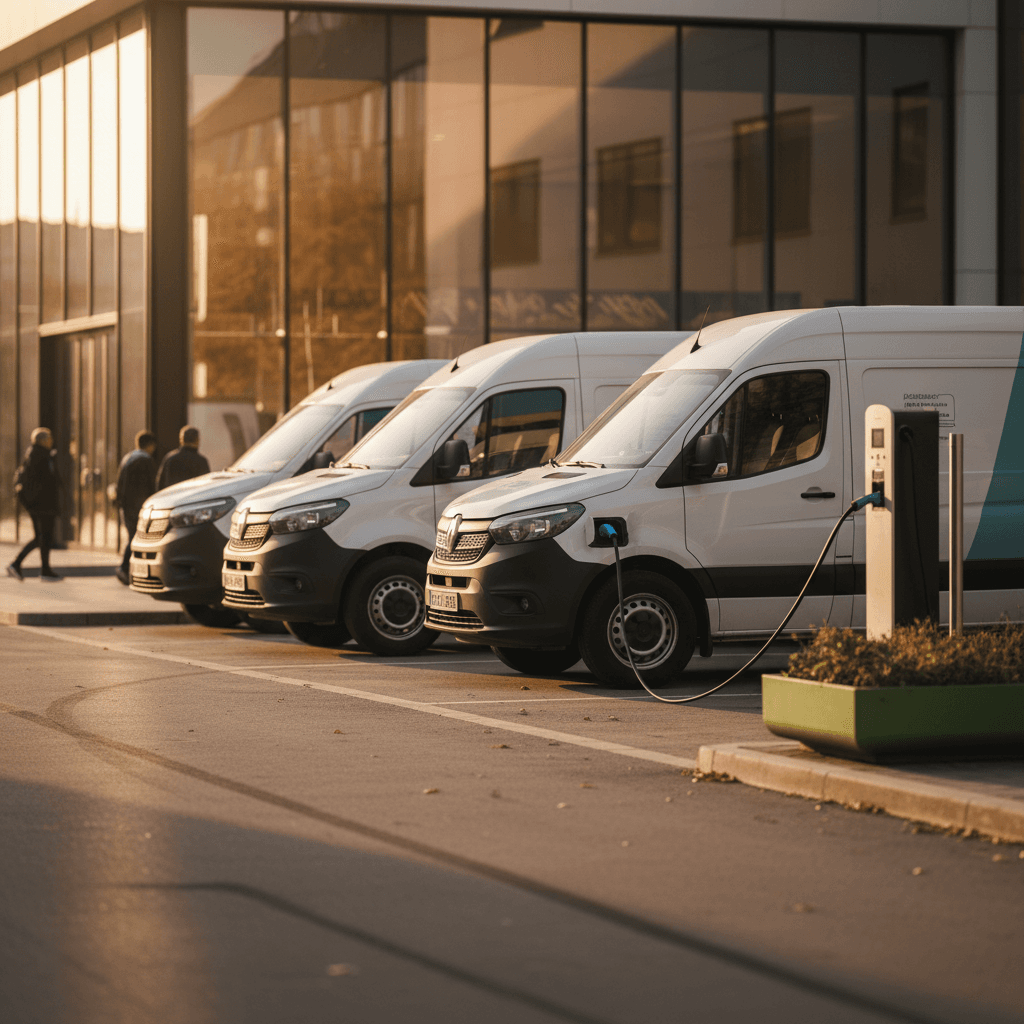
- Home‑base Level 2 charging: For many businesses, a few 240V Level 2 chargers at the shop are enough to recharge overnight after each day’s routes.
- Driver take‑home vans: If technicians or sales staff park at home, you’ll need policies around home chargers, reimbursement for electricity, or stipends.
- Public fast charging: Helpful as a safety net or for occasional long days, but not ideal as your primary fueling plan because pricing can be volatile.
- Smart charging and scheduling: Software can stagger vans on limited chargers, focus on lowest‑cost hours, and precondition cabins while still plugged in.
Safety and electrical work
How to transition your fleet in steps
No serious fleet manager dumps every gas van for electric in one go, and you shouldn’t either. The smoothest transitions are phased, with clear learning built in along the way.
Practical paths to an electric van fleet
Small business (1–5 vans)
Start with your most predictable, shorter route, make that your first EV test case.
Install one or two Level 2 chargers and verify your electrical panel has room to grow.
Collect real‑world data for a few months, then decide whether a second EV van makes sense.
Use a mix of new and carefully vetted used vans to keep cash flow flexible.
Growing fleet (6–25 vans)
Create an internal EV champion, someone responsible for data, driver training, and vendor coordination.
Electrify a single depot or region first, rather than sprinkling EVs everywhere.
Standardize on one or two electric van models to simplify parts, training, and upfits.
Revisit your replacement cycle; you may be able to safely run EV vans longer if battery health remains strong.
Where Recharged fits in your plan
Ready to find your next EV?
Browse VehiclesFAQ: Commercial electric vans for business
Frequently asked questions about electric work vans
Bottom line: Is a commercial electric van right for your business?
A commercial electric van for business isn’t a magic bullet, and it isn’t the right move for every route or operation. But if most of your days fall comfortably inside today’s electric ranges, you have predictable parking for overnight charging, and you’re tired of watching fuel and maintenance nibble away at profits, it’s time to run the numbers seriously.
Start modestly: log your routes, test one well‑chosen van, and treat the first few months as a rolling pilot project. As you learn what works, and what doesn’t, you can lean more confidently into electrification, mixing new and used vans to hit the right balance of capability and cash flow. And when you’re ready to explore used options with verified battery health and fair pricing, Recharged is built to help you make that next van the one that works as hard as you do.