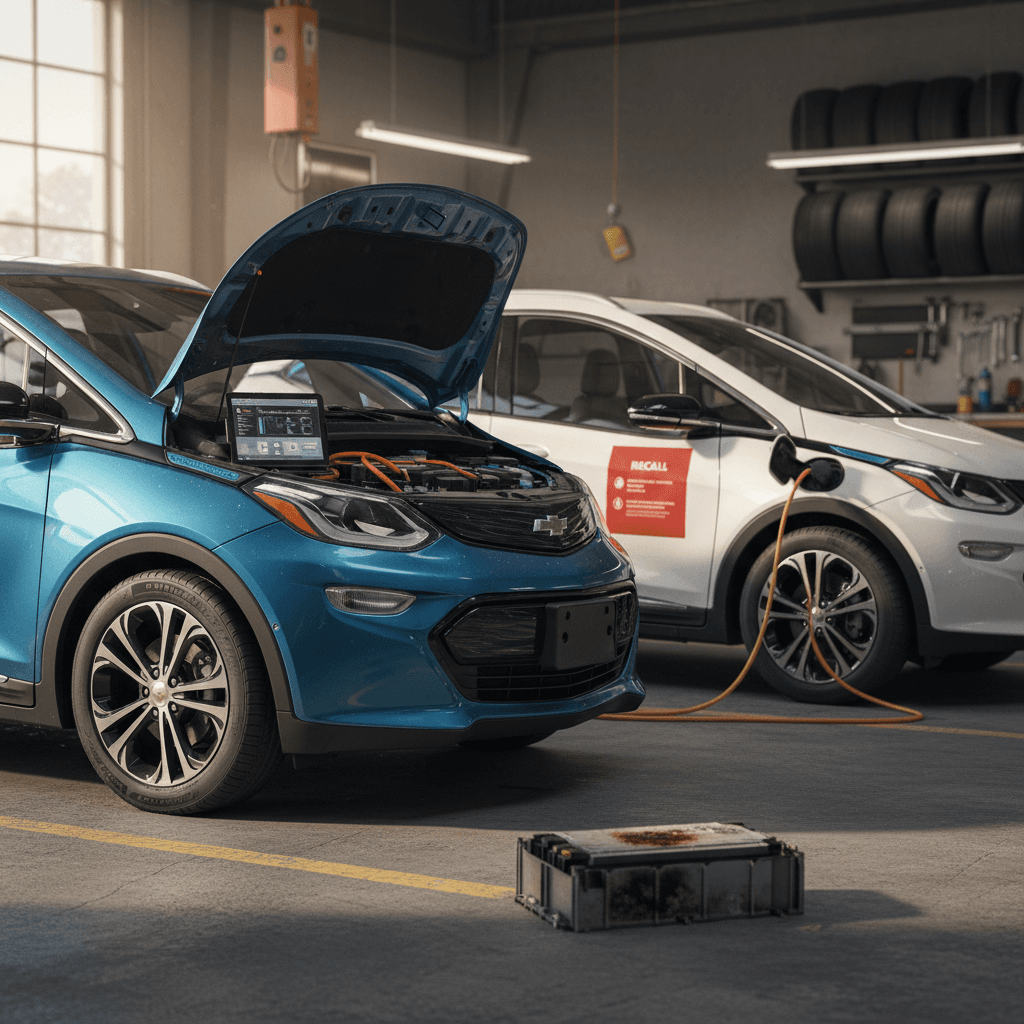
If you’re researching a Chevy Bolt EV recalls list, you’ve probably heard about the battery fire issue – or you’re eyeing a used Bolt and want to know what you’re getting into. That’s smart. Between 2017 and 2022, every Bolt EV and Bolt EUV built was swept into at least one recall campaign, mainly focused on high‑voltage battery safety.
Quick takeaway
Overview: How many Chevy Bolt EV recalls are there?
When people talk about “the Chevy Bolt recall,” they’re usually talking about the series of battery‑fire recalls that ultimately expanded to cover every 2017–2022 Bolt EV and EUV. But there have also been smaller campaigns for software, seat belt reminders, and other issues.
Chevy Bolt EV recall snapshot (2017–2022)
For used shoppers, the key is less about memorizing every campaign number and more about understanding: Was this specific car fixed correctly, and what does that mean for me? We’ll walk through the major recalls, then translate them into practical shopping and ownership advice.
Chronology of major Chevy Bolt EV recall campaigns
Key phases of the Bolt EV battery recall
How the fire‑risk issue evolved from 2020 to 2024
Phase 1: 2020–2021
Initial fires & first recall. Early 2017–2019 cars with LG battery packs built in Korea were recalled. GM first tried software limits on state of charge before moving to hardware fixes.
Phase 2: 2021 expansion
All Bolts recalled. In August 2021, GM expanded the action to include every 2017–2022 Bolt EV and EUV, citing a rare combination of cell defects that could cause a fire.
Phase 3: 2022–2024 repair wave
Battery module replacement & new software. Dealers began installing new battery modules and updated diagnostics. By 2023–2024, most active vehicles had received their permanent fix.
In parallel with those big headline campaigns, there were smaller NHTSA recalls for things like seat belt pretensioners, chimes, and calibration tweaks. Those matter, but the battery story drives most of the risk – and most of the opportunity – in the used Bolt market.
Battery fire recalls: detailed Chevy Bolt EV recalls list
Here’s a plain‑English Chevy Bolt EV recalls list focused on the high‑voltage battery. The formal NHTSA campaign numbers can vary a bit by model year, but the themes are consistent.
Major Chevy Bolt EV & EUV battery‑related recalls
This table summarizes the big battery campaigns that matter most for safety and used‑car value.
| Approx. campaign(s) | Model years affected | Key issue | Fix / remedy | What to ask about on a used car |
|---|---|---|---|---|
| Late 2020: initial battery recall | 2017–2019 Bolt EV (many with Korea‑built LG packs) | Reports of parked vehicles catching fire at high state of charge, traced to rare cell manufacturing defects. | Interim software limiting max charge and monitoring the pack, later followed by battery module replacement on many cars. | Has the car had the full module replacement, or only the early software‑limit fix? |
| July 2021: expanded fire‑risk recall | 2017–2019 Bolt EV | More fires, including some vehicles that already had software updates. GM acknowledged need for broader action. | Updated guidance to park outside, avoid overnight charging, and more aggressive plans for battery module swaps. | Did the owner follow safety guidance? Any documentation from this period is useful context. |
| Aug 2021: recall expansion to all Bolts | All 2017–2022 Bolt EV and Bolt EUV | GM concluded that a rare combination of a torn anode tab and folded separator could appear in cells across a wider production range, raising fire risk. | Planned replacement of all affected battery modules plus new diagnostic software. Many vehicles now have essentially “new” packs. | Ask for service records showing module or pack replacement, and confirm via GM or NHTSA tools. |
| 2022–2023: software & verification campaigns | Primarily 2020–2022 Bolt EV & EUV | Ensuring advanced battery diagnostics were installed and evaluating vehicles post‑repair; a very small 2020–2022 population later recalled again for incomplete software. | Dealer installs/updates diagnostic software and confirms modules meeting spec; in rare cases, additional module replacements. | Does the car show the latest Battery Module Replacement / Update campaign as completed with no subsequent open recalls? |
Always verify open recalls on your specific VIN – this table is a guide, not a substitute for an official NHTSA or GM lookup.
A note on campaign numbers
Other Chevy Bolt EV and EUV recalls beyond the battery
Although the battery campaigns are the headline, the Bolt EV and EUV have had a handful of non‑battery recalls as well. Exact campaigns depend on model year and build plant, but examples include:
- Front seat belt pretensioner issues that could, in some impacts, pose a fire risk near interior trim.
- Seat belt chime or telltale malfunctions, where reminders might not behave as required by regulations.
- Calibration updates for various control modules (for example, charging, propulsion, or braking behavior under specific conditions).
Why these still matter
How to check if your Bolt EV has open recalls
Before you buy a used Bolt – or if you already own one – you’ll want to run a VIN‑based recall check. This is the only reliable way to know where a particular car stands.
Step‑by‑step: checking Chevy Bolt EV recalls by VIN
1. Locate the VIN
You’ll find the 17‑digit VIN at the base of the windshield on the driver’s side, on the driver‑door jamb sticker, and on registration/insurance documents. For an online listing, ask the seller to provide it.
2. Use the official NHTSA recall lookup
Go to the National Highway Traffic Safety Administration’s recall lookup tool and enter the VIN. It will show <strong>any outstanding safety recalls</strong> that still need to be performed.
3. Cross‑check with GM’s recall page
GM and Chevrolet host their own recall lookup tools. Enter the VIN again to double‑check for brand‑specific campaigns or software updates that may not show elsewhere yet.
4. Request dealer service history
Ask the seller for a printout or PDF of the <strong>dealer service history</strong>. This can show when battery modules were replaced, which campaigns were completed, and if the car visited multiple dealers for the recall.
5. Verify the battery fix, not just "recall closed"
Many early fixes were software‑only. For maximum confidence, look for service lines that explicitly mention <strong>battery module replacement</strong> or pack replacement, plus installation of the latest diagnostic software.
6. Save documentation
Keep copies of the recall printouts and service records in your records. They support resale value and help you track which campaigns have been done.
Use digital records as leverage
Shopping for a used Chevy Bolt after the recalls
The Bolt’s recall history creates a weird situation in the used market: it’s both a red flag and a bargain opportunity. If you know what you’re looking at, a post‑recall Bolt can be one of the best value EVs available.
Why a recalled Bolt can be a smart buy
- New battery, old price: Many cars received fresh battery modules with an 8‑year/100,000‑mile warranty from the installation date, effectively extending the vehicle’s electric lifespan.
- Improved range: Some earlier model years now match later EPA range ratings after getting replacement packs.
- Depreciation already priced in: The recall headlines pushed values down, which can mean a lower purchase price relative to the car’s capability.
- Mature software: Post‑recall vehicles generally have more refined battery management and diagnostics.
What to watch out for
- Incomplete repairs: Some cars may still be waiting for module replacement or correct diagnostic software.
- Hard use history: Rideshare duty or frequent DC fast charging won’t necessarily show up in recall data, but they matter for long‑term health.
- Owner behavior during the recall: Vehicles repeatedly driven or charged in ways GM discouraged (frequent 100% charges, deep discharges) might have more stress on their packs.
- Accident and flood damage: A clean recall record doesn’t protect you from unrelated structural or water damage.
How Recharged approaches used Bolts
Ready to find your next EV?
Browse VehiclesBattery health, range, and warranty after the recall
It’s easy to assume that a recalled battery is automatically “bad,” but the reality for the Bolt is more nuanced. For many owners, the recall actually meant ending up with a newer, better‑performing pack than the car originally had.
What the recall usually means for your battery
Most 2017–2022 Bolts on the road today are running on updated hardware and software.
Newer chemistry & modules
Replacement battery modules are built after GM and LG addressed the original manufacturing defect. That doesn’t make them perfect, but it does mean they were produced with tighter quality control.
Range that matches newer models
Owners of early Bolts commonly report EPA‑rated range jumping to roughly 259 miles after a full battery replacement, matching later model years.
Fresh warranty clock
Replacement packs typically come with a new 8‑year/100,000‑mile battery warranty starting from the date of installation, not the car’s original in‑service date.
Not every car got a full pack
This is where independent battery‑health data becomes valuable. A tool like the Recharged Score doesn’t just confirm that recall work was done – it measures the pack’s real‑world usable capacity and projects long‑term health, so you can compare one Bolt to another on more than just odometer miles.
Practical safety tips for current Bolt EV owners
If you already own a Bolt or are about to buy one, you don’t need to live in fear of a fire. But you should respect the engineering limits and make sure your car is up to date. Think of it like flying: statistically safe, but worth following the checklist.
- Confirm all battery‑related recalls and software updates are marked as completed on your VIN.
- Use scheduled charging to avoid sitting at 100% state of charge for long periods unless you need the full range for a trip.
- Avoid routinely running the battery down to single‑digit percentages; shallow charging cycles are easier on lithium‑ion packs.
- Keep the under‑seat and cargo area vents clear so the pack’s thermal system can do its job.
- If you ever see battery warnings, unusual smells, or rapid drops in state of charge, stop driving as soon as it’s safe and contact a dealer or roadside assistance.
- Follow any updated guidance from GM, including short‑term advice to limit charge level, until a dealer confirms your car is on the latest recall configuration.
What if you suspect a problem?
FAQ: Chevy Bolt EV recalls and used buying
Frequently asked questions about Chevy Bolt EV recalls
Bottom line: Is a recalled Bolt EV still worth buying?
If you simply skim headlines, “every Chevy Bolt recalled for fire risk” sounds like a deal‑breaker. But once you dig into the Chevy Bolt EV recalls list, the story looks different. GM and LG spent years chasing down a rare manufacturing defect, and in the process a huge number of Bolts ended up with newer battery hardware, updated software, and extended warranty coverage.
For a shopper who does their homework – confirms recall completion, reviews service records, and looks at independent battery‑health data – a used Bolt can deliver long range, low running costs, and modern tech for a fraction of the price of a new EV. The key is choosing the right individual car, not assuming every Bolt is the same.
If you’d rather not untangle that on your own, platforms like Recharged are built around this exact problem. Every used Bolt we list comes with a Recharged Score Report, verified recall status, and expert EV support from first click to final delivery. Whether you buy from us or elsewhere, take the time to make the recall history work in your favor – not against you.