If you’ve followed the launch of the Chevy Blazer EV, you’ve probably heard about its software problems, stop‑sale, and big price cuts. Understanding the Chevy Blazer EV software update history isn’t just trivia, it’s key to deciding whether this SUV fits your life, especially if you’re eyeing a used one in the next few years.
Why software history matters on the Blazer EV
Blazer EV software at a glance
Chevy Blazer EV launch & software fixes in numbers
The Blazer EV runs on GM’s Ultifi software platform over the Ultium hardware architecture. That means its “personality”, how it charges, drives, navigates and talks to your phone, is mostly defined by code, not hardware changes. Early on, that flexibility turned into fragility: reviewers and owners reported blank or crashing screens and DC fast‑charging failures, prompting GM to pause sales at the end of 2023 while engineers rewrote and retested core software.
Important note on dates and details
Timeline: Chevy Blazer EV software update history
Key phases of Blazer EV software development
From rocky launch to iterative fixes
Phase 1: Launch & early bugs (Q3–Q4 2023)
First 2024 Blazer EVs reach customers in late 2023. Soon after, reviewers and early owners report:
- Frozen or blank infotainment screens
- Random error messages and resets
- DC fast‑charging failures or stalls
By December 2023, GM announces a pause in Blazer EV sales while it chases down “software quality issues.”
Phase 2: Dealer reflashes & price cuts (Q1 2024)
In early March 2024, Chevy resumes sales after what it calls “significant software updates,” combined with price cuts of roughly $5,600–$6,500 on some trims.
Dealers are instructed to:
- Connect early units to factory tools
- Check ~20+ modules for updated firmware
- Apply a large programming package that can take a full business day
Phase 3: OTA ramp‑up & campaigns (late 2024–2025)
As GM matures Ultifi, more updates move over‑the‑air:
- Stability fixes for infotainment and Google Built‑In
- Updates for the telematics module and app connectivity
- Brake system control module campaign (CSP N252521980)
By mid‑2025, many owners report 2–3 OTA updates in a few months, while others still rely on dealer visits.
Tip for owners
Major Blazer EV software campaigns and recalls
Here’s a breakdown of the most important software‑related efforts that have affected the Blazer EV so far. Exact build ranges and campaign codes can vary by VIN, so always confirm with a Chevy dealer or the NHTSA recall lookup if you own, or plan to buy, one.
Key Chevy Blazer EV software campaigns
High‑level view of the biggest software‑driven actions affecting the Blazer EV from launch through 2025.
| Approx. timing | Type | Main focus | Owner impact | Delivery method |
|---|---|---|---|---|
| Dec 2023–Mar 2024 | Stop‑sale & update | Infotainment stability, DC fast‑charging, general software quality | Vehicles could not be sold until reflashed; early owners asked to return for updates. | Dealer reprogramming (multi‑module) |
| Early–mid 2024 | Large dealer "reflash" (multiple campaigns) | Checking and updating dozens of control modules across the vehicle | Vehicles often sat 1–3 days while techs updated and validated modules; some risk of modules bricking and needing replacement. | Dealer only |
| Late 2024–2025 | Brake System Control Module update (CSP) | Ensuring the brake control module has the latest software; in some cases master cylinder replacement if software alone doesn’t resolve issues. | Inspection, BSCM reprogramming, and possibly hardware replacement if symptoms persist. | Dealer only |
| 2024–2025, ongoing | Infotainment & Google Built‑In patches | Fixes for random reboots, audio and nav glitches, and profile sync issues. | Improved day‑to‑day usability; some owners report minor quirks remain but are reduced. | Mix of OTA and dealer updates |
| 2024–2025, ongoing | Telematics & connectivity updates | Addressing GPS dropout, OnStar connection loss and app‑vehicle sync issues reported on some units. | Restores location‑based services and remote features; in more serious cases, modules replaced under warranty. | OTA where possible, otherwise dealer |
Details will vary by VIN; always verify your specific vehicle’s record.
Safety vs. convenience updates
Over-the-air (OTA) updates on the Blazer EV
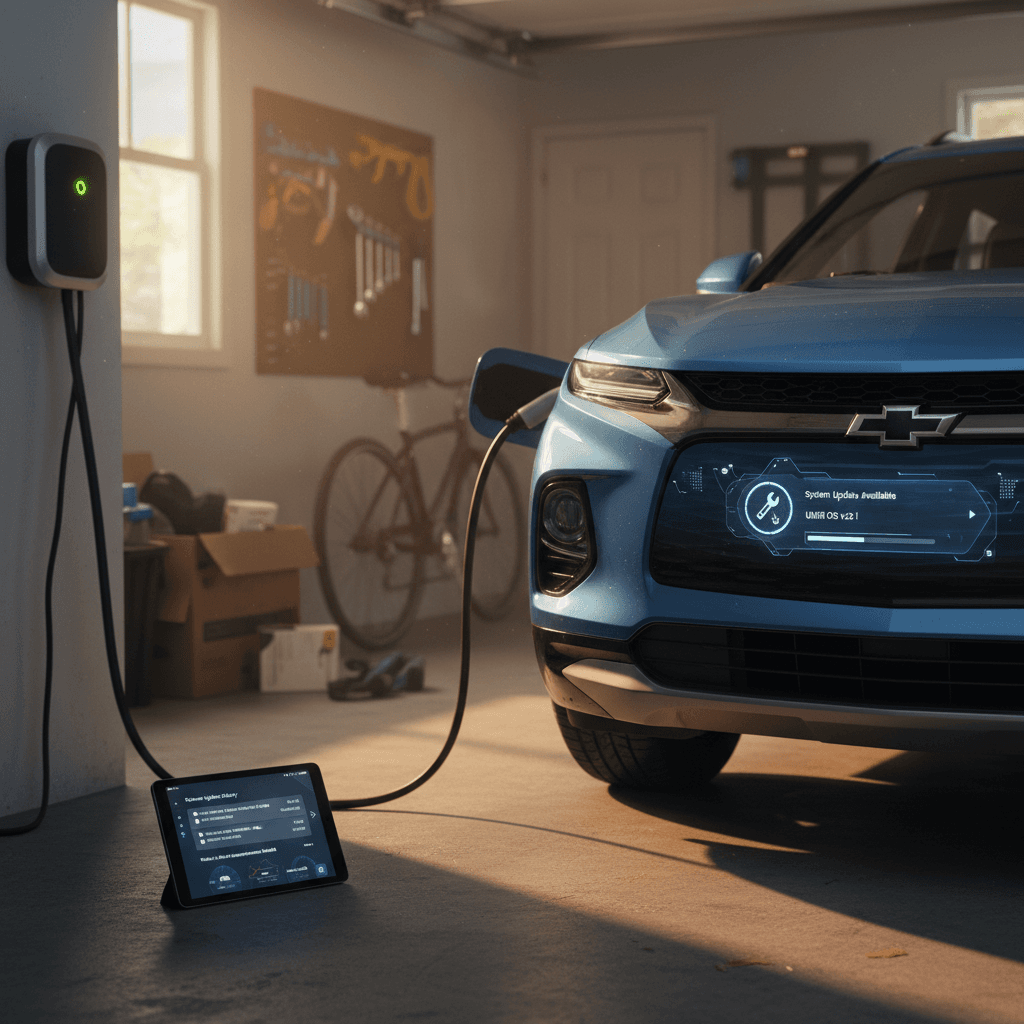
GM designed Ultifi so that vehicles like the Blazer EV could evolve over time with over‑the‑air (OTA) updates, much like your smartphone. In practice, the rollout has been uneven: some owners report a string of OTA patches in 2025, while others have seen almost nothing without dealer intervention.
What OTAs can do on the Blazer EV
- Fix bugs in infotainment, connectivity and some driver‑assist features
- Improve stability for Google Built‑In apps, voice, and nav
- Update background firmware for modules like telematics (GPS/OnStar)
- Lay groundwork for new features or future recalls
Some owners report small quality‑of‑life tweaks arriving quietly, such as smoother app pairing or fewer random reboots.
What still needs a dealer visit
- Large multi‑module programming events after major campaigns
- Updates that risk “bricking” a key module if interrupted
- Brake system control module reflashes and related hardware checks
- Some infotainment upgrades and replacement of failed head units
Owners who reject an OTA prompt or whose vehicle is offline for long periods may also get stuck and need a dealer to “unstick” the update process.
Maximize your chance of getting OTAs
How to check your Blazer EV software version
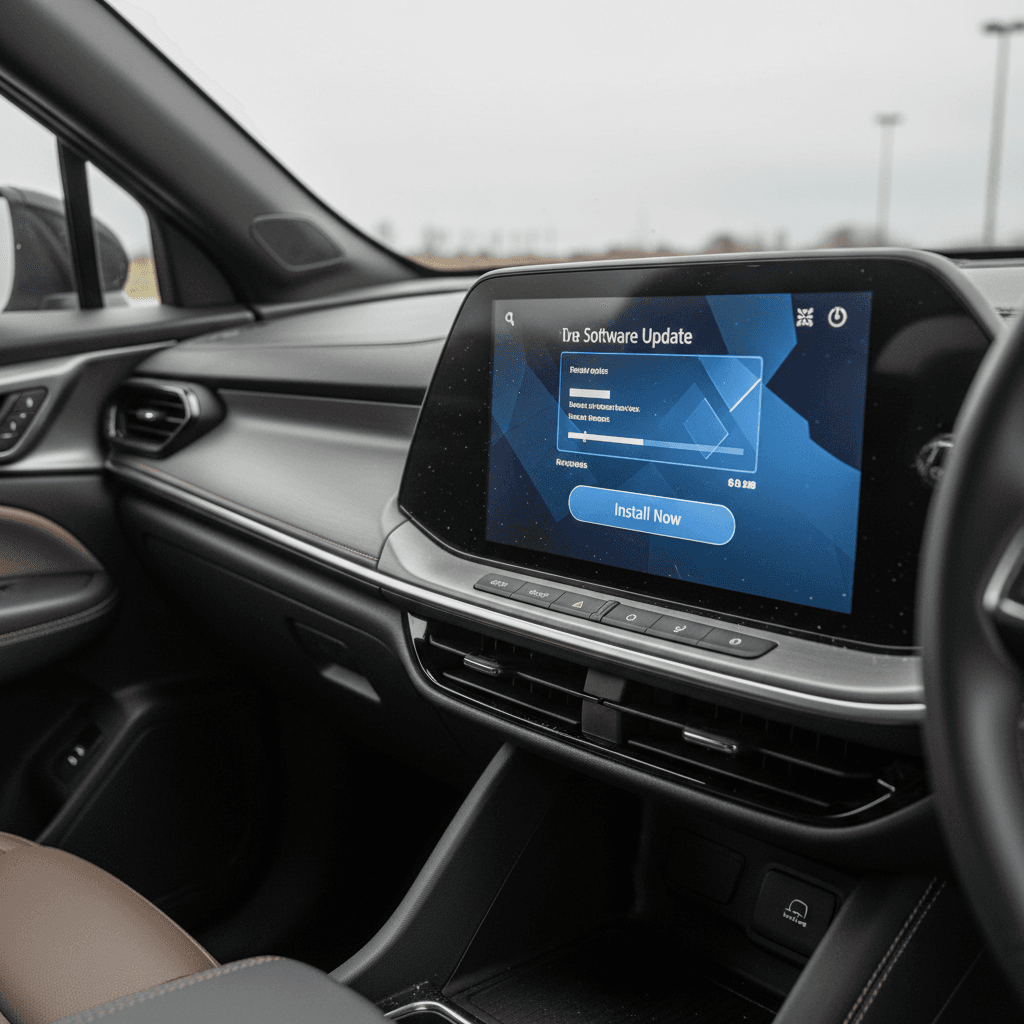
Because GM has changed layouts and labels across builds, the exact wording can vary. But the basic steps to see what your Blazer EV is running today look like this:
Step‑by‑step: checking software on a Blazer EV
1. Start the vehicle safely
Sit in the driver’s seat, press the brake, and power the Blazer EV on. Make sure you’re in Park with the parking brake engaged before you start poking around the screen.
2. Open the Settings menu
From the main Google Built‑In home screen, tap the Settings gear icon. On some builds, you may need to swipe to a secondary page to find it.
3. Find "System" or "About"
Scroll through Settings and look for a section labeled System, About vehicle, or similar. GM has shuffled labels between software versions, but they’ll be in this neighborhood.
4. Note the software version & date
Look for strings like a software version ID, build date, or module versions. Take a photo with your phone so you can compare against dealer paperwork or future updates.
5. Check the myChevrolet app
If your vehicle is properly linked, the app can show pending OTA updates or campaign messages. It won’t list every module version, but it’s a useful second source.
6. Call a Chevy EV‑certified dealer
Provide your VIN and ask a service advisor to check for open campaigns or software updates. They can see recall and customer‑satisfaction programs that don’t always show in the consumer app.
No public changelog? What to do instead
Ownership impact: driving, charging, and resale value
Software on the Blazer EV isn’t just about the screen looking pretty. It has direct consequences for how the SUV drives, charges, and holds value, especially in the used market where buyers don’t always know the full history.
How software affects your Blazer EV day to day
From charging curves to confidence at resale
DC fast‑charging behavior
Early bugs made some Blazer EVs unreliable at DC fast chargers, sessions would fail to start or drop unexpectedly. Post‑2024 updates focused heavily on stabilizing handshake protocols and managing charge curves.
If you road‑trip a lot, confirm your vehicle has had the large dealer reflashes and any later fast‑charging‑related patches.
Driver‑assist & brake feel
Software commands the brake control module and interfaces with Super Cruise and other assists. The 2025 brake system control module campaign is about ensuring that logic is using the latest calibrations.
Flashes in this area are about safety and consistency, how the pedal feels, how the system responds in panic stops, and how assists behave.
Perceived reliability & resale
In the used market, two Blazer EVs can look identical but feel very different if only one has had all of the critical updates applied.
Vehicles with documented software history, campaigns closed, OTA updates successful, no chronic module failures, are likely to be more attractive to future buyers and lenders.
Good news for later‑build Blazer EVs
Used Blazer EV buying checklist (software edition)
Thinking about a Blazer EV on the used market, today or a couple of years from now? Here’s how to separate a well‑sorted example from one that may still be living with first‑generation bugs.
Software questions to ask before you buy a Blazer EV
1. Has the vehicle been through the 2023–2024 software campaigns?
Ask for service records from late 2023 through 2024. Look for line items mentioning multi‑module software updates, reflashes, or specific campaign codes tied to the early stop‑sale and follow‑up fixes.
2. Are all recalls and CSPs closed for this VIN?
Use the NHTSA recall lookup or have a Chevy dealer run the VIN. Confirm that brake‑related campaigns and any major software programs are marked “complete,” not just visually inspected.
3. Any history of infotainment or telematics replacements?
Head unit and telematics module replacements can be a double‑edged sword: on one hand, they often fix stubborn bugs, but repeat replacements may hint at ongoing issues. Ask whether problems resolved fully after the latest work.
4. When was the last OTA or dealer update?
If the last documented software touch was in early 2024 and the SUV has seen heavy use since, you’ll want a dealer to run it through current programming before or right after purchase.
5. Does DC fast‑charging work reliably today?
On a test drive, stop by a reputable DC fast charger. Monitor whether the session starts cleanly, stays stable, and ramps power reasonably. Real‑world behavior tells you as much as paperwork.
6. Who will stand behind the software going forward?
If you’re buying from a private seller, plan on building a relationship with an EV‑certified Chevy dealer. If you buy from a specialist retailer like Recharged, ask how they verify software and battery health before a vehicle is listed.
Bundle software verification into your pre‑purchase inspection
How Recharged looks at Blazer EV software and battery health
If you’re considering a Blazer EV but feel uneasy about its software past, you’re not alone. That’s exactly the kind of uncertainty Recharged was built to reduce in the used‑EV market.
Recharged Score & software context
Every EV listed on Recharged comes with a Recharged Score Report, which focuses first on battery health and charging performance. For software‑sensitive models like the Blazer EV, our process also looks at:
- Documented recall and campaign completion
- Diagnostic scans for error codes and module faults
- Real‑world charging behavior during our testing
The result: you don’t have to guess whether the vehicle is still running a problematic early build.
Support before and after you buy
Because Blazer EV updates can still require dealer visits, our EV specialists can help you:
- Understand which software campaigns apply to a specific VIN
- Plan a post‑purchase visit to an EV‑certified Chevrolet dealer if needed
- Choose financing and protection options that make sense for a high‑tech SUV
You can browse used EVs online, get an instant offer for your trade‑in, and arrange nationwide delivery, without sitting in a traditional showroom.
Thinking ahead to financing and resale
Chevy Blazer EV software FAQ
Frequently asked questions about Blazer EV software
Bottom line: is the Blazer EV software situation stabilizing?
The Chevy Blazer EV launched with promising hardware but shaky software. A 2023 stop‑sale, sweeping dealer reflashes in 2024, brake‑system updates, and a growing stream of OTA patches have moved it toward stability, but the path hasn’t been simple. If you own one today, staying current on software campaigns and OTA prompts is part of normal maintenance. If you’re shopping for a used Blazer EV, treat software history as seriously as you would battery health or accident reports.
The good news: by late 2024 and into 2025, many of the worst early bugs have been addressed, and later‑build vehicles are generally better sorted. The caution: this is still a sophisticated first‑wave Ultium SUV with a lot of computing power behind the scenes. Working with EV‑savvy partners, whether that’s an EV‑certified Chevy dealer or a specialist retailer like Recharged, can give you the confidence that the Blazer EV you’re buying has the right software underneath its sharp sheet metal.