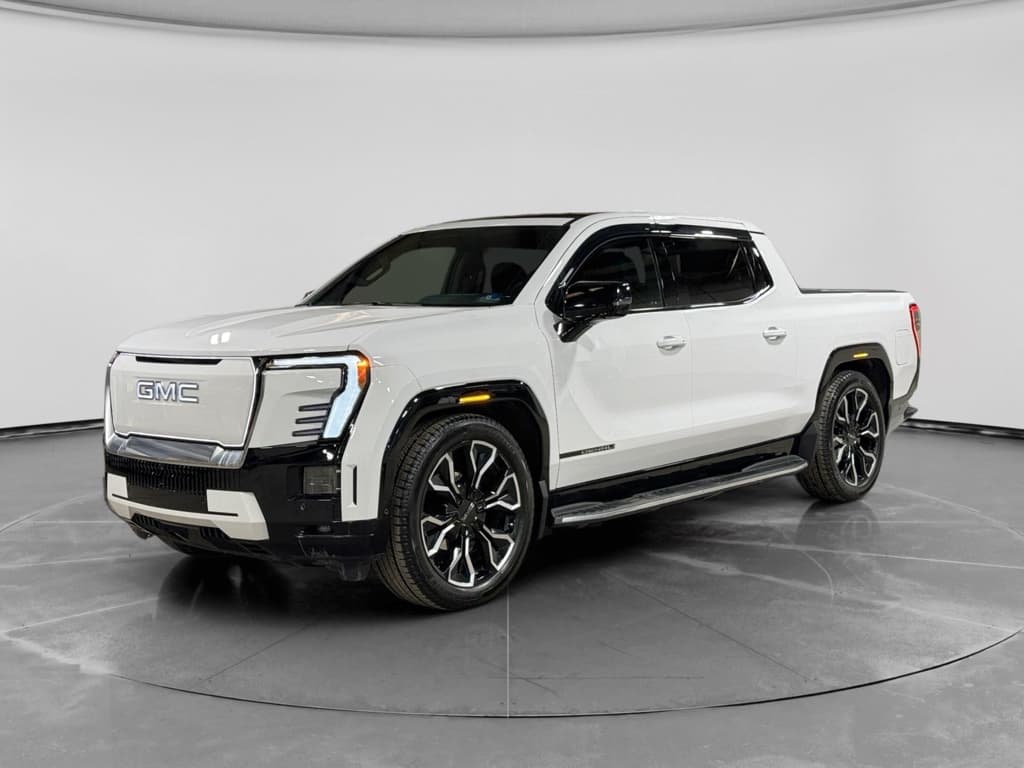
If you’re eyeing a GMC Hummer EV, you’re not shopping for a sensible commuter. You’re looking at a 9,000‑plus‑pound electric supertruck with a battery north of 200 kWh and some of the lowest efficiency numbers of any EV on sale. That combination makes the GMC Hummer EV long term ownership cost very different from a Tesla Model Y, or even a Ford F‑150 Lightning.
Big picture
Why GMC Hummer EV ownership costs look so different
Most EVs save you money over time through low fueling and maintenance costs. The Hummer EV bends that curve. Its roughly 205–212 kWh battery, over 3‑ton curb weight, and brick‑like aerodynamics make it one of the least efficient EVs on the market, with EPA ratings around 50–53 MPGe combined and real‑world efficiency often in the 1.5–1.9 mi/kWh range.
GMC Hummer EV by the numbers (ownership-relevant)
EPA‑rated range lands around 314 miles for lighter trims and up to roughly 381 miles for certain 3X pickups with the big pack and road‑biased tires. That range looks impressive until you realize how much electricity you’re paying for each full charge, and how heavily weight and off‑road tires can drag that range down in the real world.
Mass matters
Efficiency and charging: cost per mile in a Hummer EV
Let’s start with the biggest day‑to‑day cost you’ll feel: electricity. To keep things realistic, assume a typical 3X pickup or SUV on all‑terrain tires driven like a normal truck, not hypermiled on a closed course.
- Typical real‑world efficiency: 1.6–1.8 mi/kWh in mixed driving
- Highway road‑trip efficiency: around 1.5–1.7 mi/kWh at 70 mph, based on independent tests
- Off‑road, lifted, or on mud‑terrains: efficiency can plunge below 1.0 mi/kWh in extreme use
Electric rates vary wildly by state and utility, but we can ballpark a few common scenarios for U.S. owners using blended rates including delivery charges:
Approximate Hummer EV charging cost per mile
Illustrative cost per mile at different electricity prices and efficiencies. Your actual numbers will depend on local rates and driving style.
| Scenario | Price per kWh | Efficiency | Cost per kWh-mile | Estimated cost per mile |
|---|---|---|---|---|
| Low‑cost home charging | $0.13 | 1.8 mi/kWh | $0.13 ÷ 1.8 | ≈ $0.07/mi |
| Average U.S. residential | $0.17 | 1.7 mi/kWh | $0.17 ÷ 1.7 | ≈ $0.10/mi |
| High‑cost home market | $0.25 | 1.6 mi/kWh | $0.25 ÷ 1.6 | ≈ $0.16/mi |
| DC fast charging (typical) | $0.40 | 1.6 mi/kWh | $0.40 ÷ 1.6 | ≈ $0.25/mi |
| DC fast charging (high) | $0.50 | 1.5 mi/kWh | $0.50 ÷ 1.5 | ≈ $0.33/mi |
Assumes 1.6–1.8 mi/kWh in normal use. Costs are rounded estimates for comparison only.
How that compares to gas
Home vs. public charging: where Hummer EV costs diverge
With a battery over 200 kWh, the Hummer EV magnifies whatever you pay for electricity. That makes your charging pattern one of the biggest levers in your long‑term cost of ownership.
Mostly home charging
- On a 240V Level 2 at ~11 kW, a full charge can take well over 10 hours from low state of charge.
- At $0.13–$0.17/kWh, you’re paying roughly $26–$36 for ~200 kWh, enough for around 320–340 miles in efficient driving.
- Total fuel cost looks quite favorable versus a thirsty V8 truck, especially if you can use off‑peak rates or solar.
Frequent DC fast charging
- 90–350 kW DC fast chargers can add a lot of energy quickly, but often at $0.35–$0.55/kWh equivalent.
- A near‑full session (say ~180 kWh) could run $65–$100+, similar to or more than filling a large gas truck.
- If you road‑trip constantly and mostly fast‑charge, the Hummer EV can be more expensive to "fuel" per mile than gas.
Practical charging strategy

Maintenance and repairs: Hummer EV vs. gas trucks
One big advantage of any EV is the lack of oil changes, spark plugs, exhaust systems, and multi‑gear automatic transmissions. The Hummer EV shares that upside, but you don’t get a free pass on maintenance just because it’s electric, especially at this size and price point.
Where the Hummer EV saves, and where it doesn’t
Maintenance differences between a Hummer EV and a comparable gas 4x4 truck
No engine service
No oil changes, timing belts, or tune‑ups. Brake fluid, coolant and cabin filters still apply, but at longer intervals than many ICE trucks.
Simpler driveline
No multi‑speed automatic transmission or transfer case to service. Ultium drive units have their own requirements but far fewer wear items overall.
Still needs routine care
Tire rotations, alignments, brake inspections, and software updates are still part of the program. Skipping these gets expensive quickly on a 9,000‑lb truck.
Factory warranties also help in the early years. General Motors covers the Ultium battery and electric drive components for 8 years/100,000 miles (from in‑service date), which cushions the risk of major EV‑specific failures for the first owner and often for a second owner as well.
Good news on brakes
Tires, brakes, and wear items: the heavyweight bill
This is where long‑term Hummer EV ownership can surprise people. You’re moving a small house on wheels, often riding on 35‑inch all‑terrain or mud‑terrain tires. That has consequences.
High‑impact wear items to budget for
1. Oversized tires
The Hummer EV’s 35‑inch tires are expensive. Depending on brand and spec, a set of four can easily land in the $1,800–$2,800 range before mounting and balancing. Heavy trucks often see shorter tire life, think 25,000–40,000 miles if driven hard or off‑road.
2. Alignments and suspension
Hitting trails, curbs, or potholes in a 9,000‑lb truck can knock alignment out more quickly than you’d expect. Budget for more frequent alignments than you might with a crossover, especially if you add larger aftermarket wheels or lifts.
3. Brake service
While regen helps, towing, mountain driving, or aggressive off‑road use can still heat up rotors. When you do buy pads and rotors, expect HD‑truck pricing, not compact‑car pricing.
4. Glass and bodywork
The truck’s width and height make it more vulnerable in tight garages and parking decks. A cracked panoramic roof or damaged wheel arch on a luxury EV is not a cheap repair.
Off‑road fun has a tab
Insurance and taxes on a six‑figure electric truck
Insurance companies price risk, not ideology, and from their perspective the Hummer EV is a large, powerful, expensive luxury vehicle with cutting‑edge tech and very costly repair parts. That tends to mean above‑average insurance premiums compared with a basic half‑ton pickup.
- MSRPs often well into six figures on early Edition 1 and loaded 3X models
- Repair complexity (Ultium battery, advanced driver‑assist, four‑wheel steering) raises claim costs
- Weight and size can contribute to higher liability and collision damage severity
On top of that, some states add weight‑ or value‑based registration fees. A heavy, high‑MSRP EV can get hit with both, so check your state’s EV fee structure and truck weight brackets before you buy.
Ways to soften the insurance hit
Depreciation and resale value: where buying used helps
Depreciation is typically the single largest cost in owning any vehicle, EV or not. Early Hummer EVs launched at eye‑watering prices with limited supply, and as more Ultium trucks roll out, used values have been normalizing like we’ve seen with other luxury EVs.
How depreciation impacts Hummer EV cost of ownership
Why timing and purchase price matter more than ever
Early adopters pay the steepest curve
Edition 1 buyers and first‑wave 3X owners should expect substantial first‑3‑year depreciation simply because the initial sticker price was so high and the truck serves a niche. That’s the cost of being first.
Second owners can benefit
Once the market settles, a used Hummer EV purchased at a realistic price can offer most of the capability and presence with a far lower depreciation curve. That’s where shopping the right used example really pays off.
Because the Hummer EV is more lifestyle toy than work tool for most buyers, residual values will be driven by desirability and rarity as much as by spreadsheet logic. Limited‑production trims and clean, unmodified trucks will typically hold value better than heavily wheeled, lifted, or rock‑rashed examples.
Battery health and long-term range expectations
The Hummer EV’s massive Ultium pack is both its superpower and its biggest single asset. A pack in the 170–200+ kWh range has a lot of cells to share load across, which can help with long‑term durability if the truck is charged and driven reasonably.
- Real‑world tests have shown some Hummer EVs beating their original range estimates when driven gently, suggesting conservative calibrations in some trims.
- Big packs are less stressed by a given daily commute, using, say, 15% of a 200 kWh pack is easier on the battery than 50% of a 60 kWh pack.
- On the flip side, repeated 0–100% DC fast charges and extreme heat can still accelerate degradation, just as with any EV.
What to look for in a used Hummer EV battery
Sample 5‑year total cost of ownership math
Every Hummer EV owner’s situation is different, but it helps to see rough orders of magnitude. Below is a simplified 5‑year, 60,000‑mile scenario for a well‑optioned Hummer EV used primarily as a personal vehicle with mixed city/highway driving and light off‑roading.
Illustrative 5‑year Hummer EV ownership cost (60,000 miles)
Very approximate numbers for a buyer who pays $95,000 plus tax/title for a used or discounted new Hummer EV, charges mostly at home, and keeps up with maintenance. All figures rounded.
| Category | Assumption | 5‑year estimate |
|---|---|---|
| Depreciation | Purchase at $95,000, value at $55,000 after 5 years/60k miles | ≈ $40,000 |
| Electricity | 60,000 miles @ $0.10/mi blended (mostly home, some DCFC) | ≈ $6,000 |
| Tires | Two full sets of premium 35‑inch tires incl. mounting/balancing | ≈ $4,000–$5,000 |
| Maintenance & repairs | Alignments, brake service, fluids, out‑of‑warranty odds and ends | ≈ $3,000–$5,000 |
| Insurance | $2,500/year average premium over 5 years | ≈ $12,500 |
| Registration & fees | State registration, EV fees where applicable | ≈ $1,500–$3,000 |
| Total (midpoint) | Roll‑up of midpoints above | ≈ $70,000 over 5 years |
This is not a quote, just directional math to show which categories dominate long‑term cost.
That works out to roughly $1.15–$1.25 per mile all‑in over five years, heavily driven by depreciation and insurance, not electricity. If you buy at a higher price, drive fewer miles, or live in a very high‑electricity market, that per‑mile number can climb quickly. Conversely, a well‑bought used example, cheaper power, and higher annual mileage can push the cost per mile down.
How buying a used Hummer EV changes the equation
From a pure cost standpoint, the smartest Hummer EV buyer is usually the second or third owner, the person who lets someone else absorb that first big depreciation hit and then steps in once the market settles.
Advantages of buying used
- Lower capital cost: Knocking tens of thousands off the purchase price is the single biggest way to reduce total ownership cost.
- Proven track record: You can see real‑world range, efficiency, and repair history instead of relying only on estimates.
- Warranty runway: Many used Hummer EVs still have years left on their battery and drive‑unit warranties.
Risks to manage
- Hard off‑road use, repeated heavy towing, or big aftermarket mods can stress tires, suspension, and steering components.
- Frequent DC fast charging in hot climates can accelerate battery wear.
- Accident damage and poor‑quality repairs are costly on a complex EV.
How Recharged can help on a used Hummer EV
Is a GMC Hummer EV worth it long term?
Whether a Hummer EV is "worth it" depends less on spreadsheets and more on what you’re really buying it for. If you want the most efficient way to commute 40 miles a day, the answer is no, there are compact EVs that will do that at one‑third the energy use and half the tire cost. But if you’re cross‑shopping high‑end off‑road trucks and full‑size luxury SUVs, the calculation changes.
- Compared with a lifted, V8‑powered 4x4 on 35s, a Hummer EV can be competitive or cheaper per mile for fuel if you charge at home.
- Depreciation and insurance are the dominant long‑term costs, so purchase price, spec, and condition matter more than squeezing another 0.1 mi/kWh.
- If you travel constantly, rely on DC fast charging, and live in a high‑rate electricity market, the Hummer EV can indeed cost more to run per mile than a gas truck.
Who should avoid a Hummer EV
For the right buyer, someone who values presence, off‑road ability, and instant electric torque more than pennies‑per‑mile efficiency, a carefully chosen used Hummer EV can deliver the drama you want without blowing up your budget. The key is to buy smart, charge smart, and go in with clear eyes about the big‑ticket items: depreciation, insurance, and tires.