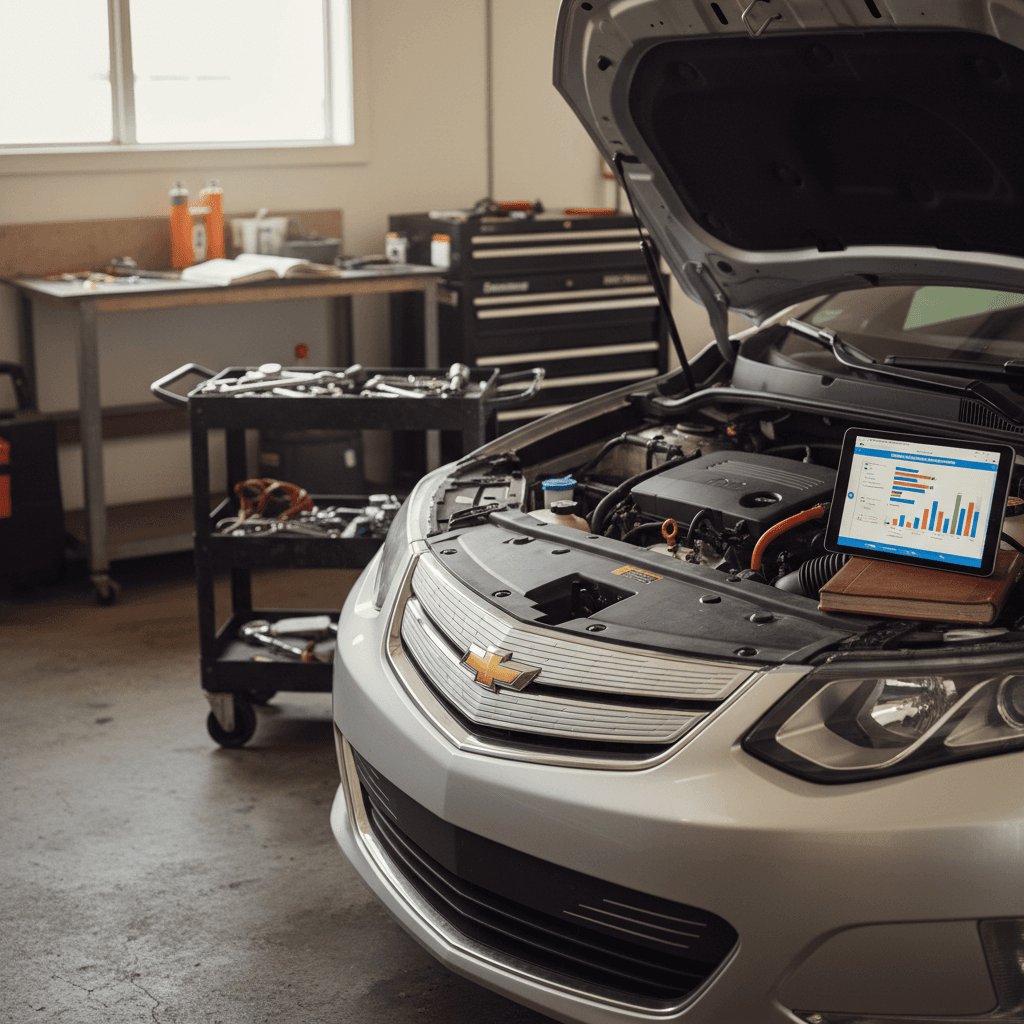
If you’re used to gas cars, the Chevrolet Volt maintenance schedule looks almost suspiciously light. No timing belt drama, no transmission flush every other oil change, no tune‑ups every 30,000 miles. But the Volt does have a few critical items, especially its coolant loops and electric drive unit fluid, that you absolutely should not ignore if you want it to sail past 150,000 miles.
Quick take
Why the Chevrolet Volt maintenance schedule looks so light
The Volt is a series/parallel plug‑in hybrid. Most daily driving happens on electric power, with the 1.4L (Gen 1) or 1.5L (Gen 2) gasoline engine waking up only when the battery is depleted or you command Hold/Mountain mode. Less engine runtime means less wear on oil, spark plugs, exhaust, and traditional transmission parts.
- No conventional automatic transmission with clutches and bands to service; the Volt uses an electric drive unit with its own fluid.
- Regenerative braking handles much of the slowing, so pads and rotors often last well past 100,000 miles.
- There’s no alternator, no timing belt, and far fewer belts and hoses than a comparable gas sedan.
Think in engine hours, not just odometer miles
Chevy Volt maintenance overview by year and miles
GM’s own schedule for the Volt is built around 7,500‑mile service intervals with a handful of big‑ticket items spread between 45,000 and 150,000 miles. To make it digestible, here’s a simplified, owner‑friendly view that applies broadly to both generations:
High‑level Chevrolet Volt maintenance schedule
Typical maintenance items for a Chevrolet Volt under normal driving conditions. Always confirm specifics in your model‑year owner’s manual.
| Mileage / Time | What to do | Notes |
|---|---|---|
| Every 7,500 miles or when Oil Life Monitor says | Change engine oil (if indicated), rotate tires, basic inspection | Volt uses synthetic oil; if you run mostly electric, the Oil Life Monitor may stretch intervals. |
| Every 22,500–30,000 miles (~2 years) | Replace cabin air (pollen) filter | Keeps HVAC efficient and the interior air clean. |
| 45,000 miles (often sooner for severe use) | Inspect/replace engine air filter; change electric drive unit fluid (check your manual) | Gen 2 schedule commonly calls the drive‑unit fluid here under severe or mixed use. |
| Every 5 years | Replace brake fluid | Age matters as much as mileage, moisture contamination is the enemy here. |
| 5 years or 150,000 miles (whichever comes first) | Replace coolant in battery, engine, and power‑electronics loops | This is one of the most important long‑term services on a Volt. |
| 97,500–100,000 miles | Replace spark plugs | Iridium plugs, long life, but don’t skip this interval. |
| 150,000 miles | Re‑evaluate all fluids; second coolant service depending on age | At this point you’re into long‑term ownership territory. |
Volt maintenance is mostly tires, fluids, and filters, plus a few EV‑specific services at higher mileage.
Why staying on top of Volt maintenance pays off
Core Chevrolet Volt maintenance intervals explained
Oil changes and tire rotations
On a Volt, you change oil when the Oil Life Monitor (OLM) tells you, or at least once a year. If you do a lot of highway driving on gas, that might be every 7,500–10,000 miles. If you mostly charge and drive electric, the OLM may let you go many months before it wants fresh oil. Tire rotation is typically every 7,500 miles, regardless of how much the engine runs.
- Use dexos‑approved synthetic oil in the correct weight listed in your owner’s manual.
- Rotate tires front to rear on schedule to even out wear, Volt torque can chew up front tires if ignored.
- Have the shop check for uneven wear that might hint at alignment or suspension issues.
Don’t ignore the oil timer
Cabin and engine air filters
GM’s schedules for the Volt generally call for a cabin air filter around every 22,500–30,000 miles or two years, and an engine air filter around 45,000–60,000 miles or four years, under normal driving. In dusty climates, both may need more frequent service.
- The cabin filter is a 5‑minute DIY job behind the glovebox on most years.
- Because the engine doesn’t run constantly, the engine air filter often looks surprisingly clean even at the suggested interval, inspect before replacing.
- If you live where pollen season is biblical, consider upgrading to a higher‑grade cabin filter.
Coolant loops: when to service the battery and power electronics
This is the part of the Chevrolet Volt maintenance schedule that trips up even seasoned mechanics. The Volt has multiple coolant loops, at minimum for the internal‑combustion engine, the high‑voltage battery, and the power electronics/charger. GM’s guidance is typically 5 years or 150,000 miles for these Dex‑Cool‑based loops, whichever comes first, with some manuals specifying additional checks under severe use.

Have all three loops serviced together
- Coolant is usually Dex‑Cool or a GM‑approved equivalent, mixing unknown coolants is a no‑go.
- If your car is 7–10 years old and has never had its coolant changed, put this at the top of your list.
- After service, keep an eye out for leaks and unusual smells; anything sweet or chemical under the hood deserves immediate attention.
Do not DIY the battery coolant without proper tools
Electric drive unit fluid, brakes, and tires
Electric drive unit ("transmission") fluid
The Volt doesn’t have a traditional multi‑gear automatic, but it does have an electric drive unit that uses fluid for lubrication and cooling. Owner manuals and dealer bulletins generally call for a fluid change around 45,000 miles for severe service (lots of city driving, hot climates) or 90,000 miles under normal use.
- This service is more than a quick drain‑and‑fill, there are specific procedures to follow, so use a shop that knows Volts.
- If you just bought a used Volt around 60,000–100,000 miles and there’s no record of this being done, it’s wise insurance to have it serviced.
- Fresh fluid is cheap compared with an out‑of‑warranty drive‑unit repair.
Brakes and brake fluid
Thanks to regenerative braking, Volt owners routinely report original pads and rotors lasting past 100,000 miles. That doesn’t mean you can forget about the brake system, though. The fluid is hygroscopic, it absorbs moisture and slowly degrades.
Brake care checklist for Volt owners
1. Replace brake fluid every 5 years
Even if you don’t rack up big miles, time and moisture break down fluid. A flush every 5 years is cheap insurance for ABS components and calipers.
2. Don’t ignore pulsation or noise
Because pads last a long time, people tend to ignore subtle issues. Any pulsation, scraping, or one‑sided pull under braking deserves a professional inspection.
3. Keep the parking brake exercised
If you rarely park on hills, the cable and mechanisms can still seize up from disuse. Use the parking brake periodically to keep things moving freely.
Tire wear and alignment
Electric torque plus a relatively heavy battery pack means the Volt is harder on tires than a comparable gas compact. Expect to budget for a full set around the 30,000–50,000‑mile mark, depending on driving style and tire choice.
Aim for quiet, low‑rolling‑resistance tires
Gen 1 vs Gen 2 Volt maintenance differences
Gen 1 Volt (2011–2015)
- 1.4L gasoline engine with a slightly more complex first‑generation Voltec drive unit.
- Maintenance schedule calls out spark plugs at roughly 100,000 miles and coolant around 5 years/150,000 miles.
- Older cars are more likely to be overdue on age‑based items like coolant and brake fluid.
Gen 2 Volt (2016–2019)
- 1.5L gasoline engine, simplified and more efficient drive unit.
- Interval grid in the manual commonly highlights electric drive unit fluid around 45,000 miles under severe use.
- Being newer, many Gen 2 cars haven’t hit high mileage yet, but they’re reaching the age where coolant and brake fluid should be refreshed.
Always default to your model‑year owner’s manual
Chevrolet Volt maintenance costs and what to prioritize
Costs will vary by region and shop, but once you strip away the fluff, the Volt’s real maintenance needs are modest. The key is understanding which services matter and which are dealership upsell theater.
Where to spend, and where to push back
Use this as a sanity check when a service advisor hands you a four‑figure estimate.
High priority
- Coolant loops at 5 years/150k miles.
- Electric drive unit fluid at 45k–90k miles depending on use.
- Brake fluid every ~5 years.
- Regular oil changes per OLM.
Medium priority
- Engine air filter around 45k–60k miles.
- Cabin filter every 2 years.
- Alignment checks if you see uneven tire wear.
- Transmission/drive‑unit fluid earlier if you tow (rare) or drive very hard.
Low priority / often upsold
- “EFI service” or fuel injector cleaning on a mostly‑electric Volt.
- Engine flushes or additives not specified by GM.
- Short‑interval transmission flushes instead of proper drive‑unit service.
- Overpriced cabin filters you can change yourself.
Beware the mystery bundle
Used Chevy Volt pre‑purchase maintenance checklist
Shopping for a used Volt? You’re in luck: they’re among the lowest‑maintenance plug‑in vehicles on the market, if the previous owner stayed on top of the basics. If they didn’t, you want to know before you sign anything.
Essential checks before you buy a used Volt
1. Confirm coolant and brake‑fluid history
Ask for invoices showing coolant loop service (engine, battery, power electronics) and a brake‑fluid flush around the 5‑year mark. If there’s no proof, assume it’s due and factor that into price.
2. Look for electric drive unit fluid service
On cars over ~60,000 miles, look for a receipt mentioning drive‑unit or transmission fluid on a Volt. If you can’t find one, plan to do this soon after purchase.
3. Check tire wear and alignment
Uneven wear can hint at pothole damage or neglected alignment. Replacing a full set of low‑rolling‑resistance tires isn’t cheap, so this matters.
4. Ask about oil‑change cadence
You want to hear that they followed the Oil Life Monitor rather than stretching oil for years. Long‑expired oil is a red flag even if mileage is low.
5. Inspect records for recalls and software updates
A dealer can pull a history by VIN. Keeping software current is especially important on early‑build cars.
6. Get the battery health checked
At <strong>Recharged</strong>, every used EV and plug‑in comes with a <strong>Recharged Score</strong> battery health report. If you’re buying privately, consider a specialist shop that can run a detailed scan rather than guessing off the dash range estimate.
How Recharged can help
Ready to find your next EV?
Browse VehiclesFAQ: Chevrolet Volt maintenance schedule
Frequently asked questions about Volt maintenance
Bottom line: keep your Volt happy for the long haul
The beauty of the Chevrolet Volt maintenance schedule is that it’s mercifully short, and the car tends to be forgiving, as long as you respect the handful of long‑interval items that actually matter. Stay ahead of coolant and drive‑unit fluid, don’t let brake fluid age into oblivion, and follow the Oil Life Monitor instead of old habits from carbureted days.
If you’re already a Volt owner, consider this your roadmap for the next 100,000 miles. If you’re shopping for a used one, it’s a checklist you can bring to a test drive, or skip the homework and let Recharged do the vetting with battery diagnostics, fair‑market pricing, and expert EV support baked in. Either way, treat the schedule as a promise: give the Volt a little care, and it will quietly pay you back in low running costs and all‑electric commutes for years to come.