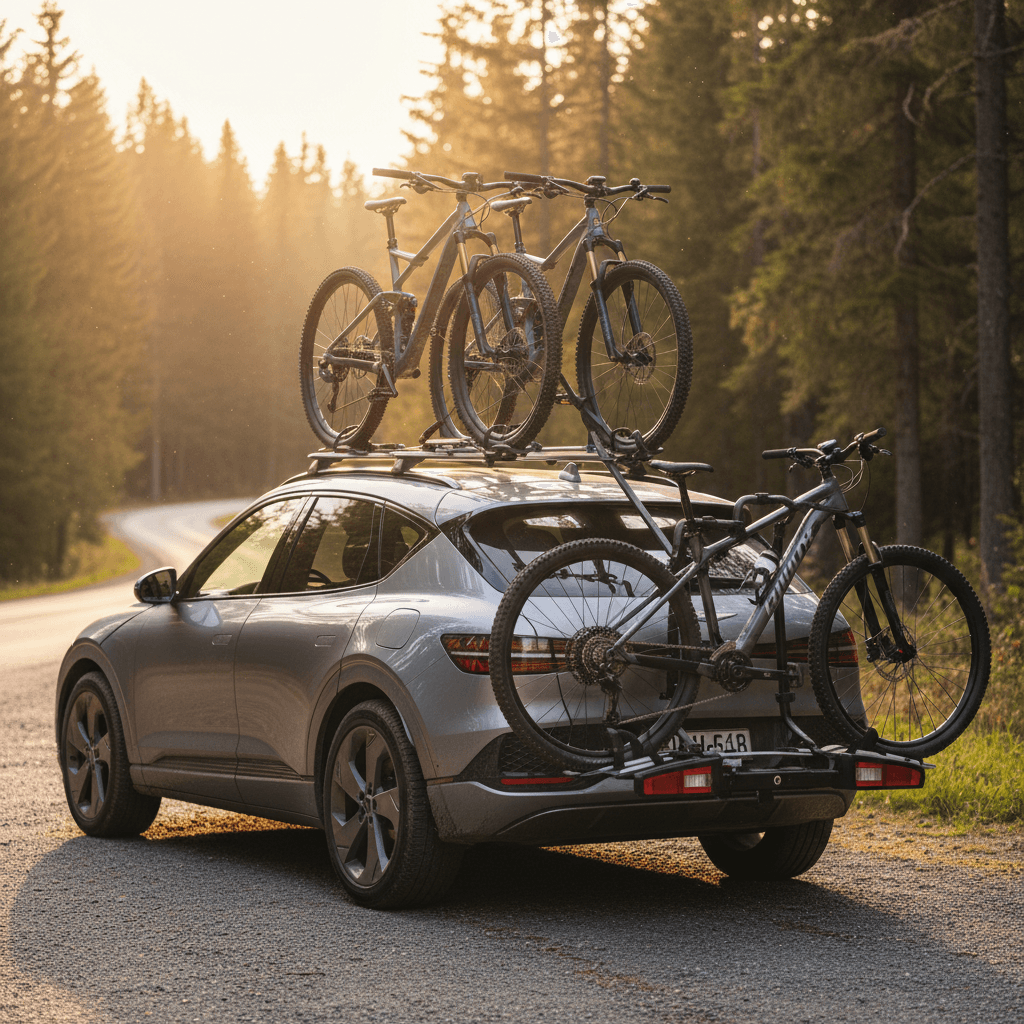
If you love to ride, a well-chosen bike rack turns your Genesis GV60 into a year‑round adventure rig. But the GV60’s EV packaging, flush rails, sensors, and sometimes‑confusing factory hitch options make bike rack shopping trickier than it is for a typical gas SUV. This guide breaks down the best Genesis GV60 bike rack options, hitch, roof, and (with caveats) trunk, so you can carry bikes confidently without hurting range, ride quality, or resale value.
At a glance
Why your Genesis GV60 bike rack choice really matters
On any EV, especially a premium one like the Genesis GV60, your bike rack choice affects more than just convenience. You’re balancing range, aerodynamics, rear visibility, parking sensors, and warranty considerations. Load the wrong rack in the wrong place and you can lose more range than you expect, trigger constant sensor warnings, or stress the hatch in ways Genesis never intended.
Bike racks and your GV60: quick impact numbers
Genesis GV60 basics for hauling bikes
Before you pick a rack, it helps to understand how the GV60 is built. Underneath, it shares the E‑GMP platform with the Hyundai Ioniq 5 and Kia EV6, but Genesis has taken a more premium, design-forward approach. That means sleek bodywork, extensive camera and parking‑sensor coverage, and, on many trims, flush roof rails that demand vehicle‑specific crossbars.
- Most U.S.‑spec GV60s are rated to tow up to around 2,000 lbs when properly equipped, with a typical tongue‑weight ceiling near 10% of that. Genesis marketing and some dealers still describe the hitch as "for accessories only," which is exactly what a bike rack is.
- Several model years have offered a factory accessory hitch in some markets, but availability and wiring support have been inconsistent by year and trim, so many owners lean on aftermarket hitches.
- All trims are packed with rear sensors and cameras. Any rack that blocks the license plate, taillights, or camera will change how those systems behave, and may require you to live with frequent beeps when backing up.
- Most U.S. GV60s ship with flush roof rails, which accept custom‑fit crossbars from Genesis and from aftermarket brands like Erkul, Thule, OMAC, and others. These are the starting point for any roof‑mounted bike system.
Check your manual first
Hitch options for Genesis GV60 bike racks
For most riders, a hitch‑mounted solution is the safest, easiest, and most range‑friendly way to carry bikes on a GV60. The catch is that the GV60 doesn’t come with a traditional frame‑exposed rear section like a truck or old‑school SUV. Everything hides behind sculpted bodywork, so you’ll usually need a hidden or accessory-style hitch.
Common Genesis GV60 hitch paths for bike racks
How owners are actually getting a receiver on the back of the car
Aftermarket Stealth Hitch
What it is: A hidden receiver that replaces part of the rear crash structure and tucks behind the bumper.
- Popular option marketed specifically for the GV60.
- Rack‑only versions with a 2" receiver are ideal for bike racks.
- Professional installation strongly recommended.
Dealer / factory accessory hitch
What it is: A Genesis‑branded accessory hitch some dealers bundle with leases or new purchases.
- Support and part availability have varied by year.
- Often positioned as "for accessories like a bike rack" rather than heavy towing.
- Ask the dealer to confirm receiver size and tongue weight rating in writing.
Custom or one‑off solutions
What it is: Hitch receivers adapted or fabricated by specialty shops.
- Can be an option if off‑the‑shelf parts don’t fit your model year.
- Best reserved for experienced fabricators who understand EV structure and crash energy paths.
- Be very cautious about warranty implications.
Don’t cut or drill blindly
Key hitch decisions for a Genesis GV60 bike rack
Use this as a checklist when comparing hitch options and talking to installers.
| Decision | What to ask | Why it matters |
|---|---|---|
| Receiver size | Is it a 1.25" or 2" receiver? | Most high‑quality platform bike racks are designed for 2" receivers; adapters can add wobble. |
| Tongue weight | What is the official tongue‑weight limit? | Your total rack + bikes weight must stay safely under this limit with margin. |
| Rack‑only vs towing | Is this hitch designed for accessories only, or also towing? | Even if you never tow, a rack‑only design may be lighter and simpler. |
| Removability | Is the receiver removable when not in use? | A removable neck can clean up the look and reduce the chance of curb or ramp scrapes. |
| Warranty impact | How does this affect my vehicle warranty? | Get clarity in writing from Genesis or the installer whenever possible. |
Always verify these details against current specs for your exact model year.
Best hitch-mounted bike rack types for the GV60
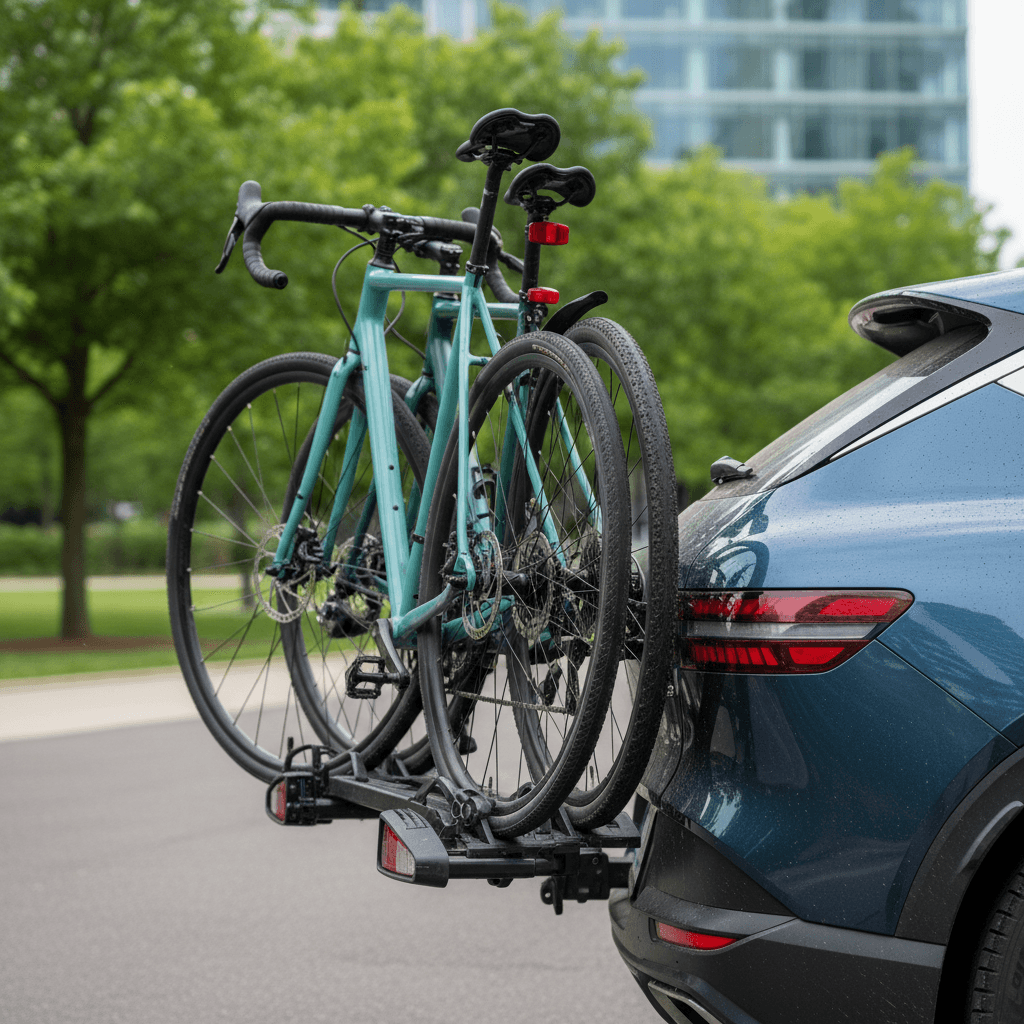
Once you have a receiver, you can focus on the rack itself. The GV60’s relatively short overhang and strong low‑end torque pair well with platform‑style racks that keep bikes low and stable. Hanging racks work, but they’re less friendly to carbon frames, modern geometry, and e‑bikes.
Platform (tray-style) racks
These support each wheel in a tray and usually secure the bike with an arm over the front wheel or frame.
- Pros: Excellent stability, easy loading, better for long‑wheelbase MTBs and e‑bikes, less frame contact.
- Cons: Heavier and more expensive; usually 2" receiver only.
Great matches for the GV60 include tilting 2‑bike trays with optional add‑on slots, especially models that offer long wheelbase and 60–80 lb per‑bike ratings if you carry e‑bikes.
Hanging (mast-style) racks
These suspend bikes from their top tubes on arms.
- Pros: Lighter, cheaper, simple to store.
- Cons: Can be hard on carbon frames and step‑through bikes; bikes can swing into each other if not carefully spaced and strapped.
Hanging racks can work for a GV60 owner with two lighter, traditional‑frame road or gravel bikes, but they’re not ideal for heavy e‑bikes or full‑suspension MTBs.
Think in total weight, not bike count
Roof rack and roof bike carrier options
If you’re hitch‑averse or simply prefer to keep the back of the car clear, roof‑mounted systems are your main alternative. The GV60’s flush rails mean you’ll need crossbars specifically designed for the car’s rail profile before you can mount any bike carriers.
Popular Genesis GV60 roof crossbar choices
These sit on the factory flush rails and form the base for roof bike racks.
Genesis OEM crossbars
Sold through Genesis parts channels for 2023–2026 models.
- Clean, near‑OEM look and fit.
- Typically rated around 150–165 lbs total load (always verify your year).
- Best integration with styling but often pricier.
Aftermarket vehicle-specific bars
Brands like Erkul, OMAC, Toros and others sell GV60‑specific crossbars sized for the flush rails.
- Often in the 150–165 lb load range.
- Good value and easy DIY installation.
- Look for T‑slot channels to accept a variety of bike carriers.
Premium systems (Thule, Yakima, etc.)
Some premium rack makers offer fit kits or crossbar systems for the GV60.
- Excellent aerodynamics and low wind noise.
- Broad accessory ecosystem for bikes, cargo boxes, and skis.
- Check fit‑guide notes carefully by year; 2026+ may use updated kits.
Once crossbars are in place, you can add fork‑mount, frame‑clamp, or wheel‑on bike trays. Wheel‑on carriers are usually easiest for modern disc‑brake bikes because you avoid removing and storing the front wheel.
Mind roof height and weight
- Favor aero-style crossbars if you do a lot of highway miles, owners report noticeably more wind noise and range loss from square bars and big rooftop accessories.
- Roof racks are great for lighter, non‑electric bikes. Most roof bike carriers cap out around 35–45 lbs per bike; many e‑bikes are heavier than that.
- Consider one or two bikes on the roof and overflow on a hitch rack if you regularly carry a full family’s worth of bikes. Spreading weight can be better than maxing out a single system.
Can you use trunk-mounted racks on a GV60?
Traditional strap‑on trunk racks are tempting because they’re inexpensive and don’t require a hitch or crossbars. On a Genesis GV60, though, they’re a questionable fit. The car’s sculpted hatch, integrated spoiler, cameras, and frameless glass come together in ways that don’t match the square, flat surfaces trunk racks were designed for.
Why trunk racks are a last resort
- If you absolutely must use a trunk‑style rack, look for one that’s specifically approved by the manufacturer for crossover/SUV hatches and has broad, padded feet.
- Expect to disable rear cross‑traffic alerts and parking sensors while the rack is installed; otherwise you’ll get a chorus of warnings every time you back up.
- Never exceed the rack’s per‑bike and total weight ratings, and check that no strap is rubbing on edges that can cut into it over time.
For most GV60 owners, it’s smarter to invest once in a hitch or proper roof setup rather than gamble with a generic trunk rack on an expensive EV.
EV-specific considerations: range, clearance, and safety
Hauling bikes on an EV isn’t quite the same as on a gas crossover. The GV60 delivers instant torque and excellent efficiency in stock form, but adding a rack and bikes changes both the aerodynamics and the weight distribution. Plan for those changes instead of being surprised by them on your first big trip.
How bike racks affect your GV60 as an EV
What changes when you strap bikes to a battery-powered crossover
Range and aerodynamics
- Hitch racks tuck into the slipstream and usually cost less range than roof racks.
- Roof‑mounted bikes can add significant drag; it’s common to see noticeably higher consumption at highway speeds.
- Slow down a bit and pre‑plan more frequent fast‑charging stops on long trips.
Suspension, braking, and clearance
- Extra rear weight slightly squats the suspension and can change headlight aim.
- Steep driveways and parking garage ramps may bring the rack closer to the pavement.
- Allow more stopping distance, the GV60’s regen is strong, but added mass still matters.
Use your data
How to choose the right bike rack for your GV60
Step-by-step: picking the best Genesis GV60 bike rack
1. Inventory your bikes
List how many bikes you carry, their frame types, and especially their weights. Two lightweight road bikes point you toward different solutions than two 70‑lb e‑MTBs.
2. Decide where you want the bikes
If you care most about range and easy loading, lean toward a hitch rack. If you already have roof crossbars or want to keep the rear hatch clear, a roof solution can make sense for lighter bikes.
3. Confirm vehicle limits
Check your GV60 manual for <strong>roof load</strong> and <strong>hitch tongue‑weight guidance</strong>. Choose a rack that keeps your total system (rack + bikes) comfortably below those numbers.
4. Check garage and parking constraints
Measure garage door height and look at your daily parking spots. If you use low garages or tight parallel spaces regularly, a <strong>folding hitch rack</strong> may be more practical than tall roof bikes.
5. Consider security and storage
Look for built‑in locks for both bikes and the rack itself, plus an easy way to remove and store the rack when you’re not riding, important if you park on city streets.
6. Think about resale and warranty
A well‑installed, reputable hitch and quality rack are often selling points on a used EV. Sloppy trunk‑rack use or roof damage is not. Protect the car as much as the bikes.
Where Recharged fits in
Ready to find your next EV?
Browse VehiclesInstallation checklist and long-term ownership tips
Pre-ride checklist for your GV60 bike rack
Verify torque and hardware
After your first drive, re‑check all hitch or crossbar bolts using the manufacturer’s torque specs. Re‑check again after a long highway trip or rough road.
Test hatch and sensor operation
Make sure the hatch can open with the rack empty and loaded (or that the rack tilts away properly). Learn how your parking sensors and cross‑traffic alerts behave with bikes on board.
Protect paint and trim
Use clear film or protective pads anywhere straps, feet, or rack parts touch painted surfaces or trim. This matters for trunk racks and some roof foot packs.
Manage charging access
On the GV60, the charge port is at the rear quarter. Confirm that your rack and bikes don’t block access to public chargers you use, especially tight fast‑charging stations.
Store the rack smartly
When you’re not riding, remove the rack to save range and reduce exposure to weather and road salt. Many owners hang the rack on a garage wall or dedicated floor stand.
Inspect regularly
Look for cracked plastic, rusted bolts, frayed straps, or wobble at the receiver or crossbars. Replace worn parts promptly; a failed strap or arm can spell the end of a frame or wheelset.
Set up correctly, a Genesis GV60 is a terrific bike shuttle, quiet, quick, and smooth enough that even long mountain‑town transfers are relaxing. Start with a hitch or roof base that respects the car’s weight and aero limits, then pair it with a quality rack sized to your bikes and your riding style. Pay attention to range, loading height, and garage clearance, and you’ll be free to focus on the ride instead of worrying about the drive home.