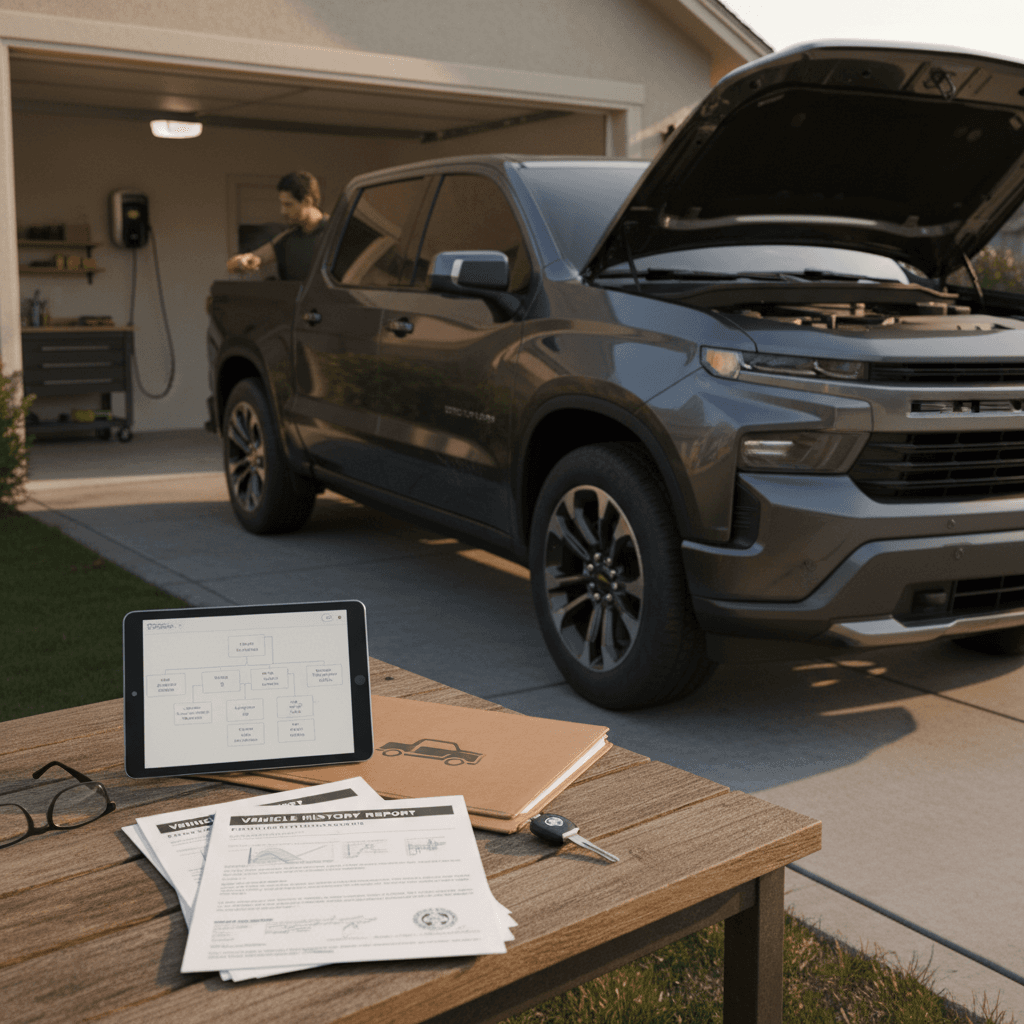
If you own a Chevrolet Silverado EV, you’re driving one of the most capable electric pickups on the road, big battery, serious range, and real towing muscle. That also means you’re dealing with a high‑dollar truck in a rapidly changing EV market. A generic selling guide won’t cut it. You need a Chevrolet Silverado EV selling checklist that addresses battery health, software, accessories, and how fast EV truck prices can move.
Who this checklist is for
Why a Silverado EV–Specific Selling Checklist Matters
The Silverado EV isn’t a typical half‑ton. With large Ultium battery packs, long range, advanced driver‑assist tech, and software‑defined features, buyers will ask different questions than they would about a gas Silverado 1500. On top of that, early electric pickups, including the Silverado EV, are seeing faster and less predictable depreciation than traditional trucks as new incentives, price cuts, and trims hit the market.
Common pain points when selling a Silverado EV
Address these upfront and your truck will stand out in a crowded market.
Battery questions
- How healthy is the battery?
- What range do you actually see?
- Has DC fast charging been used heavily?
Charging & towing use
- Home charging setup
- How often you tow
- Typical trailer weights and routes
Complex paperwork
- Over‑the‑air updates
- Warranty nuances
- Transferable subscriptions and accessories
Why consider Recharged
Step 1: Know What Your Silverado EV Is Worth
Before you clean a floor mat or snap a photo, get a realistic idea of your truck’s value. Early used Silverado EVs are already showing big spreads between what the first owner paid and what the market will pay today. Your job is to understand that landscape so you don’t walk away from thousands of dollars, or list the truck unrealistically high and let it sit.
Key factors that drive Silverado EV resale value
- Use major pricing tools (Edmunds, KBB, etc.) to see trade‑in, dealer retail, and private‑party values for your model year, trim, mileage, and ZIP code.
- Search listing sites for similar Silverado EVs actually advertised for sale, filter by trim, battery pack, and mileage.
- Look at real sold prices where available, not just asking prices.
Watch out for EV truck depreciation curves
Step 2: Document Battery Health and Charging Habits
For a Silverado EV buyer, the battery is the heart of the deal. They want proof that the pack is healthy and that they’re really getting the range Chevy advertises for that trim and battery size. If you can answer those questions with data instead of guesses, you instantly separate your truck from the rest of the market.
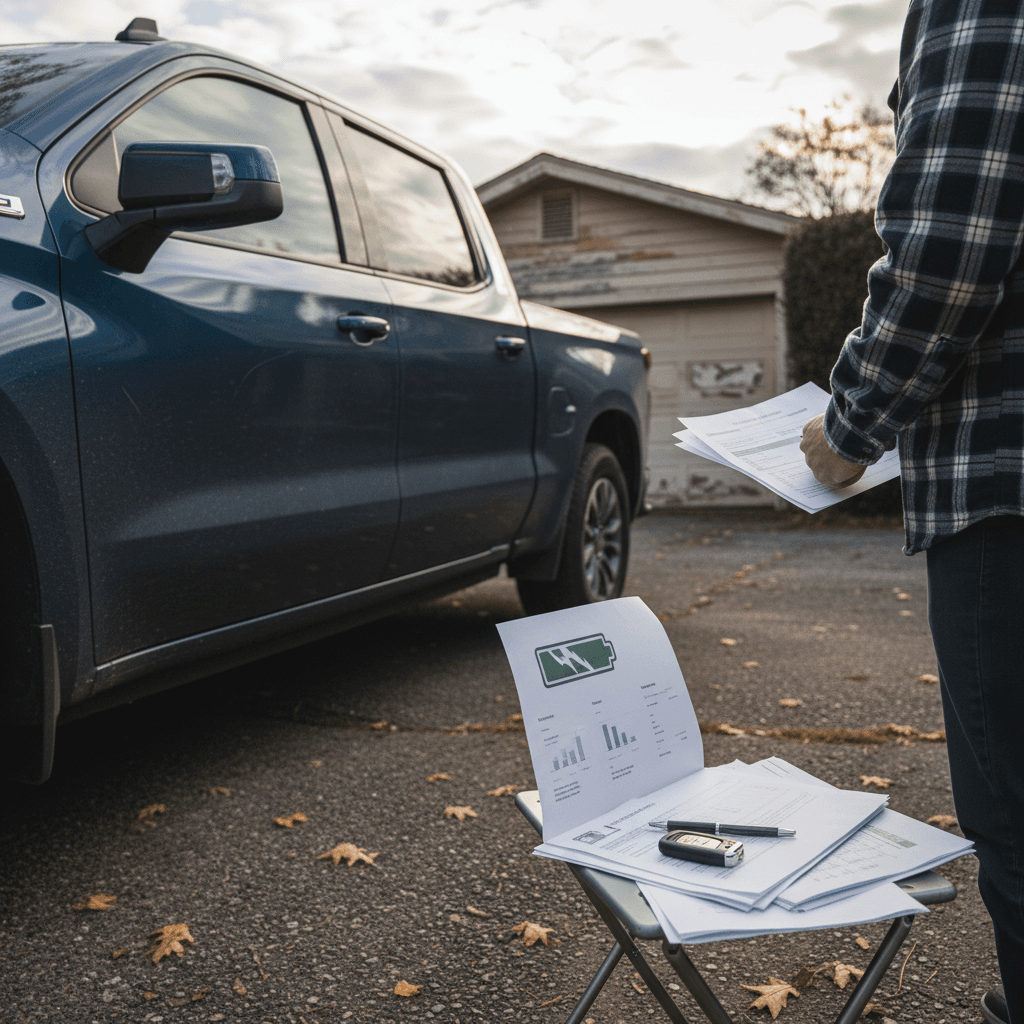
Battery & charging documentation checklist
Confirm your typical real‑world range
Fully charge the truck, reset a trip meter, and drive your normal routes. Note the range you actually see for your trim and battery pack in mild weather without a trailer. Buyers trust concrete examples far more than vague guesses.
Pull any in‑vehicle battery data
Many EVs show battery percentage, range adaptation, and energy use. Take photos of the relevant screens, especially after a full charge and after a representative drive.
Get an independent battery health report
If possible, use a third‑party battery diagnostic (like the <strong>Recharged Score battery health report</strong>) that quantifies remaining capacity and pack condition. This kind of documentation can justify a higher asking price.
Summarize your charging habits
Be ready to describe how often you charge at home Level 2 vs DC fast charging, typical state‑of‑charge range (for example, 20–80%), and any long‑term storage practices. Consistent, moderate charging is reassuring to buyers.
Note towing and heavy‑load usage
If you towed regularly, be transparent. Share typical trailer weight, trip length, and how often you fast‑charged while towing. Honest details help serious shoppers decide if your truck fits their use case.
Battery transparency pays
Step 3: Get the Truck Ready – Detail, Inspect, and Fix the Small Stuff
A Silverado EV buyer expects a truck that looks like it was cared for, not abused as a job‑site tool, especially if you’re selling an LT, RST, or Trail Boss. You don’t need a concours‑level detail, but you do want the truck cleaned, deodorized, and free of obvious defects that will scare off buyers or give them painless negotiation leverage.
- Exterior wash, clay, and wax or sealant – focus on glass, lights, and charge‑port door.
- Thorough interior cleaning – steam or shampoo carpets, wipe all trims, clean the glass and touchscreens carefully.
- Address small defects – blow fuses, cracked lenses, curb‑rashed wheels, or broken bed tie‑downs are worth fixing if inexpensive.
- Tires and brakes – replace badly worn tires; make sure brake pads and rotors are within spec and don’t squeal or pulsate.
- Software – run all available OTA updates, clear warning messages, and confirm no active recalls affecting drivability.
Cosmetic vs. structural repairs
Step 4: Gather Title, Service Records, and EV‑Specific Paperwork
The cleaner your paperwork, the more comfortable buyers will feel wiring you tens of thousands of dollars, or agreeing to your trade‑in number. A Silverado EV adds a few extra wrinkles, like high‑voltage service and connected‑services subscriptions.
Paperwork to gather before you list your Silverado EV
Collect these documents in one folder so you can answer buyer or dealer questions on the spot.
| Document | Why it matters |
|---|---|
| Title or payoff info | Proves you can legally sell the truck and shows whether a lienholder must be paid off at closing. |
| Registration & plate information | Helps buyers confirm VIN and ownership details; needed for test drives. |
| Service & repair records | Shows how the truck was maintained, including tire rotations, brake service, and any high‑voltage work. |
| Battery health reports | Reassures buyers about remaining capacity and real‑world range. |
| Recall & campaign paperwork | Confirms that any open campaigns, especially safety‑related ones, have been taken care of. |
| Accessory and charger receipts | Adds value if you’re including home chargers, winter wheels, tonneau covers, or bed storage. |
Well‑organized records signal a well‑cared‑for truck.
Don’t forget charging equipment
Step 5: Take Photos and Write a Silverado EV–Focused Listing
In the EV world, good photos and a detailed description aren’t just “nice to have”, they’re how you convince shoppers that your Silverado EV is worth a trip across town or across state lines. Put yourself in a buyer’s shoes: they’re comparing your truck to newer inventory, other electric pickups, and traditional half‑tons.
Must‑have Silverado EV photos
- Front 3/4 view in daylight, truck clean and centered.
- Side profile showing bed, wheels, and stance.
- Interior from both front doors, plus rear seats and cargo floor.
- Close‑ups of the charge port and charge‑screen displays.
- Instrument cluster and center screen showing mileage, battery %, and range.
- Bed, tonneau, midgate (if equipped), trailering equipment, and any accessories.
- Any flaws: scratches, dings, curb rash, or interior wear.
Elements of a strong listing description
- Year, trim, battery pack (Standard/Extended/Max Range) and key packages.
- Accurate current mileage and ownership history (for example, single‑owner, off‑lease).
- Real‑world range examples based on your driving and weather.
- Charging details: home setup, included chargers, and typical charge patterns.
- Towing/hauling usage: how often, what weight, and what kind of trailers.
- Reason for sale (upgrading, downsizing, switching brands, etc.).
- Disclosure of any accidents, paintwork, or significant repairs.
Use buyer language, not ad copy
Step 6: Choose How to Sell – Trade‑In, Instant Offer, or Private Party
Not every Silverado EV owner wants to manage a private‑party sale, especially when you’re juggling a payoff, potential tax credits, and the logistics of a new vehicle. Your options fall into three broad buckets, each with its own trade‑offs.
Which Silverado EV selling path fits you best?
Balance convenience, net dollars, and how much time you’re willing to invest.
Dealer trade‑in
Pros:
- Quick and simple; one transaction.
- Can reduce sales tax on your new vehicle in many states.
- No dealing with strangers or test drives.
Cons:
- Usually the lowest dollar amount.
- Some dealers are still learning how to price EV trucks.
Instant offer / EV specialist
Pros:
- Fast online quotes and streamlined paperwork.
- Some platforms (like Recharged) specialize in EVs and factor real battery health into pricing.
- May offer pickup or nationwide logistics.
Cons:
- Net slightly less than a well‑executed private sale.
- Offer may change after inspection if condition differs from your description.
Private‑party sale
Pros:
- Highest potential sale price.
- More control over who buys your truck and how it’s used.
Cons:
- More time and effort: listings, inquiries, showings.
- Must manage paperwork and payment security yourself.
- Need to educate buyers on EV truck ownership if they’re new to it.
How Recharged fits in
Ready to find your next EV?
Browse VehiclesStep 7: Screen Buyers, Test Drives, and Secure Payment
If you go private‑party, treat your Silverado EV sale like a business transaction. The amounts involved are large, and your truck’s performance, range, acceleration, and towing torque, can tempt buyers into unsafe test drives if you’re not clear about the rules.
- Pre‑screen by phone or messages. Confirm the buyer’s basic info, readiness to purchase, and whether they’re pre‑approved if using financing.
- Meet in a safe, public place, ideally near your bank or credit union. Bring a friend or family member if possible.
- Check the buyer’s driver’s license and snap a photo before any test drive. Confirm they’re comfortable driving a large truck.
- For test drives, set ground rules: no hard launches, no towing, and stick to a pre‑planned route that includes city and highway.
- Use the test drive to educate: show how charging works, walk through key screens, and demonstrate driver‑assist features without distraction.
- For payment, use verified cashier’s check at your bank, wire transfer, or a licensed escrow service. Never release the title or signed paperwork until funds are confirmed.
Protect your data before the sale
Chevrolet Silverado EV Selling Checklist at a Glance
Quick Chevrolet Silverado EV selling checklist
1. Research current market value
Check multiple pricing guides and real‑world listings for your trim, mileage, and battery pack. Adjust for condition, options, and accident history.
2. Document battery health & range
Gather in‑vehicle data, note real‑world range, and, if possible, get a third‑party battery health report like a Recharged Score.
3. Service and detail the truck
Address basic maintenance items, fix inexpensive cosmetic issues, and thoroughly clean the interior and exterior.
4. Assemble paperwork
Organize title, payoff letter, registration, service records, battery reports, recall documents, and accessory receipts.
5. Prepare photos & listing
Shoot clear, honest photos and write a description that highlights EV‑specific strengths, usage, and included chargers/accessories.
6. Choose selling channel
Decide between dealer trade‑in, instant offer (for example through Recharged), or private‑party sale based on your priorities.
7. Manage showings & payment
Screen buyers, set safe test‑drive rules, protect your personal data, and only release the truck once payment is verified.
Frequently Asked Questions About Selling a Chevrolet Silverado EV
Silverado EV selling FAQs
Final Thoughts: Maximizing Your Silverado EV Resale Value
Selling a Chevrolet Silverado EV is part art, part science. The art is how you present the truck, clean, well‑photographed, and honestly described. The science is in your paperwork, battery health data, and pricing strategy in a fast‑moving EV market. When you handle both sides carefully, you can move on from your truck with confidence and without leaving money on the table.
Use this Chevrolet Silverado EV selling checklist as your step‑by‑step playbook. If you want expert help, especially with battery diagnostics, pricing, and buyer education, consider starting with a Recharged Score Report or exploring selling options directly through Recharged. Either way, you’ll be walking into your next truck or EV with clearer information and a stronger negotiating position.