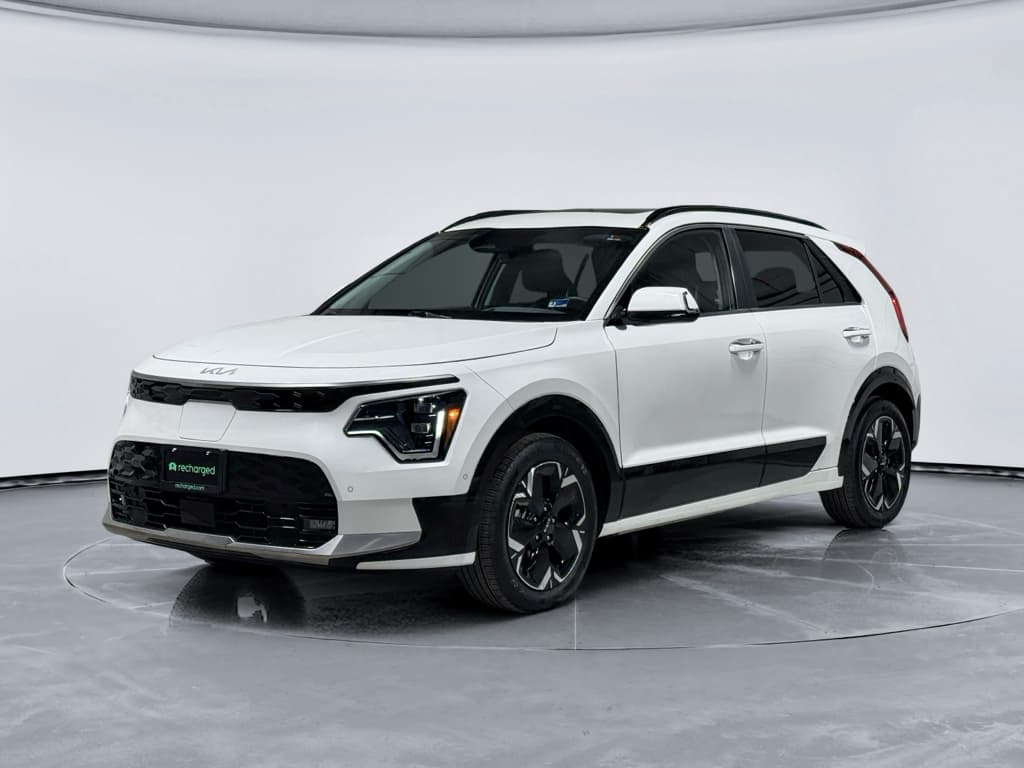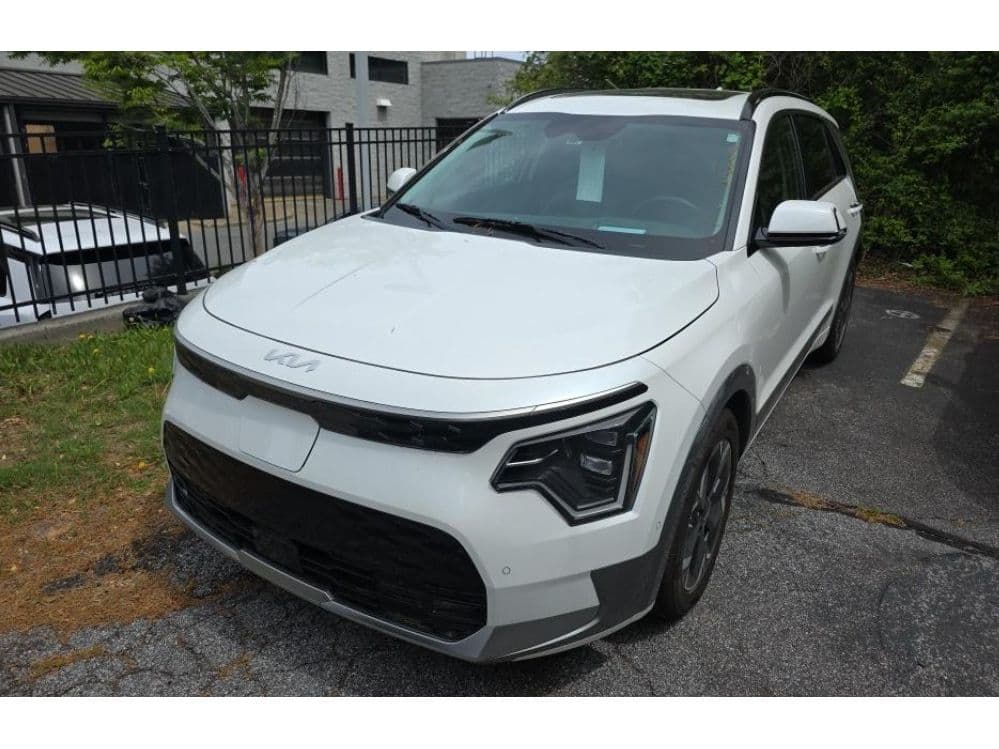
If you’re looking at a 2025 Kia Niro EV, you’re probably trying to thread a needle: you want an affordable, efficient electric crossover that won’t turn into a science experiment once the warranty ends. The good news is that the 2025 Kia Niro EV reliability rating lands in the “decent but not perfect” bucket, especially strong on battery durability, with some noise around build quality, dealer support, and small hardware glitches.
Quick takeaway
2025 Kia Niro EV reliability at a glance
2025 Niro EV reliability snapshot
Don’t confuse Niro hybrid and Niro EV stats
How the 2025 Kia Niro EV is rated for reliability
Major reliability guides like Consumer Reports and J.D. Power now publish data for the 2025 Niro lineup, but they don’t always separate the EV cleanly from its hybrid cousins. Broadly, the 2025 Niro is scored as having **about average reliability** versus its model‑year peers. That’s neither a disaster nor a standout, but it’s notable that some independent coverage still calls the Niro one of Kia’s more dependable nameplates overall.
- Consumer survey scores: Owners report relatively few catastrophic failures on the Niro EV so far, with most issues clustered around features and trim rather than the battery or motor.
- Brand context: Kia as a brand typically scores above the industry average for reliability, especially in the first few years of ownership.
- Early EV track record: The previous‑generation e‑Niro / Niro EV (2019–2022) built a reputation as a solid, range‑efficient workhorse. That history matters because much of the core battery and drive technology carries over.
How to read “about average”
Common issues and early trouble spots
The 2025 Niro EV hasn’t been around long enough to build a decade‑long reliability story, but early owner feedback and warranty actions point to a few patterns. None of these are universal, but they’re worth watching for if you’re buying used or still within warranty.
Where 2025 Niro EV owners report problems
Most issues so far are annoying more than catastrophic, but they still cost time and money if you’re out of warranty.
Body & hardware
- Reports of sunroof/roof rails misaligning or binding.
- Occasional issues with power windows, doors, and hatch latches.
- Rattles and trim squeaks on rough roads.
HVAC & comfort
- A small but real number of 2025 owners mention A/C failures at low miles.
- Blower‑motor noise and intermittent climate control glitches also surface.
Electronics & infotainment
- Screen freezes or reboots, especially when quickly switching between apps.
- Glitchy Bluetooth or phone mirroring in some vehicles.
- Occasional false warning lights that clear after a restart or software update.
Pay attention to recalls
Battery life, degradation, and long-term durability
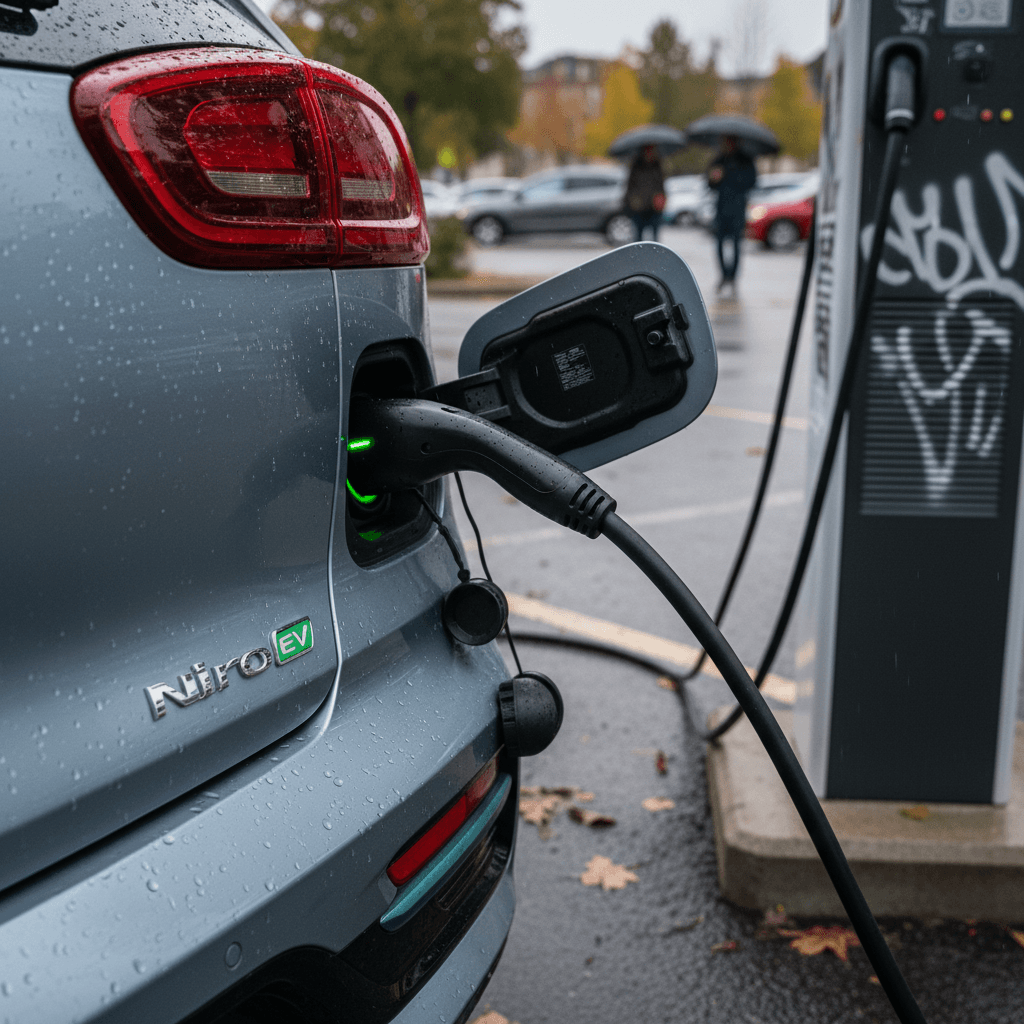
When people ask about the 2025 Kia Niro EV reliability rating, they’re usually really asking about the battery. Here the Niro EV quietly does some of its best work. The current‑generation Niro EV uses a liquid‑cooled lithium‑ion pack of about 64 kWh usable capacity, essentially an evolution of the earlier e‑Niro pack that has built a good reputation for staying healthy over high mileage.
- Most Niro EVs in typical use seem to lose roughly 5–10% capacity over the first 5–6 years, with many owners still seeing around 200–215 miles of real‑world range a decade in, assuming the car started around 240 miles of mixed‑driving range when new.
- Kia backs the pack with a high‑voltage battery warranty of about 8–10 years / 100,000 miles depending on market and exact model year, with protection if usable capacity drops below roughly 70% while in‑warranty.
- Fast‑charging abuse and extreme heat can still accelerate degradation, but compared with some early EVs, the Niro’s chemistry and cooling strategy are conservative, which generally helps long‑term durability.
How to protect a Niro EV battery
Warranty coverage for the 2025 Niro EV
Kia’s warranty is one of the biggest reasons shoppers are willing to overlook some of the brand’s dealer‑service drama. For a 2025 Kia Niro EV sold new in the U.S., you can generally expect the familiar Kia cocktail of long powertrain coverage plus a dedicated EV system warranty.
Typical U.S. warranty coverage for 2025 Kia Niro EV
Exact terms can vary by region, first owner vs. subsequent owner, and commercial use. Always confirm with the original warranty booklet.
| Component | Typical coverage | Notes |
|---|---|---|
| High‑voltage battery & EV system | 10 years / 100,000 miles | Usually covers the traction battery, drive motor, and major power electronics; includes capacity protection down to ~70% in many markets. |
| Powertrain (U.S. retail first owner) | 10 years / 100,000 miles | Legendary on paper, but portions may reduce for second owners or commercial use. |
| Basic bumper‑to‑bumper | 5 years / 60,000 miles | Covers most electronics, interior hardware, and body components. |
| Corrosion | 5+ years (varies) | Perforation‑only coverage; cosmetic rust typically excluded. |
Key warranty buckets that influence long‑term reliability risk.
Used‑buyer tip
How reliable is the 2025 Niro EV vs. other EVs?
In a world where fully electric crossovers are still working through early‑generation bugs, the Niro EV lands in a pragmatic middle ground. Survey‑based rankings that lump the Niro EV in with the broader Niro family typically put it around the middle of the EV pack, behind ultra‑simple models from Toyota, but ahead of some more ambitious, software‑heavy platforms that have struggled with teething issues.
Where the Niro EV looks strong
- Battery durability: Better‑than‑average degradation behavior versus many peers, which supports long‑term usability and resale value.
- Simplicity: The Niro EV isn’t trying to reinvent the user interface or suspension layout on every model year, which is great for reliability.
- Kia brand record: Kia’s compact crossovers often score well in owner‑reported surveys once initial bugs are sorted.
Where rivals may have an edge
- Charging speed and connector: The Niro EV’s modest DC fast‑charging and lack of built‑in NACS hardware hurt road‑trip convenience compared with some 800‑volt platforms and newer NACS‑native EVs.
- Dealer experience: Owners routinely report spotty dealer communication and slow parts availability, which can turn small problems into big annoyances.
- Software polish: Some competitors now push more frequent over‑the‑air updates, while Kia still leans heavily on in‑dealer updates.
Big picture for reliability shoppers
Used 2025 Kia Niro EV: what to check before you buy
For used‑EV shoppers, the question isn’t just “Is the 2025 Niro EV reliable?”, it’s “Is this specific Niro EV a good bet?” Variability between cars can be larger than the differences between brands, especially when you factor in charging habits, climate, and prior accident history.
Pre‑purchase checklist for a 2025 Niro EV
1. Pull the full recall and service history
Use the VIN to check NHTSA recalls and ask for dealer service records. Verify that any open campaigns, especially EV‑system or safety‑critical ones, have been completed.
2. Inspect for build and hardware issues
Look closely at doors, hatch, sunroof, and interior trim. Check for water leaks, rattles, and power windows or locks that feel slow or inconsistent.
3. Test the HVAC thoroughly
With the car READY, run the A/C and heat in multiple modes. Listen for blower noise, verify that the cabin actually cools or heats, and check for fogging or strange smells that might hint at hidden leaks or mold.
4. Verify all driver‑assist and infotainment features
On a test drive, confirm that adaptive cruise, lane‑keeping, parking sensors, and cameras behave consistently. Try CarPlay/Android Auto and Bluetooth, and look for screen freezes or lag.
5. Evaluate battery health and range in the real world
Look at the displayed range at 80–90% charge, then compare it with the original EPA rating to sanity‑check degradation. If possible, do a real‑world drive to see how many miles you actually get per kWh.
6. Confirm remaining warranty and ownership status
Ask for documentation showing the in‑service date and any transfer‑of‑warranty details. A 2025 Niro EV bought new in mid‑2025 could still have five‑plus years of battery coverage left for a 2026 buyer.
Watch out for abused fast‑charging histories
How Recharged evaluates Niro EV battery health
Because the battery is such a big part of any 2025 Kia Niro EV reliability rating, Recharged goes beyond a quick test drive. Every Niro EV we list comes with a Recharged Score Report that includes an independent view of battery health, pricing, and overall condition.
What’s inside a Recharged Niro EV evaluation
Designed to reduce the information gap between EV sellers and buyers.
Battery diagnostics
Fair‑market pricing
EV‑specialist support
Ready to find your next EV?
Browse VehiclesYou can browse used Niro EV listings, get an instant offer on your current vehicle, or arrange nationwide delivery, all digitally. And if you’re local to Virginia, you can visit our Richmond Experience Center to see vehicles in person before you commit.
FAQ: 2025 Kia Niro EV reliability
Frequently asked questions about 2025 Niro EV reliability
Bottom line: is the 2025 Kia Niro EV a safe bet?
If you’re looking for a reliable, efficient EV that doesn’t chase headline‑grabbing specs, the 2025 Kia Niro EV is a fundamentally sound choice. Its official reliability rating sits around the middle of the pack, but the pieces that matter most for long‑term EV ownership, the battery pack and electric drivetrain, have a stronger track record than you might guess from that label.
The trade‑offs are clear: you give up cutting‑edge fast‑charging performance and some of the polish you’ll find from brands with deeper software benches, and you’ll want to go in with eyes open about dealer‑service variability. In return, you get an EV that sips energy, treats its battery kindly, and benefits from one of the more generous warranty structures in the business.
If you’d like to de‑risk the process even further, consider shopping for a Niro EV with a Recharged Score Report. Verified battery health, transparent pricing, and EV‑specialist support turn the 2025 Niro EV from a question mark on a ratings chart into a concrete, data‑backed decision for your driveway.