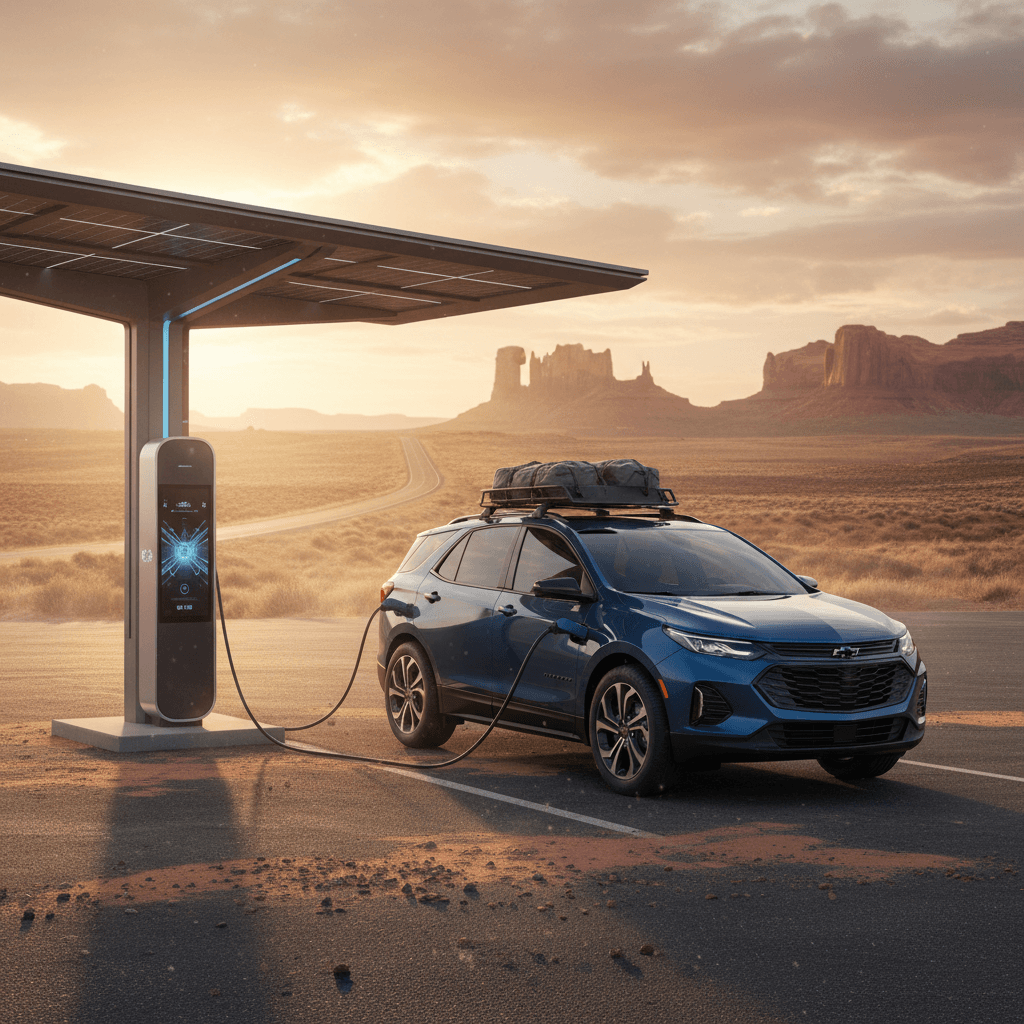
The Chevrolet Equinox EV was built for exactly the kind of driving Americans actually do: long interstate slogs, family visits two states over, the annual beach run. If you’re wondering whether it’s up to serious long-distance driving, the answer is yes, provided you respect the physics of batteries and plan a little smarter than you did in your last gas crossover.
Equinox EV at a glance for road trips
Why the Equinox EV actually works for long trips
If your mental picture of EV road tripping is a sad hatchback trickling electrons behind a strip mall, the Equinox EV will be a pleasant surprise. It was engineered to be a mainstream, do‑everything electric SUV, not a science project. With roughly 300+ miles of EPA range on many FWD trims and respectable DC fast charging, it behaves, on the highway, a lot like a very efficient gas crossover that just happens to get "fuel" at different pumps.
Core strengths of the Equinox EV on long drives
Where it quietly outperforms old‑school crossovers
Serious highway range
Front‑wheel‑drive trims can manage 250–280 real‑world highway miles per charge when driven sanely. That’s a four‑to‑five‑hour stint between stops, which is as long as most people can tolerate in one go anyway.
Competitive fast charging
In good conditions, peak DC fast‑charge power is around 150 kW, enough to add on the order of 70–90 miles in about 10 minutes when the battery is low, or go from roughly 10–80% in half an hour.
Built‑in EV route smarts
Newer GM EVs integrate Google Maps with EV routing plus myChevrolet’s Energy Assist tools, so your dashboard knows where the chargers are and can estimate arrival state of charge.
Think in time, not miles
Know your Equinox EV’s real-world highway range
EPA stickers are written for government labs, not crosswinds in Kansas. For long‑distance driving, you need a conservative mental model of what your Equinox EV can do at 70–75 mph with passengers, cargo and weather involved.
Rule-of-thumb Equinox EV highway range
Approximate ranges assume a healthy battery, 70–75 mph cruising and mild conditions. Treat these as planning baselines, not promises.
| Trim / Conditions | Mild weather (65–75°F) | Cold (below 35°F) | Very hot (95°F+, A/C high) |
|---|---|---|---|
| FWD long‑range (EPA ~319 mi) | ~250–270 mi | ~180–210 mi | ~220–240 mi |
| AWD (EPA low‑300s to high‑200s) | ~220–240 mi | ~160–190 mi | ~200–220 mi |
Use the conservative numbers for planning; enjoy the upside when conditions are better.
Beware “optimistic” estimates
Before your first big trip, spend a weekend doing a repeatable highway loop, say 50–100 miles, at your usual road‑trip speed. Reset the trip computer, watch mi/kWh, and see what the car actually delivers in your climate. That real‑world number will be more valuable than anything in the brochure.
Smart route planning and must-have apps
The Equinox EV’s secret road‑trip weapon isn’t only the battery; it’s software. Between built‑in Google Maps and the myChevrolet app, you have a decent starting point. Add one or two third‑party tools and the anxiety largely evaporates.
Apps that make Equinox EV road trips easier
Use more than one brain when you’re hundreds of miles from home
Built‑in Google Maps (in car)
Newer Equinox EVs integrate Google Maps with EV routing. When you enter a distant destination, it can suggest charging stops based on your current state of charge and consumption estimates, and can precondition the battery when you navigate to a DC fast charger.
myChevrolet app
Handy for pre‑trip planning, checking charging status from your hotel room, and finding compatible stations. Use it to experiment with routes a day or two before you leave, then send your trip to the car.
Third‑party planners
Tools like A Better Route Planner (ABRP) and PlugShare let you fine‑tune assumptions (speed, weather, charger brand) and see ratings from other drivers. Many Equinox owners plan in ABRP, then follow the route in Google Maps on the dash.
Plan A and Plan B for every stop
How to plan the night before
- Pick your overnight town first, then work backward in 2–3‑hour driving segments.
- Use ABRP or Google Maps EV routing to drop in DC fast chargers every 120–160 miles instead of running the pack to empty every time.
- Look for hotels with Level 2 charging so you can wake up full, PlugShare’s lodging filter is your friend.
How to adapt on the fly
- Watch predicted arrival state of charge; if it drops below 10–12%, zoom out and pick an earlier charger.
- If you hit unexpected headwinds or heavy rain, slow 5 mph; it’s shocking how often that stabilizes the projection.
- Don’t be afraid to skip a stop if you arrive with much more charge than expected.
DC fast-charging strategy that actually saves time
On Ultium‑platform vehicles like the Equinox EV, the charging curve is front‑loaded: the car pulls hardest when the battery is low and gradually tapers as you climb past roughly 50–60%. If you always insist on charging to 100%, you’ll spend a lot of time nursing the top of the pack for very few extra miles.
Equinox EV DC fast-charging, in practice
Time-efficient DC charging strategy for the Equinox EV
1. Arrive between 10–25% when possible
The Equinox EV charges fastest when the battery is low. Don’t panic if you see 12% on the dash, that’s where the big power lives. Just keep a conservative buffer in bad weather or charger‑sparse areas.
2. Stop charging around 70–80%
Above about 70–80%, the charge rate drops dramatically. On a long day, it’s usually faster overall to take <strong>more, shorter</strong> stops that stay in the juicy part of the curve than a few long hauls up to 100%.
3. Use the in-car nav to precondition
Whenever possible, set the charger as your destination in the built‑in nav. The Equinox EV can warm or cool the battery en route so it hits the station ready to pull maximum power.
4. Favor modern, high-power stations
When you have a choice, pick 150–350 kW sites from reputable networks. Your car can’t always use the full 350 kW, but those sites usually have better uptime, more stalls and nicer amenities.
5. Make your stop about you, not the car
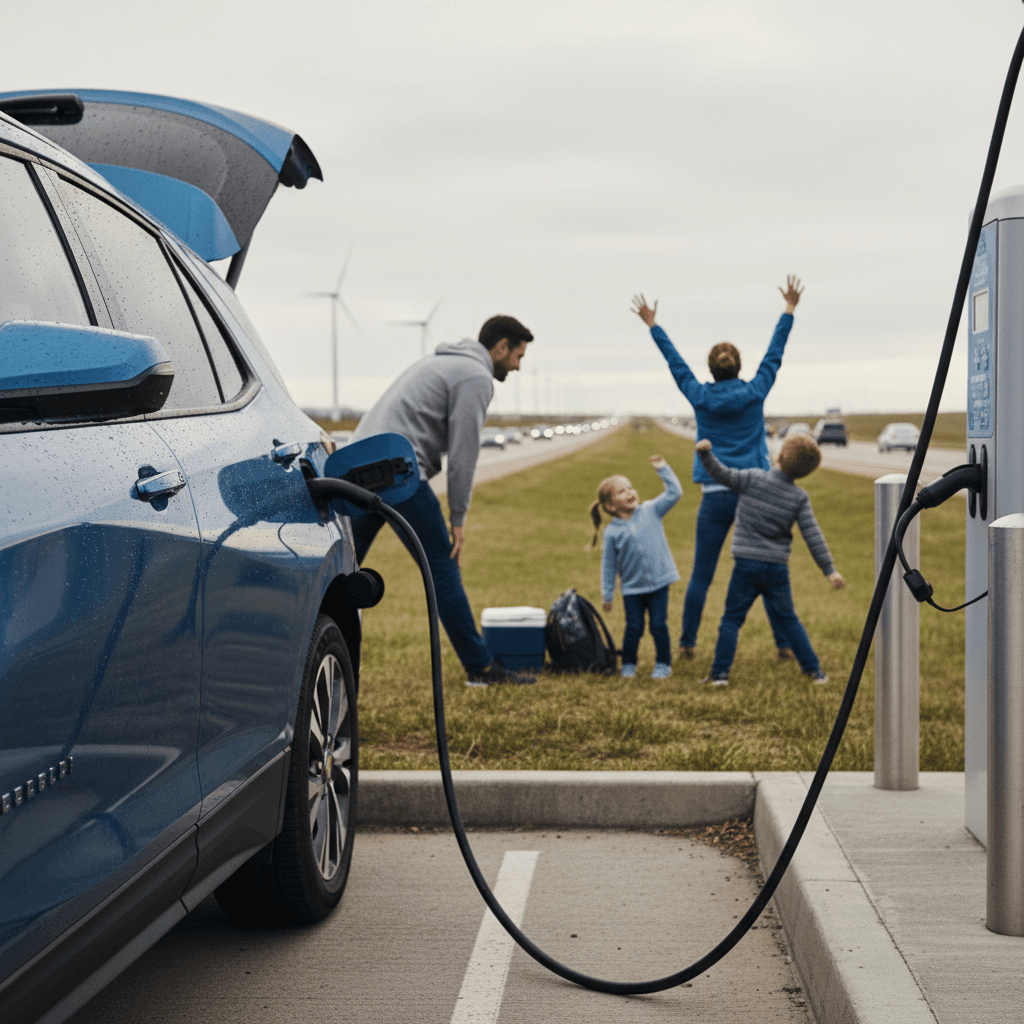
Plan breaks around meals, bathrooms and stretching. Walk away, stop doom‑scrolling the charge screen, and come back when you’re done. Most of the time, the car will be ready before you are.
6. Top to 90–100% only when necessary
If the next reliable charger is far or you’re heading into mountains or a storm, sure, fill it. Just understand you’re paying a time penalty in those final 10–20%.
Don’t camp on a fast charger
Using drive modes and regen without making yourself crazy
The Equinox EV gives you several drive modes plus two different ways to recuperate energy: One‑Pedal Driving and a Regen On Demand paddle behind the steering wheel. These are great tools, but on a long drive, the goal is smooth, predictable progress, not playing video‑game hero with the brake lights.
How to set up your Equinox EV for long highway stints
Less fiddling, more flowing with traffic
Choose the right drive mode
For most long trips, Normal mode is the sweet spot: calm throttle, full range. Use Sport only if you’re carving up back roads; it can tempt you into range‑eating acceleration. If you have a Snow/Ice or similar mode, keep it for genuinely low‑grip situations.
Use One-Pedal Driving strategically
Many drivers end up loving high One‑Pedal Driving around town. On the highway, though, it’s mostly a matter of taste. Use what feels natural and predictable to you; the car recovers similar energy whether you let regen do the work or brake gently.
What Regen On Demand actually does
The main thing is consistency. Pick a regen/drive‑mode combo you’re comfortable with and stick to it so your muscle memory stays sharp. On unfamiliar roads, especially in the wet or on snow, dialing regen back a notch can make the car feel more like a conventional crossover and reduce the chance of mid‑corner surprises.
Driving style, speed and weather: what really kills range
The fastest way to waste range in any EV is to pretend air resistance is a rumor. Above about 60 mph, drag ramps up dramatically, and the Equinox EV is still a boxy SUV it has to shove through the air.
- Every +5 mph over 70 mph can shave a noticeable chunk off your range. Slowing from 78 to 70 mph often saves more time in reduced charging than you lose in road speed.
- Strong headwinds, cold batteries and heavy rain all increase consumption. If you see your projected arrival state of charge sliding, ease back a few mph and watch the prediction stabilize.
- Big HVAC swings cost energy. In winter, use seat and wheel heaters generously and cabin heat more modestly. In summer, pre‑cool the cabin while still plugged in and then let the A/C maintain rather than rescue.
Cold weather is different
Overnight stops, hotels and destination charging
The most civilized way to road‑trip an EV is to have it charge while you sleep. One good hotel choice can erase two or three mid‑day charging stops.
Make your Equinox EV work while you rest
Why Level 2 overnight beats an extra fast charge
Pick lodging with Level 2 charging
Use PlugShare, ChargePoint or hotel filters to find places with on‑site or next‑door chargers. Many are complimentary or cheap for guests, and a full pack in the morning lets you skip the pre‑breakfast DC stop.
Arrive nearly empty, wake up full
If you’re sleeping next to a charger, it’s fine, even smart, to arrive with 10–20% left. That lets the overnight session put the most kWh back into the pack while you do literally nothing.
Use departure timers
Set a departure time in the myChevrolet app or in‑car menus so the Equinox EV can finish charging right before you leave and pre‑condition the cabin. You get a warm (or cool) car without wasting much driving range.
Battery health, long trips and buying a used Equinox EV
Long‑distance driving, done right, is not the villain in your Equinox EV’s battery story. In some ways, highway trips are easier on the pack than years of short, hot city hops and 100% fast charges.
- Highway driving tends to keep the battery in a moderate temperature band, which Ultium packs like.
- DC fast charging is fine in moderation, especially between about 10–80%. The bigger long‑term stress comes from baking at 100% in summer heat or fast‑charging to full constantly.
- Keeping daily charging limits around 70–80% and saving 90–100% for trips is a simple way to be kind to the pack.
How Recharged helps if you’re buying used
Ready to find your next EV?
Browse VehiclesWhen you shop used, look for a well‑documented charging history, evidence of home Level 2 use, and conservative daily charge limits. Pair that with a third‑party battery health assessment, like the Recharged Score, and you’ll have a much clearer sense of how confidently that particular Equinox EV will handle long‑distance duty for years to come.
Comfort, cargo and family road-trip sanity tips
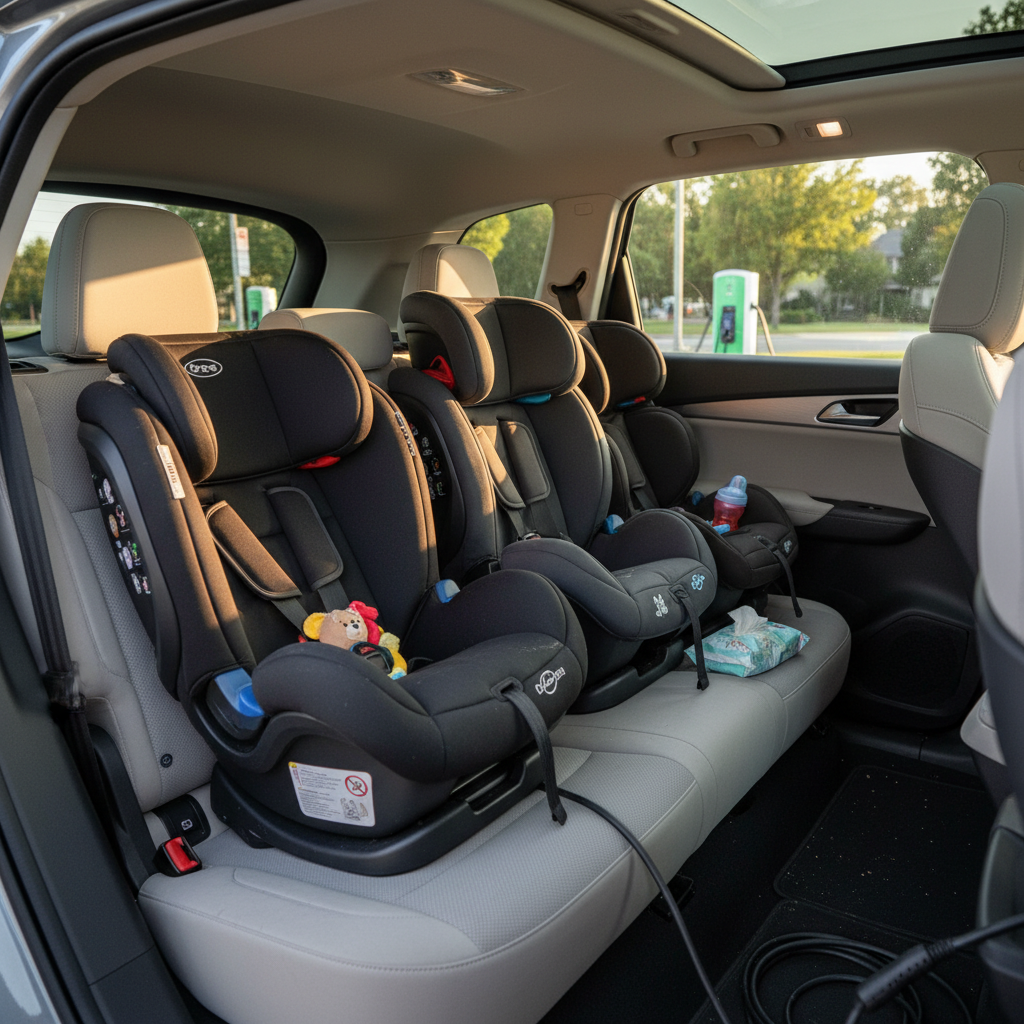
Range and chargers get all the attention, but what you’ll remember from a 1,000‑mile loop in an Equinox EV is whether your spine and your kids are still speaking to you at the end. The good news: this is still an Equinox at heart, practical, quiet and roomy.
Make the cabin work for you
- Use seat and steering‑wheel heaters liberally in winter; they use far less energy than cranking cabin heat.
- Set a slightly more efficient temperature (say 68°F in winter, 72–74°F in summer) and let the climate control maintain it rather than yo‑yoing.
- Take advantage of the quiet EV drivetrain: podcasts, audiobooks and low‑volume music are less fatiguing when you’re not shouting over engine noise.
Pack like an EV driver, not a camper
- Avoid roof boxes unless absolutely necessary, they’re drag monsters and can eat 10–20% of your range at highway speed.
- Heavier loads do hurt efficiency, but not as much as terrible aerodynamics. Put bulky items inside the cabin or cargo area first.
- Keep charging cables and adapters in an easy‑to‑reach side bin so you’re not excavating the trunk in the rain.
Family rhythm beats charge rhythm
Pre-trip checklist for your Equinox EV
Quick pre-trip checklist: Chevrolet Equinox EV
1. Update software and apps
Make sure your Equinox EV has the latest infotainment and charging‑related updates, and that your myChevrolet, PlugShare, Electrify America, EVgo and/or ChargePoint apps are logged in and funded.
2. Check charging equipment
Confirm you have your portable Level 1/2 cable, any adapters you use at home, and your DC fast‑charge cards. Visually inspect charge ports and cables for obvious damage.
3. Set a sensible starting charge
For a big first leg, charging to <strong>90–100%</strong> the night before is fine. Just don’t let it sit at 100% in extreme heat all day if you can avoid it.
4. Rough in your route and stops
Use Google Maps EV routing, myChevrolet or ABRP to drop in chargers every 120–160 miles along your path, plus backups. Screenshot or save the plan in case of spotty data coverage.
5. Plan lodging with charging
Whenever possible, book hotels with on‑site Level 2 or a short walk to public chargers. It’s worth driving a few extra minutes off the freeway to wake up with a full battery.
6. Set your expectations
Tell everyone in the car: you’ll be stopping every 2–3 hours for 20–40 minutes. Once that rhythm feels normal, long‑distance EV travel goes from "Can we make it?" to "This is actually more relaxed than gas."
Chevrolet Equinox EV long-distance driving FAQ
Frequently asked questions about Equinox EV road trips
Final thoughts: how the Equinox EV changes road trips
Once you’ve done a couple of long weekends in the Chevrolet Equinox EV, the drama tends to melt away. The rhythm of 2–3‑hour stints and short, predictable charging breaks feels less like a compromise and more like the way road trips probably should have been all along.
Yes, you need to think a little more about where the energy comes from, and yes, weather and speed matter. But between solid real‑world range, respectable fast‑charging and modern route‑planning tools, the Equinox EV is perfectly capable of hauling you cross‑state or cross‑country without turning the trip into a math exam.
If you’re shopping for an Equinox EV specifically for long‑distance duty, or you want a clear picture of battery health before trusting a used one on a family vacation, Recharged can help. Our EV‑specialist team, flexible financing, trade‑in options and Recharged Score battery diagnostics take much of the guesswork out of EV ownership, so the only thing you’ll worry about on your next trip is where to stop for the best pie.