If you’re shopping for the best electric car for car seats, you’re not alone. Recent research from Cars.com found that more than 60% of parents say car‑seat needs are a primary reason they pick a particular vehicle. That’s doubly true with electric vehicles, where backseat space, battery packaging, and child‑safety features all come together in ways that can either make car‑seat life easy, or incredibly frustrating.
Quick takeaway
Why car seat compatibility matters in an EV
With many families now going all‑electric for school runs and road trips, your EV isn’t just a tech toy, it’s a rolling nursery. A vehicle can ace efficiency tests and still be a poor fit for your kids’ seats if the LATCH anchors are buried, the rear doors don’t open wide, or the floor is so high that rear‑facing seats eat up front‑row legroom.
How parents actually shop for family cars
Electric vehicles add another twist. Their batteries are usually mounted in the floor, which can raise the rear seating position. That can improve visibility for kids, but it can also make it harder to lift a bulky seat in and out or to get the right recline angle for a rear‑facing infant seat. That’s why it’s critical to look beyond range and charging speed and dig into how family‑friendly a given EV really is.
What makes an electric car good for car seats?
6 traits of a car‑seat‑friendly electric vehicle
Use this mental checklist whenever you’re comparing family EVs.
1. Rear‑seat space
2. Interior width
3. LATCH usability
4. Door opening & angle
5. Crash & safety scores
6. Flexible seating
Pro move: bring your seats
Best electric cars for car seats in 2026
There’s no single “best electric car for car seats” because your needs, city vs. suburban driving, one child vs. three, budget vs. luxury, are unique. But a few models consistently rise to the top when you combine car‑seat usability, space, and safety. Below we’ll focus on EVs (and one standout plug‑in) that have earned strong marks in independent car‑seat checks and safety testing.
Standout electric (and plug‑in) family vehicles for car seats
These models have scored well in car‑seat fit evaluations, LATCH usability, and overall family practicality.
| Model | Powertrain | Row count | Why it’s great for car seats |
|---|---|---|---|
| Volkswagen ID.4 | All‑electric SUV | 2 rows | Straight‑A Car Seat Check grades, roomy backseat, easy‑access LATCH anchors. |
| Lexus RX 450h+ | Plug‑in hybrid SUV | 2 rows | Top car‑seat scores with exposed anchors and plenty of space for two seats. |
| Volkswagen Atlas | Gas SUV with future hybrid/EV siblings | 3 rows | Three‑row SUV with excellent car‑seat access; captain’s chairs make third‑row access easier. |
| Volkswagen Atlas Cross Sport | Gas SUV | 2 rows | Wide rear bench and simple LATCH hardware make multiple car seats manageable. |
| Subaru Crosstrek | Gas/hybrid small SUV | 2 rows | Compact footprint with surprising rear‑seat room and strong car‑seat scores. |
| Nissan Pathfinder | Gas SUV | 3 rows | Family‑oriented three‑row SUV with good car‑seat access in both second and third rows. |
Always confirm exact LATCH positions and seating layouts on the specific trim you’re considering.
On the pure‑EV side, the Volkswagen ID.4 is one of the most family‑friendly electric crossovers on sale today. It earned straight A grades in Cars.com’s Car Seat Check thanks to a rear seat that’s roomier than its exterior size suggests and easy‑to‑reach anchors. The ID.4’s relatively square roofline and wide openings also help when you’re lifting a rear‑facing infant seat in and out.
If you’re open to plug‑in hybrids while the three‑row EV market continues to mature, the Lexus RX 450h+ deserves a close look. It offers the smooth, quiet drive that EV shoppers like, ample backseat space, and very friendly LATCH hardware. It isn’t all‑electric, but for families who aren’t ready for a full EV, it shows what a truly car‑seat‑friendly electrified SUV feels like.
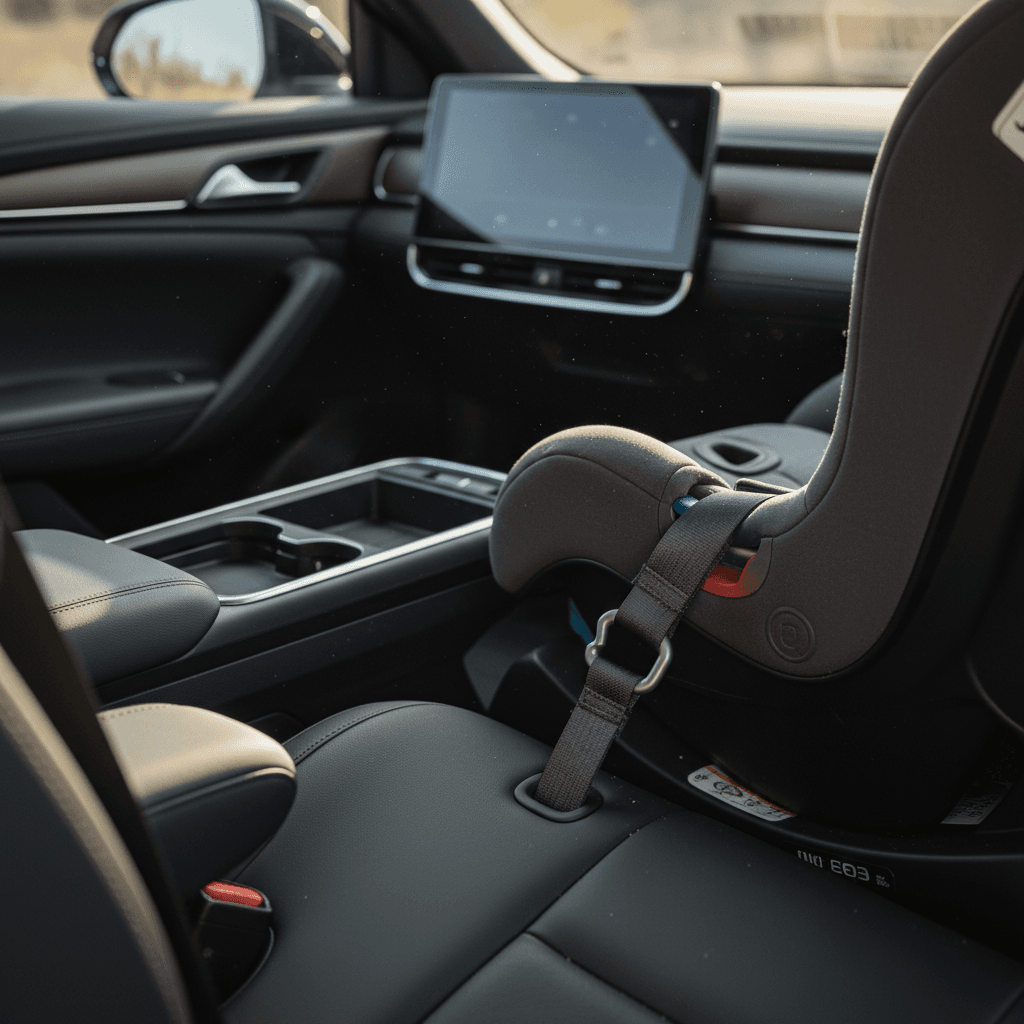
Best EVs for two or three car seats across
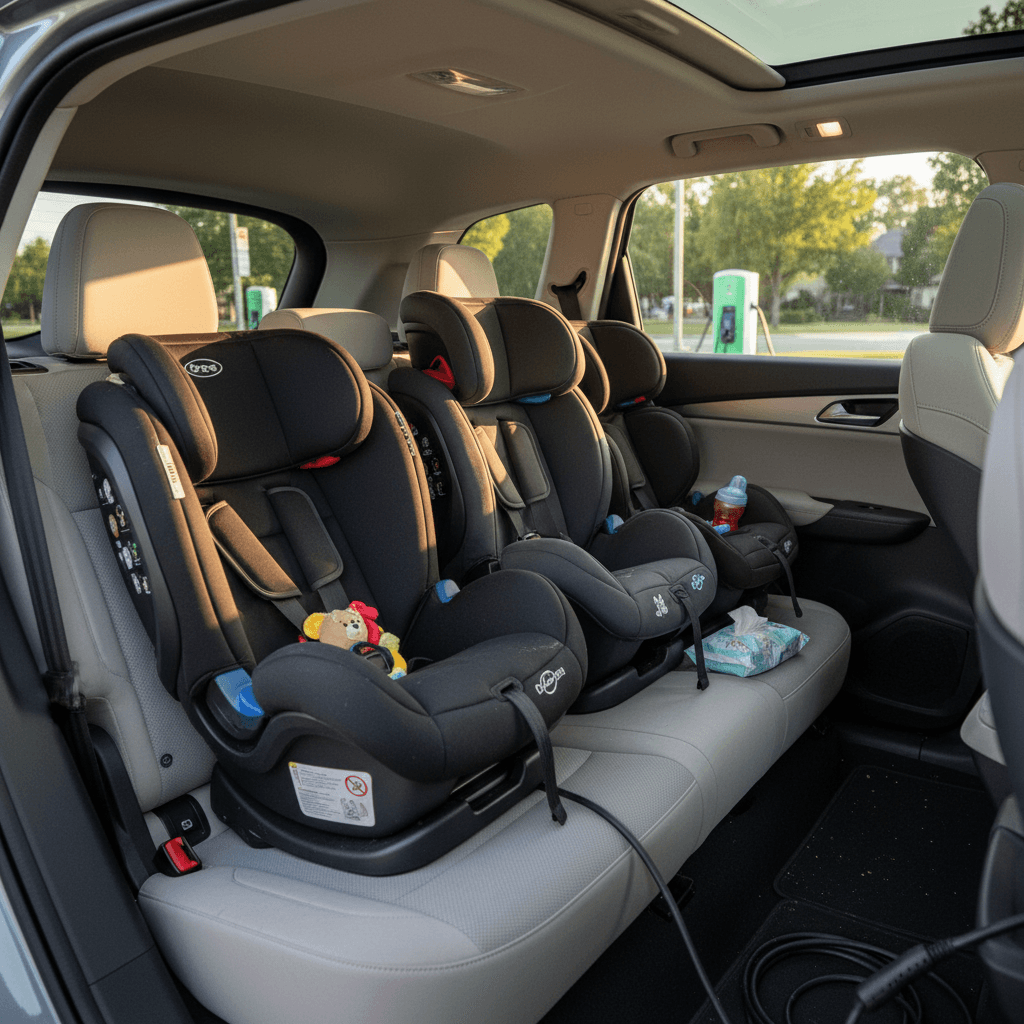
Fitting two child seats is straightforward in many EVs. Fitting three across is where the field narrows. If that’s your situation, twins plus an older child, or three under five, you’ll want to seek out EVs and electrified SUVs with truly generous width and thoughtful rear‑seat design.
1. Volkswagen ID.4 (compact EV SUV)
The ID.4’s rear seat is both tall and relatively flat, which is helpful when you’re trying to line up three child seats or a mix of boosters and harnessed seats. Narrow car seats help, but the ID.4’s straight‑A car‑seat record shows that its basic geometry is on your side.
- Best for: Two kids in full‑size seats, plus a compact booster.
- Watch for: Wheel‑arch intrusion if you install wider seats outboard.
2. Larger electrified SUVs (Atlas, Pathfinder, upcoming Ioniq 9)
Three‑row SUVs like the Nissan Pathfinder and Volkswagen Atlas shine when your kids span ages and seat types. You can place two full‑size seats in the second row and a booster in the third, or use optional captain’s chairs to keep the aisle clear.
- Best for: Families juggling infant, convertible, and booster seats at once.
- Watch for: Third‑row LATCH limitations; many SUVs only provide tethers, not full lower anchors, in the way‑back.
Three‑across reality check
How to evaluate LATCH systems and safety ratings
You don’t have to become a crash‑test engineer to pick a safe, car‑seat‑friendly EV, but you should know how to read the basics. Two groups do the most useful testing here: the Insurance Institute for Highway Safety (IIHS) and the National Highway Traffic Safety Administration (NHTSA).
Reading the fine print on LATCH and safety
Four quick checks before you sign the paperwork.
1. Overall crash scores
2. LATCH ease‑of‑use rating
3. Tether anchor placement
4. Real‑world car‑seat checks
Never skip the tether
Practical car seat tips for EV owners
Living with car seats in an EV feels a bit different than in a traditional SUV or minivan. Instant torque and quiet cabins are great, but you also have to think about how battery placement, one‑pedal driving, and regenerative braking affect your kids’ comfort and safety.
Day‑to‑day tips for car seats in electric vehicles
1. Prioritize rear‑facing as long as possible
Follow your seat manufacturer’s height and weight limits and keep children rear‑facing as long as you can. EVs are heavy and quick; rear‑facing gives better head, neck, and spine protection in more crash scenarios.
2. Test recline angles on your driveway
Because EV floors are often higher, some rear‑facing seats may sit more upright than in a gas SUV. Before a big trip, test the seat in your driveway and adjust recline or add approved angle adjusters if allowed by the manufacturer.
3. Mind the quiet cabin
Quiet EV cabins can mask how fast you’re actually driving. Use your driver‑assist systems and cruise control to keep speeds consistent and reduce sudden maneuvers that can startle kids or overload their harnesses.
4. Use child‑lock and window lock every time
EVs often have touch‑sensitive door and window controls. Get in the habit of activating child locks and window locks the moment you buckle the kids in.
5. Watch battery drain from climate control
Keeping the cabin at kid‑friendly temperatures can use a surprising amount of energy, especially in extreme weather. Pre‑condition the car while plugged in so you’re not sacrificing range once you’re on the road.
6. Do a full install after any seat move
If you slide or fold a seat to access the third row, re‑check that the car seat is still tight, less than an inch of movement at the belt path, and that the tether or lower anchors are correctly attached.
Good news for EV parents
Used EVs for families: how Recharged helps
If you’re shopping for a used electric SUV or crossover to haul car seats, the homework can feel overwhelming: battery health, previous fast‑charging habits, crash history, and basic questions like “Will my stroller still fit with the third row up?” That’s exactly the maze Recharged set out to simplify.
Recharged Score: beyond the crash test
Every vehicle on Recharged comes with a Recharged Score Report that includes verified battery diagnostics and fair‑market pricing. For families, that means you’re not just guessing about range and long‑term reliability, you can focus on finding an EV that will still meet your car‑seat needs years down the road.
Because the Recharged Score looks at real battery health instead of just odometer mileage, you can confidently compare a lower‑miles city vehicle to a higher‑miles road‑trip hauler.
Shopping, trade‑in and delivery on your schedule
With Recharged, you can browse used EVs online, get an instant offer or consignment option on your current vehicle, line up financing, and arrange nationwide delivery, all digitally. If you’d rather buckle real car seats into a vehicle before deciding, you can schedule an appointment at Recharged’s Experience Center in Richmond, VA.
Whether you’re trying to fit two seats in a compact EV or you’re hunting for a three‑row electric SUV for a growing family, an EV specialist can walk you through options and talk through real‑world range with kids, cargo and roof boxes on board.
Try before you decide
FAQs: best electric car for car seats
Common questions about EVs and car seats
Bottom line: choosing the right EV for your car seats
When you’re trying to decide on the best electric car for car seats, remember that the glossy brochure won’t tell you how it feels to buckle a squirming toddler in on a rainy weekday. Start with safety ratings and car‑seat evaluations, short‑list family‑friendly models like the Volkswagen ID.4 and larger three‑row SUVs if you need more room, and then physically install your own seats in any EV you’re serious about.
If you’re looking at the used market, a platform like Recharged can take the guesswork out of battery health, pricing and logistics with the Recharged Score, EV‑savvy financing and even nationwide delivery. That lets you spend your energy on what really matters: finding an electric vehicle where your kids are safe, comfortable and easy to buckle in, for years of daycare runs, soccer practices and family road trips to come.