If you’re shopping a used Chevrolet Bolt EV or EUV in 2026, the question that matters isn’t just the shiny EPA number on the window sticker. You want to know the Chevrolet Bolt EV real‑world range, on the highway at 70 mph, in winter weather, with kids in the back and luggage in the hatch. The good news: a healthy Bolt still delivers very usable range in 2026, but the numbers change with model year, driving style, and battery health.
Quick answer: real‑world Bolt range in 2026
Chevy Bolt EV real‑world range in 2026: the big picture
Chevrolet Bolt EV/EUV real‑world range snapshot (2026)
Chevy built two flavors of Bolt: the original Bolt EV hatchback (2017–2023 in the U.S.) and the slightly larger Bolt EUV (2022–2023). Both use about a 65 kWh battery in later years and carry EPA ratings in the mid‑200‑mile range. In the real world, especially in 2026 when these cars are all used, your actual range depends on: - Which model year you’re driving - Highway vs city speeds - Temperature and climate control use - How healthy the battery is after years of charging Let’s break that down so you can see what to expect before you sign anything, or before you aim for the next fast charger that’s 190 miles away.
EPA range vs real‑world: how the Bolt really behaves
What the window sticker says
Later‑model Bolts (2020–2023) use a roughly 65 kWh pack and carry these EPA combined ratings:
- Bolt EV: 259 miles EPA range
- Bolt EUV: 247 miles EPA range
Earlier 2017–2019 Bolt EVs have a smaller‑capacity pack and are rated around 238 miles EPA.
What drivers actually see
Real‑world testing and owner data show that at steady highway speeds, especially 70–75 mph, you’re more likely to see:
- Bolt EV (65 kWh): roughly 180–220 miles at 70–75 mph
- Bolt EUV: roughly 170–210 miles at the same speeds
- Around town: 230–280 miles is realistic in mild weather
That gap between EPA and reality is normal for EVs because the EPA highway cycle never gets close to the speeds U.S. drivers do in the real world.
Don’t plan to zero
Real‑world range by Bolt EV model year
Because the Bolt EV evolved over its production run, a 2017 car and a 2023 car will not behave exactly the same in 2026. Battery size, chemistry, and age all matter. Here’s how to think about real‑world range by generation if the battery is healthy.
Chevrolet Bolt EV real‑world range by model year (healthy battery)
Approximate real‑world ranges on a full charge in 2026, assuming normal driving and a battery without unusual degradation.
| Model years | EPA combined when new | Typical highway 70–75 mph | Typical mixed / city | Winter with heat (freezing temps) |
|---|---|---|---|---|
| 2017–2019 Bolt EV (60 kWh pack) | ≈238 mi | 160–190 mi | 200–230 mi | 130–170 mi |
| 2020–2023 Bolt EV (65 kWh pack) | 259 mi | 180–220 mi | 230–270 mi | 150–190 mi |
Use these as planning numbers, not guarantees. Conditions, elevation, and driving style can easily shift these figures by 10–20%.
2017–2019 vs 2020–2023: why the later cars go farther
Chevy Bolt EUV real‑world range
The Chevrolet Bolt EUV arrived for 2022 with the same basic 65 kWh pack as the later Bolt EV, but it’s a bit taller and heavier. On paper, it drops from 259 to 247 miles EPA range. In the real world, you feel that mostly at higher speeds and in headwinds.
Bolt EV vs Bolt EUV: how much range do you really give up?
For most drivers, the EUV’s extra space costs only a small slice of range.
Bolt EV (2020–2023)
- EPA: 259 miles
- Highway 70–75 mph: ≈180–220 miles
- City/mixed: ≈230–270 miles
- Winter, freezing temps: ≈150–190 miles
Bolt EUV (2022–2023)
- EPA: 247 miles
- Highway 70–75 mph: ≈170–210 miles
- City/mixed: ≈220–260 miles
- Winter, freezing temps: ≈140–180 miles
The EUV is still a solid road‑trip companion
Five conditions that help or hurt your Bolt’s range
- Speed: The single biggest factor. Going from 65 mph to 75 mph can easily cost you 10–15% of your range.
- Temperature: Batteries are happiest in the 60–80°F band. Below freezing, you’ll lose range to cold chemistry and cabin heat. Above 90°F, heavy A/C adds drag.
- Elevation and wind: Long climbs and stiff headwinds eat into range quickly. Tailwinds and descents are your friends.
- Tires and roof loads: Aggressive all‑terrain tires and roof boxes can quietly steal range. Keep tires properly inflated and cargo out of the slipstream when you can.
- Driving style: Smooth acceleration, coasting, and maximizing regen in town can easily swing your efficiency by 0.5–1.0 mi/kWh. That’s 30–60 miles of range on a full pack.
Watch miles per kWh, not just miles remaining
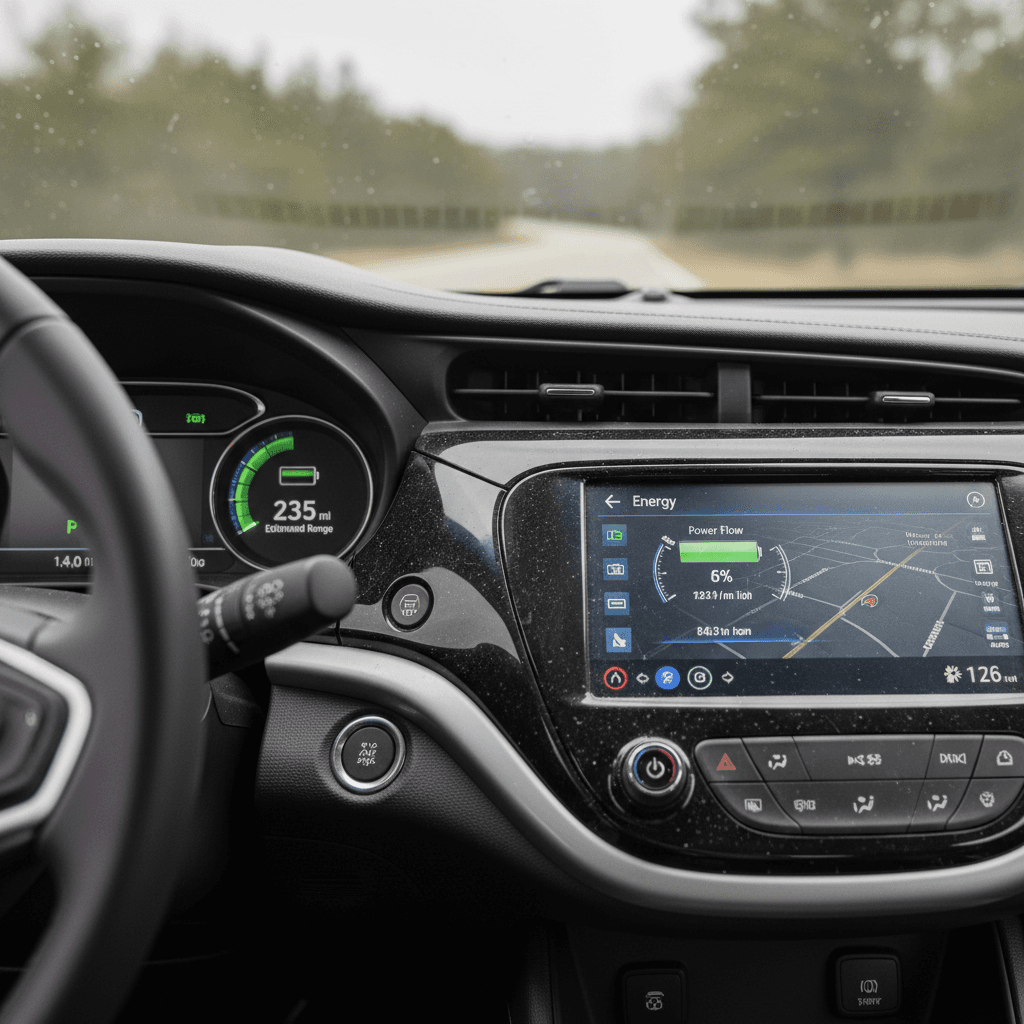
Highway road‑trip range: what to plan for in 2026
The place where range anxiety still lives is the interstate. You’ve locked in cruise at 72 mph, the next DC fast charger is 165 miles away, and there’s a crosswind. How far will a Bolt really go in that scenario in 2026?
Realistic highway planning numbers for a healthy Bolt
Assumes a 100%–10% usable window (90% of the pack) and typical 70–75 mph U.S. interstate driving in mild weather.
| Model | Usable SOC window | Conservative planning range at 70–75 mph | Comfortable leg length with buffer |
|---|---|---|---|
| 2020–2023 Bolt EV | 100% → 10% | ≈180–200 miles | 140–170 miles |
| 2022–2023 Bolt EUV | 100% → 10% | ≈170–190 miles | 130–160 miles |
| 2017–2019 Bolt EV | 100% → 10% | ≈160–180 miles | 120–150 miles |
If you’re starting at 80% or planning a bigger buffer, scale these numbers down accordingly.
Never assume the last 5–10%
Quick checklist for realistic Bolt road‑trip planning
1. Plan with conservative range
Use **70–80% of EPA range** for your planning number, then build a 10–15% arrival buffer on top of that. Apps that assume EPA can be optimistic, dial them back manually.
2. Favor 65–70 mph if possible
Dropping from 75 to 68 mph can make the difference between sweating the last 15 miles and rolling in relaxed. In a Bolt, speed matters more than in a big‑battery luxury EV.
3. Watch elevation between chargers
A route that looks flat on the map may quietly climb 2,000 feet, which can cost tens of miles of range. Use elevation profiles in your nav app when planning long gaps.
4. Pre‑condition when plugged in
In cold weather, warm the cabin and (when supported) the battery while you’re still on the plug. That front‑loads some of the energy draw into grid power instead of your pack.
5. Be ready with a Plan B
On unfamiliar corridors, identify a backup fast charger or Level 2 stop midway, just in case wind, weather, or a busy station force a change in plans.
Battery health, recalls, and degradation in 2026
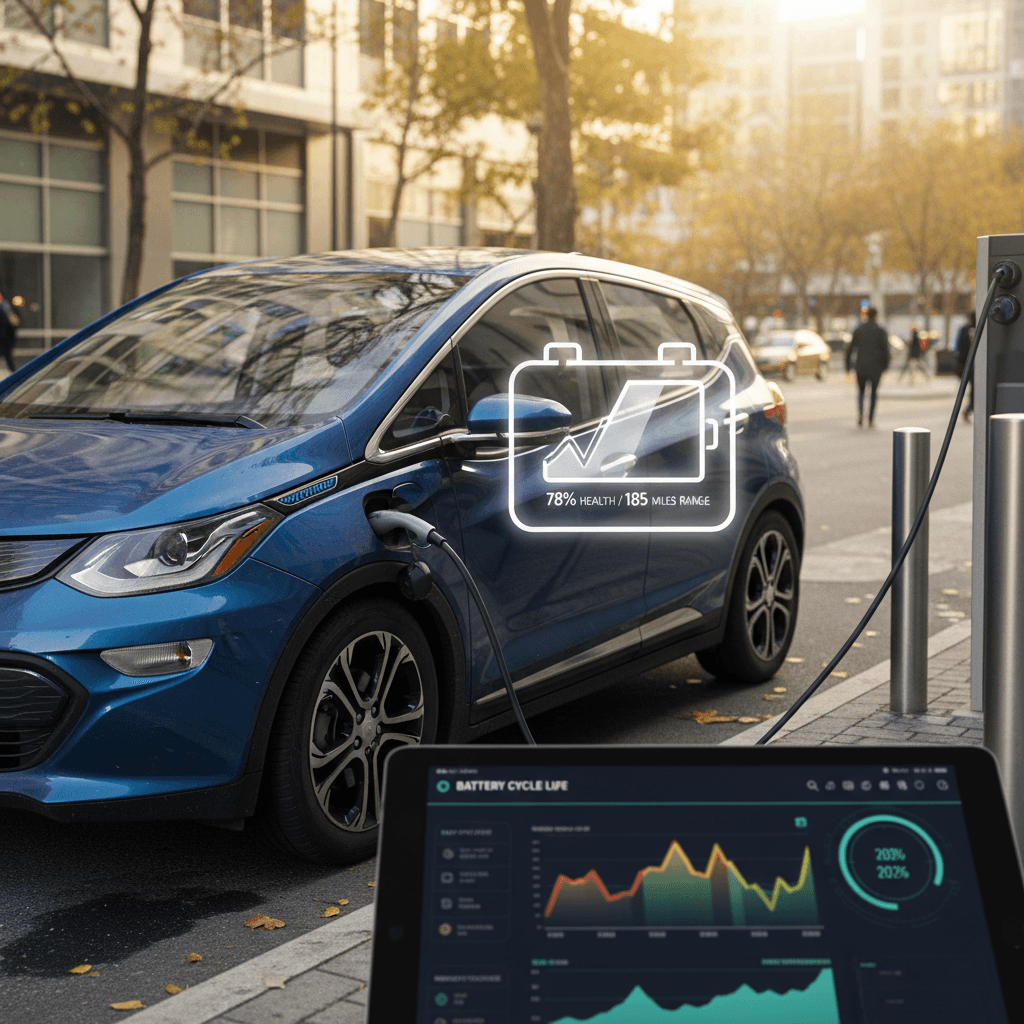
Every Bolt you can buy in 2026 is a used car, and that means one thing above all: **battery history matters**. The Bolt story is unusual because of the large‑scale battery recall that affected 2017–2022 cars.
What the recall and age mean for real‑world range
Not every older Bolt is a ticking time bomb, many are quietly doing just fine.
Many cars have new packs
Typical degradation so far
Abuse shows up in range
How Recharged checks Bolt battery health
Used Chevrolet Bolt range checklist for 2026 shoppers
If you’re standing in front of a used Bolt in 2026, whether it’s on a dealer lot, in someone’s driveway, or on your screen at Recharged, here’s how to quickly sanity‑check the range story before you fall in love with the price.
Seven steps to verify real‑world range on a used Bolt
1. Confirm model year and EPA rating
Look up whether it’s a 2017–2019 or 2020–2023 Bolt EV, or a 2022–2023 Bolt EUV. That tells you the original EPA range (≈238, 259, or 247 miles) and which bucket of real‑world numbers you’re in.
2. Ask about the recall
Has the car had a <strong>replacement battery pack</strong> under the recall, or is it still on the original? Replacement packs are often newer than the car itself and can mean better long‑term range.
3. Check displayed range at high state of charge
Charge (or have the seller charge) the car to 80–100% and note the estimated range on the dash, along with the recent mi/kWh. A healthy late‑model Bolt EV showing ~220–260 miles at 100% in mild weather is a good sign.
4. Read the energy details screen
On a test drive, open the energy or efficiency screen. Look at average mi/kWh over the last 50–100 miles. If the owner drives gently and you’re still seeing low efficiency, that may hint at tire, alignment, or battery‑health issues.
5. Do a short highway test
Take the car on a sustained 65–70 mph stretch. Reset a trip meter, drive 20–30 miles, and check mi/kWh when you exit. You’re looking for something in the ballpark of **3.2–3.8 mi/kWh** depending on wind and terrain.
6. Inspect tires and wheels
Oversized wheels, aggressive tires, or under‑inflated rubber can quietly steal range. Confirm you’re on reasonably efficient all‑season tires set near factory pressures, not knobby off‑road specials.
7. Get an objective battery report
If you’re buying remotely or just want peace of mind, lean on a <strong>battery‑health report</strong> like the Recharged Score. It translates all the technical data into a plain‑English picture of expected real‑world range.
Practical tips to maximize your Bolt’s range
Once you’ve bought the car, range becomes less about numbers on a page and more about habits. The Bolt is honest: treat it well and it will give you more miles than you expect; treat it like a rental and it will empty its pack to prove the point.
Simple changes that add real miles to your Bolt’s range
You don’t need hypermiling tricks, just a few smart habits.
Drive the smooth line
Use climate control strategically
Charge habits that protect range
At home
- Use a Level 2 charger if possible for predictable overnight refills.
- Schedule charging to finish near your departure time so the pack is warm in winter.
- If your utility offers time‑of‑use rates, charge when power is cheapest and least carbon‑intensive.
On the road
- On DC fast chargers, you’ll add miles quickest from about 10–60% state of charge.
- On long trips, it’s usually faster overall to do more short stops in that band than one big charge to 100%.
- Keep an eye on charger reliability and back‑up options in your route planner.
Chevy Bolt EV real‑world range: FAQ
Frequently asked questions about Chevrolet Bolt real‑world range in 2026
Bottom line: is Bolt EV range enough in 2026?
For most drivers in 2026, a healthy Chevrolet Bolt EV or EUV delivers more than enough real‑world range. You can comfortably cover a week of commuting on a couple of home charges, and you can stitch together 400‑ to 600‑mile days on the highway with thoughtful planning and 2–3 fast‑charge stops. The key is understanding that the **EPA number is a ceiling, not a promise**, and buying a car with verified battery health so your expectations match reality.
That’s where a purpose‑built used‑EV marketplace like Recharged changes the game. Every Bolt we sell comes with a Recharged Score Report that spells out battery condition, realistic range expectations, and pricing that reflects the car’s true capability, not just its original window sticker. If you’re ready to put real‑world numbers behind your next EV, a well‑chosen Bolt in 2026 is still one of the smartest range‑per‑dollar buys on the road.