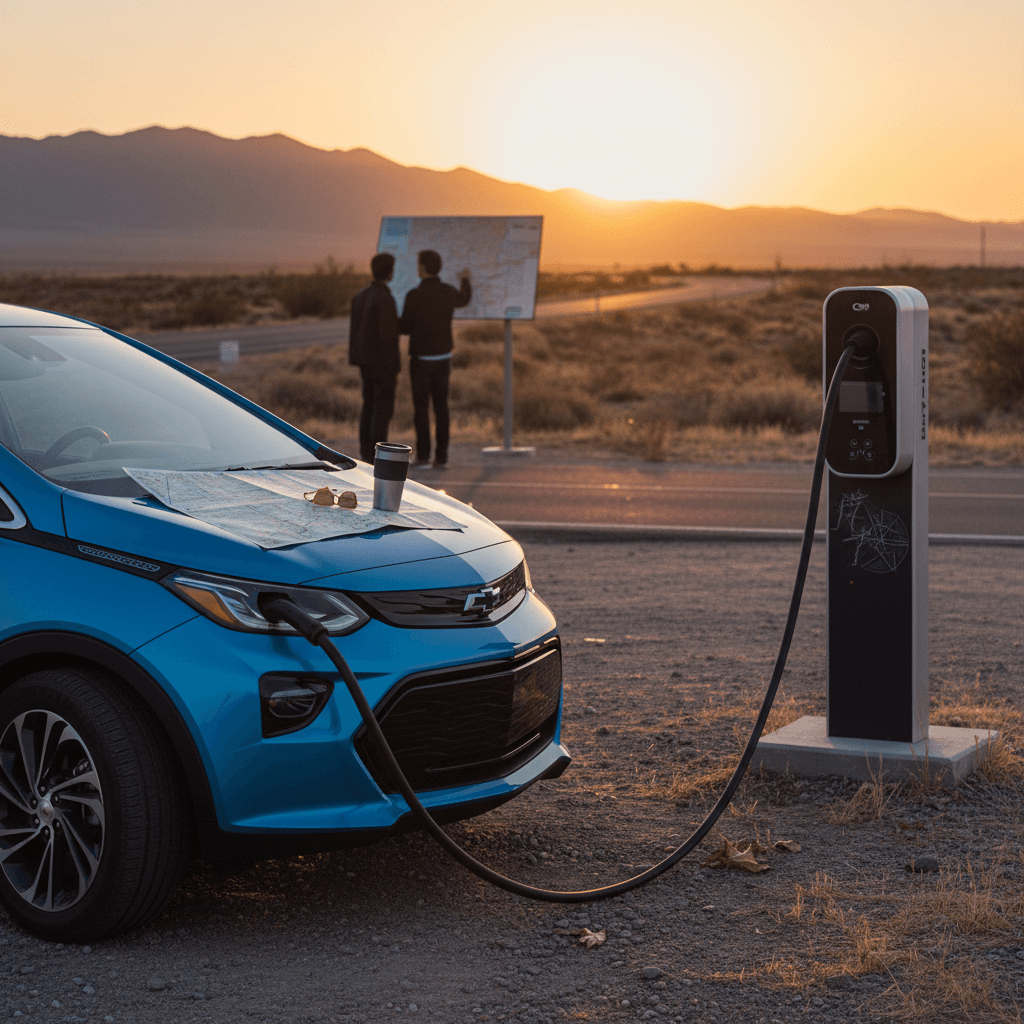
If you own a Chevrolet Bolt EV or EUV, you already know it’s a terrific city and commuting car. But can a Bolt handle long-distance driving and road trips? Absolutely, if you drive it the way it was designed to be used and plan around its charging strengths and weaknesses. This guide walks you through practical, real-world tips so you can road-trip a new or used Bolt with confidence.
Who this guide is for
Why the Bolt EV Makes a Great Road-Trip Companion
Chevy Bolt EV Road-Trip Baseline (Typical Conditions)
On paper, the Bolt’s combination of a ~65 kWh battery and 238–259 miles of EPA range is excellent for its size and price. In the real world, the key is understanding that the Bolt’s DC fast charging is slower than many newer EVs. That doesn’t mean you can’t road-trip; it just means your strategy should favor slightly more frequent, shorter stops and smart route planning instead of pushing the pack to nearly empty and then filling all the way to 100%.
Think like a pilot, not a gambler
Know Your Bolt’s Real-World Range
Understand EPA range vs. what you’ll actually see
Most Bolt EVs advertise 238–259 miles of range, with EUV models a bit lower. That number is based on EPA testing that mixes city and highway driving. On a long freeway run at 70–75 mph, you should expect less, often 170–210 miles in truly realistic conditions, depending on weather, speed, and elevation changes. Used cars with older or heavily cycled packs might see somewhat less.
- At 65–70 mph in mild weather, many Bolt drivers see around 3.0–3.5 miles per kWh.
- At 75–80 mph or into strong headwinds, efficiency can drop near 2.5 mi/kWh or less.
- Cold temperatures, rain, snow, and climbing mountain grades can easily shave another 10–30% off.
Don’t plan legs off the EPA number
Use your last few weeks of driving as a baseline
Before a big trip, reset one of your trip meters and track your average efficiency for a week of similar driving conditions. If you’re consistently seeing, say, 3.2 mi/kWh on mostly highway commutes in spring weather, that’s a much better planning basis than a generic estimate. Multiply that by ~60 kWh and you’re in the ballpark of your safe highway range, with a bit of buffer left at the bottom.
Plan Your Route Around the Bolt’s Charging Personality
The original-generation Bolt’s biggest road-trip quirk is its modest DC fast-charging speed. Peak power is around 50–55 kW on a warm battery and then it tapers fairly aggressively after about 50–60% state of charge (SOC). That means your best strategy is to avoid very long charging sessions at a single stop and instead string together multiple, well-placed chargers along your route.
Target SOC window
- Arrive at fast chargers around 10–25% when practical.
- Charge up to roughly 60–75% for the best minutes-per-mile tradeoff.
- Above 80%, the Bolt’s charge rate often falls below many Level 2 stations.
Practical planning rules
- Plan legs of 90–140 miles between stops, not 200+ miles.
- Prioritize stops with multiple DC fast chargers on-site.
- Bias toward sites near food, restrooms, and shopping so time feels productive.
Route planner tip
Smart Fast-Charging Strategies for the Bolt
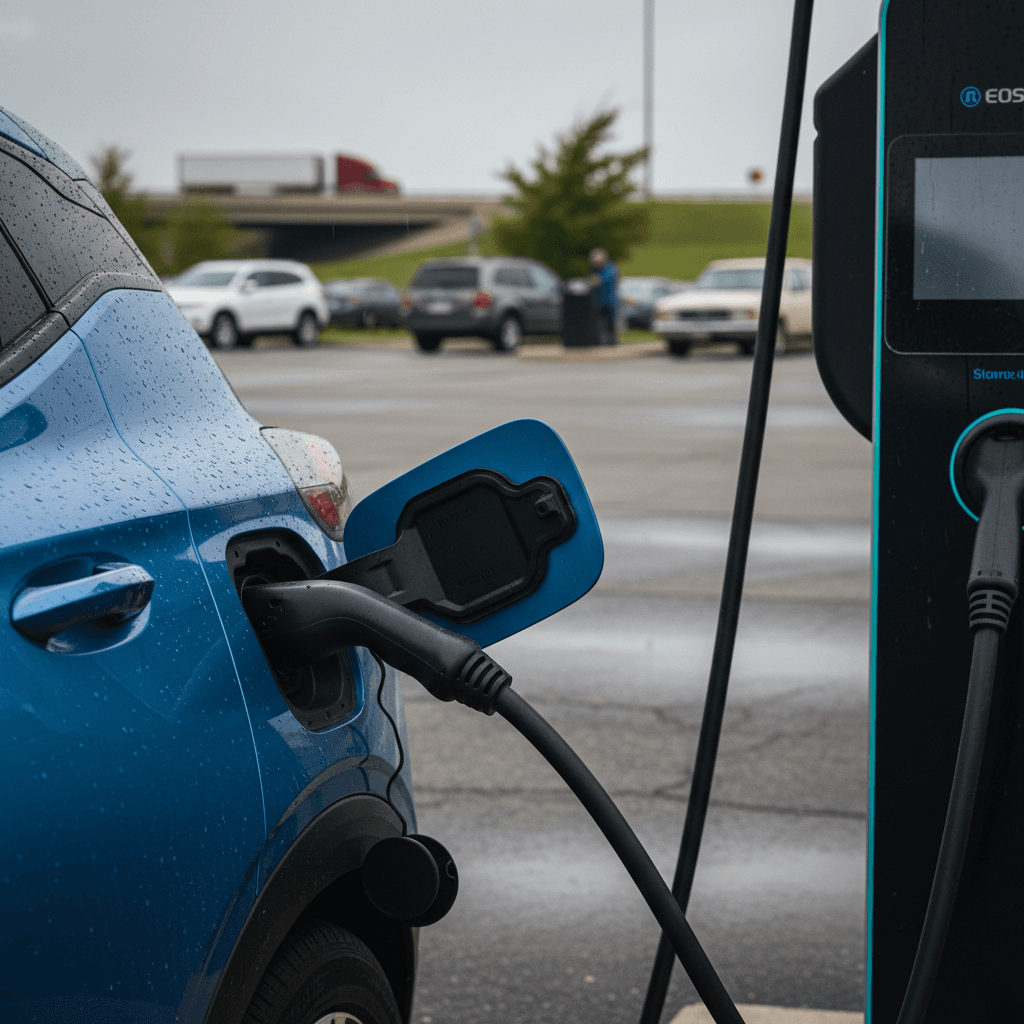
Work with the Bolt’s DC fast-charging curve
On a warm day, a Bolt that arrives near 10–20% SOC will typically ramp up close to its 50–55 kW peak, then slowly step down as the battery fills. Past about 60–65%, you’re paying more time for each additional mile of range. Instead of sitting there waiting for 90–100%, it’s usually faster over the course of a day to stop charging earlier and drive to the next fast charger.
Checklist: How to Get the Most Out of Each DC Fast Charge
1. Precondition the battery with driving
The Bolt doesn’t have aggressive user-triggered battery preconditioning, so the best way to warm the pack is to drive 20–40 minutes before your first DC fast-charge of the day, especially in cool weather.
2. Prefer 50–150 kW stations
Even though your Bolt tops out around 55 kW, use stations rated at 50 kW or higher. Higher-powered units often hold peak current more consistently and may share power less aggressively.
3. Avoid arriving with a cold pack
In winter, a Bolt that’s been sitting outside may charge far below its rated speed until the battery warms up. Try to time your first stop after some steady driving, not immediately after leaving a hotel.
4. Unplug when the rate drops sharply
Once you see speeds fall into the low 20s kW or teens and you already have enough buffer to reach the next charger, it’s time to leave. That last 15–20% is slow and rarely worth it on a paid DC fast charger.
5. Watch for per-minute pricing
At stations that bill by the minute, slow charging past 70–80% can get expensive. It’s more cost-efficient to “splash and dash” in the high-power part of the curve and keep moving.
6. Combine charging with meals and breaks
Plan main stops around meals, coffee breaks, or leg-stretch stops so the car finishes before you feel rushed. It’s much easier psychologically to accept a 30-minute charge when you’re using that time anyway.
Don’t fast-charge to 100% unless you truly need it
Apps and Tools That Make Bolt Road Trips Easier
Essential Planning Tools for Chevy Bolt Road Trips
Use more than one app so you’re never surprised by an out-of-service charger.
A Better Routeplanner (ABRP)
Great for detailed forecasting:
- Lets you choose “Chevrolet Bolt EV/EUV” as your car.
- Adjusts for speed, weather, and elevation.
- Shows expected arrival SOC and how long to charge.
PlugShare
Your crowdsourced charger atlas:
- See all networks in one map.
- Read recent user check-ins for reliability.
- Filter by CCS fast chargers, hotels, and amenities.
Network-specific apps
EVgo, Electrify America, ChargePoint, etc.:
- Start/stop sessions and see live status.
- Check pricing by kWh or by minute.
- Sometimes reserve a stall in advance.
Save your route before you go
Highway Driving Techniques to Maximize Range
Driving style matters more in an EV than in many gas cars, and that’s especially true in a compact battery-electric like the Bolt. A few small adjustments can easily swing your highway range by 10–20% without turning the trip into a rolling roadblock.
- Aim for the right lane at 65–70 mph instead of 75–80 mph whenever traffic allows.
- Use L mode or higher regen to capture energy when slowing, but don’t obsess, avoiding unnecessary braking is more important.
- Use cruise control on flat stretches to keep speed consistent; turn it off early on hills and in heavy traffic.
- Watch the instantaneous efficiency gauge on long climbs so you don’t accidentally bleed off range with aggressive throttle inputs.
- If you have roof racks or a cargo box, remove them when not needed, they add surprising drag at highway speeds.
A small speed cut goes a long way
Weather, Terrain, and Load: How Conditions Affect Your Trip
Cold, heat, and climate control
- Cold weather thickens battery chemistry and increases cabin heating needs, cutting range by 20–40% in extreme cases.
- Precondition the cabin while plugged in so you use grid power for the initial warmup.
- On the highway, moderate use of seat and wheel heaters is more efficient than cranking cabin heat.
Hills, wind, and weight
- Long climbs can burn energy quickly; expect lower mi/kWh when driving into mountains.
- Strong headwinds behave like an invisible hill, watch efficiency and adjust speed.
- Heavy passengers and cargo add up. Pack smart and avoid hauling unnecessary weight when you can.
Be conservative in bad conditions
Battery Health and Used Bolt Road Trips
Many Bolts on the road today are used, and a significant number have had replacement battery packs installed under GM’s recall program. That’s good news for road trips, but it also means two used Bolts with the same model year can behave differently on a long drive. You want to know how much usable capacity you actually have before you count on a 180‑mile highway leg.
What to Check Before a Road Trip in a Used Bolt
A little homework before you leave can save a lot of stress later.
1. Recent full-to-low test
On a normal weekend, drive your Bolt from a high SOC (near 100%) down to 10–15% in mixed conditions. Note the miles traveled and your average mi/kWh to estimate usable kWh.
2. Dashboard estimates vs. reality
The "guess-o-meter" is only a guide. If it says 230 miles at 100% but you’re consistently getting 170–180, trust your real-world numbers when planning legs.
3. Professional health report
A diagnostic like the Recharged Score battery health report can quantify remaining capacity and charging behavior, especially helpful if you’re evaluating a used Bolt before a big trip.
4. Recall and warranty status
Confirm that any recall work has been completed and review remaining battery warranty coverage. If you buy through Recharged, our team walks you through these details as part of the purchase.
How Recharged helps used-Bolt buyers
Overnight Charging: Hotels and Destination Stops
Because the Bolt’s DC fast charging is modest, Level 2 charging overnight is your secret weapon. If you can plug into a 6–11 kW Level 2 charger while you sleep, most Bolts can go from low SOC back to nearly full by morning. That turns each day into a fresh, full-range starting point and reduces how often you have to rely on fast chargers.
Common Overnight Charging Options for Bolt Road Trips
Prioritize lodging and destinations that let you add meaningful range while you’re off doing other things.
| Location type | Typical power | Miles added per hour* | Best use case |
|---|---|---|---|
| Hotel Level 2 (J1772) | 6–11 kW | 20–35 mi/hr | Overnight stays or long dinners |
| RV park (50A plug with portable EVSE) | 7–9 kW | 22–30 mi/hr | Campgrounds, rural areas |
| Friend or family 240 V outlet | 3–7 kW | 10–25 mi/hr | Visiting for several hours or overnight |
| Workplace charging | 6–7 kW | 20–25 mi/hr | Multi-day trips with work days between legs |
Level 2 charging turns your car into its own “fueling station” while you rest.
Filter lodging by EV charging
Sample Chevy Bolt EV Road-Trip Strategy
To make this more concrete, let’s sketch a typical day in a 2020–2023 Bolt EV on a roughly 400–450 mile interstate trip in mild weather. Assume realistic highway efficiency around 3.0 mi/kWh and roughly 180–200 miles of comfortable, usable range per full charge with buffer.
Example: 430-Mile Day in a Chevy Bolt EV
Morning
Start the day at ~90–100% after charging overnight at a hotel Level 2.
Drive ~140–160 miles at 65–70 mph to the first DC fast charger, aiming to arrive near 20%.
Take a 30–35 minute charging stop while grabbing coffee and a snack, charging back to ~70%.
Midday
Drive another 120–140 miles to the next fast charger, again arriving around 15–25%.
Stop for lunch at a location with multiple DC chargers; charge 35–45 minutes back to ~75–80%.
If conditions are ideal and you like bigger gaps between stops, you might stretch this middle leg a bit, but keep an eye on buffer.
Afternoon/Evening
Drive a final 120–140 miles to your evening destination, arriving with 10–20% remaining.
Plug into Level 2 at your hotel, campground, or relative’s house.
Wake up the next day close to full and repeat. If you have a shorter day ahead, you can charge partway and leave earlier.
Measure trip success by stress level, not bragging rights
Chevy Bolt EV Road Trip FAQ
Frequently Asked Questions About Long-Distance Driving in a Bolt
Key Takeaways: Long-Distance Driving in a Bolt EV
The Chevrolet Bolt EV and EUV aren’t the quickest fast-charging EVs on the market, but with thoughtful planning they’re perfectly capable long-distance companions. Know your real-world range, plan routes around the car’s 50–55 kW DC fast-charging behavior, and use overnight Level 2 charging whenever you can. If you’re considering a used Bolt for road-trip duty, tools like Recharged’s Score Report make it far easier to understand the specific car’s battery health and decide whether it matches your travel ambitions. Do that homework up front, and you’ll discover that crossing states in a Bolt can be less about range anxiety, and more about enjoying the journey.