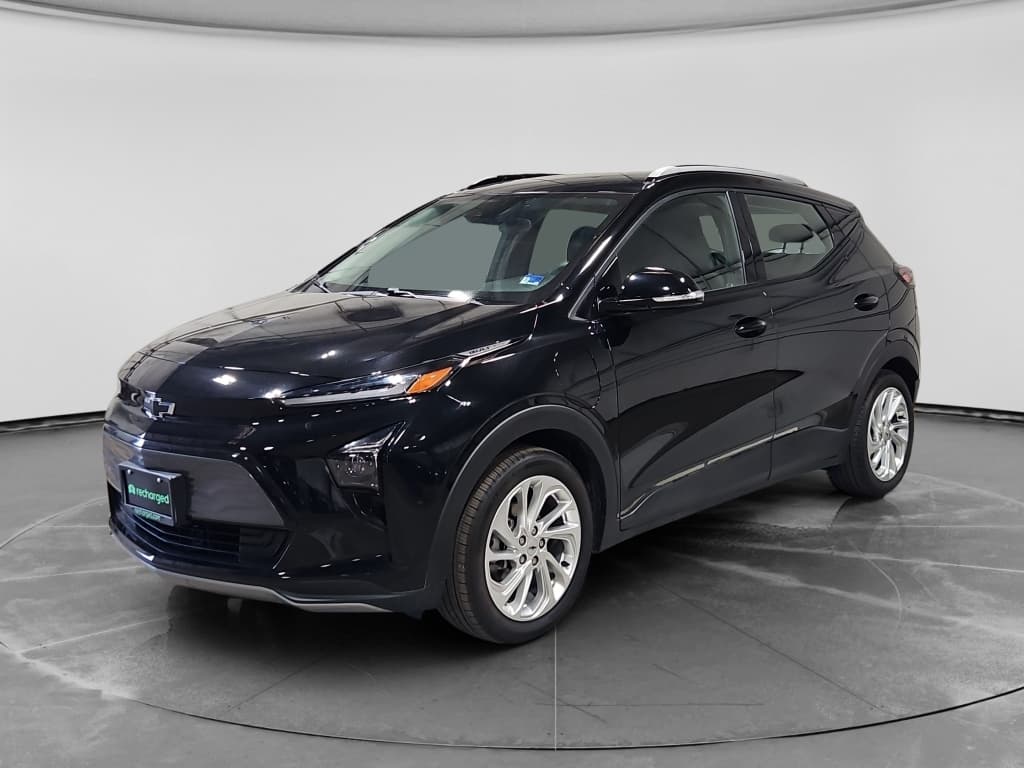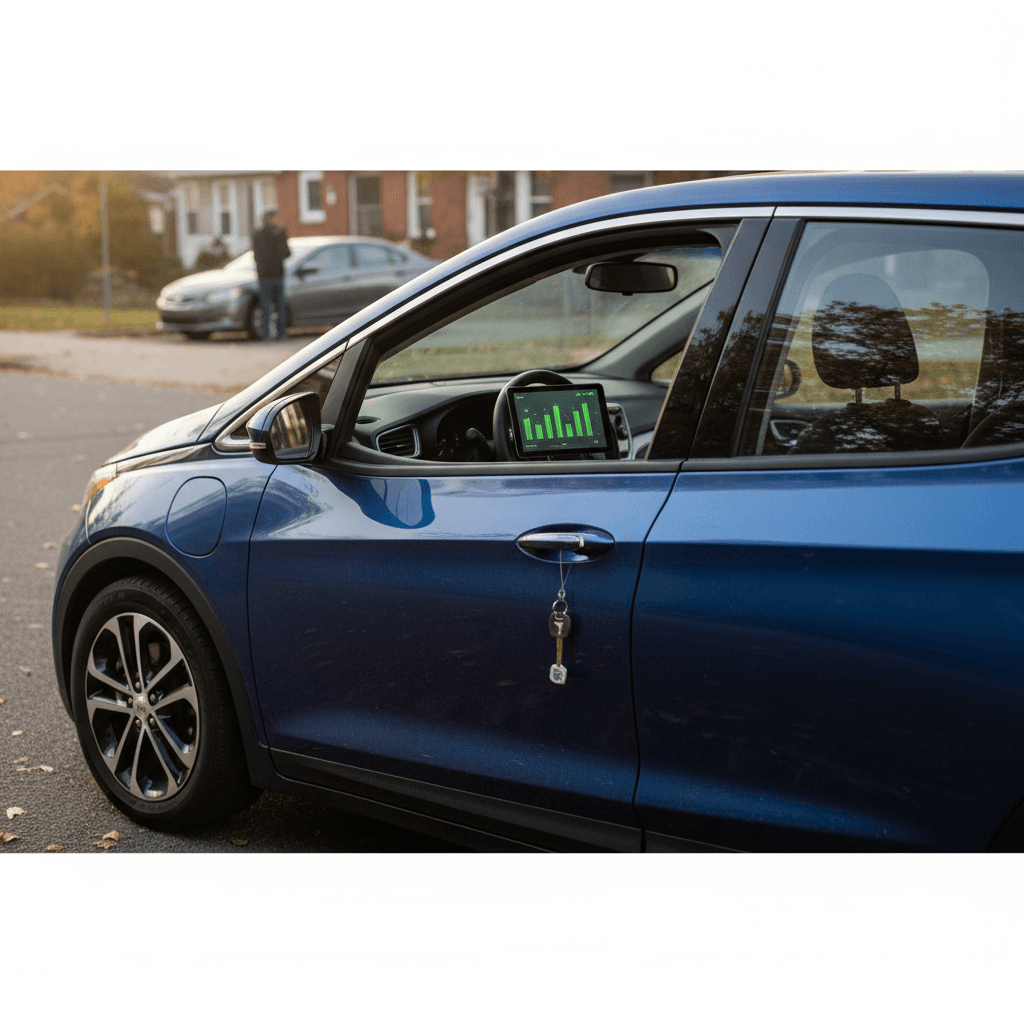
If you’re searching for a Chevrolet Bolt EV for sale, you’re looking at one of the most affordable long‑range electric cars you can buy used today. With over 200 miles of EPA‑rated range, hatchback practicality, and steep depreciation from original MSRP, the Bolt EV has become a standout value in the used EV market.
Big picture
Why the Chevrolet Bolt EV is a smart used buy
When it launched for 2017, the Chevy Bolt EV was one of the first mass‑market EVs with 200+ miles of range. Early cars offered an EPA‑rated 238 miles; later models reached about 259 miles on a charge. That kind of range, combined with compact‑car dimensions and a tall hatchback body, makes the Bolt EV a surprisingly practical daily driver, especially in cities and suburbs where you can charge at home.
What makes a Bolt EV appealing on the used market
Three pillars: price, range, and practicality
Affordable pricing
Because the Bolt EV has been on sale since 2017 and new‑car incentives have shifted, used prices have dropped sharply from original MSRPs in the mid‑$30,000s to low‑teens or low‑$20,000s for many examples, depending on year and mileage.
Serious electric range
Most Bolts deliver well over 200 miles of usable range when new, which remains competitive with many newer EVs that cost far more. That means fewer charging stops and less range anxiety.
Compact but roomy
The Bolt’s tall roof and hatchback layout create good headroom and cargo flexibility. Fold the rear seats and you have space for bikes, luggage, or big Costco runs, without the footprint of an SUV.
Who the Bolt EV fits best
Quick specs: what you get with a Bolt EV
Core Chevrolet Bolt EV specs (most model years)
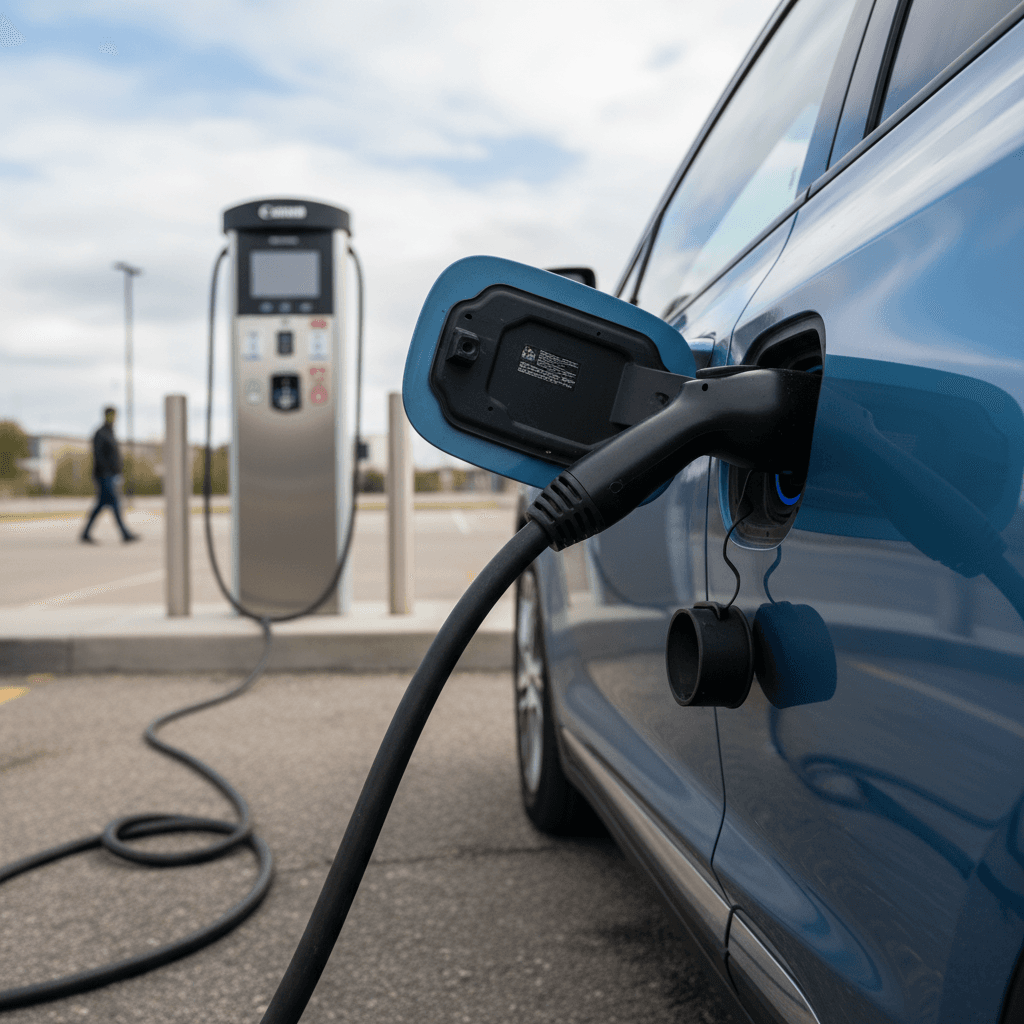
All Chevrolet Bolt EVs use the CCS fast‑charging standard and J1772 connector for Level 1 and Level 2 charging. That means you can use most non‑Tesla public chargers in the U.S., and with the right adapter you can increasingly access Tesla’s growing DC charging network as well.
Model years and key updates
When you see a Chevrolet Bolt EV for sale, it’s worth knowing how the car evolved. While the basic powertrain and compact hatchback shape stayed consistent, there are meaningful changes in range, interior quality, and charging hardware over time.
Chevy Bolt EV model‑year highlights
How the Bolt EV changed from launch through the most recent models.
| Model year | EPA range* | Key changes | Good fit for |
|---|---|---|---|
| 2017–2018 | 238 mi | Launch years; 60 kWh battery; basic active‑safety options, smaller infotainment feature set. | Lowest upfront price; city commuters who value value over features. |
| 2019–2020 | 238 mi | Minor updates; similar range; incremental safety/infotainment updates. | Buyers balancing price and modern safety tech. |
| 2020 (late)–2021 | 259 mi | Battery pack update adding roughly 21 miles of range; more standard safety features. | Drivers who road‑trip occasionally and want maximum range per dollar. |
| 2022–2023 | 259 mi | Major refresh with updated styling and interior; improved seats; 11.5 kW AC charging on many trims. | Shoppers who prioritize comfort, faster home charging, and more modern design. |
Use this as a sanity check when you compare different Bolts online.
What about the Bolt EUV?
Chevy Bolt EV prices: what to expect
Used pricing will always depend on mileage, condition, equipment, and local demand, but the Bolt EV has depreciated more steeply than many comparable gas cars. That’s good news if you’re shopping for value.
Approximate used Chevrolet Bolt EV pricing (dealer retail)
Representative national pricing for typical used Bolts in average condition as of late 2025.
| Model year | Typical mileage | Approx. price range | Notes |
|---|---|---|---|
| 2017–2018 | 60k–90k miles | $9,000–$13,000 | Lowest buy‑in; confirm recall work and battery health carefully. |
| 2019–2020 | 40k–70k miles | $11,000–$15,000 | Often the sweet spot of price vs. remaining life. |
| 2021 | 30k–60k miles | $13,000–$18,000 | Higher range pack; watch options and DC fast‑charge equipment. |
| 2022–2023 | 15k–40k miles | $17,000–$24,000 | Refreshed interior, more features, faster AC charging. |
Think of these as ballpark targets when you shop listings or talk to dealers.
Prices move quickly
At Recharged, we track live market data on used Bolts across the country to price each vehicle fairly. Every listing includes a Recharged Score Report that shows how the asking price compares to similar vehicles, so you can see in seconds whether a particular car is priced high, low, or right on the money.
Battery health, range, and real‑world ownership
Battery condition is the single most important factor when you’re considering any used Chevrolet Bolt EV for sale. GM’s pack chemistry has generally held up well in the real world when maintained properly, but early Bolt packs were also subject to a widely publicized recall and replacement campaign. Many owners now report modest degradation, often around 5–10% after high mileage, when the car has been driven and charged responsibly.
What “good” looks like
- Ask specifically whether the car received a replacement battery pack under the recall or just a software update.
- Review the car’s displayed maximum range on a full charge and compare it to the EPA figure for that year.
- Look for any history of frequent DC fast charging in extreme heat, which can accelerate wear when abused.
- Check for warning lights or error codes related to the high‑voltage system during a pre‑purchase inspection.
"After 100,000 miles, my battery is still at around 95% of its original capacity. I stick to 80% daily charging and only go to 100% for road trips."
Daily charging habits matter
Charging your Bolt EV: home, public, and road trips
The Chevy Bolt EV won’t win any drag races at the fast‑charger, but it offers a very livable charging profile for most real‑world use. Understanding how it charges will help you decide whether it fits your lifestyle, and which model years make the most sense.
Typical Bolt EV charging options
How you’ll actually keep your Bolt topped up day to day
Home Level 1
Uses a standard 120‑volt outlet. Adds just a few miles of range per hour, fine for very light use or as a backup.
Home / work Level 2
240‑volt Level 2 charging is the sweet spot. Expect roughly 20–35 miles of range per hour depending on model year and charger output.
Public DC fast
On a healthy battery and warm day, you can typically add about 100 miles of range in ~30 minutes when fast‑charging from a low state of charge.
Earlier Bolts accept up to roughly 7.2 kW on Level 2; later refreshed models can take advantage of higher‑output home chargers around 11 kW. All Bolt EVs that are equipped with DC fast‑charging use the CCS connector and top out around 55 kW peak. You’ll see much higher numbers on some public chargers, but the car is the limiting factor, your Bolt simply won’t pull more than its design allows.
Don’t plan on ultra‑fast road‑trip charging
Recalls, safety, and warranty coverage
The Bolt EV’s battery recall made headlines, but it also means many used cars on the market now carry newer replacement packs and updated software. That’s not a bad place to be as a second or third owner, as long as you verify the work.
- Ask the seller for documentation showing all recall work has been completed, particularly around the high‑voltage battery.
- Confirm there are no open recalls using the VIN through GM’s online tools or a dealer.
- Review crash‑test results if safety is a top concern; the Bolt has generally performed well in major U.S. safety testing.
- Look into remaining battery and powertrain warranty coverage, many Bolts still have years of factory battery warranty left, especially lower‑mileage 2021–2023 vehicles.
Never skip recall verification
How to inspect a used Chevy Bolt EV
A proper inspection combines all the usual used‑car checks with EV‑specific items. You want to understand not just cosmetic condition but also battery health, charging behavior, and how the car was used.
Key steps when evaluating a Chevrolet Bolt EV for sale
1. Check the battery and range display
With the car fully charged, note the estimated range (“guess‑o‑meter”) and compare it to the EPA figure for that year. A moderate difference is normal; a very low estimate suggests degradation or unusual driving history.
2. Verify charging equipment
Confirm the car includes its portable charge cord and, if possible, test both Level 1 and Level 2 charging. On a short DC fast‑charging session, watch that it ramps up to typical power levels and doesn’t throw errors.
3. Review recall and service history
Ask for printed service records. Look specifically for battery recall codes, high‑voltage system work, and any repeated trouble codes related to charging or power delivery.
4. Inspect tires, brakes, and suspension
EVs are heavy, and tires can wear faster than on comparable gas cars. Uneven wear can indicate alignment or suspension issues. Regenerative braking means physical brakes often last a long time, but they can still rust if driven infrequently.
5. Test all tech and safety features
Confirm the touchscreen, cameras, parking sensors, and advanced driver‑assistance features work as expected. Take time to test Bluetooth, CarPlay/Android Auto, and heater/AC performance.
6. Take a long enough test drive
Get the Bolt up to highway speed, test acceleration and regenerative braking, listen for wind or bearing noise, and make sure the steering tracks straight without vibration.
Buying from a private seller
- Potentially lower upfront price.
- More variability in how well the car was maintained.
- You’ll need to arrange your own inspection and paperwork.
If you buy privately, budget for a professional EV inspection and be prepared to walk away if anything feels off.
Buying from a curated EV marketplace
- Reconditioned vehicles and verified history reports.
- Access to EV‑savvy specialists who understand Bolt‑specific issues.
- Streamlined financing, trade‑ins, and nationwide delivery options.
With Recharged, every Bolt EV comes with a detailed Recharged Score Report, including battery diagnostics and transparent pricing.
Financing, trade‑ins, and buying online with Recharged
A big part of finding the right Chevrolet Bolt EV for sale is structuring the deal in a way that fits your budget and your life. Because EV pricing is evolving quickly, you don’t want to overpay, or get stuck in a car that doesn’t really match your range needs.
How Recharged simplifies buying a used Bolt EV
From valuation to delivery, built around EV ownership
Transparent financing
Pre‑qualify online with no impact to your credit score, compare terms, and see your estimated payment before you fall in love with a specific car.
Trade‑ins and instant offers
Get an instant offer or explore consignment if you’re selling a gas car or an older EV. The value can go straight toward your Bolt EV purchase.
Nationwide delivery & support
Browse Bolt EVs online, review each Recharged Score Report, sign digitally, and have your car delivered, backed by EV‑specialist support and our Experience Center in Richmond, VA.
Ready to find your next EV?
Browse VehiclesWhy the Recharged Score matters
Chevrolet Bolt EV buying checklist
10‑point checklist before you say yes to a Bolt
Confirm range needs vs. Bolt capability
Calculate your longest typical day and occasional trips. If you’re regularly under ~150 miles per day, a Bolt EV will likely fit comfortably.
Choose the right model year
Balance budget and features. Earlier years are cheaper; 2020–2021 bring more range; 2022–2023 add nicer interiors and faster AC charging.
Verify recall completion
Use the VIN to confirm all battery recalls and software updates are closed, and ask for documentation from the current owner or dealer.
Evaluate battery health
Look at maximum range estimates, ask for any battery reports, and consider a third‑party or Recharged battery diagnostic when possible.
Inspect charging hardware
Make sure the included charge cord works and test Level 2 or DC fast‑charging if possible before finalizing the deal.
Review history and condition
Check for prior accidents, flood damage, or repeated service visits. A clean history report and consistent service records are ideal.
Understand total cost of ownership
Factor in electricity costs, potential home charger installation, insurance, and expected maintenance, typically lower than a gas car.
Plan your home charging solution
Decide whether you’ll rely on Level 1 initially or install a Level 2 charger for faster overnight charging.
Explore financing and trade‑in options
Compare offers from your bank, credit union, and EV‑focused marketplaces like Recharged so you don’t leave money on the table.
Take a thorough test drive
Drive on both city streets and highways, try one‑pedal driving, and make sure you’re comfortable with the seating position and visibility.
Chevrolet Bolt EV FAQ
Frequently asked questions about Chevrolet Bolt EVs for sale
Is a used Chevrolet Bolt EV right for you?
If you want a practical, efficient, and surprisingly quick electric hatchback without a luxury‑car price tag, a used Chevrolet Bolt EV deserves a serious look. Its combination of long range, compact size, and steep depreciation makes it one of the most compelling entry points into EV ownership today.
The key is doing your homework: understand model‑year differences, verify recall work, evaluate battery health, and make sure the car’s charging profile matches your lifestyle. When you shop through Recharged, you get expert‑guided support, transparent pricing, and a Recharged Score Report on every Bolt EV we list, so you can spend less time worrying about what you’re missing and more time enjoying quiet, torque‑rich electric miles.