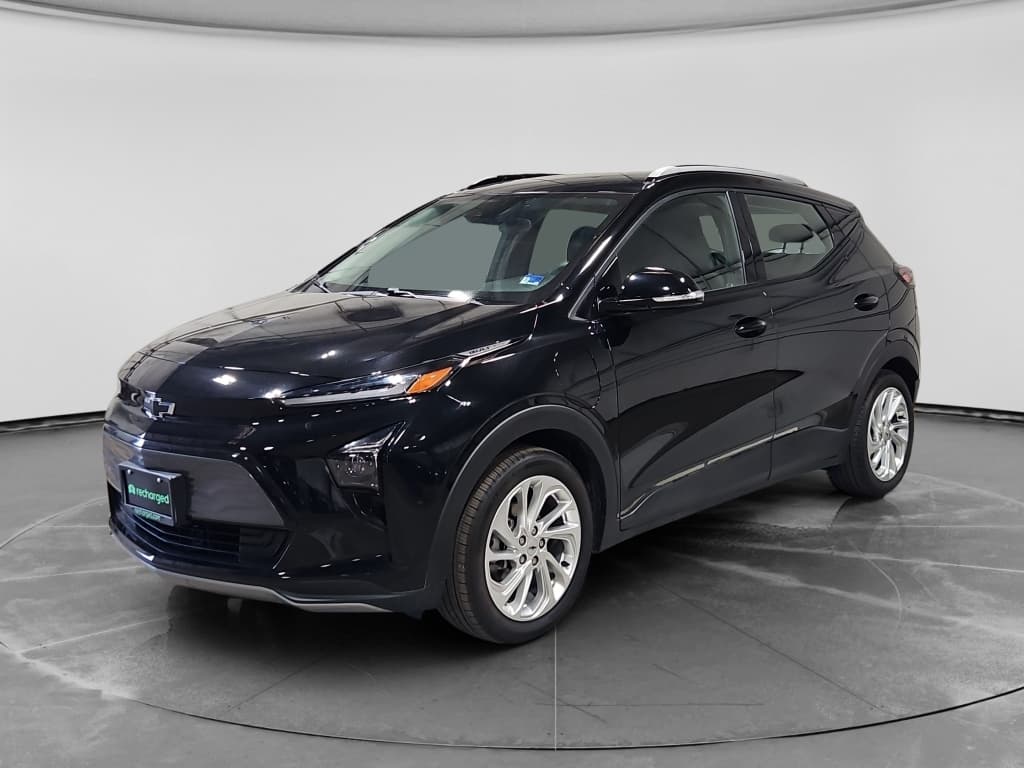
If you own a Chevrolet Bolt EV or EUV, the single best upgrade you can make to your daily life isn’t a bigger wheel package or fancy floor mats, it’s a proper Level 2 home charger. In this 2026 guide, we’ll walk through what “best home charger for a Chevy Bolt” really means, which specs matter, and how to choose a charger that fits your driving habits, your electrical panel, and your future plans.
Quick answer
Why home charging matters for Bolt owners
Why a home charger transforms Bolt ownership
The Bolt’s whole value proposition is efficiency: a relatively affordable EV with solid real‑world range. That value really shows up when you can plug in at home and start each day with plenty of charge. A dedicated Level 2 charger turns your Bolt into an appliance: you plug in at night, wake up with the range you need, and rarely think about charging logistics.
Relying only on the factory Level 1 cord and public chargers works in a pinch, but it undercuts the Bolt’s strengths. Level 1 can take days to fill a nearly empty battery, and public DC fast charging is great for road trips, not for topping up every night. A right‑sized home charger is the missing piece that makes an inexpensive used Bolt feel like a much more expensive EV.
Chevy Bolt charging basics: what your car can accept
Onboard AC charger limits
- 2017–2021 Bolt EV: ~7.2–7.7 kW onboard AC charger (about 32 amps at 240 V). Installing anything bigger than a 32 A EVSE won’t make this generation charge faster, your car is the bottleneck.
- 2022–2023 Bolt EV & EUV: Upgraded to about 11.5 kW onboard AC charging. On a 48 A Level 2 charger, you can see noticeably faster home charging if your electrical service supports it.
- Upcoming 2027 Bolt (announced): GM has signaled a 48 A AC charging capability with a native NACS port. That matters for future‑proofing your charger choice today.
Connector types and compatibility
- All current Bolt EV and EUV models in North America use a J1772 inlet for AC charging (the standard Level 2 plug).
- Most non‑Tesla home chargers ship with a J1772 handle; they’re plug‑and‑play with the Bolt.
- If you buy a newer charger that only has a NACS (Tesla‑style) connector, you’ll need an adapter to use it with today’s Bolt, at least until a native‑NACS Bolt arrives.
- For DC fast charging on the road, the Bolt uses CCS1; that’s separate from your home charging decision, which is all about AC Level 2.
Don’t overspend on amps you can’t use
How fast will a Level 2 charger fill a Bolt battery?
Real‑world charging speed is a combination of your charger’s output, your home’s voltage, and the Bolt’s onboard charger limit. For most U.S. homes, you’ll see around 240 V on a dedicated 240 V circuit. Here’s what that translates to in practical terms.
Typical Chevy Bolt home charging speeds (approximate)
How different Level 2 charger settings translate into miles of range per hour for a Chevrolet Bolt EV or EUV.
| Charger setting | Circuit / breaker | Approx. kW into Bolt | Miles of range per hour* | Best use case |
|---|---|---|---|---|
| 16 A Level 2 | 20 A / 240 V | ~3.8 kW | 12–15 mi/hr | Apartment or limited panel capacity |
| 24 A Level 2 | 30 A / 240 V | ~5.7 kW | 18–22 mi/hr | Moderate daily driving, smaller homes |
| 32 A Level 2 (max for 2017–2021) | 40 A / 240 V | ~7.7 kW | 25–30 mi/hr | Most Bolt EV owners; overnight full charge |
| 40 A Level 2 | 50 A / 240 V | ~9.6 kW (11.5 kW cars limited by EVSE) | 30–35 mi/hr | Good match for 11.5 kW 2022–2023 Bolt if panel is tight |
| 48 A Level 2 (max for 2022–2023) | 60 A / 240 V | ~11.5 kW | 34–38 mi/hr | Fastest home charging for newer Bolt EV/EUV |
Actual results vary with temperature, driving efficiency, and exact line voltage, but these ranges are useful planning numbers.
Rule of thumb
Key features to look for in a Bolt home charger
What actually matters in a home charger for your Bolt
Focus on the specs that change your day‑to‑day experience, not just marketing numbers.
Right amperage & adjustability
Choose a charger whose maximum current makes sense for your Bolt and panel, but can be dialed down in software or on the unit. That lets you:
- Match the 32 A limit of older Bolts.
- Take advantage of 11.5 kW on newer Bolts if your wiring allows.
- Reduce current in hot weather or on shared circuits.
Connector & cable quality
A rugged J1772 connector with a 20–25 foot cable gives you flexibility on where you park. Look for:
- Comfortable handle and easy‑to‑press latch.
- Thick, flexible cable that won’t crack in cold weather.
- Wall holster to keep the plug off the floor.
Smart features (if you’ll actually use them)
Wi‑Fi or Bluetooth connectivity unlocks:
- Scheduled charging for off‑peak rates.
- Energy tracking by session and by month.
- Utility or demand‑response rebates in some regions.
If you know you’ll never open the app, a cheaper “dumb” unit is fine.
Other factors that should influence your choice
These won’t change your Bolt’s max kW, but they affect ownership experience.
Durability & warranty
Look for NEMA 3R or better weather rating if it’s outdoors, a 3+ year warranty, and a solid enclosure. Simple, fanless designs like the Grizzl‑E lean toward longevity over flash.
App & ecosystem
Some brands integrate nicely with smart panels, solar, and home energy monitoring. If you’re building a broader home energy setup, it’s worth aligning those ecosystems now instead of replacing gear later.
Rebates & incentives
Utilities often give extra rebates for networked chargers. It’s worth checking local programs before you buy, especially if you’re choosing between a basic and a smart version of the same unit.
Top home charger picks for Chevrolet Bolt EV/EUV
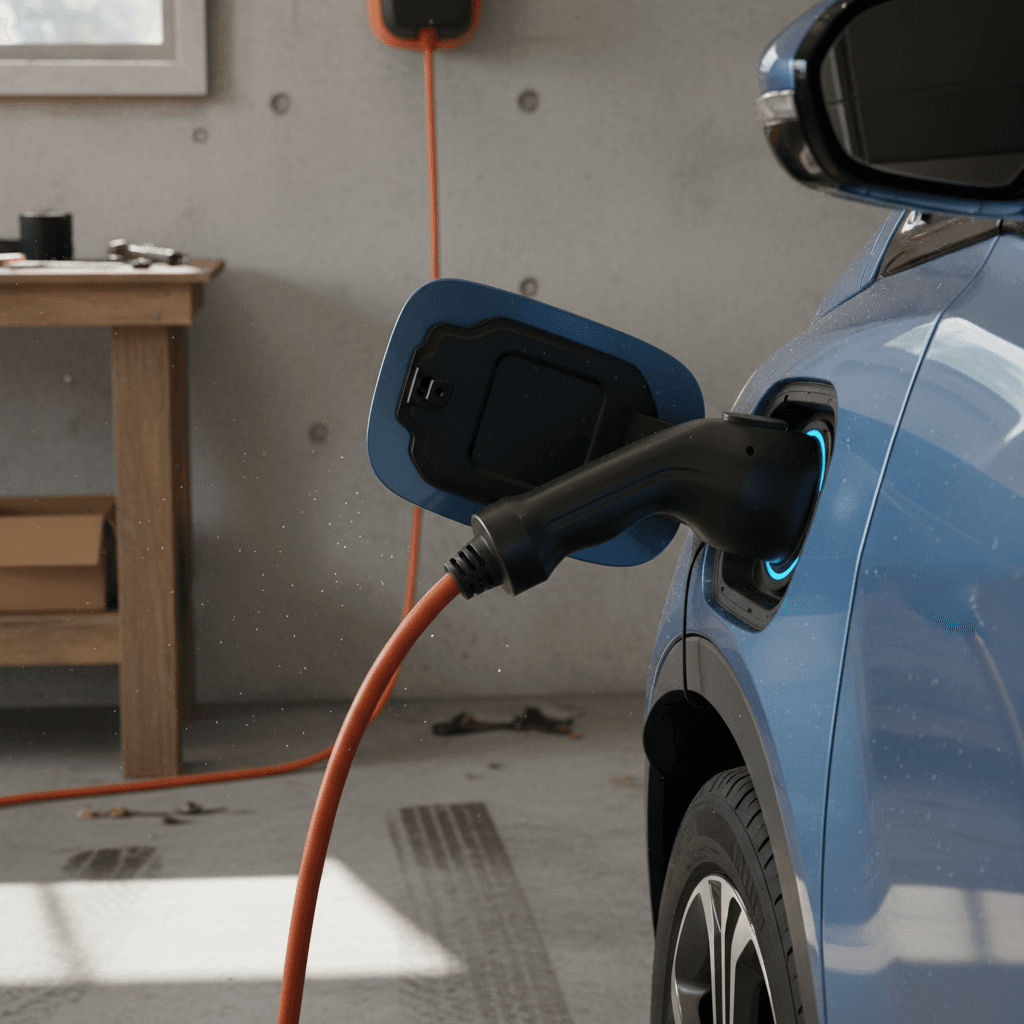
The good news is that the Bolt doesn’t require anything exotic. Most mainstream Level 2 chargers will work well as long as you size the circuit correctly. The differences are in build quality, smart features, and how well they line up with how you actually use your car.
Popular Level 2 home chargers that pair well with the Chevy Bolt
Representative options from well‑known brands as of 2026. Pricing is approximate and varies by retailer and incentives.
| Charger | Max current | Typical street price | Best for Bolt owners who… | Pros | Trade‑offs |
|---|---|---|---|---|---|
| Emporia Level 2 | 40 A (hardwire or NEMA 14‑50) | ~$400 | Want strong smart features and energy monitoring on a budget | Good app, load management with Emporia energy monitor, adjustable current, solid value | Needs Wi‑Fi for full features; app is more technical than some competitors |
| Grizzl‑E Classic | 40 A (NEMA 14‑50) | ~$360 | Prioritize durability over bells and whistles | Rugged metal housing, simple DIP‑switch current setting, weather‑resistant | No Wi‑Fi or app; basic status LEDs only |
| ChargePoint Home Flex | Up to 50 A (hardwire or plug‑in) | ~$650 | Prefer polished app experience and brand recognition | Mature app, good utility program support, flexible amperage from 16–50 A | Pricey; value is mainly in software and ecosystem |
| Wallbox Pulsar Plus | Up to 48 A | ~$650 | Want a compact smart charger with strong app features | Small, sleek unit with robust smart scheduling and power sharing | Higher cost; some features depend on cloud services |
| Basic 32 A "no‑name" unit | 32 A | ~$250–$300 | Own an older Bolt and just need reliable 7.7 kW charging | Low cost, set‑and‑forget operation, often includes long cable | Unknown long‑term durability; limited support and firmware updates |
Any of these will charge a Bolt reliably if installed on an appropriately sized circuit; the best choice depends on your budget and appetite for smart features.
Simple recommendation by Bolt generation
Installation, electrical, and safety considerations
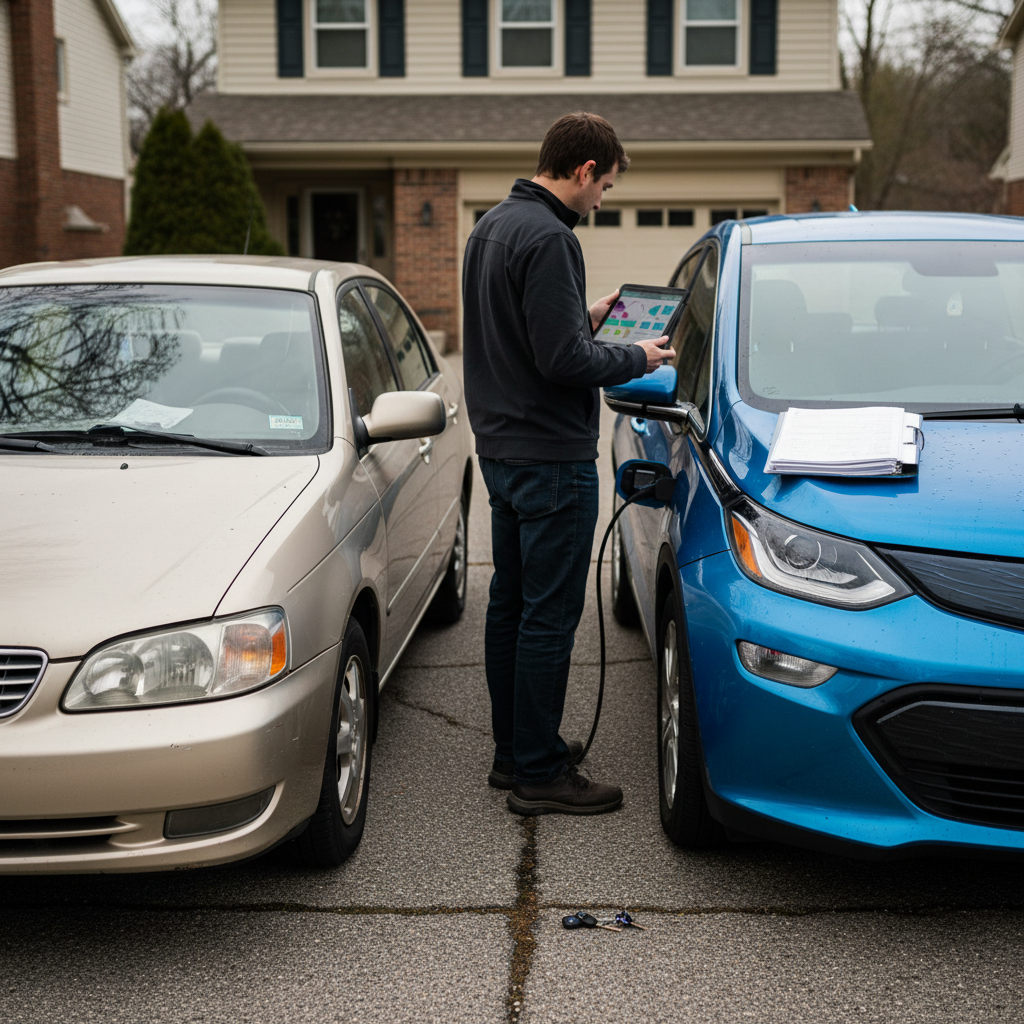
A home charger is essentially a high‑power appliance. For most Bolt owners in detached homes or townhouses with dedicated parking, the most robust setup is a hardwired Level 2 charger on its own circuit. Apartment and condo drivers often have to get more creative with lower‑amp circuits or shared infrastructure.
Before you pick a charger, answer these questions
1. How far is your panel from your parking spot?
Longer wire runs cost more and may reduce usable voltage slightly under load. Get a rough distance; your electrician will care about whether it’s 15 feet or 75 feet.
2. What spare capacity does your panel have?
A typical 32 A charger needs a 40 A breaker; a 48 A charger needs a 60 A breaker. If your home is already close to its service limit, it may be cheaper (and safer) to install a 16–32 A unit instead of upgrading service.
3. Plug‑in (NEMA 14‑50) or hardwired?
A <strong>NEMA 14‑50 receptacle</strong> adds flexibility, you can change chargers later without an electrician, but some jurisdictions now prefer or require hardwired EVSEs outdoors. Hardwiring also avoids a bulky plug sticking off the wall.
4. Indoor or outdoor mounting?
Garages are easy mode. Outdoor installs need appropriate weather‑rated enclosures and conduit. If you park in a driveway, prioritize a charger rated for outdoor use with a robust cable and connector holster.
5. Do you want an electrician‑managed turnkey install?
GM has partnered with companies like Qmerit for Bolt home charging installs, and many local electricians now specialize in EV work. A professional install isn’t just about convenience, it’s about code compliance and safety with continuous high current.
Safety first
Smart vs. simple chargers: what makes sense for a Bolt?
When a smart charger is worth it
- You’re on a time‑of‑use rate plan and want to automatically charge during off‑peak hours to minimize cost.
- You like to track energy usage and cost per mile, or you manage multiple EVs in the same household.
- Your utility offers rebates for networked chargers or demand‑response programs that require a connected EVSE.
- You plan to integrate with solar, batteries, or a smart panel and want coordinated load management.
When a simple charger is enough
- You plug in when you get home and don’t care about exact kWh tracking.
- Your Bolt’s daily usage is light enough that starting and stopping within certain windows doesn’t matter.
- Your utility doesn’t offer meaningful incentives for a connected unit.
- You prefer the reliability of a charger that doesn’t depend on Wi‑Fi, cloud services, or apps that can change over time.
Leverage the Bolt’s built‑in scheduling
Future-proofing for your next EV after the Bolt
The Chevy Bolt is one of the best values in the used EV market, but many owners see it as their first step into electric. If you expect to upgrade to a larger or faster‑charging EV in a few years, it’s worth zooming out and thinking of the charger as a 10‑year asset, not just a Bolt accessory.
Design your home charging with your next EV in mind
Your Bolt sets minimum requirements; your next EV sets the ceiling.
Choose adjustable current
A charger that can be configured anywhere from 16 A up to 40–48 A lets you:
- Run at 24–32 A today if your panel is tight.
- Turn it up later after a panel upgrade or service increase.
- Match the higher AC charging rates of future EVs.
Consider higher‑amp wiring once
If you’re already hiring an electrician, it may be worth running a 60 A‑capable circuit (with appropriate wire gauge) even if you initially limit the charger to 32–40 A. Copper and labor are the expensive parts; the incremental cost over a 40 A circuit can be modest when done up front.
Think about connector standards
The industry is quickly standardizing on the NACS (Tesla‑style) connector for new EVs. Buying a J1772 charger is still fine for today’s Bolt, but a unit that can be ordered with or adapted to NACS will age more gracefully as the fleet transitions.
How a used Bolt and a good home charger fit together
Many shoppers come to the Chevy Bolt through the used market, attracted by low running costs and accessible pricing. At Recharged, every used EV we list includes a Recharged Score battery health report, so you can see how the pack has aged before you buy. Pair that transparency with a thoughtfully chosen home charger and you’ve essentially locked in your fueling costs for years.
If you’re still in the research phase, it can help to think of the vehicle + charger + installation as one system. A slightly cheaper used car with a healthy battery plus a right‑sized 32–40 A home charger is often a better deal than stretching for a newer car but skimping on home charging. And because Recharged supports trade‑ins, financing, and nationwide delivery, you can plan the charger install alongside your vehicle purchase instead of treating it as an afterthought.
Where the Recharged Score fits in
FAQ: Chevrolet Bolt EV best home charger
Frequently asked questions about Chevy Bolt home charging
Bottom line: choosing the best home charger for your Bolt
Choosing the “best” home charger for a Chevrolet Bolt EV or EUV isn’t about chasing the biggest number on the box, it’s about matching the charger to your car, your home, and your habits. For most owners, that means a reliable 32–40 A Level 2 unit with a 20–25 foot cable, mounted where you naturally park, and installed on a dedicated 240 V circuit by a qualified electrician. If you plan to upgrade to a faster‑charging EV later, stepping up to a configurable 40–48 A smart charger on a 50–60 A circuit can future‑proof your investment.
Get that pairing right, and the Bolt’s strengths, low running costs, easy urban maneuverability, and respectable real‑world range, really come into focus. Whether you’re shopping for a used Bolt with a strong Recharged Score or already own one and are ready to step up from trickle charging, a well‑chosen home charger is what turns electric ownership from “interesting experiment” into everyday normal.