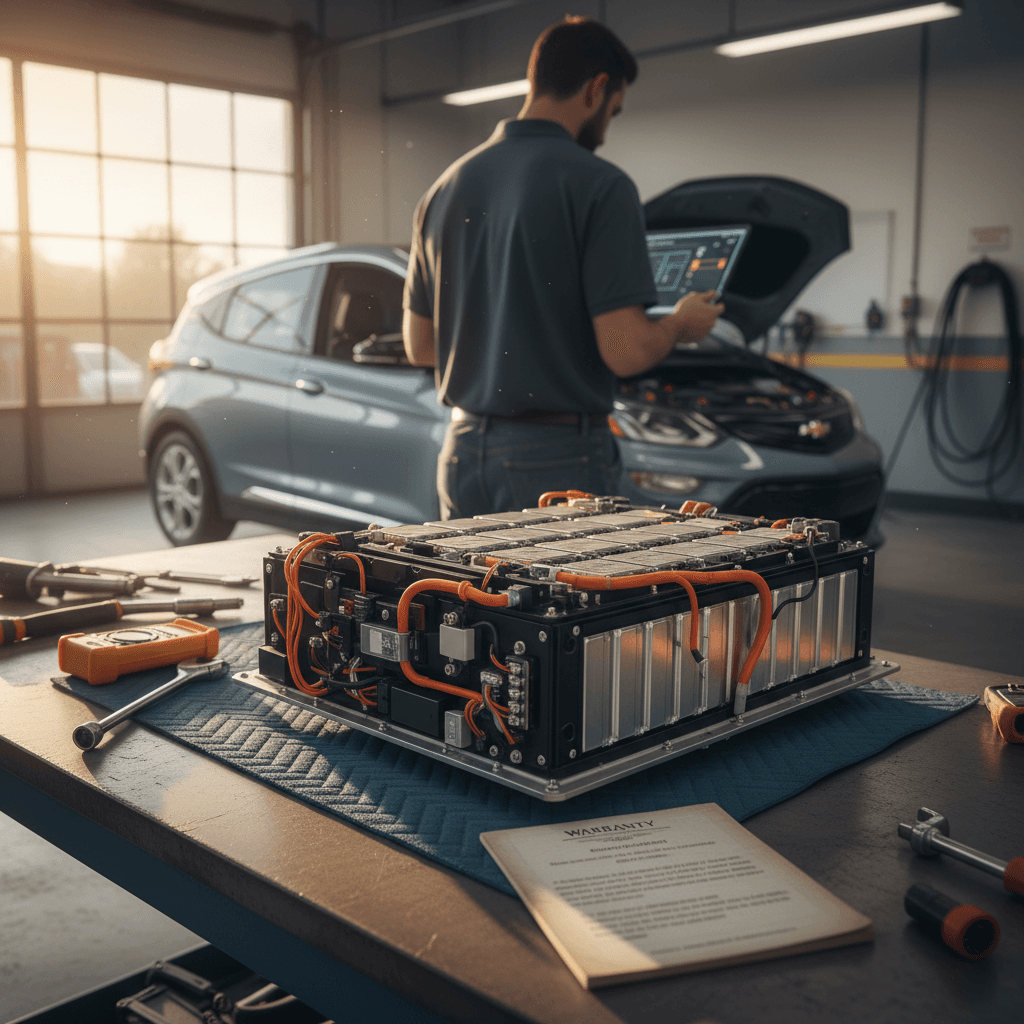
If you own or are shopping for a Chevy Bolt, the question isn’t just **“How long will the battery last?”** It’s **“What does the Chevrolet Bolt EV battery warranty cover if something goes wrong?”** Between the 8‑year/100,000‑mile coverage, the big LG battery recall, and normal degradation, it can be hard to tell what’s actually protected and what isn’t, especially on a used Bolt.
Quick takeaway
Chevy Bolt EV battery warranty overview
Bolt EV battery warranty at a glance
Think of the Bolt’s battery warranty as **insurance against manufacturing or design defects** in the high‑voltage battery and related propulsion components. It’s not a promise that your car will always deliver brand‑new range numbers, and it doesn’t turn abuse or accidents into free repairs. But it *does* give you strong protection if the pack or its internal parts fail before that 8‑year/100,000‑mile line in the sand.
The standard Bolt EV battery warranty: years, miles & components
Chevrolet’s own EV ownership materials lay out the basic coverage this way: certain electric propulsion components, **including the high‑voltage battery**, are covered for **8 years or 100,000 miles, whichever comes first**. On a brand‑new Bolt, that clock starts the day the vehicle is first put into service (when it’s sold or leased, not when it’s built).
Core Chevy Bolt EV battery & EV component warranty terms
These are the high‑level factory warranty terms most Bolt EV and EUV buyers start with in the U.S. market.
| Coverage type | Typical term | What it generally applies to |
|---|---|---|
| Bumper‑to‑bumper limited warranty | 3 years / 36,000 miles | Most non‑wear items on the car |
| Electric propulsion / EV component warranty | 8 years / 100,000 miles | High‑voltage battery, drive motor(s), and related electronics |
| Battery recall replacement parts warranty* | 8 years / 100,000 miles from installation | Replacement high‑voltage battery installed under the LG recall campaigns |
Always confirm specific coverage for your VIN, model year, and market, details can shift over time.
Always check the VIN
What the Chevrolet Bolt EV battery warranty actually covers
Under the hood, well, under the floor, the Bolt’s battery warranty is designed to cover **defects in materials or workmanship** that cause the high‑voltage pack or related components to fail during the warranty period. In practical terms, that usually means Chevrolet will repair or replace covered parts at no charge for parts and labor when a defect shows up within the time and mileage window.
Key things the Bolt battery warranty is built to cover
Details vary by model year and policy language, but these buckets describe how it works in the real world.
Defective battery modules or pack
If the pack or individual modules have a **manufacturing defect** that leads to faults, excessive self‑discharge, or unacceptable capacity loss by GM’s internal thresholds, the high‑voltage battery can be repaired or replaced under warranty.
High‑voltage battery electronics
Coverage typically includes the **battery energy control module**, pack contactors, and other high‑voltage control components when they fail due to defects, not damage from outside events or modifications.
Drive‑motor propulsion issues tied to the pack
If a defect in the battery or high‑voltage system causes propulsion problems (for example, repeated "propulsion power reduced" warnings traceable to the pack), that’s generally considered part of the **EV component warranty** coverage.
1. Defects, not wear‑and‑tear
The warranty is there to catch **things that shouldn’t have happened**, faulty cells, bad welds, failing control boards, not the gradual, expected wear that comes from years of charging and driving.
If the car’s diagnostic routines show a genuine failure connected to a defect, the dealer can submit a claim and GM will typically authorize the repair or replacement.
2. Pack repair or full replacement
Depending on the issue, GM may approve **module‑level repairs** inside the pack or swap the entire battery assembly. On recall replacements, owners generally received an all‑new pack; standard warranty fixes may be more surgical.
Either way, when work is done under the official battery warranty, the **parts and labor** are covered during the warranty term.
Good news for recall packs
What the Bolt EV battery warranty does NOT cover
This is where expectations can get sideways. The Bolt’s battery warranty is robust, but it’s **not a blanket guarantee** that any drop in range or any issue with the car’s charging will trigger a free pack. These are the big exclusions that trip people up.
Common exclusions in the Chevy Bolt battery warranty
Gradual, "normal" battery degradation
All lithium‑ion batteries lose capacity over time. GM has long indicated that **up to roughly 40% capacity loss** over the warranty period can be considered within expectations. That means a pack that’s degraded but still within GM’s internal thresholds usually isn’t replaced under warranty.
Damage from accidents or external events
If the pack is damaged in a crash, by road debris, flooding, or improper lifting, that’s **insurance territory**, not battery warranty. The same goes for damage from fire, vandalism, or other external events.
Improper use, abuse, or modifications
Using non‑approved high‑voltage modifications, tampering with the pack, or ignoring critical warnings can void coverage. Aftermarket hacking or opening the pack is a fast way to land outside warranty protection.
Routine maintenance items
Things like the 12‑volt battery, tires, or brakes aren’t part of the high‑voltage battery warranty. Even some software updates or calibrations may be handled as part of other warranty programs, not the propulsion battery coverage.
Out‑of‑term issues
Once the earliest of **8 years or 100,000 miles** is up, Chevrolet isn’t obligated to repair battery issues under the factory battery warranty, even if a problem shows up right after that line is crossed.
Don’t assume "any range loss" is a claim
Battery degradation: how much loss is “normal” under warranty?
When the Bolt launched, GM telegraphed an important expectation: over the full 8‑year/100,000‑mile warranty period, **battery capacity loss as low as about 10% and as high as about 40%** could still be considered normal, depending on use. That’s a wide window, and it explains why very few Bolts get packs replaced *only* for range loss.
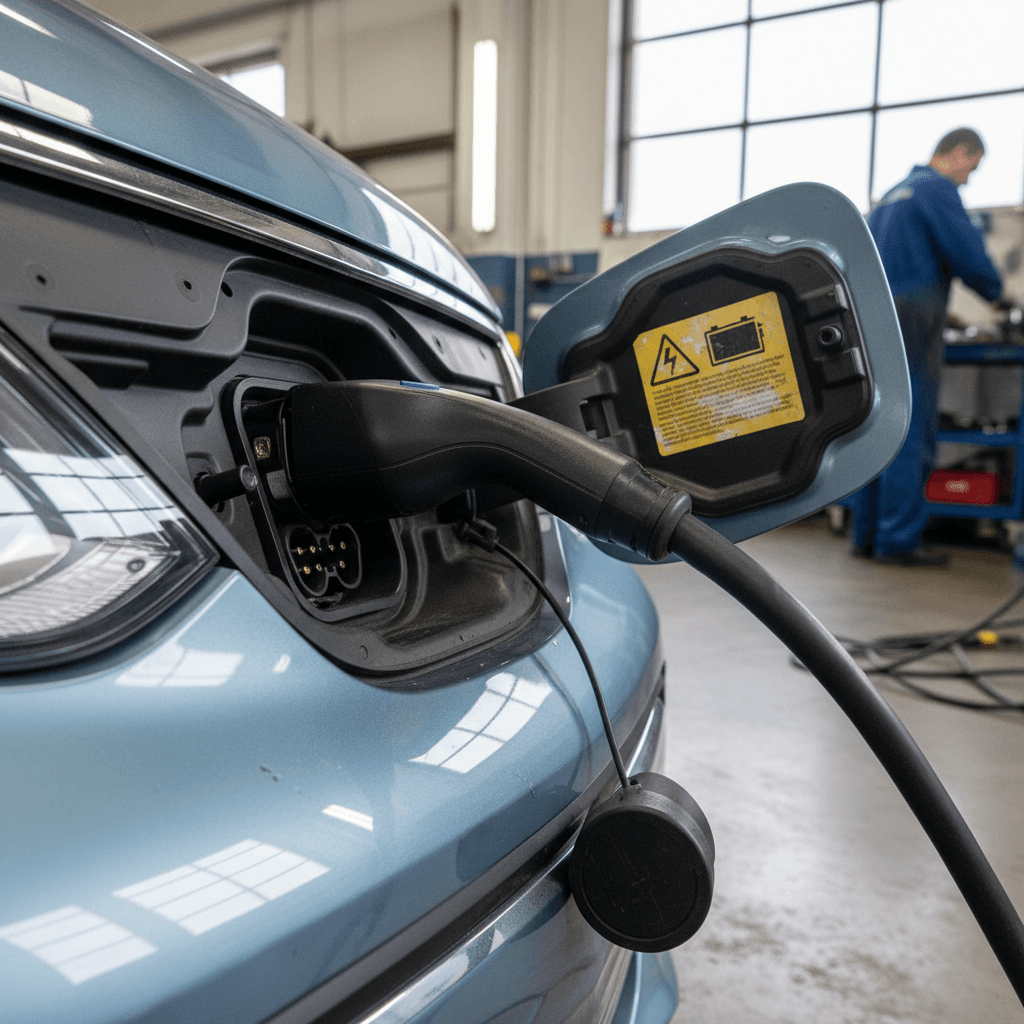
In the real world, the news is better than that upper limit sounds. Owner data and Recharged’s own testing show many Bolts **lose capacity slowly and predictably**, especially with liquid‑cooled recall packs and reasonable charging habits. Seeing 5–15% loss over many years is common, particularly on cars that aren’t fast‑charged hard in extreme heat.
- Minor range loss or a slowly falling state‑of‑health (SoH) number on a scan tool is **not, by itself, grounds for a warranty claim**.
- GM typically looks for **diagnostic trouble codes, imbalance between modules, or capacity below internal thresholds** before approving a pack.
- For some late‑model Bolts, internal documentation points to a **replacement threshold around 60% of original capacity**, roughly 40% loss, during the warranty period, as measured by GM’s tools.
How Recharged approaches Bolt degradation
How the Bolt battery recall affects your warranty
From 2017 through 2022, virtually every Chevy Bolt EV and EUV was swept up in a high‑profile LG Chem battery recall. GM eventually chose to **replace the entire high‑voltage pack** on many cars, not just patch modules. For owners, that created a twist: the new pack usually comes with its **own 8‑year/100,000‑mile parts warranty** starting from the date it was installed.
Original vs. recall battery warranty on a Bolt
Many used Bolts on the market today have <em>two</em> overlapping warranty clocks, if you know where to look.
Original EV battery warranty
Starts: when the car was first placed in service.
Term: typically **8 years/100,000 miles**.
Applies to: original pack and covered EV components.
Ends: at the earlier of time or mileage limit, or if the vehicle is branded salvage.
Bolt Battery Limited Part Warranty (recall pack)
Starts: the **installation date** of the recall replacement pack.
Term: another **8 years/100,000 miles** on that specific part.
Applies to: the service replacement high‑voltage battery.
Shows up as: a “Bolt Battery Limited Part Warranty” entry when you pull coverage by VIN.
Why recall history matters when you’re buying used
Not every battery replacement restarts the clock. A **recall‑driven pack swap** is usually the one that triggers that separate, long parts warranty. A standard warranty repair outside the recall may or may not reset coverage, depending on how GM codes the job. That’s why checking the actual warranty entries for a given VIN is more reliable than going by rumors.
Buying a used Bolt EV? How to check remaining battery warranty
If you’re looking at a used Chevy Bolt EV or EUV, you don’t have to guess about the battery’s warranty status. A few quick checks will tell you how much coverage is left, and whether a recall pack has changed the picture.
Used Bolt EV battery warranty checklist
1. Find the in‑service date and mileage
Ask the seller or a dealer for the Bolt’s original **in‑service date** and current mileage. Subtract those from 8 years and 100,000 miles to get a rough sense of the remaining original EV component warranty.
2. Run the VIN through GM’s owner/recall site
Use the VIN on GM’s online tools or have a Chevrolet dealer pull a **warranty summary**. Look specifically for entries labeled things like **“Bolt Battery Limited Part Warranty”** and note their start and end dates.
3. Confirm whether the recall pack was installed
Many 2017–2022 Bolts were eligible for a complete battery swap under the LG recall campaigns, but not all have been done. Confirm whether a **full pack replacement** occurred and on what date; that’s usually when the new 8‑year/100,000‑mile parts warranty begins.
4. Check for salvage, flood, or buyback history
A Bolt that’s been branded **salvage, rebuilt, or flood** may have its factory warranties voided, including battery coverage. Always run a vehicle history report and ask for documentation on any buyback or lemon‑law status.
5. Review service records for high‑voltage work
Look for prior high‑voltage warranty repairs, control module replacements, or battery‑related fault codes. Patterns of repeated issues could be a red flag, even if the car is technically still under warranty.
6. Get independent battery health data
Tools like the **Recharged Score battery health report** measure usable capacity, charging behavior, and real‑world range. That gives you a clearer picture than warranty status alone, and can surface marginal packs that are still within GM’s replacement thresholds.
How Recharged makes this easier
Ready to find your next EV?
Browse VehiclesReal-world warranty scenarios Bolt owners run into
Theory is one thing; what actually happens at the service desk is another. Here are three scenarios that mirror what many Bolt owners have seen, and how the battery warranty typically applies.
Scenario 1: Noticeable but moderate range loss
You bought a 2019 Bolt new. Six years and 80,000 miles later, your typical highway range has dropped from ~240 miles to about 200 on the same commute.
Likely outcome: Dealer may run diagnostics but, if there are no faults and the pack is within GM’s internal capacity limits, the battery is considered to be aging normally. No warranty replacement is authorized.
Scenario 2: Recall pack with a new issue
You purchased a 2017 Bolt that had its battery replaced under the LG recall in 2023. Two years later, at 60,000 miles on the car and ~20,000 miles on the new pack, you get repeated propulsion‑power‑reduced messages and fault codes pointing to a module.
Likely outcome: The dealer diagnoses a defective module in the **replacement pack**. The repair is covered under the **Bolt Battery Limited Part Warranty** that started with the recall installation.
Scenario 3: Out‑of‑term, high‑mileage Bolt
You’re considering a 2017 Bolt with 130,000 miles and no recall pack. The original 8‑year/100,000‑mile EV component warranty has expired on mileage, even though it’s only year nine.
Likely outcome: Any future battery repairs are **out of warranty** with GM. You’ll want strong independent battery health data and a good purchase price, or walk away.
Warranty coverage is ultimately GM’s call
How to protect your Bolt’s battery, and keep the warranty on your side
You can’t control every variable in a lithium‑ion battery’s life, but you can **stack the deck in your favor**. The same habits that keep the pack happy also make it easier to get help if something truly goes wrong under warranty.
Smart habits that help your Bolt battery and your warranty
Simple things you can start doing on your next drive.
Charge thoughtfully
- Use **Level 2 home charging** for most top‑ups.
- Save DC fast charging for road trips or when you genuinely need it.
- Avoid sitting at 100% state‑of‑charge for long periods if you don’t need the range.
Respect temperature extremes
- Whenever possible, park in **shade or a garage** in extreme heat.
- Don’t ignore cooling‑system warnings or overheating messages.
- Let the car finish its thermal‑management cycles after hard charging.
Document issues early
- If you see repeated battery or propulsion warnings, **photograph the messages** and note mileage and conditions.
- Bring concerns to a dealer while you’re still clearly inside warranty limits.
- Keep service records, especially for any high‑voltage work.
Keep your paperwork tight
Chevrolet Bolt EV battery warranty FAQ
Frequently asked questions about Chevy Bolt EV battery coverage
Bottom line: reading a Chevy Bolt EV battery warranty like a pro
The Chevrolet Bolt EV battery warranty is better than many people realize, and narrower than some owners hope. It gives you strong protection against **defective high‑voltage batteries and propulsion components** for 8 years/100,000 miles, and recall replacement packs often come with their **own 8‑year/100,000‑mile clock** starting from installation. What it doesn’t do is guarantee that every Bolt will hold showroom‑fresh range forever or turn every quirk into a free new pack.
If you understand **what’s covered, what isn’t, and how recall history plays into the story**, you’re in a much better position, whether you’re nursing your own Bolt through year seven or hunting for a used one with a long runway of coverage left. And if you’d rather not decode all of that alone, browsing Bolts on Recharged means every candidate comes with a **Recharged Score battery health report, VIN‑level warranty context, flexible financing, trade‑in options, and nationwide delivery**. That way, the biggest, most expensive component in your EV is something you can buy with confidence, not cross your fingers about later.