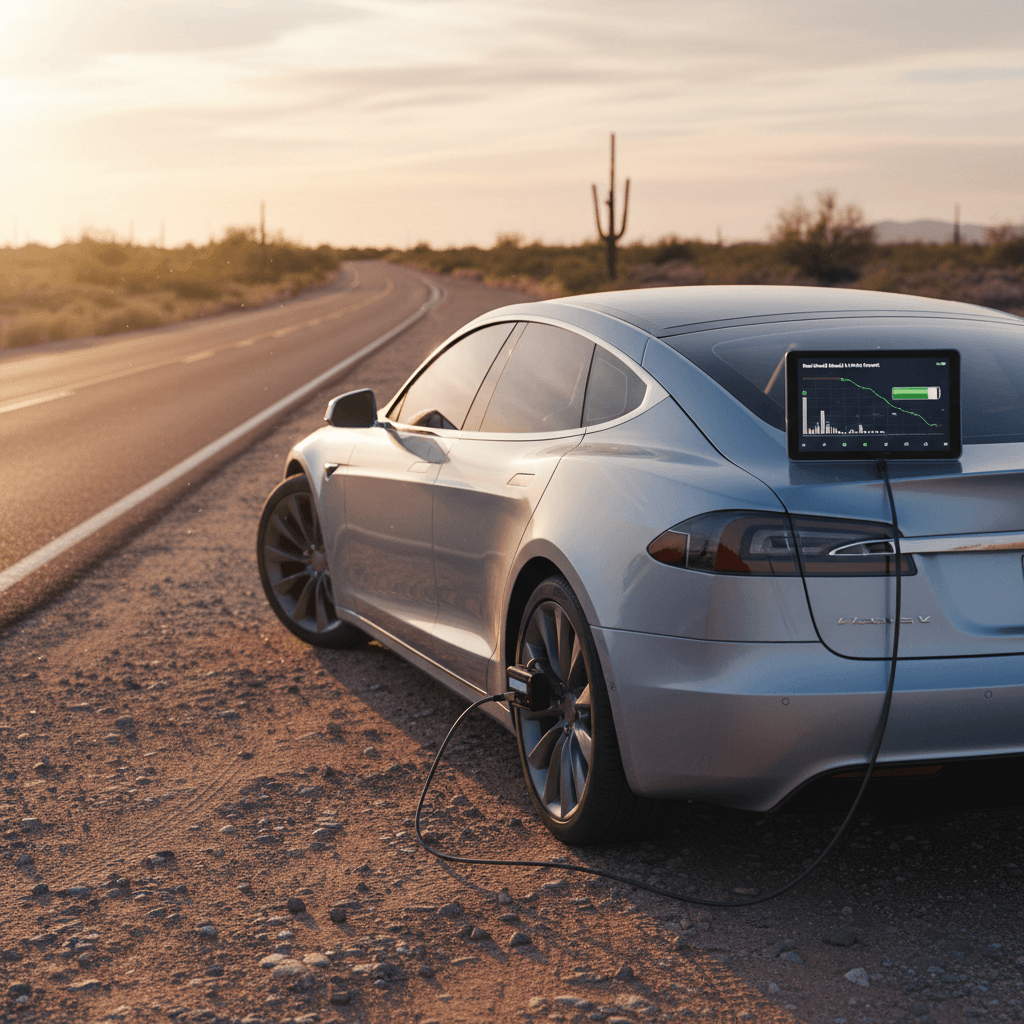
If you’re looking at a used 2019 Tesla Model S, you’re probably asking one big question: **how far will it really go on a charge today?** Official EPA numbers are helpful, but a proper 2019 Tesla Model S range test, and a clear view of battery health, tells you a lot more about what to expect in daily driving and on road trips.
Why 2019 matters
2019 Model S variants and official EPA range
Before you dive into any 2019 Tesla Model S range test results, it helps to know which version you’re dealing with. Tesla shuffled trims frequently, but in 2019 you’ll most commonly see these models on the used market:
2019 Tesla Model S trims and EPA range
Approximate EPA‑rated ranges for the most common 2019 Model S variants when new.
| Trim (2019) | Battery label | Drivetrain | EPA rated range (mi) | 0–60 mph (sec) |
|---|---|---|---|---|
| Long Range | 100D successor | Dual motor AWD | ~335–370 | 4.0 |
| Performance (Ludicrous) | P100D successor | Dual motor AWD | ~315–345 | ~2.4–2.8 |
| Standard Range / 75D (early 2019 stock) | 75 kWh pack | Dual motor AWD | ~259–270 | ~4.2 |
EPA ratings are laboratory numbers; real‑world results vary with speed, temperature, and battery health.
EPA range vs what you’ll see on screen
Real-world 2019 Model S range tests
Owners, YouTubers, and journalists have been range‑testing the 2019 Tesla Model S for years now. While results vary, clear patterns have emerged when cars are in good health and driven at realistic U.S. highway speeds.
Typical real-world range on a healthy 2019 Model S
In other words, a **well‑maintained 2019 Model S Long Range** that originally carried an EPA rating around the mid‑300‑mile mark will often deliver **roughly 260–290 real miles** on a full charge at a steady 70 mph today, assuming moderate temperatures and normal tires. Around town, where you spend more time coasting and taking advantage of regenerative braking, you can easily match or beat what you see at sustained freeway speeds.
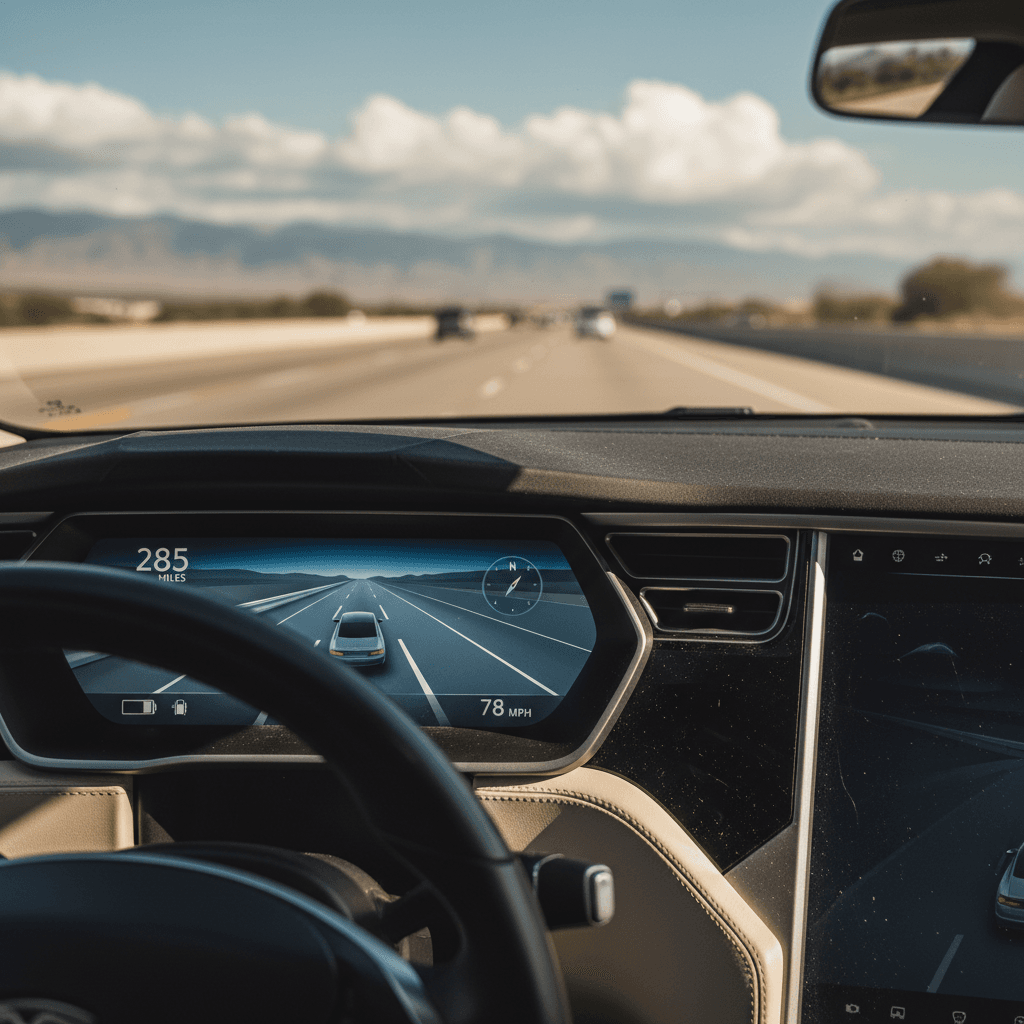
Look at energy, not just miles
Factors that change your 2019 Model S range
Two 2019 Teslas can roll off the same line, but years later their range can look very different. That’s why context around any range test is critical, especially if you’re shopping used.
Six big variables that shape your real-world range
Keep these in mind when you read or run a 2019 Tesla Model S range test.
Temperature
Speed
Tires & wheels
Wind & terrain
Driving style
Battery health
Don’t compare one person’s best run to your worst day
Highway vs city range on a 2019 Model S
Most shoppers obsess over highway range, and for good reason. That’s what dictates how many Supercharger stops you’ll make on a road trip. But a 2019 Tesla Model S can behave very differently in city or mixed driving.
Highway range (road trips)
- Speed driven: Above 65 mph, expect range to sit well below the original EPA figure.
- Climate control: A/C and cabin heat run almost constantly at speed.
- Limited regen: Fewer braking events means less energy recovery.
- Realistic expectation: On a healthy 2019 Long Range, plan trips around 260–290 mi per full charge at 70 mph in mild weather.
City & suburban range (daily driving)
- Lower average speed: Aero drag drops sharply at lower speeds.
- Frequent regen: Stop‑and‑go lets the car recapture energy.
- Shorter trips: You rarely run from 100% down to single digits.
- Realistic expectation: Many owners see rated or even better efficiency around town, especially in moderate climates.
What this means for you
Battery degradation: what to expect by 2026
By 2026, a 2019 Tesla Model S is seven years old. That age alone doesn’t tell you everything about range, but owner data across Tesla forums and fleet‑wide analytics paints a fairly consistent picture.
- Many Model S packs lose a noticeable chunk of capacity in the first 30,000–50,000 miles, then degrade more slowly.
- A well‑cared‑for 2019 Long Range pack might show roughly **5–10% capacity loss** after 80,000–100,000 miles.
- Abuse, like frequent fast charging from very low state of charge, or extreme heat with no garage, can push some cars beyond that band.
- Software‑limited or replaced packs can behave differently; always check service history and current displayed full‑charge range.
Use displayed 100% range as a quick gut check
At Recharged, every car gets a **Recharged Score battery health diagnostic**, which goes beyond the dash readout. Instead of guessing from one range test, you see a **verified view of usable capacity, charging history, and pack behavior**, all of which directly informs how much real‑world range you’ll have left.
How to run your own 2019 Model S range test
If you already own, or are test‑driving, a 2019 Model S, a simple, controlled range test on a familiar route can tell you more than hours of internet research. Here’s a practical way to do it without babying the car.
Step-by-step DIY 2019 Model S range test
1. Pick a known loop or route
Choose a mostly flat highway segment or out‑and‑back loop where you can hold a steady speed. Avoid big elevation changes if you’re trying to compare your result with others.
2. Start near 90–100% charge
Charge to at least 90%. Note the displayed estimated range and battery percentage before you leave. Record your odometer reading and take a quick photo of the display.
3. Drive at a consistent speed
Use cruise control and target a realistic speed, usually 65–70 mph for U.S. highways. Don’t hypermile; drive as you normally would on a trip so the result feels honest.
4. Use typical climate settings
Set climate to the temperature you’d actually use. Running everything in “eco” just for the test may give you a number you’ll never see again in daily life.
5. Drive down to 5–10% state of charge
You don’t need to hit 0%. Once you’re near 5–10%, note your odometer again. The miles driven from start to finish are your **real‑world usable range** for that scenario.
6. Record Wh/mi and conditions
Grab the trip meter’s Wh/mi reading and jot down weather, wind, tire type and any unusual conditions. Later, that context helps when you compare against other owners’ tests.
Safety first
Shopping used: why range tests matter
When you’re buying a used 2019 Tesla Model S, the **difference between a strong pack and a tired one** can easily mean 30–60 miles of real‑world range. That’s the difference between skipping a Supercharger stop and needing to pull off every leg of a trip.
Questions to ask the seller
- “What range does it show at 100%?”
- “How often was it Supercharged vs home or Level 2 charging?”
- “Has the battery or drive unit ever been replaced?”
- “What tires and wheel size are on it now?”
How Recharged approaches it
- Every car includes a Recharged Score Report with verified battery health, not just a snapshot of the dash.
- We look at charge behavior and pack data to estimate realistic range today.
- Our EV specialists can walk you through what those numbers mean for your commute and favorite road trips.
Range confidence, not range anxiety
Frequently asked questions about 2019 Model S range
2019 Tesla Model S range test FAQ
Bottom line: what range you can really expect
A 2019 Tesla Model S that’s been treated well still ranks among the **strongest long‑range used EVs** on the market. In realistic 70 mph highway driving, you’re typically looking at **roughly 260–290 usable miles** on a Long Range model and somewhat less on the Performance trim, more than enough for most commutes and plenty capable for cross‑country runs with Superchargers along the way.
The key is understanding that not every 2019 car is identical anymore. Battery degradation, tires, climate and driving style all shape the outcome of any 2019 Tesla Model S range test. If you’re shopping used, pair what you learn here with a **data‑driven battery health report**, like the Recharged Score, and you’ll know exactly what kind of range you’re buying, not just what it could do when it rolled off the line in 2019.