If you’re looking to sell a Tesla Model S in Virginia in 2026, you’re in a sweet‑and‑slightly‑weird spot. Used Tesla values have whipsawed over the last few years, Virginia has some unique tax rules, and EV‑savvy buyers now know how to read things like battery health and Autopilot options. The good news: if you approach the sale the right way, there’s still strong demand for a clean Model S in the Commonwealth.
Snapshot: Tesla Model S market in early 2026
Why selling a Tesla Model S in Virginia is different
Virginia isn’t California, but it’s quietly become a solid EV market. There are now well over 100,000 plug‑in vehicles on the road statewide, concentrated around Northern Virginia, Richmond, Hampton Roads, and the college towns. That’s exactly the audience that understands a Model S and is willing to pay for options like Dual Motor, Plaid, or Full Self‑Driving (Supervised).
- Virginia buyers are more EV‑educated than they were even three years ago; they’ll ask about battery health and charging habits, not just leather and wheels.
- The Model S is no longer being sold new in the U.S. as of 2026, which is pushing some shoppers who always wanted one into the used market.
- State tax rules treat private sales and trade‑ins differently than many people expect, which can influence whether you sell to a dealer, online, or private party.
- Access to Tesla’s Supercharger network and software features (like FSD transfers) can meaningfully change what your specific car is worth.
Think beyond “Tesla people”
What your Tesla Model S is worth in 2026
Tesla Model S value trends heading into 2026
Those are national ballparks. Your Virginia reality will hinge on specifics: year, battery size, dual‑motor vs Plaid, mileage, accident history, and how the battery has aged. A 2022 Model S Long Range with 25,000 miles and clean history around Fairfax will command a very different price from a 2017 75D with 110,000 miles outside Roanoke.
Beware outdated book values
How Virginia taxes and paperwork affect your sale
Before you decide how to sell, you need to know how Virginia treats the transaction. The Commonwealth’s rules are simple on paper but surprise a lot of sellers coming from other states.
Virginia rules that matter when you sell
These don’t change what you get paid, but they do change how buyers think about the deal.
4.15% Sales and Use Tax
Virginia charges a 4.15% Motor Vehicle Sales and Use Tax when a car is titled, whether that’s a dealer sale or a private sale. Buyers pay this when they register the car.
No trade‑in tax credit
Unlike many states, Virginia does not reduce tax based on trade‑in value. Tax is calculated on the full sales price, even if there’s a trade involved.
Documentation for private sales
For private sales, the buyer will title the car using the signed title plus, in some cases, a bill of sale or price certification if the sale price is unusually low versus book value.
For you as the seller, the big takeaway is that Virginia tax rules don’t really reward trading in a Model S the way some other states do. Since there’s no trade‑in credit against tax, you can focus entirely on where you’ll net the most cash with the least hassle.
What about federal EV tax credits?
Five ways to sell a Tesla Model S in Virginia
You effectively have five main paths: Tesla’s own ecosystem, national online buyers, traditional dealers, private party, and EV‑specialist marketplaces like Recharged. Each makes a different trade between price, time, and hassle.
1. Trade in to Tesla
Tesla will give you a trade‑in quote through your Tesla account if you’re buying another Tesla. It’s fast and convenient, no test drives with strangers, but Tesla is infamous among owners for conservative offers, especially on performance and older luxury models.
- Best for: Upgrading to another Tesla and prioritizing convenience.
- Watch out for: Lowball offers and the fact that in Virginia there’s no tax credit advantage to trading in.
2. Sell to an online car‑buying service
Companies like CarMax, Carvana, and other national players operate in Virginia and will appraise a Model S. They’ve become more EV‑savvy, but generic algorithms still tend to undervalue battery health, software options, or recent service history.
- Best for: Quick sale with a single offer and immediate payment.
- Watch out for: “Subject to in‑person inspection” clauses that chip away at the online quote.
3. Sell to a local dealer
Some Virginia luxury dealers will buy a Tesla outright to retail or send to auction. They may offer a bit more than national chains if they have local demand, but they’ll still build in a healthy margin for auction risk and transport.
- Best for: Sellers who want a face‑to‑face transaction and same‑day check.
- Watch out for: Dealers who don’t understand Tesla condition items (like MCU replacements, drive unit history, or battery warranty).
4. Private sale
Selling your Model S yourself in Virginia, via Facebook Marketplace, Craigslist, or enthusiast forums, can yield the highest price, especially for well‑optioned or enthusiast‑spec cars. But you’re also taking on all of the fraud screening, test drives, and paperwork coaching.
- Best for: Maximizing price on a well‑maintained, desirable configuration.
- Watch out for: Wire‑fraud scams, fake cashier’s checks, and strangers at your house.
5. Sell through Recharged
Ready to find your next EV?
Browse VehiclesPrepare your Tesla Model S to sell for top dollar
A Model S ages differently from a gas luxury sedan. Buyers care about software, charging, interior wear, and especially how the high‑voltage battery has been treated. Before you take photos or request offers, do a quick pre‑sale rehab.
Pre‑sale prep for a Virginia‑market Model S
Detail the car, inside and out
Have the car professionally cleaned, or at least wash, clay, and wax it yourself. Clean the white seats carefully if you have them, and steam‑clean carpets. A clean, odor‑free interior reassures buyers that the car’s been cared for.
Resolve obvious maintenance items
Fix simple issues like worn wipers, cracked glass, or tire tread below 4/32". For bigger items, like a leaky air suspension or yellowing headlights, get quotes and decide if fixing pre‑sale will raise your net price.
Pull service and repair records
Gather Tesla service history (visible in your app or Tesla account), plus any independent‑shop invoices. Buyers in Virginia’s growing EV community are increasingly data‑driven; records help you stand out.
Update software and clear errors
Make sure the car is on a recent software version and that there are no persistent error messages on the display. If you have unresolved alerts, get them diagnosed so you can explain them honestly.
Check tires and alignment
Uneven wear on a Model S can scare buyers about suspension or alignment issues. If the front tires are badly cupped or worn on the inside, a fresh set and alignment can be worth the expense.
Prepare both keys and accessories
Have both key fobs, any key cards, mobile charging cable, adapters, floor mats, and original manuals ready. Missing items are an easy excuse for buyers and dealers to push your price down.
Don’t over‑invest in pre‑sale mods
Get your battery health documented
Battery health is the single biggest question serious Model S buyers have, and often the thing most pricing algorithms understand the least. Two otherwise‑identical 2018 Model S cars can differ by tens of miles of real‑world range, and that difference shows up in Virginia’s long I‑95 and I‑81 drives.
Ways to prove your Model S battery’s condition
The more transparent you are, the easier it is to get top‑tier offers.
In‑car range snapshots
Show photos of 100% and 80–90% charge with rated range in your listing. It’s crude, but buyers use it as a first‑order estimate of degradation.
Third‑party scan tools
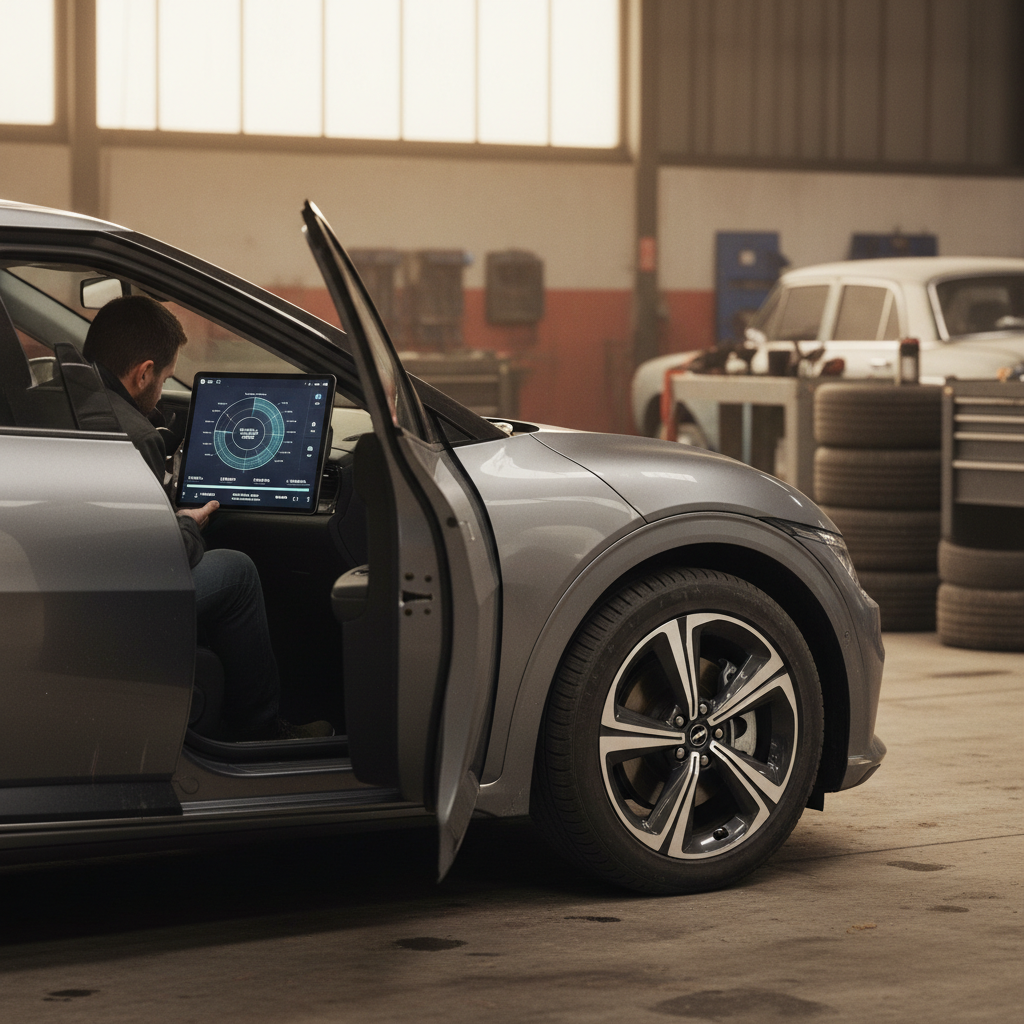
Specialized Tesla scan tools and apps can estimate remaining battery capacity more precisely. Savvy buyers may bring their own; being open to that signals confidence.
Recharged Score battery report
If you sell through Recharged, your car gets a Recharged Score with professional battery diagnostics. That report translates complex battery data into a simple score that’s easy for buyers to compare and trust.
Why battery documentation pays in Virginia
Pricing strategy for a fast, fair sale
Model S pricing in 2026 feels like a moving target because, frankly, it is. Tesla’s historic price cuts, the end of federal credits, and softer new‑EV demand all sloshed through to the used market. The goal in Virginia isn’t to guess the future; it’s to price for your local reality and your timeline.
Example pricing bands for used Model S in 2026
These broad ranges assume clean titles and typical mileage. Exact numbers will vary by options, color, condition, and battery health.
| Model year | Typical mileage | Condition example | Indicative retail ask (VA) | Likely dealer/online offer |
|---|---|---|---|---|
| 2023–2024 | 10k–30k | Plaid or Long Range, one owner, clean history | $60,000–$75,000 | $52,000–$65,000 |
| 2020–2022 | 30k–60k | Refresh car, dual motor, good options | $45,000–$60,000 | $38,000–$50,000 |
| 2016–2019 | 60k–100k | AP2+, MCU2 upgrade, decent battery | $28,000–$42,000 | $23,000–$35,000 |
| 2013–2015 | 90k+ | Early car, limited warranty left | $15,000–$25,000 | $10,000–$18,000 |
Use this table as a directional guide, then refine with real quotes and local comps.
Don’t chase a falling market
- Start with data. Pull values from at least two pricing guides, but also look at live listings in Virginia and nearby states for cars close to your year/mileage/spec.
- Get real offers. Request instant offers from at least two national buyers and, if you’re upgrading, Tesla’s trade‑in estimate. If you use Recharged, compare our instant offer with your other quotes.
- Set a target and a floor. For private sale, list a bit above your real target to leave room for negotiation, but know the number at which you’re willing to walk away.
- Adjust quickly. If you get no serious interest in the first 10–14 days of a private listing, drop price decisively, not $100 at a time. The best buyers see fresh listings first.
Step‑by‑step checklist to sell your Model S in Virginia
From “I might sell” to money in your account
1. Decide how fast you need to sell
If you’re moving, changing jobs, or facing an expiring lease on another car, prioritize speed and certainty. If you’re flexible on timing, you can aim higher with private or consignment sale.
2. Gather documents and Tesla account info
Collect your title (or payoff letter if there’s a lien), ID, any loan information, service history, and your Tesla account login. Know whether features like FSD are owned outright or subscription‑based.
3. Prep and photograph the car
After your pre‑sale prep, shoot photos in good natural light: front 3/4, rear 3/4, side profiles, interior, screens, wheels, and close‑ups of any flaws. Clear, honest photos make transactions smoother.
4. Get multiple valuations
Obtain quotes from Tesla, at least one national online buyer, and if you’re EV‑focused, an instant offer from Recharged. This triangulates a realistic price band for your car in Virginia.
5. Choose your sale path
If the spread between trade‑in and private sale is small, convenience often wins. If you’re leaving $3,000–$6,000 on the table, a consignment or marketplace partner like Recharged can be a good middle path.
6. Close the deal safely
For private sales, meet buyers at their bank or a branch of yours, confirm funds, and complete the title transfer paperwork together. For dealer or Recharged sales, follow their closing checklist and keep copies of everything.
FAQs about selling a Tesla Model S in Virginia
Frequently asked questions
Bottom line: should you sell your Tesla Model S in Virginia now?
If you own a Tesla Model S in Virginia in 2026, you’re sitting on a car that depreciated quickly but now enjoys a tighter, more appreciative used market. The key to capturing that value is being more transparent and prepared than the average seller: document your battery health, present the car cleanly, price it based on live Virginia comps, and choose a sale path that fits your risk tolerance and schedule.
You can trade the car in or take a fast instant offer and be done, or you can lean into what makes the Model S special and market it to EV‑savvy buyers who will pay for that. If you want help threading that needle, Recharged combines EV‑specific diagnostics, transparent pricing, financing, trade‑in options, and nationwide exposure to buyers who actually understand electric cars. That’s how you turn a complex market into a straightforward, confident sale.