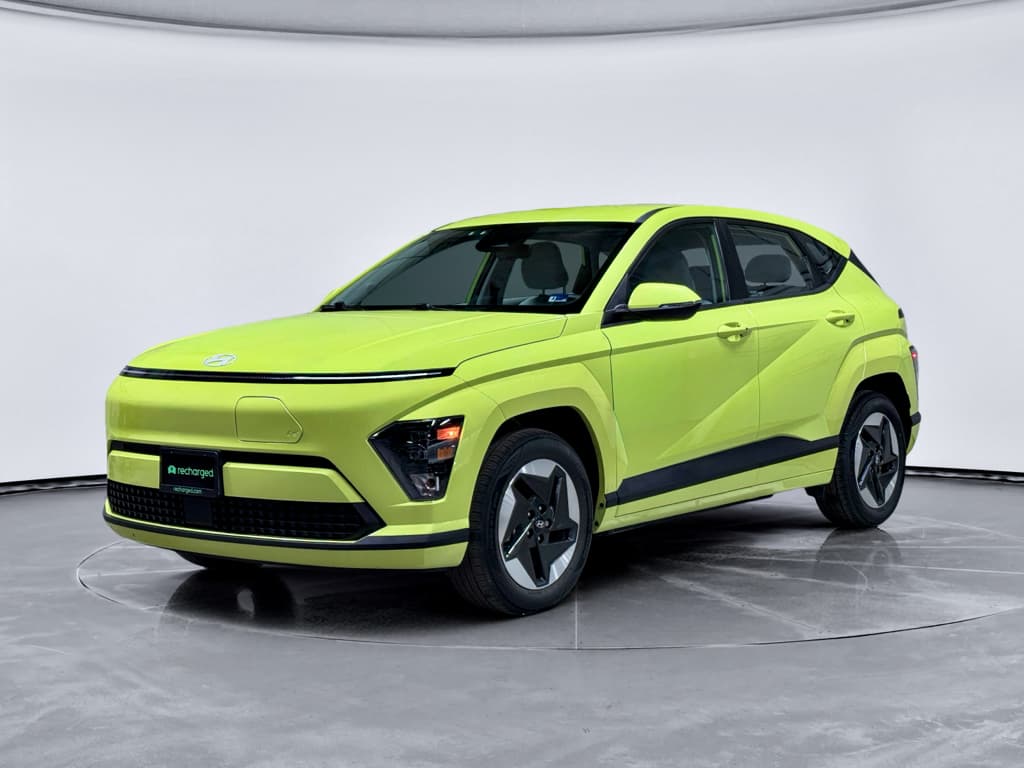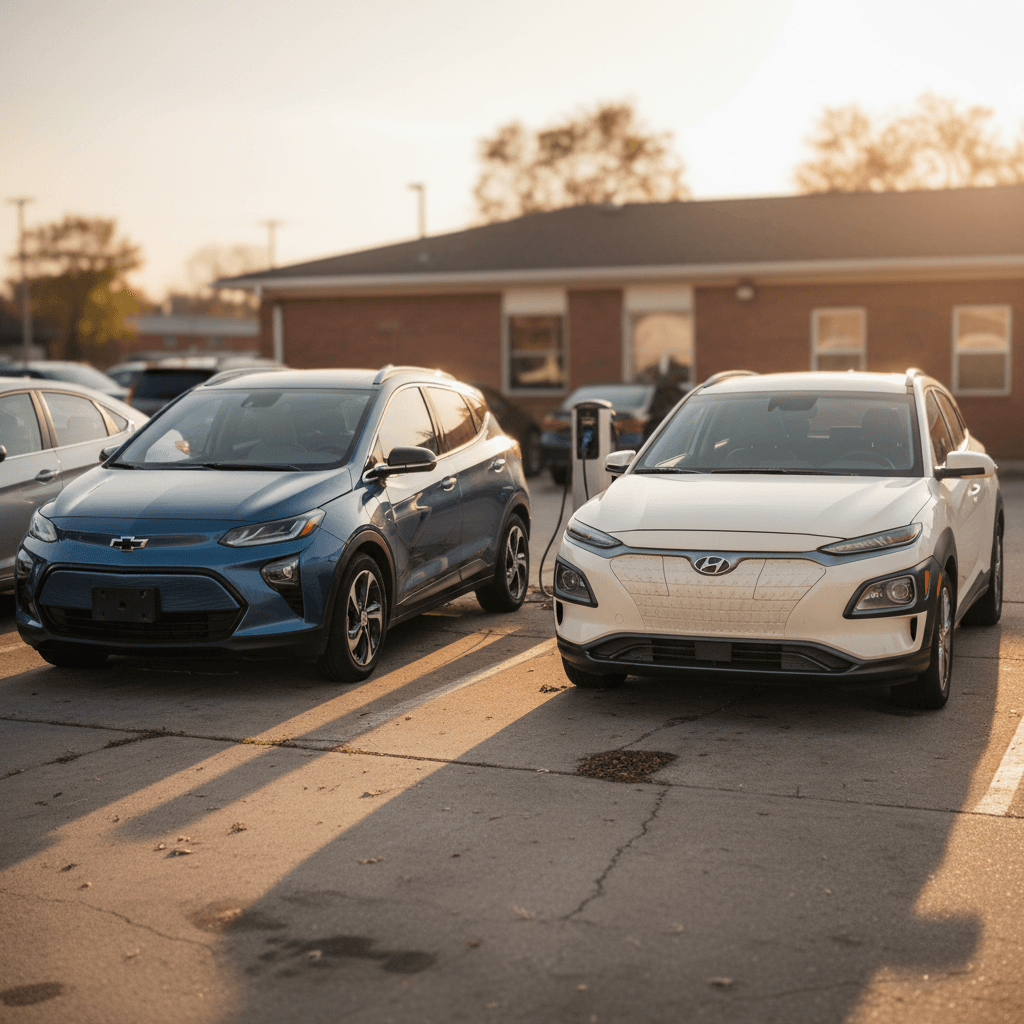
If you’re hunting for an affordable, practical used EV, you’ll keep running into two names: the Chevrolet Bolt EUV and the Hyundai Kona Electric. Both are subcompact electric crossovers with solid range, hatchback practicality, and prices that undercut most newer EVs. But which one actually fits your life better?
Big Picture
Chevy Bolt EUV vs Hyundai Kona Electric: Who Each EV Fits Best
Chevrolet Bolt EUV: Best For
- Value-focused shoppers who want maximum range per dollar.
- Drivers who mostly charge at home and take occasional road trips.
- Households that need usable rear-seat space in a small footprint.
- Buyers who prefer a simple, straightforward cabin over flashy design.
Hyundai Kona Electric: Best For
- Drivers who want a more refined ride and quieter cabin.
- Frequent highway users who value slightly better DC fast charging and efficiency.
- Shoppers wanting advanced driver-assistance and a more premium interior feel.
- Owners in harsher climates who appreciate Hyundai’s long battery warranty.
Used EV Shopping Tip
Key Specs: Chevrolet Bolt EUV vs Hyundai Kona Electric
Core Specs Comparison (Typical U.S. Models)
Representative specs for late first‑generation Chevrolet Bolt EUV (2022–2023) and Hyundai Kona Electric (2019–2023 first gen / 2024+ redesigned) as commonly found on the used market in the U.S.
| Spec | Chevrolet Bolt EUV (2022–2023) | Hyundai Kona Electric (2019–2023) | Hyundai Kona Electric (2024+) |
|---|---|---|---|
| Battery capacity | 65.0 kWh | 64.0 kWh | 64.8 kWh (approx.) |
| EPA range (max trims) | 247 miles | Up to ~258 miles | Around 230–260 miles (est./early data) |
| Drive layout | Single motor FWD | Single motor FWD | Single motor FWD |
| Power | 200 hp | ~201 hp | ~201 hp |
| 0–60 mph (approx.) | ~7.0 sec | ~6.4–6.6 sec | Similar to prior gen |
| Max DC fast charge | ~55 kW | ~75 kW (peak) | Similar or slightly higher |
| Onboard AC charger | 11.5 kW | 7.2 kW | Upgraded, varies by trim |
| DC connector | CCS1 | CCS1 | NACS or CCS1 depending on market (transitioning) |
| Length | ~169.5 in | ~164.6 in (1st gen) | Longer on 2024+ redesign |
| Rear legroom | 39.1 in | 36.4 in (1st gen) | Improved vs 1st gen but still tighter than Bolt EUV |
Always verify exact specs for the model year and trim you’re considering.
Model Years Matter
Range & Efficiency: Daily Driving and Road Trips
Range is the first number most EV shoppers look at, and for good reason. Both the Chevrolet Bolt EUV and Hyundai Kona Electric deliver enough range for typical American daily driving, but they go about it a bit differently.
Real-World Range: Bolt EUV vs Kona Electric
Both are efficient; the Kona tends to squeeze a bit more from a similarly sized pack.
Chevrolet Bolt EUV Range
- EPA rated up to 247 miles for 2022–2023 models.
- Real‑world mixed driving often lands in the 220–260 mile window depending on speed, weather, and terrain.
- Very efficient in city commuting; highway speeds and cold weather trim range like any EV.
Hyundai Kona Electric Range
- First‑gen 64 kWh models commonly rated around 258 miles EPA.
- Independent tests routinely see excellent efficiency, with many drivers exceeding their rated range at moderate speeds.
- Newer 2024+ models use a similar‑size pack with EPA ratings typically in the 230–260 mile band depending on trim.
Range Verdict
For most commuters clocking 30–60 miles a day, either EV will comfortably cover several days of driving on a single charge. If you do frequent 200‑mile highway runs without easy charging at your destination, the Kona’s extra efficiency and slightly higher range rating are nice to have, but not a night‑and‑day difference.
Charging Experience: Home, Work, and Road Trips
Charging speed, and how it fits your routine, is where these two really start to separate. The Chevy Bolt EUV is built around home charging and value; the Hyundai Kona Electric offers a somewhat more road‑trip‑friendly DC fast‑charging experience.
Charging Snapshot
At home, the Bolt EUV’s stronger onboard AC charger is a quiet advantage. Hooked to a 40‑ or 48‑amp Level 2 station, it can take full advantage of 11.5 kW, while the Kona Electric’s 7.2 kW system simply can’t pull as much power. In practice, that means the Bolt can recover from a deeper discharge to full in fewer overnight hours, handy if you occasionally arrive home with a near‑empty battery.
Out on the highway, though, the Kona Electric’s DC fast‑charging curve is more favorable. While neither of these cars are “ultra‑fast” chargers by 2026 standards, the Kona’s higher peak and better sustained charge rates typically shave meaningful time off long‑distance stops compared with the Bolt EUV.
Charging Strategy Tip
Space, Comfort & Practicality
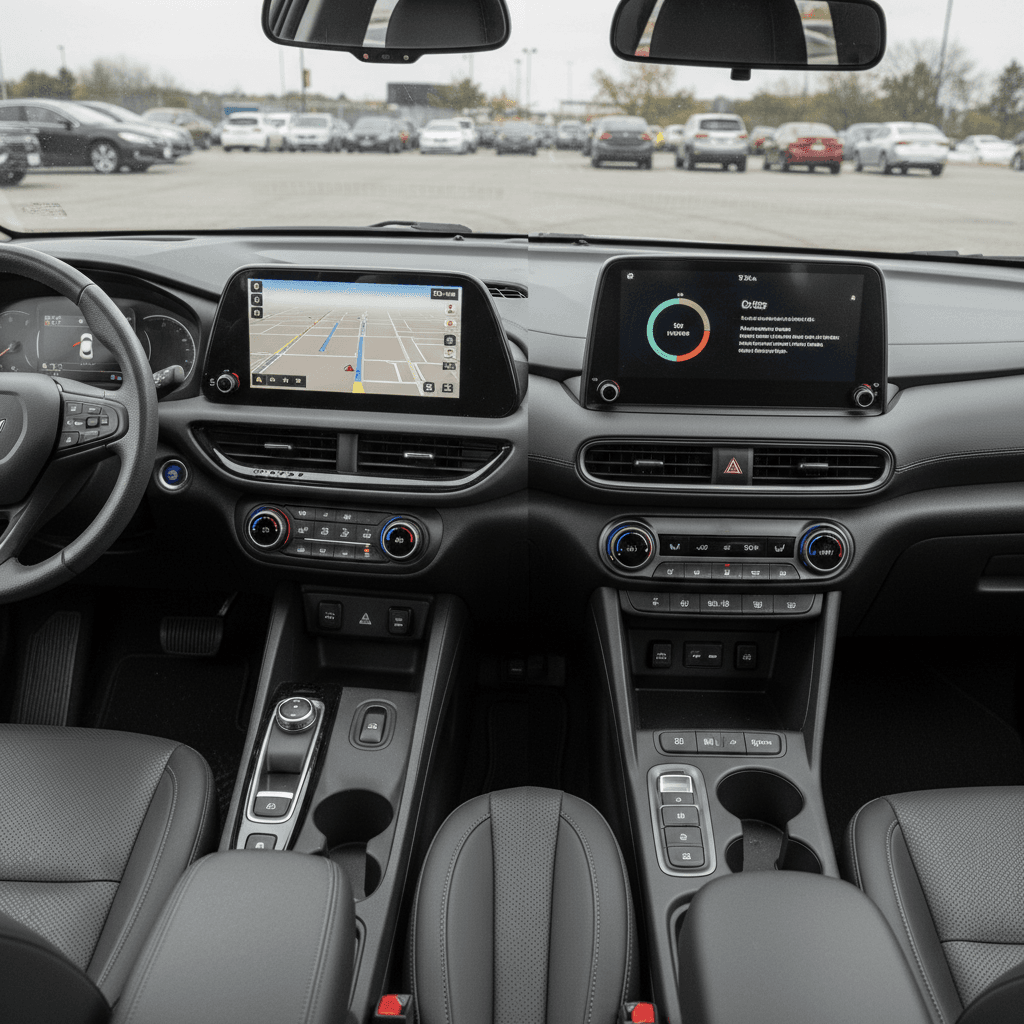
On the outside, both of these EVs look like tidy subcompact crossovers. Inside, though, the Chevrolet Bolt EUV uses its space differently from the Hyundai Kona Electric, and that matters if you regularly carry passengers.
Interior & Cargo Space Highlights
Similar on paper, but the Bolt EUV gives rear passengers a better deal.
Chevrolet Bolt EUV
- More rear legroom, around 39.1 inches, generous for the class.
- Flat, upright roofline gives good headroom and an airy feel.
- Rear seat is friendlier for adults and teenagers on longer rides.
- Cargo space is competitive; not huge, but very usable with split‑folding rear seat.
Hyundai Kona Electric
- First‑gen models have tighter rear legroom, around 36.4 inches.
- Front seats and driving position feel sportier and more cocooned.
- Cargo area is similar in volume, with a slightly higher liftover.
- 2024+ redesign improves interior packaging but still doesn’t quite match the Bolt EUV’s rear‑seat stretch‑out space.
If you’re a one‑ or two‑person household that rarely uses the back seat, either EV will feel roomy enough in daily use. But if you routinely have adults in the second row, or kids in bulky car seats, the Bolt EUV’s extra legroom and more upright roofline make it the better people‑mover in a compact footprint.
Tech, Safety & Driving Experience
Both vehicles pack the kind of tech you expect from a modern EV: big touchscreens, standard Apple CarPlay and Android Auto, and a full suite of safety features on most trims. The differences are in the details and in how each one feels from behind the wheel.
Chevrolet Bolt EUV
- Clean, straightforward infotainment system that’s easy to learn.
- Later trims offer GM’s excellent Super Cruise hands‑free highway assist in some configurations.
- Ride quality is firm but controlled; steering is light and city‑friendly.
- Cabin materials are practical rather than premium, but earlier hard plastics were improved in 2022+ updates.
Hyundai Kona Electric
- Well‑tuned driver‑assist suite (Hyundai SmartSense) with smooth lane‑keeping and adaptive cruise on many trims.
- Interior design feels a bit more upscale, especially on higher trims.
- Ride is composed and quiet; the Kona often feels more refined at highway speeds.
- Steering is a little heavier and more engaging for drivers who enjoy a sporty feel.
Tech & Feel Verdict
Reliability, Battery Health & Recalls
Used EVs live or die on battery confidence. Both of these models have strong underlying efficiency and robust liquid‑cooled battery packs, but their histories are different, and that matters when you’re shopping pre‑owned.
What to Know About Reliability & Battery History
1. Chevy Bolt EUV Battery Recall History
Earlier GM Bolt EV and EUV models were affected by a high‑profile battery recall related to fire risk. Most affected packs have been repaired or replaced, but when you shop a used Bolt EUV you’ll want documentation showing recall work is complete. A fresh pack can actually be a long‑term plus if properly verified.
2. Kona Electric Early-Build Issues
Early Hyundai Kona Electric models in some markets experienced battery pack concerns and, in limited cases, fires that led to recalls and software updates. U.S.‑market cars benefited from those lessons, but you should still confirm that all recall and software campaigns are completed on any used Kona you consider.
3. Warranty Coverage
Hyundai typically offers a <strong>10‑year/100,000‑mile</strong> warranty on EV batteries for original owners, which can be partially transferable. Chevrolet’s coverage is competitive but varies by year and mileage. For both models, later‑year, lower‑mileage examples that are still within battery warranty are especially attractive.
4. Battery Health Testing
Regardless of brand, ask for <strong>verified battery health data</strong> when you shop used. At Recharged, every vehicle includes a Recharged Score Report with measured battery capacity and detailed charging history where available, so you can compare a used Bolt EUV and Kona Electric on more than just the EPA window sticker.
Don’t Skip the Battery Check
Ownership Costs & Used EV Value
The reason so many shoppers cross‑shop the Bolt EUV and Kona Electric is simple: both are among the most affordable used EVs that still deliver real‑world 200‑plus‑mile range. But there are some cost differences to keep in mind.
Cost of Ownership: Where Each EV Shines
Beyond the sticker price, think electricity, maintenance, insurance, and long‑term value.
Chevrolet Bolt EUV
- Often priced lower than comparable Kona Electrics on the used market.
- Excellent efficiency helps keep electricity bills low.
- Simple mechanical layout, no engine, fewer fluids, keeps maintenance costs modest.
- Slower DC fast charging can add time (and sometimes cost) on road trips, depending on your charging network pricing.
Hyundai Kona Electric
- Tends to hold value well thanks to strong efficiency and long battery warranty.
- Fast‑charge behavior is friendlier for road‑trip use, which can reduce time‑based charging fees.
- Some owners report slightly higher insurance costs depending on region and trim, so get quotes on both vehicles before you decide.
- Hyundai’s long warranty support can add peace of mind and reduce surprise expenses, especially on newer used examples.
Financing & Trade-In with Recharged
How to Choose: Bolt EUV vs Kona Electric
Choose Your Best Match in 5 Minutes
If You Mostly Drive Locally
Prioritize <strong>purchase price</strong> and interior comfort over DC fast‑charging specs.
If you carry adult passengers or teenagers often, lean toward the <strong>Chevy Bolt EUV</strong> for its rear legroom.
If the back seat is rarely used and you like a sportier feel, a <strong>Kona Electric</strong> may be more fun to drive.
If You Take Frequent Road Trips
Look closely at <strong>DC fast‑charging behavior</strong>. The Kona Electric generally wins here.
Map your usual routes using public charging apps and see which CCS networks dominate along the way.
If trip time is critical, favor the <strong>Kona Electric</strong>, or budget extra time for the Bolt EUV’s slower charging.
If You’re Budget-Constrained
Compare total out‑the‑door prices, not just advertised listings; taxes and fees vary.
Don’t ignore a well‑priced Bolt EUV with a <strong>fresh recall battery</strong>; battery replacements are extremely valuable.
Use Recharged’s pricing tools and Recharged Score Reports to balance <strong>price, battery health, and mileage</strong> objectively.
If You Plan to Keep the Car 8+ Years
Focus on <strong>battery warranty</strong> and long‑term durability over soft‑touch materials.
Hyundai’s long battery warranty and strong efficiency make the Kona Electric attractive for long‑term ownership.
A clean, low‑mileage Bolt EUV can still be a smart long‑term choice, just ensure all recall work is done and verified.
In the end, there’s no bad choice between the Chevrolet Bolt EUV and Hyundai Kona Electric, only a better fit for how you drive. If you want maximum rear‑seat space and strong value, the Bolt EUV should be high on your list. If you care more about road‑trip charging manners, a quieter ride, and a more polished interior, the Kona Electric leans ahead. Whichever direction you’re leaning, a used‑EV specialist like Recharged can help you compare real battery health, ownership costs, and financing options across both models so your next EV feels like the right one on day one and years down the road.