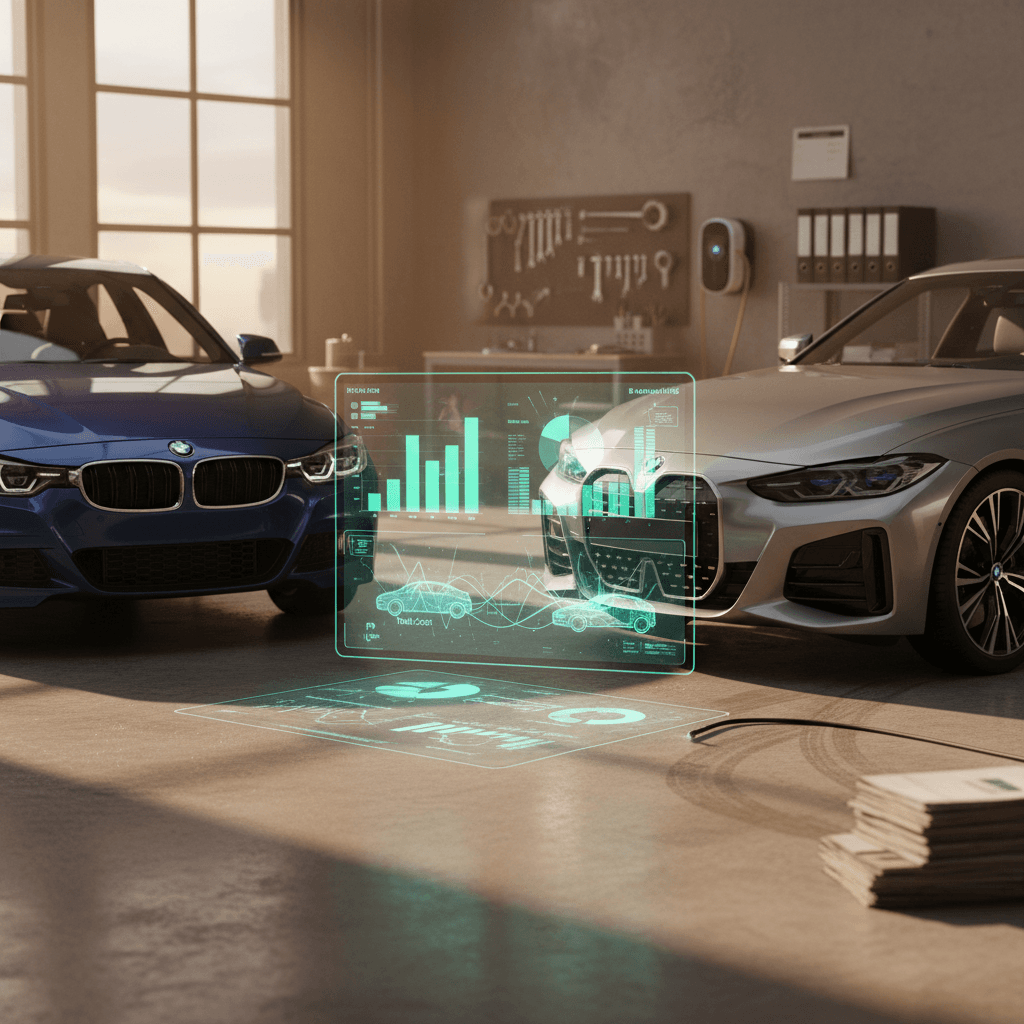
If you’re a BMW 3 Series driver, or you’re cross‑shopping one, you’re probably wondering how the all‑electric BMW i4 stacks up on total cost of ownership. The sticker prices can look similar, but once you factor in fuel or electricity, maintenance, depreciation and incentives, the i4 can play a very different game than a gasoline 3 Series.
Quick take
Why compare BMW 3 Series vs BMW i4 on cost?
The 3 Series is BMW’s benchmark sports sedan, efficient by gasoline standards and widely available on the used market. The BMW i4 is essentially its electric cousin, built on the same basic platform but powered only by batteries. Shoppers considering a used premium sedan today often ask a simple question: “Does an electric BMW actually cost less to own than a 3 Series, or is that just marketing?”
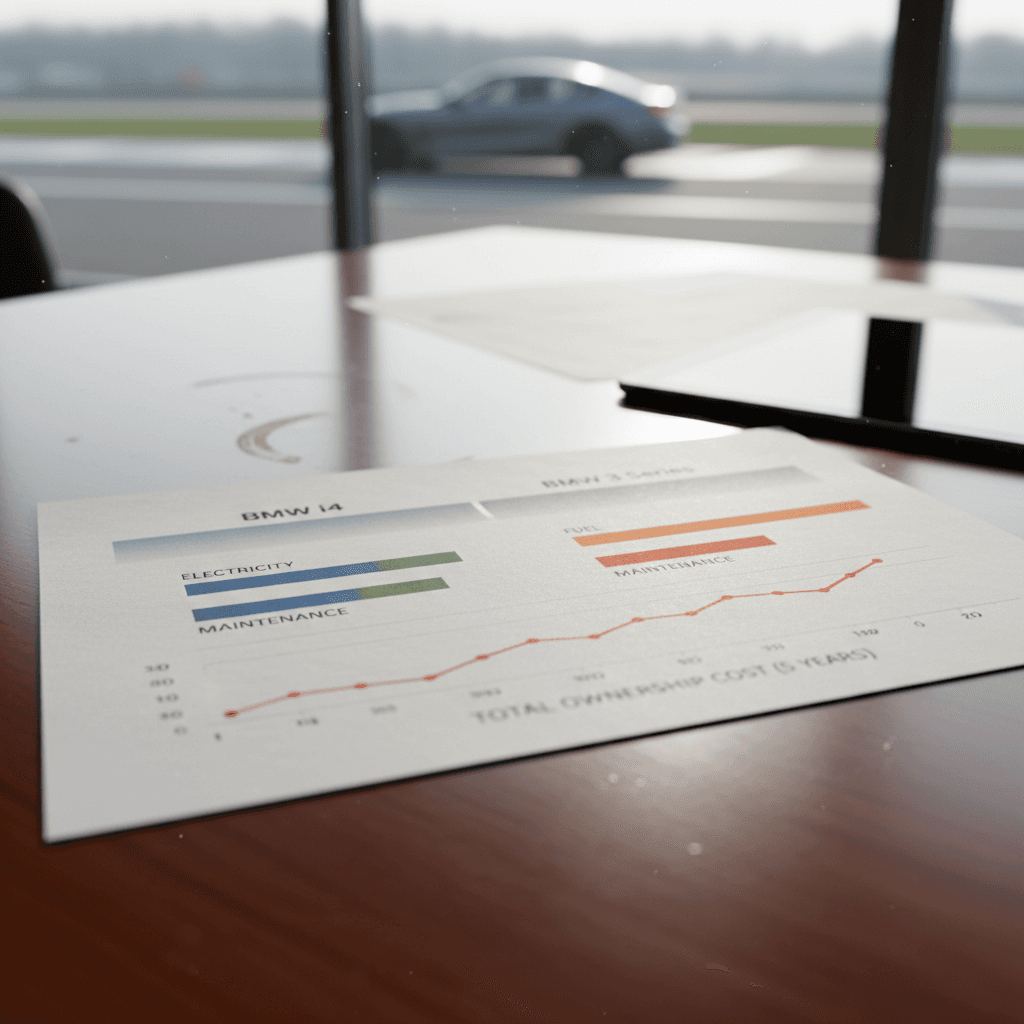
To answer that, you need to look beyond MSRP and monthly payments. Total cost of ownership (TCO) wraps in energy, maintenance, insurance, depreciation, taxes and fees. In this guide we’ll focus on U.S. costs and use current energy price data and realistic consumption figures to show how a BMW 3 Series vs BMW i4 TCO comparison plays out over five years.
What we’re comparing: models, mileage and assumptions
To keep things apples‑to‑apples, we’ll use typical U.S. specifications and national average prices. Your real‑world numbers will vary by state, driving style and how you charge.
Baseline vehicles for this analysis
Representative trims many used‑car shoppers actually buy
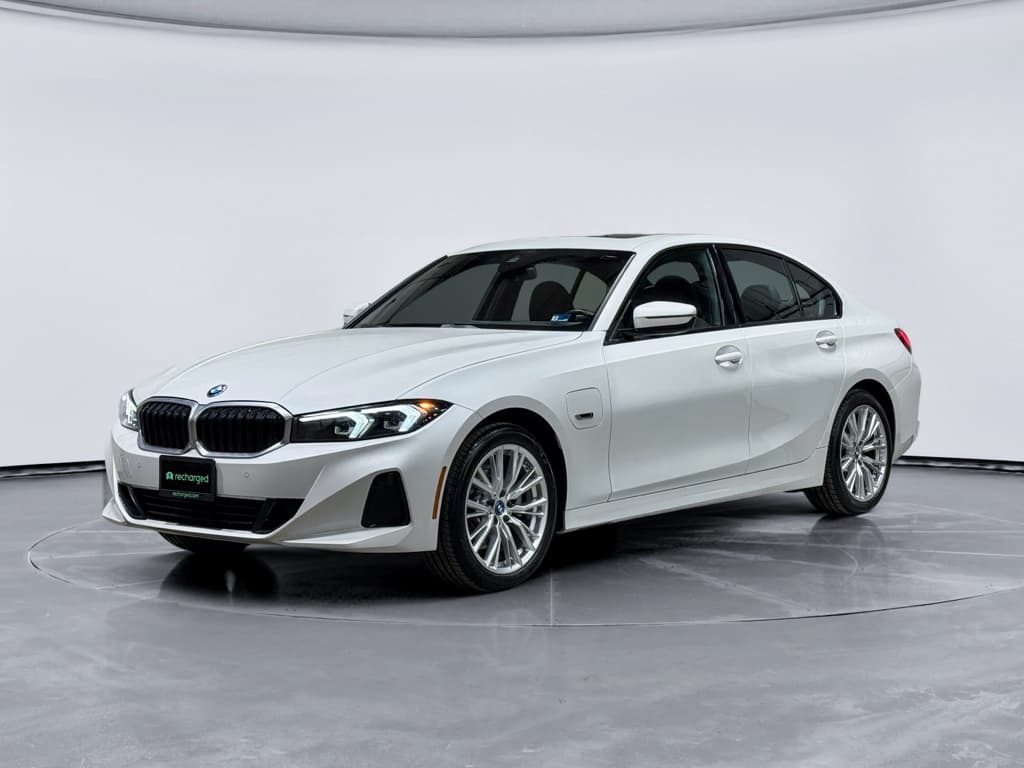
BMW 3 Series (gasoline)
- Example model: 2023 BMW 330i xDrive sedan (2.0L turbo)
- EPA combined fuel economy: ~30 mpg (real‑world drivers often see mid‑20s to low‑30s)
- Fuel: Premium gasoline recommended
BMW i4 (electric)
- Example model: 2023 BMW i4 eDrive40 Gran Coupe
- EPA electricity use: ~31 kWh/100 miles (about 3.2 mi/kWh) for the eDrive40
- Battery capacity: ~80 kWh usable
Key usage and price assumptions (U.S., 2024–2026 averages)
Your state may look very different
Fuel vs electricity: how much does each BMW really cost to “fuel”?
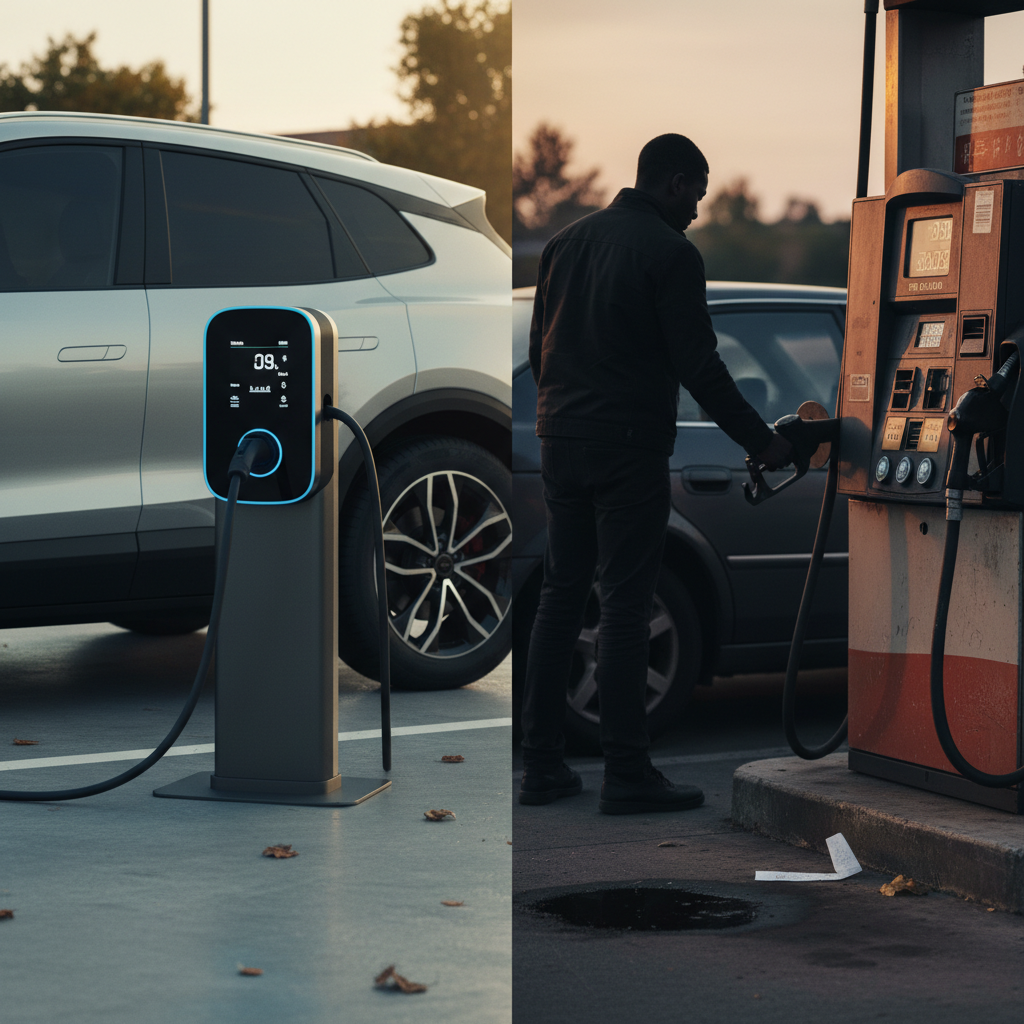
Energy is where the BMW 3 Series vs BMW i4 total cost of ownership gap usually opens up. We’ll estimate cost per mile and then scale up to 12,000 miles per year.
Gasoline BMW 3 Series
Using a realistic combined fuel economy of 30 mpg and national average gas around $3.30/gal (regular; premium can be higher), you get:
- Cost per mile (gas): $3.30 ÷ 30 mpg ≈ $0.11/mile
- Annual fuel (12,000 mi): 12,000 × $0.11 ≈ $1,320/year
In a high‑price state or using premium fuel, $0.13–$0.15 per mile and $1,560–$1,800 per year are common.
Electric BMW i4
Using ~31 kWh/100 miles (about 3.2 mi/kWh) and average home electricity at $0.17/kWh:
- kWh per mile: 31 ÷ 100 = 0.31 kWh
- Home charging cost per mile: 0.31 × $0.17 ≈ $0.053/mile
- Annual electricity (12,000 mi): ≈ $640/year if charged fully at home
If 20% of your miles use more expensive public fast charging, blended cost might land around $0.06–$0.07 per mile, or roughly $720–$840/year.
Off‑peak charging makes the i4 look even better
Estimated annual energy cost: BMW 3 Series vs BMW i4
12,000 miles per year, U.S. national average gas and electricity, typical real‑world efficiency.
| Vehicle | Energy type / rate | Efficiency assumption | Cost per mile | Annual energy cost (12,000 mi) |
|---|---|---|---|---|
| BMW 330i (gas) | Gasoline @ $3.30/gal | 30 mpg | $0.11 | $1,320 |
| BMW 330i (gas, high fuel cost) | Gasoline @ $4.00/gal | 30 mpg | $0.13 | $1,600 |
| BMW i4 (home charging) | Electricity @ $0.17/kWh | 31 kWh/100 mi | $0.053 | $640 |
| BMW i4 (mixed home + DC fast) | 80% home, 20% DC fast | 31 kWh/100 mi | ~$0.06–$0.07 | $720–$840 |
These are illustrative national‑average numbers; always plug in your local fuel and power prices.
Energy savings in plain English
Maintenance, repairs and tires: where EVs usually win
Gas BMWs are well‑engineered but complex: turbocharged engines, multi‑speed transmissions, exhaust systems and lots of fluids. The i4 eliminates many of those wear items. You still have brakes, suspension and tires to think about, but routine service drops dramatically.
Typical 5‑year maintenance patterns
Realistic expectations once a BMW is out of its initial warranty
BMW 3 Series (gas)
- Regular oil and filter changes
- Engine air and cabin filters
- Spark plugs and ignition components (later in life)
- Automatic transmission fluid service (depending on mileage)
- More frequent brake work (less regen than an EV)
Budget: For a 5‑year‑old 3 Series driven another 5 years, many owners should plan on roughly $700–$1,000 per year in routine maintenance and minor repairs, with larger repairs possible as mileage rises.
BMW i4 (electric)
- No oil changes, no spark plugs, no exhaust
- Fewer moving parts in the drivetrain
- Brake pads can last significantly longer thanks to regeneration
- Still needs cabin filters, brake fluid flushes, coolant service on BMW’s schedule
Budget: Many EV owners report annual maintenance closer to $300–$500 per year once out of warranty, mostly tires, inspections and occasional wear items.
Don’t ignore tires on the i4
Practical maintenance checklist when cross‑shopping used 3 Series and i4
1. Review the service history
For a 3 Series, look for documented oil changes, coolant, brakes and any major engine or transmission work. For an i4, confirm regular inspections and software updates.
2. Ask about warranty coverage
Many used BMW i4s still carry remaining battery and high‑voltage component warranties. A used 3 Series may be mostly out of powertrain coverage after 6–8 years.
3. Inspect brakes and tires closely
A 3 Series that’s mostly done highway miles may have healthy brakes but tired shocks. An i4 with a lot of spirited city driving may need fresh tires sooner than you expect.
4. Get a pre‑purchase inspection
For either car, a BMW‑experienced technician, or an EV‑specialist shop for the i4, can spot issues you’ll never see on a basic test drive.
Insurance, taxes and fees
Insurance and registration are where the math becomes more local and less predictable. Electric BMWs can sometimes cost more to insure because of higher parts prices and repair complexity, while registration fees in some states include extra EV surcharges.
- Insurance: In many U.S. markets, an i4 can run $100–$300 more per year to insure than an equivalent 3 Series, but this swings widely by driver profile and ZIP code.
- Registration: Some states add EV fees to make up for lost gas‑tax revenue, while others offer discounts or HOV access. Check your DMV’s EV fee schedule before you buy.
- Taxes: New EV purchases may qualify for federal and state incentives; used EVs can sometimes qualify for a federal used EV tax credit. Gas 3 Series models generally do not receive similar breaks.
Used EV tax credit could tilt the scales
Depreciation and resale value: BMW 3 Series vs BMW i4
Depreciation is the wild card in any total cost of ownership discussion. Historically, BMW 3 Series models depreciate faster than mainstream sedans but hold value reasonably well thanks to strong brand demand. Early EVs, including premium models, have seen steeper depreciation curves as technology and incentives shift.
How the 3 Series tends to depreciate
A well‑optioned 330i often loses a large chunk of its value in the first 3–4 years, then depreciation slows. By years 5–10, residual value depends heavily on mileage, condition and maintenance history. Buyers still understand the car, gasoline sedans remain familiar territory.
In TCO terms, if you buy a 5‑year‑old 3 Series and keep it another 5 years, your depreciation per year is often modest and predictable, assuming you bought at a fair market price.
How the i4’s story is evolving
First‑generation premium EVs took sharp value hits as new models with longer range and better incentives arrived. The i4 launched into that environment, so early depreciation has been notable, but that also means the used i4 market can offer strong value for second owners.
As EV adoption normalizes and more buyers prioritize battery health over model‑year novelty, well‑maintained i4s with good battery diagnostics should hold value more predictably, especially if charging infrastructure continues to expand.
Battery health is the new "timing chain"
5‑year total cost of ownership: side‑by‑side summary
To pull this together, here’s a simplified 5‑year total cost of ownership snapshot for an average‑mileage U.S. driver who buys a used 5‑year‑old car (either a 3 Series or an i4) and keeps it another five years. These are directional estimates, not quotes, but they illustrate how the math usually shakes out.
Illustrative 5‑year TCO: used BMW 3 Series vs used BMW i4
Assumes 12,000 miles per year, national‑average gas and electricity, typical maintenance and insurance ranges, and similar purchase prices for comparably equipped used models.
| Category (5 years) | Used BMW 3 Series (gas) | Used BMW i4 (electric) |
|---|---|---|
| Energy (fuel / electricity) | $6,600–$9,000 | $3,200–$4,200 |
| Maintenance & minor repairs | $3,500–$5,000 | $1,500–$2,500 |
| Tires | $1,200–$1,800 | $1,500–$2,000 |
| Insurance | Baseline | Often +$500–$1,500 vs 3 Series over 5 years |
| Registration / EV fees | Standard | Standard ± EV surcharges/discounts (state‑specific) |
| Depreciation (buy used, resell after 5 yrs) | Moderate, fairly predictable | Can be similar or slightly higher; depends heavily on battery perception and incentives at resale |
| Potential tax credits / perks | Typically none | Possible used EV federal credit + local perks (where available) |
| Indicative 5‑year TCO impact vs 3 Series | , | Often $3,000–$6,000 lower overall, if you buy smart and charge mostly at home |
All amounts are rough estimates for comparison only; plug in your own quotes, incentives and local energy prices before making a decision.
Where the i4 often pulls ahead
When a used BMW i4 makes the most financial sense
The BMW i4 doesn’t win every scenario. But there are clear patterns where its total cost of ownership advantage becomes hard to ignore.
Scenarios where the i4 usually beats the 3 Series on TCO
Look for yourself in one or more of these buckets
You can charge at home
You drive 10k–15k miles a year
You live where gas is pricey
When a 3 Series may still pencil out better
How Recharged helps you shop used BMW EVs with confidence
On the used market, the difference between a great BMW i4 deal and a so‑so one comes down to what you can’t easily see: battery health, prior charging habits and whether the asking price reflects true fair market value. That’s where Recharged is built to help.
Why a marketplace built for used EVs matters
Especially for high‑value cars like BMW i4 and 3 Series
Recharged Score battery diagnostics
Fair pricing, financing and trade‑ins
If you’re running your own BMW 3 Series vs BMW i4 total cost of ownership math, a platform that understands both EVs and used‑car economics, and backs it with battery reports and specialist support, can turn a complicated spreadsheet into a confident purchase.
BMW 3 Series vs BMW i4 TCO: FAQs
Frequently asked questions
Bottom line: which BMW costs less to own?
When you add everything up, the BMW i4 often delivers a lower total cost of ownership over five years than a comparable BMW 3 Series, especially if you can charge at home, drive at least 10,000 miles a year, and buy used at a fair market price. Energy and maintenance savings usually outweigh slightly higher insurance and any EV‑specific fees for many U.S. owners.
That doesn’t mean the 3 Series is suddenly a bad bet. For drivers who can’t install home charging, who log very low annual mileage, or who find an exceptional deal on a well‑maintained gas car, a 3 Series can still be competitive on TCO. The key is to run the numbers based on your fuel and power prices, commute and budget.
If you’re ready to explore a used BMW i4, or compare it directly with other EVs and premium sedans, Recharged can help with transparent pricing, expert EV support, Recharged Score battery health reports, financing, trade‑ins and nationwide delivery. That way, your next BMW isn’t just fun to drive, it’s a smart ownership decision, too.