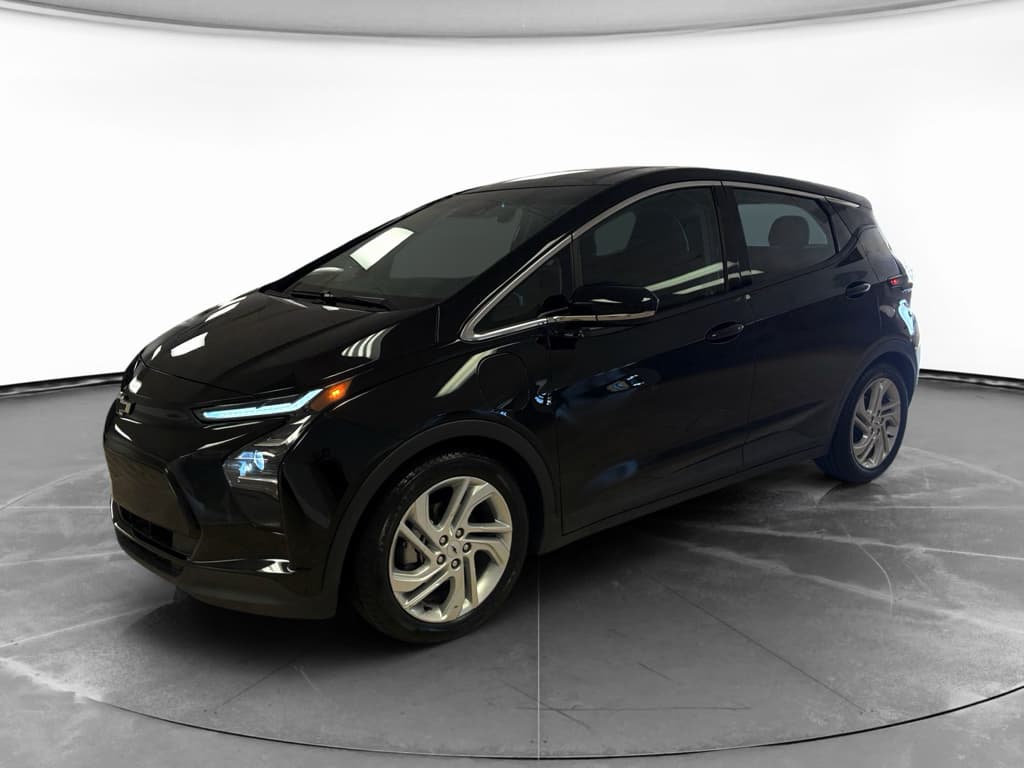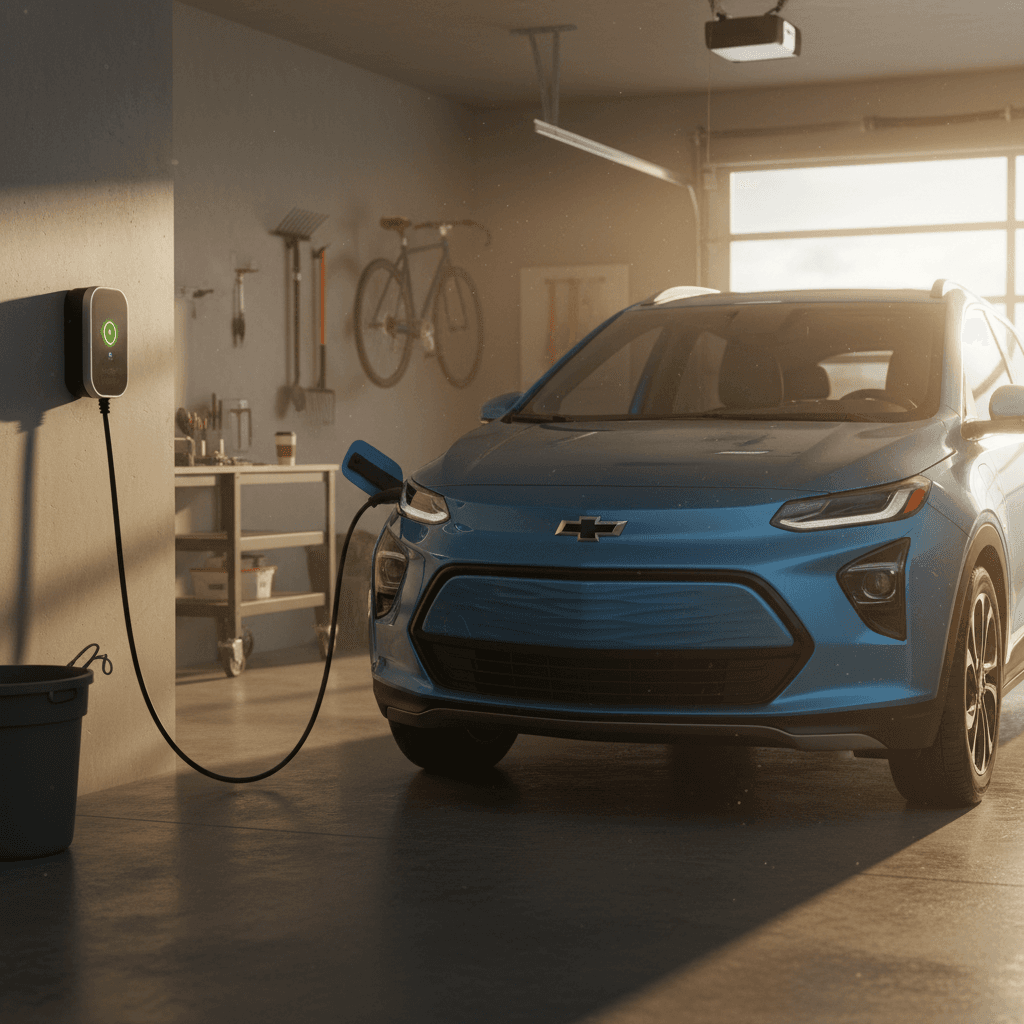
If you drive a Chevrolet Bolt EUV, the “best” home charger isn’t just the biggest number on the box. It’s the Level 2 setup that matches your daily miles, your home’s electrical panel, and the car’s 11.5 kW onboard charger. This guide walks through what that actually means in the real world so you can pick the best home charger for your Bolt EUV with confidence.
Quick answer
Why home charging matters for Bolt EUV owners
The Bolt EUV’s 65 kWh battery and ~247‑mile EPA range make it a very livable EV, but the experience changes dramatically depending on how you charge. Rely only on public stations and you’re planning your life around chargers. Add the right home charger and your EUV simply wakes up “full” most mornings, the way your phone does.
- Level 1 (120V) adds ~3–5 miles of range per hour, fine for very light use, frustrating for most owners.
- Level 2 (240V) typically adds 25–35 miles of range per hour on a Bolt EUV, easily covering a full workday’s driving overnight.
- Consistent home charging lets you use cheaper off‑peak power and avoid parking at public chargers just to top up.
Think in miles per hour, not kilowatts
How fast can a Bolt EUV charge at home?
Every 2022–2023 Chevrolet Bolt EUV comes with an 11.5 kW onboard AC charger. In plain English, that’s the maximum power the car can draw from a Level 2 charger. You’ll only see that full rate if your home EVSE and electrical circuit can supply about 48 amps at 240V; otherwise, the car simply takes what’s available up to that ceiling.
Bolt EUV typical home charging speeds
Approximate home charging performance for a Chevrolet Bolt EUV at different power levels.
| Charging type | Circuit / EVSE rating | Approx. power to car | Miles of range per hour* | 0–100% time from empty |
|---|---|---|---|---|
| Level 1 (120V) | 15A outlet, 12A setting | ~1.4 kW | 3–5 mi/hr | 40–50 hours |
| Level 2 (240V) | 20A circuit, 16A EVSE | ~3.8 kW | 12–15 mi/hr | 17–20 hours |
| Level 2 (240V) | 40A circuit, 32A EVSE | ~7.7 kW | 25–30 mi/hr | 8–9 hours |
| Level 2 (240V) | 60A circuit, 48A EVSE | ~11.5 kW (max) | 35–37 mi/hr | 5.5–6.5 hours |
Real‑world speeds will vary with temperature, battery state of charge, and voltage at your home.
Don’t chase numbers you can’t use
What makes a home charger “best” for a Bolt EUV?
Forget the generic “best EV charger” lists for a moment. The right home charger for a Bolt EUV owner in a single‑family home doing 60 miles a day looks different from what an apartment dweller with occasional access to a dryer outlet needs. Start with your use case, then layer on features.
Key criteria for picking a Bolt EUV home charger
Match the charger to your driving, home, and budget.
Charging speed you’ll actually use
For most owners, a 32A or 40A charger easily refills a Bolt EUV overnight. A 48A unit only makes sense if:
- Your panel can support a 60A circuit.
- You regularly arrive home with a nearly empty battery.
- You value margin for a future EV that can use more power.
Connector and outlet type
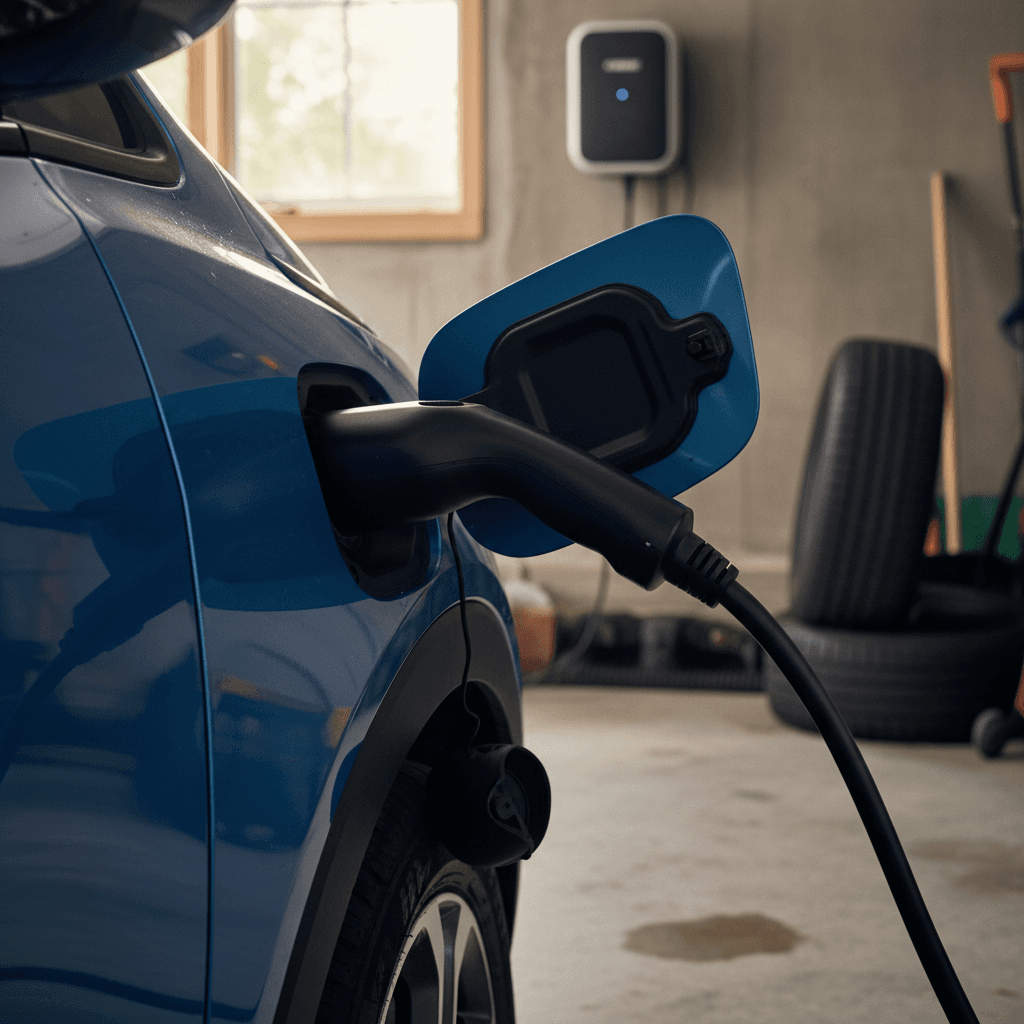
The Bolt EUV uses a J1772 inlet for AC charging. On the wall side, you’ll choose between:
- NEMA 14‑50 plug‑in (more flexible, easier replacement).
- Hardwired (cleaner install, often higher continuous current).
Safety & durability
Look for UL or ETL listing, a solid enclosure, and at least a 3‑year warranty. An EVSE lives in your garage or outside 365 days a year; it needs to shrug off weather and daily use.
Smart features and utility rates
If your utility offers time‑of‑use (TOU) pricing, it’s worth paying for Wi‑Fi and an app that can schedule charging automatically. Otherwise, basic schedule controls in the car are often enough.
Future‑proofing for your next EV
GM is transitioning to the NACS/Tesla connector on newer models, but Level 2 home chargers are typically J1772 on the vehicle side for now. A solid 40–48A J1772 unit today will still be useful with future EVs via simple adapters.
Top home charger options for Chevy Bolt EUV
The Bolt EUV ships with a dual‑level portable charge cord on many trims, capable of both 120V and 240V use when paired with the right outlet. It’s fine as a starting point, but most owners quickly prefer a dedicated wallbox for convenience, speed, and durability. Below is a high‑level comparison to help frame what “best” looks like for you.
Example home charger configurations for Bolt EUV
Representative options, not an exhaustive list or endorsement of specific brands.
| Use case | Example EVSE style | Circuit / outlet | Max current to car | Why it may be “best” |
|---|---|---|---|---|
| Budget, light daily driving | Portable dual‑level (included cord) | Existing 120V or new 240V NEMA 14‑50 | 12–32A (1.4–7.7 kW) | Low or no hardware cost if you already have suitable outlets; flexible for travel. |
| Typical suburban commuter | Wall‑mounted 32–40A smart charger | 40A circuit (hardwired or 14‑50) | 32A (7.7 kW) | Full overnight refills, good app controls, reasonable install cost, this is the sweet spot for most Bolt EUV drivers. |
| High‑mileage or two‑EV household | 48A hardwired smart charger | 60A dedicated circuit, hardwired | 48A (11.5 kW, Bolt EUV max) | Fastest possible AC charging, best if you routinely add 150+ miles overnight or share charging between two cars. |
All examples assume typical North American residential voltage and continuous load derating (80% of breaker rating).
A realistic “best” for most owners
NEMA 14-50 vs. hardwired: which is better for you?
Most Bolt EUV owners end up choosing between a plug‑in charger on a NEMA 14‑50 outlet and a permanently hardwired unit. Both can work well with the EUV’s 11.5 kW onboard charger; the trade‑offs are about flexibility, cost, and maximum current.
NEMA 14‑50 plug‑in chargers
- Common choice for 32–40A Bolt EUV setups.
- Easier to replace or upgrade the EVSE later, just unplug it.
- Great if you rent or expect to move in a few years.
- National code typically limits continuous load on a 50A receptacle to 40A.
For many households, a 40A plug‑in charger is the optimal mix of speed and flexibility.
Hardwired chargers
- Required for 48A continuous charging on a 60A circuit.
- Cleaner look with no plug or exposed receptacle.
- Less portable, you’re committing that charger to that spot.
- Sometimes preferred by electricians for outdoor installs.
If you know this is your long‑term home and you want to squeeze out maximum speed for a Bolt EUV or future EVs, a hardwired install can make sense.
Safety first: no DIY panel adventures
Installation and electrical checklist
Before you hit “buy now” on any charger, do a quick audit of your home’s electrical capacity and layout. This step is where a lot of people discover that the “best” charger for their Bolt EUV isn’t the 48A model they saw in an ad, but a slightly smaller unit that fits their panel without a full upgrade.
Bolt EUV home charging installation checklist
1. Check your main service rating
Look at your electrical panel label: most US homes are 100A, 150A, or 200A. A 200A service usually has room for a 40–60A EV circuit without major upgrades; 100A often requires more careful load calculations.
2. Identify panel location vs. parking spot
Measure the distance from your panel to where the Bolt EUV will park. Longer wire runs cost more and may affect where it’s cheapest to mount the charger.
3. Decide on circuit size target
Based on your daily miles and service size, pick a realistic target: 20A (slow but cheap), 40A (ideal for most), or 60A (max performance, higher cost).
4. Plan indoor vs. outdoor mounting
If your charger will live outdoors, confirm the EVSE is rated for outdoor use and that your electrician will use appropriate conduit and weatherproof fittings.
5. Get at least one electrician quote
A quick site visit or photo‑based quote gives you real numbers instead of guesses. Ask for separate pricing on 40A vs. 60A circuits if you’re on the fence.
6. Coordinate with vehicle settings
The Bolt EUV lets you set home charging preferences and schedules. Make sure your hardware choice lines up with how you actually plan to use these features.
Where GM and Recharged fit in
Smart features that actually matter
Many home chargers now come with Wi‑Fi, apps, and even Alexa integration. Some of that is genuinely useful for a Bolt EUV owner; some of it is window dressing. Since the EUV itself has basic scheduling tools and energy stats, think about whether you need the charger to be smart, the car to be smart, or both.
High‑value vs. nice‑to‑have smart features
Focus your budget on the features that change how you charge.
Off‑peak scheduling
High value. If your electric company offers cheaper overnight rates, app‑based scheduling can save real money and keep your charging invisible. The Bolt EUV can also schedule charging, but dedicated charger apps sometimes make it easier to adjust on the fly.
Detailed energy tracking
Nice to have. Seeing exactly how many kWh your Bolt EUV uses each month is helpful for budgeting and solar planning. It’s not essential, but for data‑minded owners it’s worth a small premium.
Load sharing & multiple EVs
Critical for two‑EV homes. If you plan to add another EV, look for chargers that can share one circuit intelligently. This lets you avoid a second large breaker upgrade while still charging both cars overnight.
Costs, payback, and ownership math
A lot of owners fixate on the price of the wallbox, but the real equation is hardware plus installation, spread over years of use. The “expensive” charger can be the cheaper option if it avoids a panel upgrade or lets you use cheaper overnight electricity more effectively.
Typical cost ranges for Bolt EUV home charging
Leverage incentives where you can
Chevrolet Bolt EUV home charging FAQ
Frequently asked questions about Bolt EUV home chargers
Key takeaways and how Recharged can help
The best home charger for a Chevrolet Bolt EUV isn’t the flashiest box on a review site, it’s the charger that fits your panel, your parking spot, and how far you actually drive. For most owners, that means a 32–40A Level 2 unit on a 40A circuit, mounted where you naturally park, with just enough smart features to take advantage of off‑peak rates.
If you’re still shopping for a Bolt EUV, or thinking about trading into one, Recharged can make the whole process smoother. Every car on our marketplace comes with a Recharged Score battery health report, transparent pricing, and EV‑specialist support that doesn’t stop at the purchase contract. We can help you size a home charger, interpret electrician quotes, and even time your vehicle delivery so your new Level 2 setup is ready when your Bolt EUV shows up in the driveway.