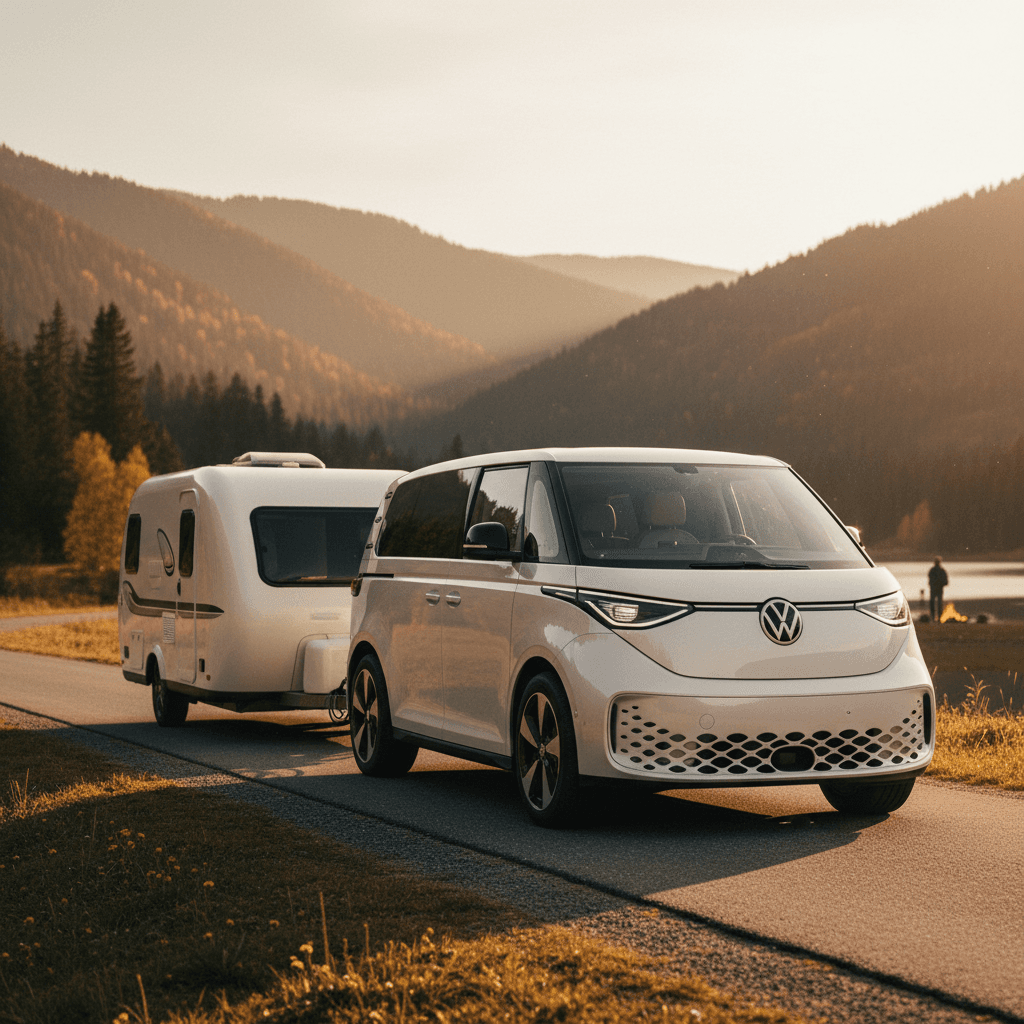
If you’re eyeing the retro‑cool Volkswagen ID. Buzz as a family hauler or camper van, one of the first questions you’ll probably ask is: “Can the Volkswagen ID. Buzz tow a trailer?” The short answer is yes, in most markets and trims, the ID. Buzz is rated to tow a modest trailer when it’s properly equipped with a factory hitch. But the details matter: tow ratings vary by model, region, and even by drivetrain, and towing has a big impact on range.
Key takeaway
Can the VW ID. Buzz Tow a Trailer? Short Answer
Yes, a Volkswagen ID. Buzz can tow a trailer as long as three conditions are met:
- Your specific ID. Buzz is rated for towing (not every trim in every market is).
- It’s equipped with a factory‑approved tow hitch and proper wiring for trailer lights.
- You stay within the rated trailer weight, tongue weight, and gross combination weight.
Important
Volkswagen ID. Buzz Towing Capacity by Model
Volkswagen offers several versions of the ID. Buzz worldwide: short‑wheelbase and long‑wheelbase passenger vans, the ID. Buzz Cargo, and higher‑power all‑wheel‑drive versions like the GTX in some regions. Each can have a different tow rating. Here’s a high‑level overview based on current factory information and converter guidelines as of early 2026:
Typical ID. Buzz Factory Towing Ratings (When Properly Equipped)
These are representative figures from VW technical documents and market brochures. Always check your vehicle’s specific paperwork for exact numbers.
| Model / Drivetrain | Region (example) | Max Braked Trailer | Max Unbraked Trailer | Typical Tongue Weight |
|---|---|---|---|---|
| ID. Buzz RWD (82 kWh) – Passenger | EU (example) | 1,000–1,200 kg (2,205–2,645 lbs) | 750 kg (1,653 lbs) | 75 kg (165 lbs) |
| ID. Buzz Cargo RWD | EU (example) | Up to 1,000 kg (2,205 lbs) | 750 kg (1,653 lbs) | 75 kg (165 lbs) |
| ID. Buzz GTX AWD (higher‑power) | EU (example) | Higher tow rating; up to around 1,600 kg (≈3,500 lbs) depending on spec | 750 kg (1,653 lbs) | Typically 75–100 kg |
| ID. Buzz LWB Passenger (U.S.‑spec example) | North America | Around 1,650 lbs (≈750 kg) max in many early guides | Often similar 1,650 lbs for unbraked in practice | Approx. 165 lbs (exact rating varies) |
Approximate maximum trailer weights for common ID. Buzz variants with a factory‑approved towing bracket.
Where the numbers come from
If you’re in the U.S., you’ll often see a headline rating around 1,650 lbs for early long‑wheelbase ID. Buzz passenger models when factory‑equipped for towing. European and other international documents typically quote kilogram figures in the same ballpark once converted.
Quick Towing Specs for the ID. Buzz (Typical RWD Models)
If your Buzz has no tow rating
What Kinds of Trailers an ID. Buzz Can Safely Tow
The ID. Buzz is an electric people‑mover first and a tow vehicle second. Its tow rating is modest compared with big SUVs or trucks, but it’s enough for many real‑world uses. Assuming a typical 1,000–1,200 kg (≈2,200–2,650 lb) braked limit on a rear‑drive model, here’s what’s realistically on the menu.
Typical Trailers Within ID. Buzz Tow Ratings
Stay light, keep the frontal area small, and you’ll have a much better experience.
Small utility trailers
Examples:
- 4×6 or 5×8 open utility trailer
- Home‑improvement store rental trailer
- Light landscaping or dump trailer (unloaded or lightly loaded)
Weight target: Under 1,000 lbs loaded for easy towing.
Compact campers & teardrops
Examples:
- Light teardrop campers
- Mini off‑grid trailers designed for EVs
- Pop‑up campers in the 1,000–2,000 lb range
Keep total weight under your specific Buzz rating and factor in range loss.
Bike racks & cargo carriers
Examples:
- Hitch‑mounted bike racks (2–4 bikes)
- Small cargo platforms or boxes
These use up tongue‑weight capacity but typically don’t count as “towing” a trailer.
Think aerodynamic first
How Towing Affects Volkswagen ID. Buzz Range
Any EV will lose range when towing, and the ID. Buzz is no exception. Weight, aerodynamics, speed, weather, and terrain all play a part. Owners of similar‑size EV vans and crossovers report 30–50% range loss when towing campers or heavier box trailers at highway speeds; lighter, more aerodynamic loads tend to do better.
What to expect in mild conditions
On a mild day, towing a light, low trailer (for example, a small teardrop or 5×8 utility trailer) at 55–60 mph, many EVs see range drop into the 30–40% loss range. If your ID. Buzz normally delivers 220 miles on a trip, you might realistically see 130–150 miles when towing under similar conditions.
When range loss gets worse
Expect more dramatic reductions if you combine several factors:
- High speeds (70+ mph)
- Cold weather with cabin heat running
- Steep climbs or mountain passes
- Tall, boxy trailers close to the Buzz’s height
In those scenarios, a 50% or greater range hit isn’t unusual. That means planning your charging stops carefully and keeping a wider safety margin.
Plan charging more conservatively
Hitch Options: U.S. vs. Europe and Cargo vs. Passenger
Volkswagen treats the tow hitch on the ID. Buzz as factory equipment in many markets, with specific part numbers and engineering behind it. But availability, design, and approvals look a little different depending on where you live and which Buzz you own.
How ID. Buzz Hitch Options Differ
Same basic van, different rules and hardware by market.
Europe & many global markets
- Factory swivel/hidden tow bracket available on many trims.
- VW documents list explicit braked / unbraked trailer limits and 75 kg tongue weight.
- ID. Buzz Cargo often marketed with up to 1,000 kg trailer capability when properly equipped.
United States & Canada
- Long‑wheelbase passenger ID. Buzz launched first, with an available tow package on some trims.
- Early 1st Edition and some U.S. builds have seen limited hitch availability or delays.
- Check whether your hitch is rated for towing or only for accessories like bike racks.
Aftermarket hitches: proceed carefully
Weight Limits, Payload, and Tongue Weight Explained
Understanding how different weight limits interact is the key to towing safely, and staying within what your ID. Buzz is designed to handle. Three numbers matter most: tow rating, tongue weight, and payload.
- Tow rating (trailer weight) – The maximum allowed weight of the trailer and everything in it. For many ID. Buzz models this is around 1,000–1,200 kg (2,205–2,645 lbs) braked.
- Tongue weight – The vertical load pushing down on the hitch ball from the trailer. Commonly around 75 kg (165 lbs) for the ID. Buzz. Too much tongue weight can overload the rear axle and affect handling.
- Payload – The total weight of people, cargo inside the van, plus tongue weight. The ID. Buzz has generous interior space, but you can’t fill every seat and cargo area to the roof and still max out the tow rating without exceeding payload.
Quick driveway check
Setting Up Your ID. Buzz to Tow a Trailer
If you’ve confirmed your VW ID. Buzz is approved to tow, the next step is getting the right hardware and settings in place. Here’s a practical setup checklist.
Pre‑Towing Setup Checklist for ID. Buzz Owners
1. Confirm factory tow rating
Check the owner’s manual, the VIN‑specific build sheet, and the certification label on the driver’s door jamb. Verify that your Buzz is rated to tow and note the max braked, unbraked, and tongue weight figures.
2. Use a factory‑approved hitch
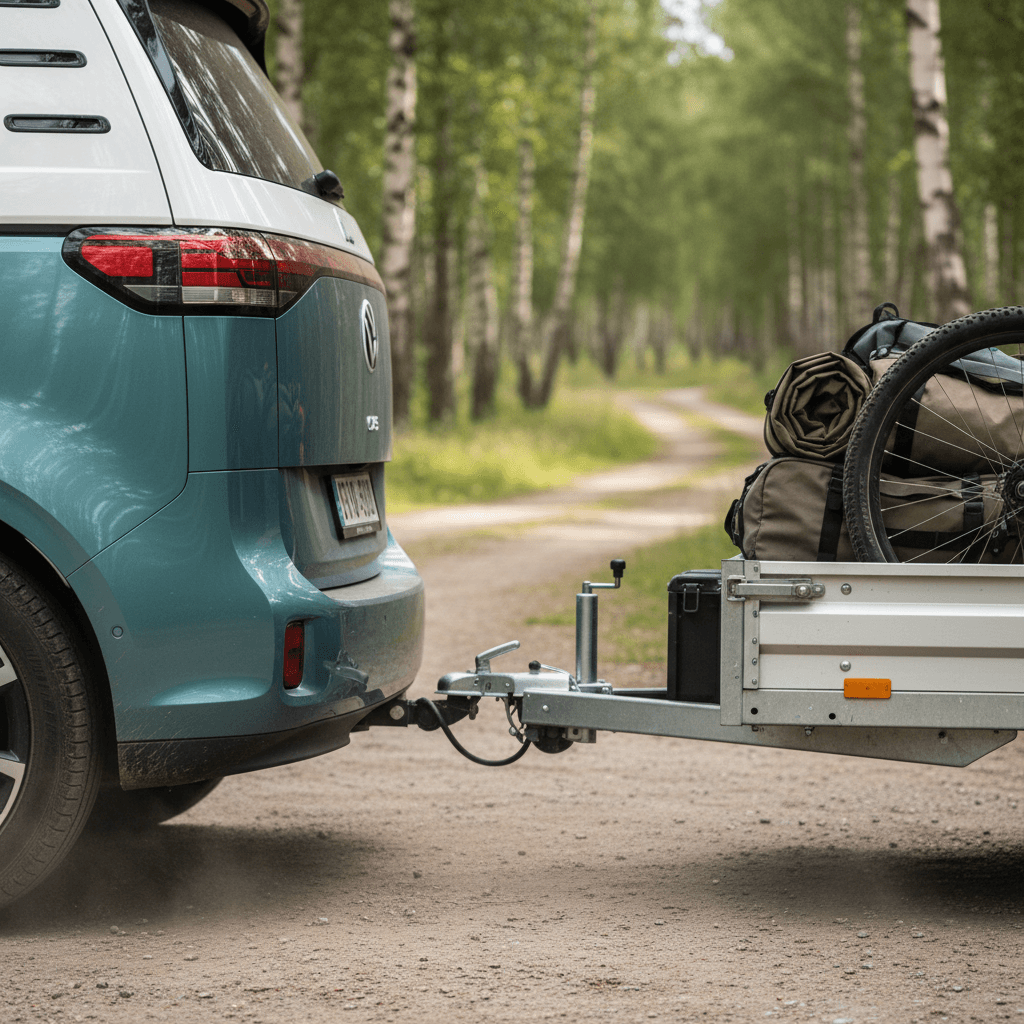
Whenever possible, opt for a VW‑approved towing bracket with the correct electrical harness. These are engineered for the Buzz’s structure and integrate with stability and trailer‑assist software where available.
3. Install a proper wiring harness
You’ll need a 7‑pin or 13‑pin (EU) or a 4/7‑pin (NA) socket for trailer lights and, if required, electric brakes. Make sure the harness is compatible with the ID. Buzz’s electronics so warning lights and stability control work as intended.
4. Match the hitch ball and coupler
Use the correct ball size and rating for your trailer’s coupler. In North America that’s often a 2‑inch ball; in Europe, a 50 mm ball. Make sure the ball and mount are rated well above your actual trailer weight.
5. Check trailer brakes and breakaway system
Many jurisdictions require brakes above a certain trailer weight, often around 750–1,000 kg. Verify your trailer’s brakes function properly and that any breakaway cable or switch is installed correctly.
6. Balance and secure the load
Load the trailer so roughly 10% of the trailer’s weight sits on the hitch ball (within your tongue‑weight limit). Secure cargo with straps so nothing shifts under braking.
Driving Tips for Towing with an Electric Van
Once your ID. Buzz is set up to tow, the driving experience is pleasantly smooth, instant electric torque is great for pulling away with a light trailer. But you’ll want to adjust some habits to protect your range, brakes, and battery.
- Slow down a bit – Dropping from 70 mph to 60 mph on the highway can make a noticeable difference in energy use when you’re towing a big box behind a boxy van.
- Use the right drive mode – If your Buzz has a specific towing or trailer‑stability setting, use it. It can adjust stability control and steering feel for better control when the trailer starts to sway.
- Brake earlier and more gently – Even with regen and trailer brakes, you’re dealing with more mass. Look further ahead and avoid hard braking that can overheat hardware and stress the battery.
- Watch your mirrors and blind spots – A wider trailer can block your normal rearview. In some markets, mirror extensions are required beyond certain trailer widths.
- Practice backing up – Reversing with a trailer is a learned skill. Find an empty parking lot to get comfortable before your first big trip.
- Plan charging stops with trailer access in mind – Many charging stations aren’t trailer‑friendly. Look for pull‑through spots or locations where you can park along the edges and still reach the cable. In some cases you may need to briefly drop the trailer to charge comfortably.
Good news for campers
Is Towing with an ID. Buzz Right for You?
Whether the ID. Buzz is a good tow vehicle for you depends on the kind of towing you have in mind. If you’re thinking occasional trips to the home‑improvement store, bikes for the family, or a lightweight teardrop camper, a properly equipped Buzz fits that brief very well. If you’re dreaming of big travel trailers or heavy toy haulers, its ratings and range hit under tow will probably push you toward a larger SUV or pickup.
Great match
- You tow only a few times a year.
- Your trailer is well under the Buzz’s rated capacity.
- Most of your driving is local or regional, not cross‑country.
- You like the idea of an efficient daily driver that can occasionally tow.
Maybe look elsewhere
- You tow frequently and for long distances.
- Your trailer’s GVWR is close to or above 3,000 lbs / 1,360 kg.
- You need serious off‑road capability while towing.
- You must maintain long‑range highway speeds with minimal stops.
How Recharged can help
So can a Volkswagen ID. Buzz tow a trailer? Yes, within reason. Think of it as an incredibly practical electric minivan that happens to tow, not a dedicated tow rig. Stay within the official ratings, keep your trailers light and aerodynamic, adjust your expectations around range, and the ID. Buzz can be a delightful basecamp on wheels. And if you’re shopping used, working with an EV‑focused marketplace like Recharged can help you zero in on examples with the options and battery health that make towing trips fun instead of stressful.