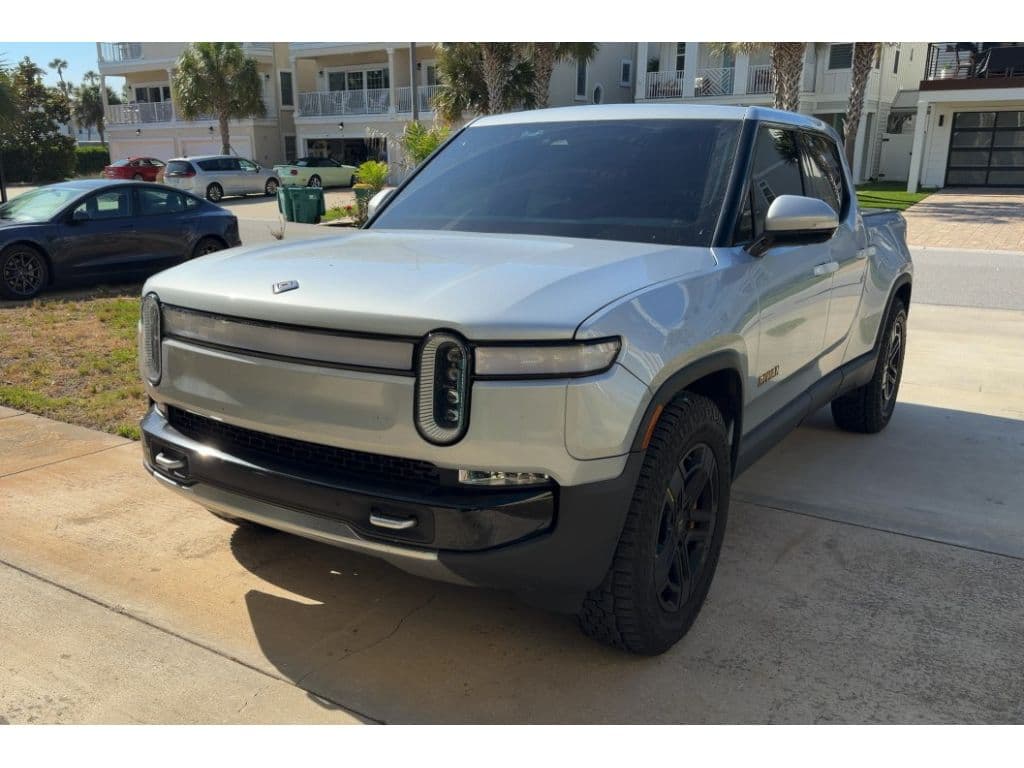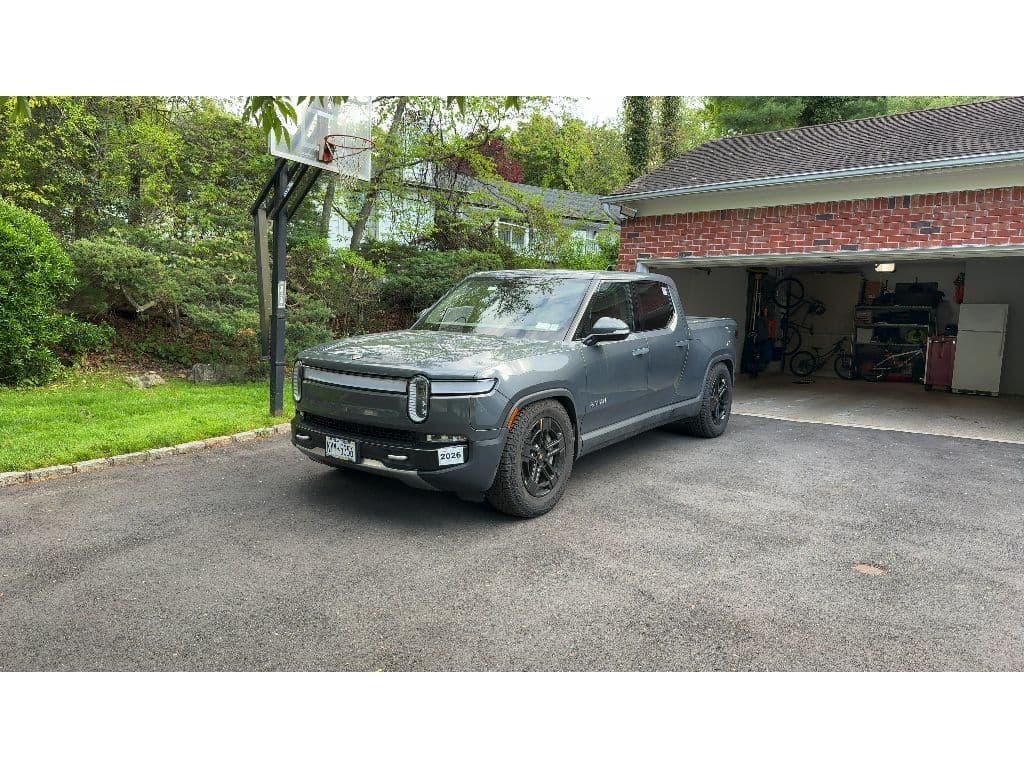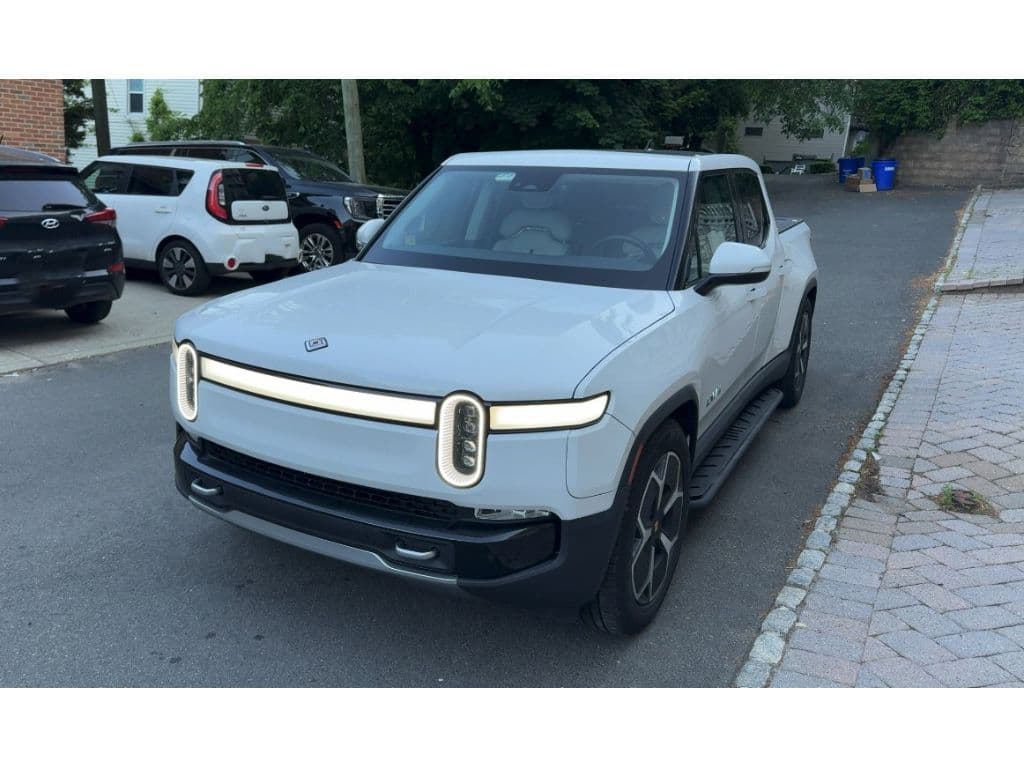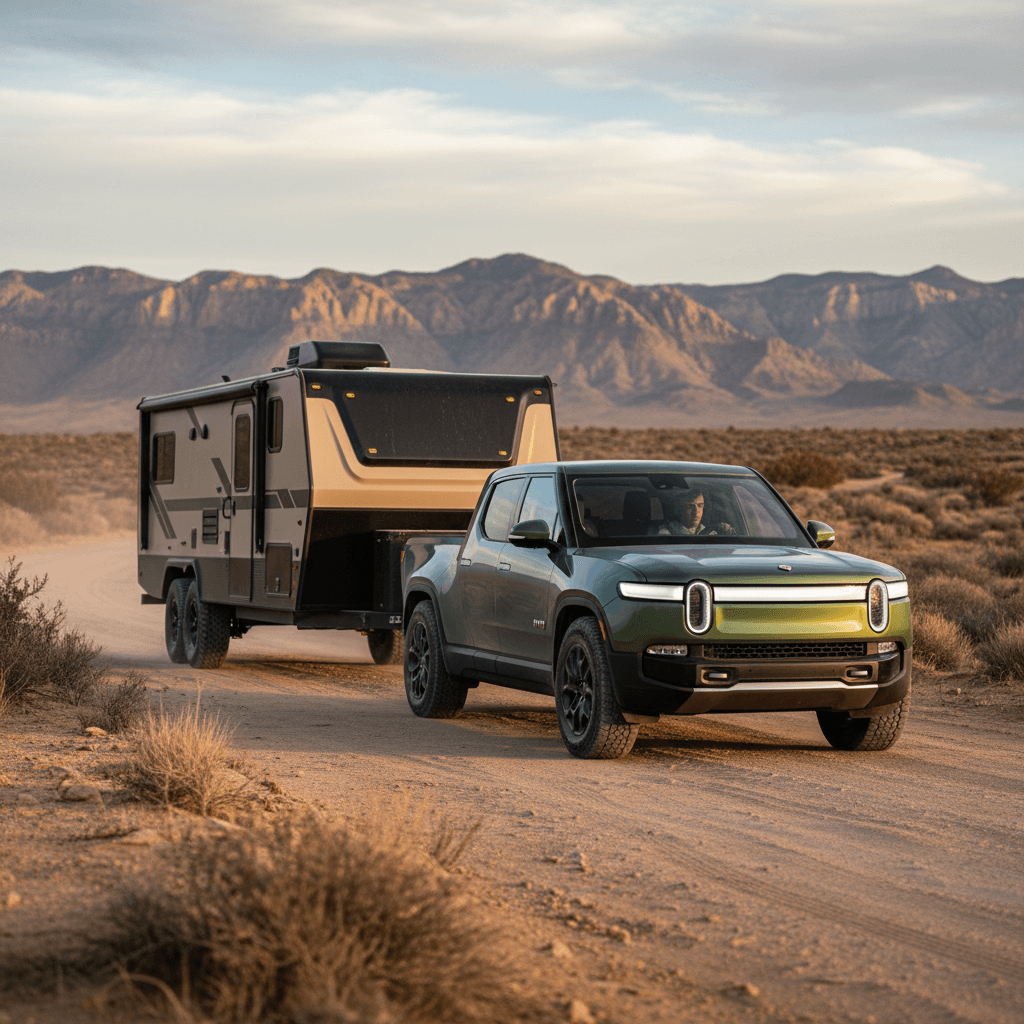
Yes, a Rivian R1T absolutely can tow a trailer. In fact, when it’s properly equipped, the R1T is rated to tow up to 11,000 pounds, on paper, that’s squarely in half-ton pickup territory. But towing with an electric truck is less about whether it can move the weight, and more about range, payload, and trip planning. If you’re thinking about a camper, boat, or utility trailer behind your R1T, this guide will walk you through the real limits and how to stay within them.
Short answer
Rivian R1T tow ratings and factory equipment
Before you start shopping for a trailer, you need to know what your specific R1T is rated to tow and what hardware it actually has. Rivian has tweaked powertrains and trims, but the broad towing story has stayed consistent.
Rivian R1T towing by the numbers (recent model years)
Typical Rivian R1T tow ratings by configuration
Exact numbers vary slightly by model year and trim, but this gives you a realistic range for most recent R1Ts.
| Configuration | Battery pack | Max tow rating | Notes |
|---|---|---|---|
| Dual-motor, Standard or Large pack | Standard / Large | 7,700–11,000 lbs | Some earlier dual-motor specs list 7,700 lbs; higher trims and Max packs reach 11,000 lbs. |
| Dual-motor, Max pack | Max | 11,000 lbs | Highest rating, paired with stronger cooling and hardware. |
| Quad-motor, Large or Max pack | Large / Max | 11,000 lbs | Most widely quoted R1T tow number; common on early trucks. |
| Without weight-distributing hitch | Any | ~5,000 lbs | Rivian reduces the rating if you’re only using a standard hitch. |
Always confirm your truck’s specific ratings on the door jamb label and in the owner’s guide.
Verify your exact truck
- Factory tow package with 2" receiver hitch and 7‑pin wiring is strongly recommended if you plan to tow regularly.
- A built-in trailer brake controller and Tow Mode in the drive settings are available on recent R1Ts and are highly recommended for heavier trailers.
- Without the tow package and weight‑distributing hitch, Rivian limits you to around 5,000 lbs of trailer weight.
Payload and tongue weight: what really limits you
When you ask, “Can my Rivian R1T tow this trailer?”, the real constraint usually isn’t the tow rating. It’s payload and tongue weight, how much weight is pushing down on the truck and how much you’re carrying in the cab and bed.
Key definitions
- Payload: Everything the truck carries, people, cargo in the cab and bed, plus trailer tongue weight.
- Tongue weight: The downward force the trailer puts on the hitch, usually 10–15% of the trailer’s total weight for travel trailers.
- GVWR: Max total allowed weight of the truck itself when fully loaded.
Why this matters on an R1T
- R1T payload is roughly 1,700–1,800 lbs depending on spec.
- The hitch receiver is rated around 1,155 lbs of tongue weight.
- A 6,000‑lb trailer with 12% tongue weight puts 720 lbs on the hitch before you add people or gear.
Do the payload math before you buy a trailer
Quick payload and tongue weight checklist
1. Find your payload rating
Open the driver’s door and read the yellow sticker. It will say something like “The combined weight of occupants and cargo should never exceed XXXX lbs.” That’s your payload limit.
2. Estimate real-world tongue weight
Take the trailer’s <strong>loaded</strong> weight (not just dry weight) and multiply by 12–15% for a typical travel trailer. That’s your expected tongue weight.
3. Subtract passengers and gear
Add up the weight of everyone in the cab plus luggage, camping gear, bikes, and bed cargo. Subtract this total plus estimated tongue weight from your payload rating, if the result is negative, you’re overloaded.
4. Respect the hitch rating
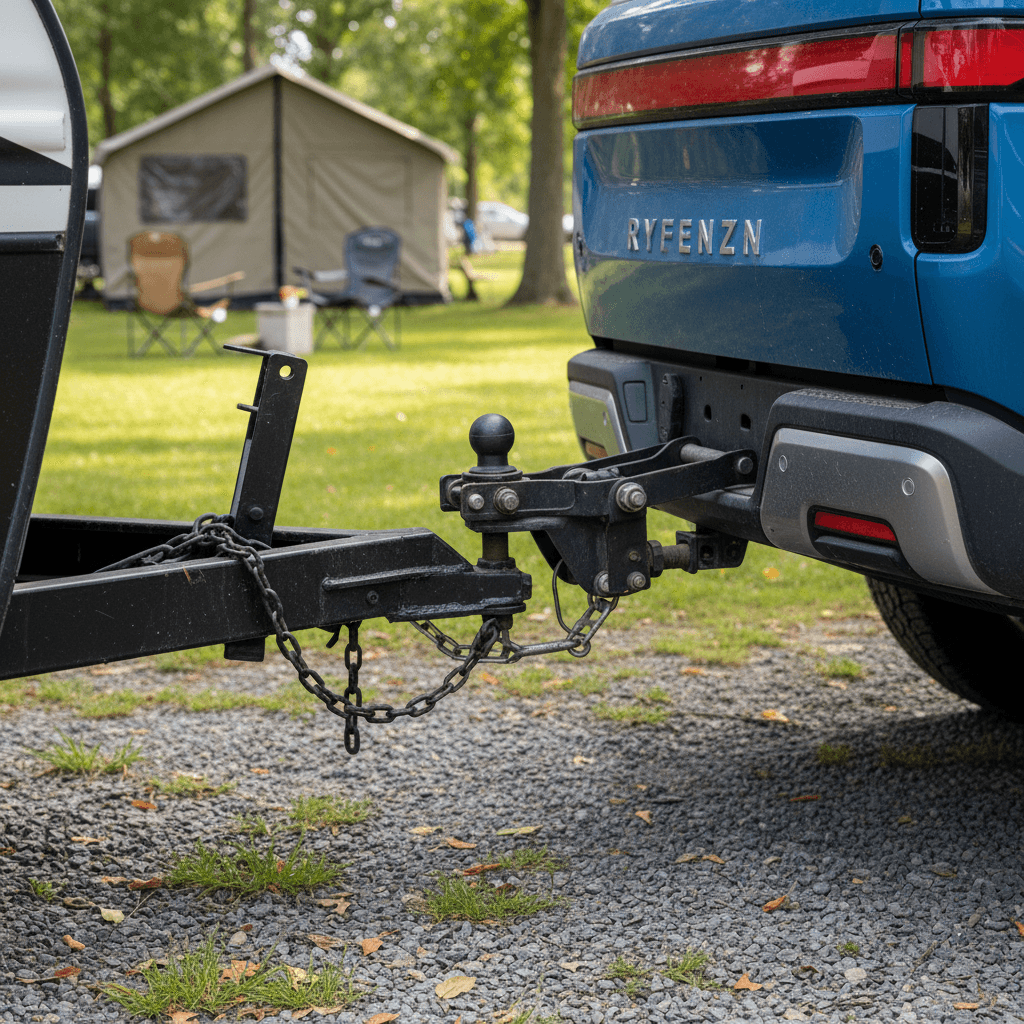
Even if you’re under payload, never exceed the receiver’s rated tongue weight (around 1,155 lbs on the R1T). Heavy, front‑heavy trailers may hit that limit first.
Is the Rivian R1T good for travel trailers and campers?
From a chassis and powertrain perspective, the Rivian R1T is excellent at towing. The instant torque, low center of gravity, and long wheelbase make it feel incredibly planted with a trailer behind it. Where things get complicated is aerodynamics and range, especially with tall, boxy campers.
How different trailer types pair with a Rivian R1T
Think less about raw tow rating and more about shape, weight, and how often you tow.
Low, aerodynamic campers
Examples: teardrops, small Airstreams, streamlined 16–20 ft travel trailers.
- Typically 2,500–5,000 lbs loaded.
- Much better aero than a tall box trailer.
- Good match for regular camping within a few hundred miles.
Boats, toys, utility trailers
Examples: boat trailers, flatbeds with ATVs, U‑Haul car haulers.
- Often 3,000–7,000 lbs loaded.
- Lower frontal area than RVs; aero drag is manageable.
- Great for weekend trips and occasional long hauls.
Tall boxy travel trailers
Examples: 25+ ft stick‑built campers, high‑wall toy haulers.
- Easily 6,000–9,000 lbs loaded.
- Huge aero penalty, especially at 65–70 mph.
- Technically towable, but range drops sharply and charging logistics get tricky.
Be realistic about “11,000 lbs”
Real-world range when towing with a Rivian R1T
Electric trucks don’t struggle to move trailers; they struggle to do it efficiently. The R1T has a big battery, but drag from a trailer eats into it quickly. In testing and owner reports, a properly loaded camper or boat can cut your usable highway range roughly in half.
Typical Rivian R1T towing range impact
In other words, if your empty‑truck highway range is around 230–260 miles, towing a 6,000‑lb, mid‑size camper at 65–70 mph might drop that to roughly 110–140 miles between fast‑charges. Slower speeds, lighter trailers, and better aero all help.
Speed is your biggest range lever
How to plan a trip with a trailer behind your R1T
Towing with an R1T is less “hook up and go” and more “lightweight logistics.” The good news is that once you understand your realistic range and where you can charge with a trailer attached, it becomes very manageable, especially for regional trips under 300–400 miles.
Step-by-step: planning an R1T towing trip
1. Start with a conservative range target
Plan legs of <strong>80–120 miles</strong> between DC fast‑chargers until you’ve built your own data. It’s easier to skip a charger than to stretch to one that’s too far away.
2. Use towing-aware route planning
Set Tow Mode with your trailer weight in the R1T, and use trip planners that understand EV towing. When in doubt, assume more drag than the software predicts, not less.
3. Check charger access for trailers
Favor sites with <strong>pull‑through</strong> or end stalls and room to maneuver. In some cases you may need to briefly drop the trailer or back into a corner stall, build that extra time into your plan.
4. Charge from low to mid-high, not 100% every time
Your fastest stops are from ~10–15% up to 60–70%. Topping all the way to 100% takes much longer and usually isn’t necessary if chargers are reasonably spaced.
5. Have a Plan B for each leg
Weather, headwinds, or elevation can chew into range. Identify a backup charger partway along in case energy use is higher than expected.
Heads up on trip time
Towing modes and helpful R1T features
Rivian didn’t just bolt a hitch on a lifestyle truck and call it a day. The R1T’s software and hardware include a handful of towing‑specific features that make life easier when you’re pulling a trailer.
Rivian R1T features that make towing easier
These built-in tools are worth learning before your first long trip with a trailer.
Tow Mode & trailer profiles
In Tow Mode, the R1T adjusts ride height, damping, power delivery, and stability control for towing. You can create different profiles for each trailer with stored weight estimates and settings.
Integrated trailer brake controller
With the tow package, the R1T includes a factory trailer brake controller, letting you fine‑tune trailer brake force from the central screen, rather than relying on an aftermarket box.
Range and energy estimates with trailer
Once Tow Mode learns your trailer’s effect on consumption, it can display more realistic range estimates. Treat them as guidance, not gospel, and still build in margin for weather and terrain.
Camera views and parking aids
Multiple camera angles help with hitching up, navigating tight charging lots, and keeping an eye on your trailer in traffic.
Practice locally before going big
Choosing the right trailer for a Rivian R1T
If you haven’t bought a trailer yet, you’re in the perfect position: you can choose something that plays to the R1T’s strengths instead of fighting its weaknesses. That usually means lighter and more aerodynamic than what you’d happily drag behind a diesel 2500.
Trailer types that pair well (and poorly) with an R1T
Use this as a directional guide, always check actual weights and dimensions for the specific trailer you’re considering.
| Trailer type | Typical loaded weight | Aero profile | Fit for R1T |
|---|---|---|---|
| Teardrop / squaredrop | 1,500–3,000 lbs | Very low, small frontal area | Excellent, ideal for long‑range electric towing. |
| 16–20 ft aerodynamic travel trailer | 3,000–5,000 lbs | Streamlined, rounded corners | Very good, realistic for regional trips and some road trips. |
| Small boat on bunk trailer | 2,000–4,500 lbs | Low hull, modest frontal area | Very good, weight manageable, drag modest. |
| Car hauler with one vehicle | 5,000–8,000 lbs | Medium, depends on vehicle | Good but range drops; best for shorter hops or well‑planned routes. |
| 25–30 ft boxy camper | 6,000–9,000 lbs | Tall, high drag | Technically towable but challenging for fast‑paced road trips. Best for shorter, destination‑style trips. |
Lighter, lower, and smoother shapes will always make your towing life easier in an EV.
A practical rule of thumb
Safety and maintenance tips for EV towing
Towing adds stress to any vehicle. With an EV, the stakes are more about heat management and predictable stopping than engine wear. The fundamentals are familiar to anyone who has towed with a gas truck, but a few points are especially important with a Rivian R1T.
- Check trailer and truck tire pressures before every towing day; underinflated tires add drag, heat, and risk.
- Use the correct weight‑distributing hitch and sway control hardware for heavier or longer trailers.
- Set an appropriate brake controller gain so the trailer isn’t shoving or yanking the truck during stops.
- Use Tow Mode so the air suspension, stability control, and cooling systems behave correctly under load.
- On long descents, rely on regenerative braking but don’t be afraid to use the friction brakes to keep speeds comfortable, Rivian designed the system to handle it.
- Avoid repeated 0–60 launches with a heavy trailer; yes, it’s impressive, but it also builds heat and eats range.
Never exceed ratings just because “it feels fine”
Frequently asked questions about Rivian R1T towing
Rivian R1T towing FAQ
Should you buy a used Rivian R1T for towing?
If your main question is, “Can a Rivian R1T tow a trailer?”, the answer is yes, often brilliantly so. The real question is what kind of trailer, how far, and how often. For weekend camping within a few hundred miles, boat and toy hauling, and even some longer trips with an aerodynamic camper, the R1T is a deeply satisfying tow rig. For nonstop, high‑speed cross‑country RV travel with a large, boxy trailer, it demands more planning and patience than most gas trucks.
If you’re considering a used Rivian R1T specifically for towing, pay attention to the tow package, payload sticker, wheel and tire choice, and real‑world energy use. That’s where a platform like Recharged can simplify things: every EV we list includes a Recharged Score Report with verified battery health, transparent pricing, and expert guidance. You can compare R1T configurations, understand how they’ll tow, and get help matching the truck to the trailer you actually want to pull, then have it delivered to your driveway, ready for that first camping trip.