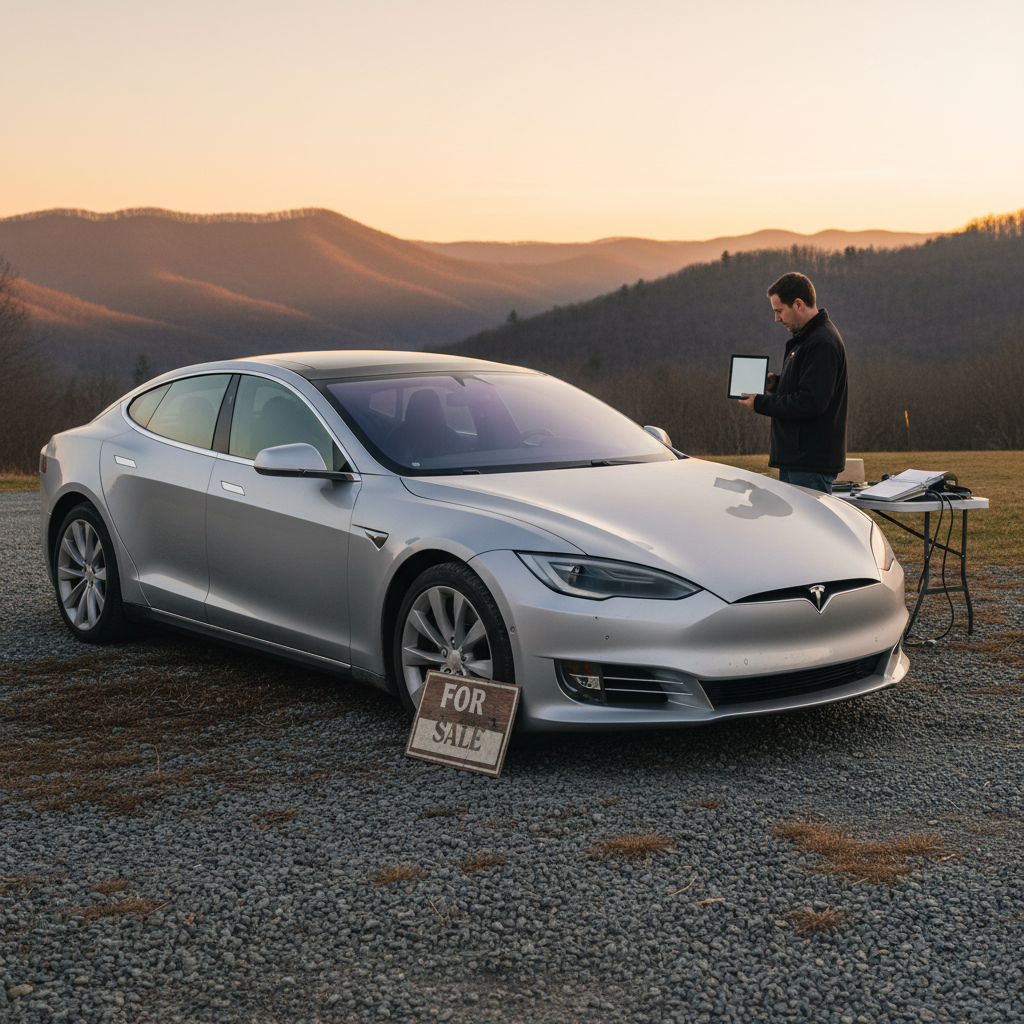
You absolutely *can* own an electric vehicle without a garage. In fact, a big share of American households don’t have access to a private garage or driveway, and EV adoption is still climbing. The real question isn’t “can I own an EV without a garage,” it’s **how you’ll charge, how often, and at what cost**, and whether the EV you choose matches that reality.
Quick answer
Can You Own an EV Without a Garage?
For years, EV ownership guides quietly assumed you had a **single‑family home with a garage** and an easy place to mount a Level 2 charger. Reality is different. National housing data shows that a significant chunk of U.S. housing, especially rentals and older urban neighborhoods, does *not* include a garage or carport. Renters are much less likely than homeowners to have private off‑street parking, which is exactly the situation many prospective EV buyers are in.
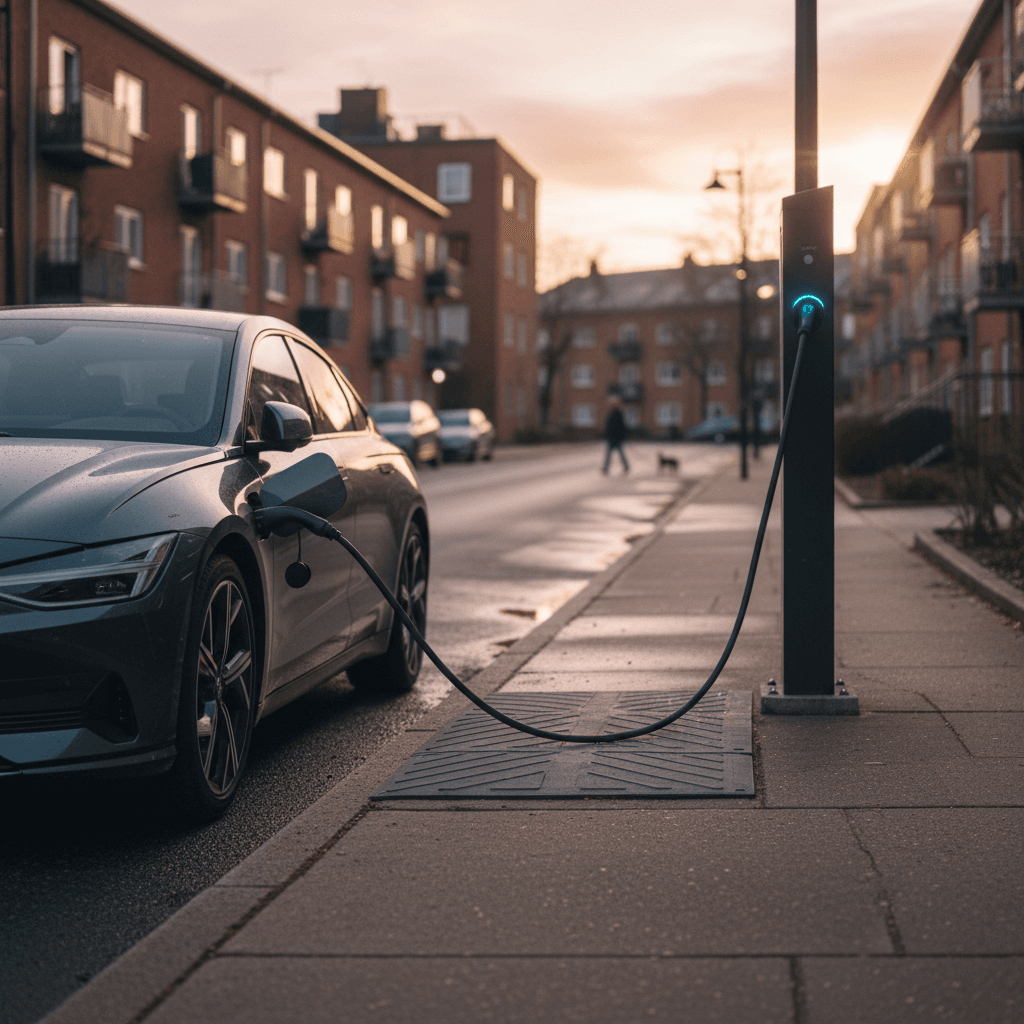
The good news is that charging infrastructure has evolved. **Public Level 2 chargers are now common at grocery stores, gyms, libraries, city lots, and workplaces**, and DC fast‑charging networks cover most major corridors. Some cities are adding curbside chargers, shared neighborhood chargers, and on‑street solutions designed specifically for people who park on the street.
Bottom line
Who This Guide Is For
Typical Drivers Without Garages
If you recognize yourself here, this guide is written for you.
Street parkers in older neighborhoods
You park on the street most nights, maybe move your car for street cleaning, and rely on a mix of city lots, meters, and neighborhood spots.
Apartment & condo residents
You park in a shared lot or structure. Some neighbors have EVs, but dedicated charging spaces are limited or nonexistent, at least for now.
Commuters with workplace parking
You drive to the same office or campus most days and park for several hours, but you don’t control parking at home.
If any of these scenarios fit, owning an EV is still on the table. You just need to understand **which charging options you’ll realistically use 80–90% of the time** and choose your vehicle accordingly.
How EV Owners Without Garages Actually Charge
Typical Charging Mix Without a Garage
Your exact mix will vary, but for most people without home charging the pattern looks like this: **a couple of planned Level 2 sessions each week**, plus **occasional DC fast charging** when life gets in the way. Once you build those stops into your routine, right alongside groceries or the gym, range anxiety fades quickly.
Charging Options When You Park on the Street
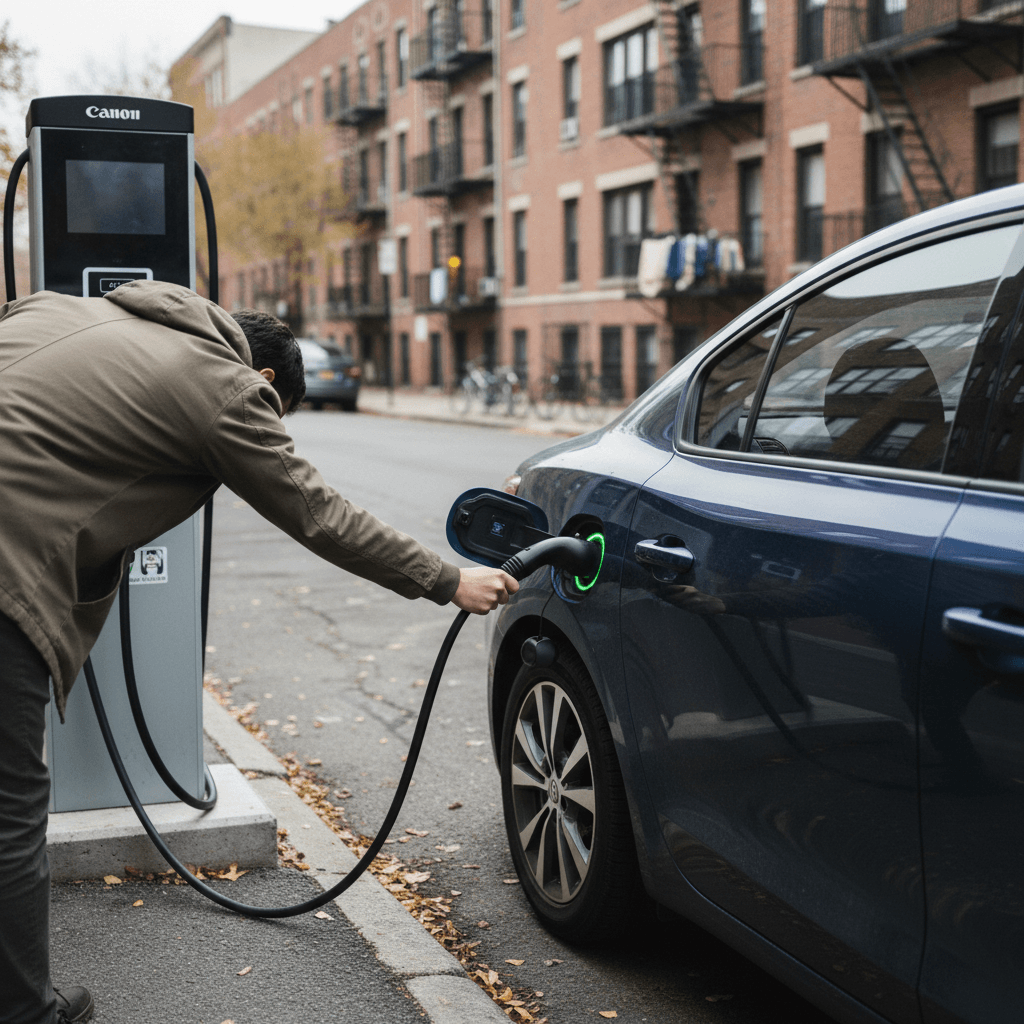
If you rely on street parking, your charging plan will lean heavily on **public infrastructure**. The key is knowing *where* you can reliably plug in and *how long* you can stay there.
Core Charging Options for Street Parkers
Mix and match these to build a routine that fits your life.
City lots & garages
Many municipal garages and lots now include Level 2 chargers. Evening or overnight flat‑rate parking can effectively replace home charging.
- Good for: predictable overnight charging
- Watch for: time limits or ICE vehicles blocking spots
Retail & grocery chargers
Supermarkets, big‑box stores, and shopping centers often have Level 2 or fast chargers.
- Good for: topping up during weekly errands
- Watch for: per‑minute fees if you stay after charging finishes
Standalone public chargers
Networks like Electrify America, EVgo, ChargePoint and others run stations in parking lots, near highways, and in urban cores.
- Good for: reliable fast charging, road trips
- Watch for: peak pricing and occasional broken stalls
Curbside & on‑street chargers
Some cities are installing pole‑mounted and curbside Level 2 chargers specifically for residents without driveways.
- Good for: overnight or multi‑hour sessions
- Watch for: other cars blocking chargers or strict time limits
Don’t run cords across the sidewalk
Apps Every Street‑Parking EV Owner Should Have
Install at least two major charging apps
Download apps from at least two big networks (like Electrify America and EVgo), plus a mapping app such as PlugShare or ChargeHub. Multiple options mean fewer headaches when one network is busy or offline.
Create accounts and add payment ahead of time
Set up accounts, payment methods, and any membership plans *before* you’re desperate for a charge in the rain. It’s one of the easiest ways to make EV life feel seamless.
Bookmark 3–5 favorite locations
Use your apps to mark chargers near your home, office, gym, and grocery store. Favor spots with good lighting, amenities, and historically high reliability based on user reviews.
Check pricing and parking rules
Tap into station details for per‑kWh or per‑minute pricing and any parking restrictions. Some spots require you to move as soon as charging ends; others allow overnight parking for a flat fee.
Charging Options for Apartment and Condo Drivers
If you park in a shared lot or garage at an apartment or condo, you may have more options than you think, especially as building owners respond to growing EV demand. Recent industry surveys show that **roughly a third of multifamily owners plan to add or upgrade EV charging in the near term**, and many are already using EV amenities as a selling point to attract residents.
1. Onsite community chargers
Many newer or recently renovated communities install a handful of shared Level 2 stations in guest or reserved spots.
- Pros: Convenient, predictable, usually cheaper than DC fast charging.
- Cons: Limited number of spaces; popular during evenings; may require an extra monthly fee.
2. Workplace & nearby chargers
If your building doesn’t have chargers yet, tie your routine to your **workplace** or **nearby public chargers**. A weekly top‑up at work plus a weekend session at a public Level 2 is enough for many drivers.
- Pros: Makes use of time you’re already parked.
- Cons: Less flexible if your work schedule changes or you switch jobs.
Ask your landlord or HOA the right questions
- Whether they already have EV chargers, and how residents access them
- If new chargers are planned, roughly when and where they’ll be installed
- How cost is handled (flat monthly fee, per‑kWh, or included in rent/HOA)
- Whether you can reserve a space or if it’s first‑come, first‑served
- If they’ll support ADA‑accessible EV spaces for those who need them
Managing Costs and Convenience Without Home Charging
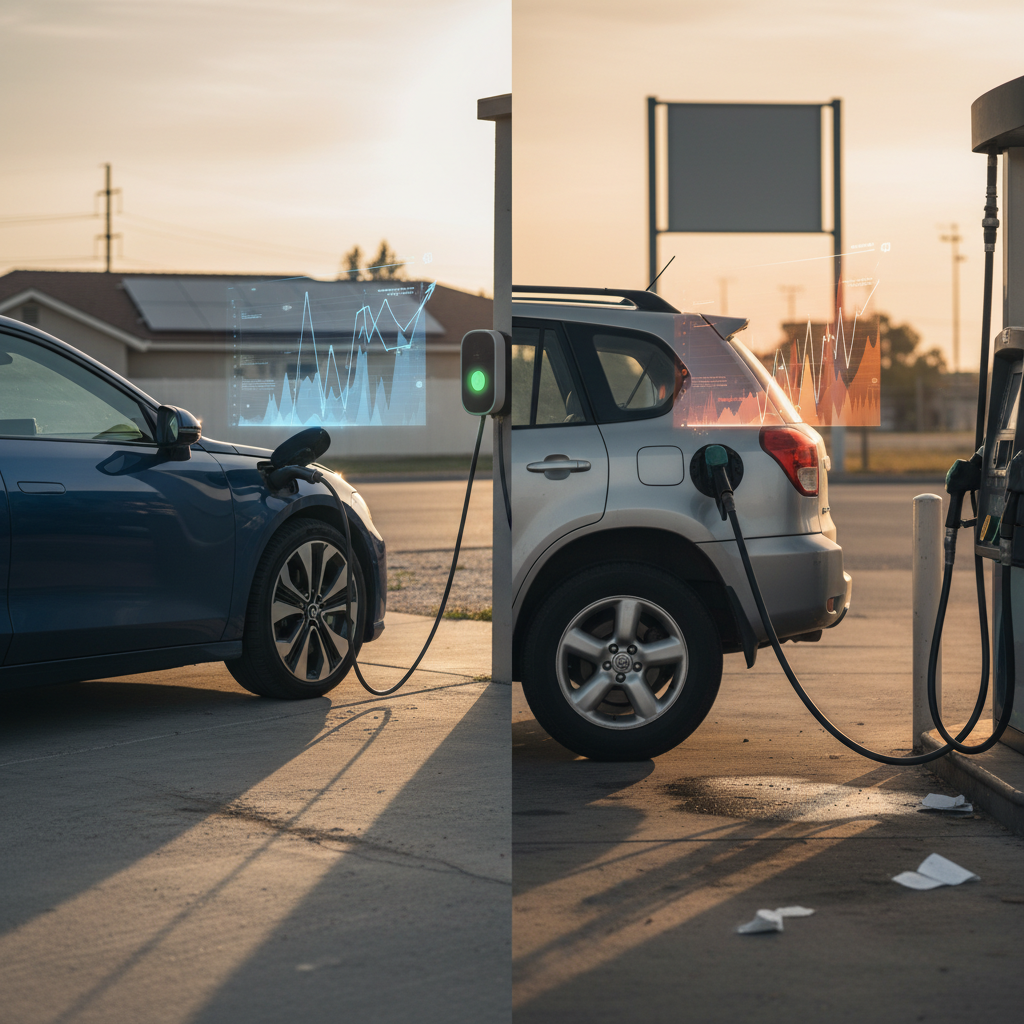
One of the biggest advantages of home charging is cost: electricity at residential rates is often cheaper than public charging. Without a garage, your per‑mile cost may be a bit higher, but **you can still beat or match gasoline costs with a thoughtful plan**, especially if most of your energy comes from reasonably priced Level 2 charging rather than premium‑priced fast chargers.
Very Rough Cost Comparison: Gas vs. Public EV Charging
Actual costs will depend on energy prices in your area, your specific EV, and how often you use fast charging, but this gives a directional sense of what to expect.
| Scenario | Fuel Type | Estimated Cost per 100 Miles | Key Assumption |
|---|---|---|---|
| Typical gas car | Gasoline | $13–$18 | 25–35 mpg, $3.25–$4.00/gal |
| EV with mostly Level 2 public charging | Electricity | $4–$9 | Energy rates similar to home or slightly higher |
| EV with heavy DC fast charging | Electricity | $8–$15 | Fast charging 2–4× cost of home electricity in many markets |
Assumes a compact or midsize vehicle, 12,000 miles per year, and average U.S. energy prices.
How to keep charging costs down
Choosing the Right EV if You Don’t Have a Garage
When you can’t plug in at home every night, the **type of EV you buy matters more**. A car that fits a suburban owner with a wallbox in the garage might be a headache for you, while another model could be nearly effortless.
Must‑Have Features for Garage‑Free EV Owners
Focus on these when you shop, especially for a used EV.
Solid usable range
Look for a **real‑world range** that comfortably covers your normal week with at most 1–2 charging stops.
For many drivers, that means a car that can truly deliver 180–250 miles in mixed driving, not just on paper.
Reasonable fast‑charge speed
You don’t need the absolute fastest charger, but you *do* want a car that can add a meaningful chunk of range in 20–30 minutes.
Check reviews for 10–80% charge times on DC fast chargers.
Flexible charging compatibility
Make sure the car plays nicely with major public networks and connector types in your region (CCS, NACS, etc.).
Adapters are becoming more common, but double‑check before you buy.
Nice‑to‑Have Features Without a Garage
Not essential, but they make life easier.
Good in‑car charging navigation
Built‑in charging station maps, route planning, and battery‑aware navigation help you find efficient stops and avoid dead ends.
Battery preconditioning
If you live in a cold climate, preconditioning the battery before fast charging helps maintain good charging speeds in winter.
Strong used‑battery health
On a used EV, a **verified battery health report** (like the Recharged Score) gives you confidence that the range you’re counting on will be there for years.
How Recharged can help
Practical Weekly Charging Strategies
Let’s turn all of this into simple, real‑world routines. Here are a few patterns that work well for people who can’t just plug in every night.
Sample Charging Routines for Garage‑Free EV Owners
Urban street parker, 150–200 miles/week
Charge once mid‑week at a grocery store or city garage with Level 2 while you shop or grab dinner.
Top up on the weekend at a public fast charger, stopping around 80% to save time and money.
Use apps to avoid the few stations that are often full or unreliable in your neighborhood.
Apartment dweller with workplace charging
Plug in at work once or twice a week for a full workday’s worth of Level 2 charging.
Use public chargers only when your driving spikes (road trips, visiting family, weekend adventures).
Watch for new chargers your landlord or HOA may add, getting on the early list for a reserved spot can be a big win.
Suburban renter with shared parking
Rely on a nearby big‑box store or public lot with Level 2 for a weekly deep charge.
If your complex has one or two community chargers, favor off‑peak times (late evening or early morning) when they’re less busy.
Use DC fast charging only when you’re behind on your weekly charge or need to prep for a long trip.
Treat charging like a recurring calendar event
Common Pitfalls and How to Avoid Them
Avoid These Mistakes if You Don’t Have a Garage
Relying on a single station
If you have *one* favorite charger and it goes down, you’re stuck. Always have at least two backup locations mapped out within a reasonable distance of home and work.
Ignoring parking rules and time limits
Nothing sours EV ownership like parking tickets. Get familiar with local rules around EV spaces, time limits, and overnight stays, especially in city garages and lots.
Overusing DC fast charging
Fast charging is a great tool, but using it as your **only** charging method can get expensive and may accelerate battery wear. Aim for a mix where most energy comes from Level 2.
Buying too little range
A small‑battery EV might be perfect with home charging, but frustrating without it. Be honest about your weekly miles and build in a cushion for unexpected trips or cold weather.
Skipping battery health checks on a used EV
If you’re buying used, especially without a garage, don’t guess about battery health. Ask for a **professional battery diagnostic** or buy from a source that provides one, like Recharged with its Recharged Score.
Watch for winter range loss
FAQ: Owning an EV Without a Garage
Frequently Asked Questions
So…Should You Buy a Used EV Without a Garage?
If you started out wondering, “Can I own an EV without a garage?” the honest answer is **yes, but only if you’re willing to be intentional about it**. You’ll need a basic plan for where you’ll charge, a car whose range and charging speed fit your life, and a little flexibility the first few weeks as you settle into a new routine.
For many drivers, especially those with **steady commutes, access to workplace or nearby public charging, and moderate annual miles**, an EV without home charging works remarkably well. In return, you get quiet, smooth driving, lower maintenance, and the satisfaction of leaving gas stations behind.
If you’re shopping for a used EV, this is where a partner like Recharged can simplify the process. With **verified battery health, fair market pricing, EV‑savvy financing options, and nationwide delivery**, Recharged helps you pick the right car for *your* parking and charging reality, not someone else’s garage. That way, when you finally make the switch to electric, you can spend your time enjoying the drive instead of worrying about where to plug in.