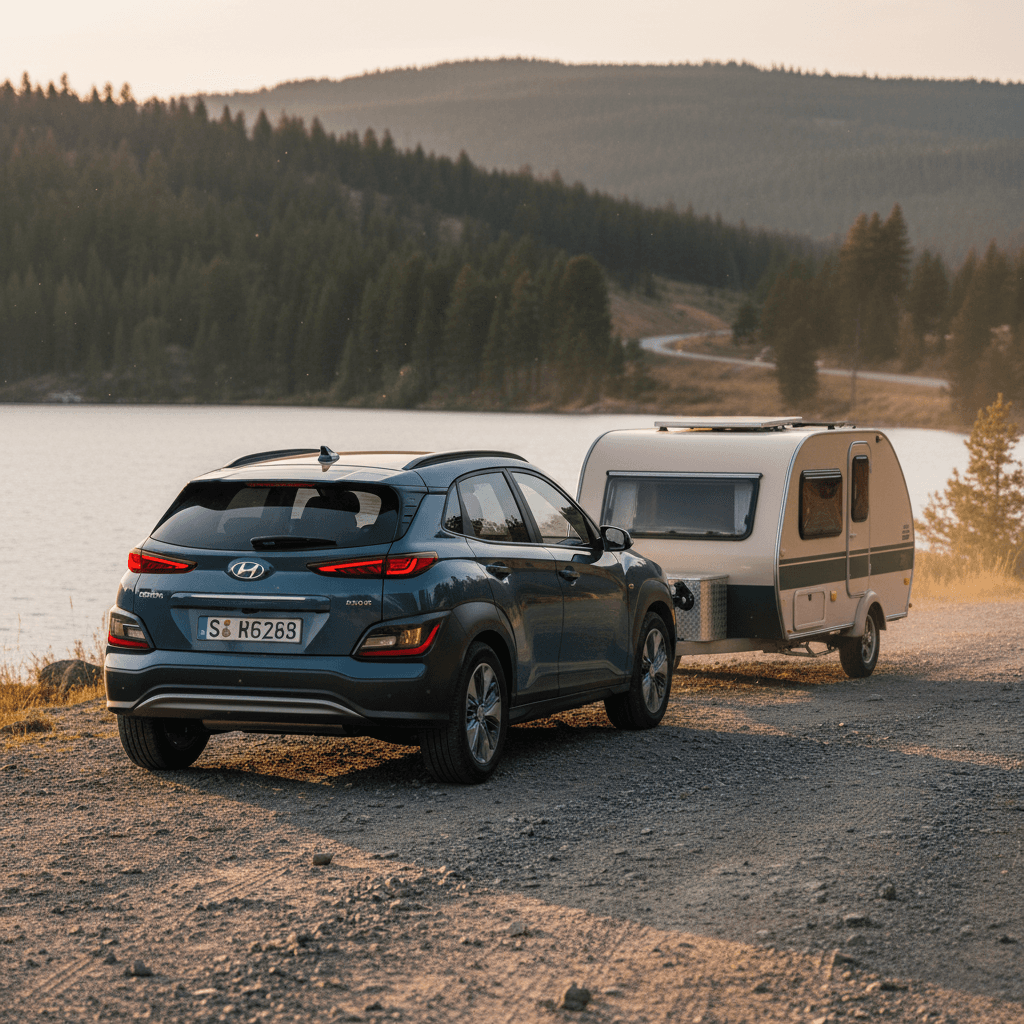
If you own, or are shopping for, a Hyundai Kona Electric, it’s natural to wonder if this compact EV can tow a trailer. The short answer is: yes, some Kona Electric models can tow, but the details depend heavily on model year and where the car was originally sold. Understanding those nuances is critical for safety, warranty coverage, and battery health.
Why towing info is confusing
Quick answer: Can a Kona Electric tow a trailer?
- Yes, but only if your specific Kona Electric is officially rated to tow in its market and model year.
- Second‑generation (2024+ "all‑new" Kona Electric) sold in Europe and many other regions is typically rated up to 750 kg (about 1,650 lb) braked and 300 kg unbraked, with a maximum towball (tongue) load around 100 kg.
- Some earlier first‑generation Kona Electrics (especially in Europe/UK) had low but official ratings, often around 300–510 kg for light trailers, while many North American cars were listed as "not recommended" for towing.
- In the U.S. and Canada, Hyundai often sells a “lifestyle” or “bike” hitch that’s specifically for racks and cargo trays, not towing a trailer.
- Even when rated, towing with a small EV like the Kona can easily cut your usable range by 30–50%, depending on speed, terrain, and trailer shape.
Always start with your owner’s manual
Kona Electric towing by generation and market
Hyundai has been iterating on the Kona Electric since 2018, and the towing story changes across generations. Here’s a structured way to think about it if you’re in the U.S. and shopping new or used.
Kona Electric towing at a glance
High‑level view by generation and market. Always verify against the VIN-specific owner’s manual for your car.
| Generation / Model Years | Region (typical) | Official trailer rating?* | Typical max braked | Typical max unbraked | Tongue weight |
|---|---|---|---|---|---|
| 1st gen Kona Electric (2019–2023) | US / Canada | Often "not recommended" | 0 lb | 0 lb | Bike/cargo-only hitches |
| 1st gen Kona Electric (2019–2023) | UK / EU (selected trims) | Light towing on some specs | ~300–510 kg | Up to ~300 kg | Up to ~75–100 kg |
| 1st gen Kona Electric (2019–2023) | Australia / NZ | Commonly "not rated" | 0 kg | 0 kg | Bike/cargo use only |
| 2nd gen "all‑new" Kona Electric (2024+) | Europe | Yes, rated for towing | 750 kg braked | 750 / 300 kg (varies by spec sheet) | Up to 100 kg |
| 2nd gen "all‑new" Kona Electric (2024+) | Australia (MY25 spec) | Rated on 150 kW motor | 750 kg braked | 300 kg unbraked | 100 kg |
| 2nd gen "all‑new" Kona Electric (2024+) | US / Canada | Emerging / limited info; many brochures still emphasize rack (non‑trailer) use | Check manual | Check manual | Check manual |
Kona Electric towing varies by model year and region. Treat this as a starting point, not a substitute for your manual.
Why regions differ
First‑generation Kona Electric (2019–2023)
For most early Kona Electric models sold in the U.S. and Canada, Hyundai marketing and spec sheets either skip towing entirely or say towing is not recommended. Yet owners in Europe and the UK have long pointed to official documents that allow modest trailer weights, often around 300 kg on base battery versions and slightly higher on long‑range trims. A number of owners have towed small utility trailers or lightweight campers successfully, but nearly all report significant range penalty and the need to drive conservatively.
Second‑generation "all‑new" Kona Electric (2024+)
Hyundai’s second‑generation Kona Electric, launched globally for the 2024 model year, takes towing more seriously in markets where compact crossovers commonly haul small caravans and cargo trailers. European technical and accessory documents now explicitly quote a 750 kg max trailer weight (often the same number for braked and unbraked) and a 100 kg max towball load on the higher‑power 150 kW motor. Australian MY25 specs show 750 kg braked and 300 kg unbraked, again with a 100 kg towball limit. That moves the Kona Electric from a "maybe just a bike rack" car into legitimate light‑towing territory, at least outside North America.
North America: hitch ≠ towing approval
Why towing ratings are conservative on small EVs
How trailer weight affects range and performance
Even with an official tow rating, towing with a Hyundai Kona Electric is fundamentally different from towing with a mid‑size gas SUV. Battery capacity, cooling strategy, and a relatively short wheelbase all put tighter boundaries on what makes sense in the real world.
What changes when your Kona Electric tows
Understanding the trade‑offs helps you decide if it fits your use case.
Aerodynamic drag
Energy consumption
Thermal load
Plan range like an RV owner
Hitches, bike racks, and what dealers actually offer
Much of the confusion around Kona Electric towing comes from the fact that you can readily buy hitches for these cars, but the products themselves may explicitly forbid towing. Understanding what you’re buying is as important as the badge on the back of the car.
1. Lifestyle / bike hitches
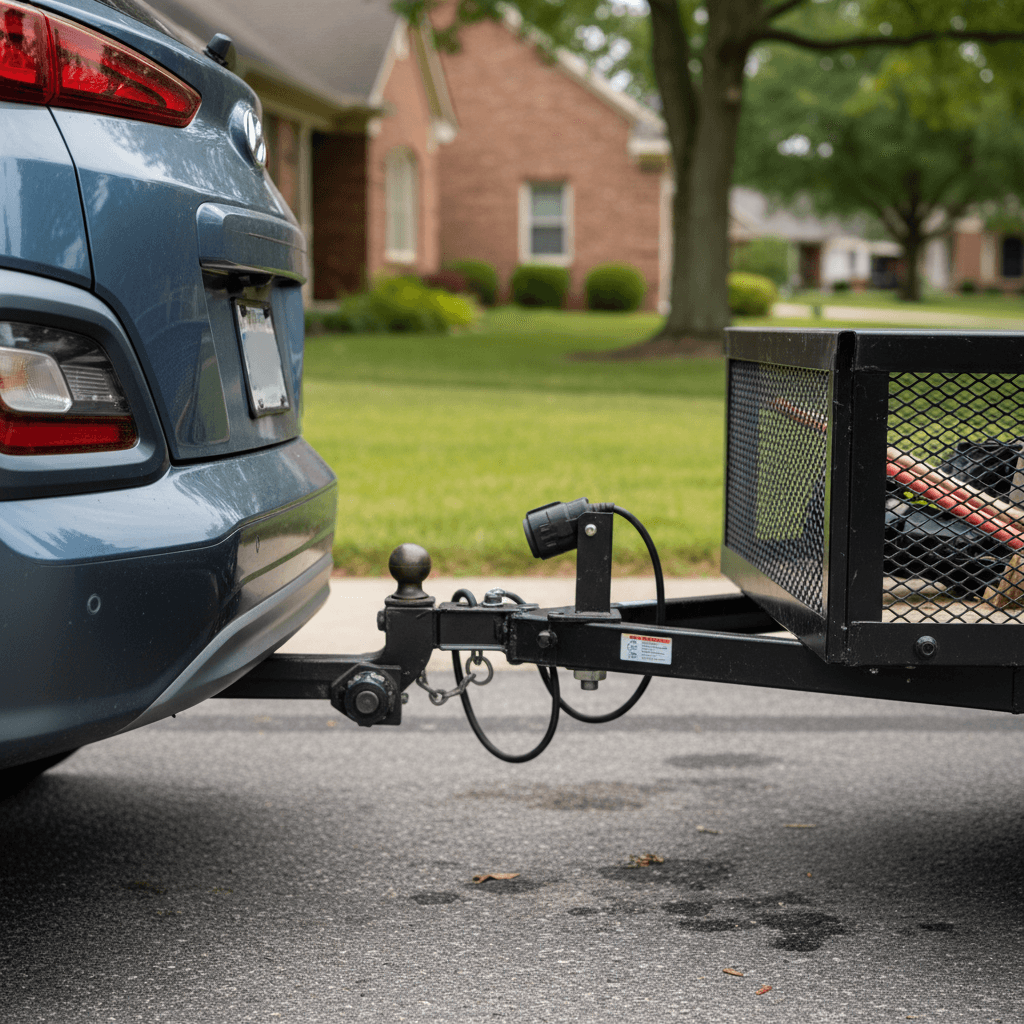
Hyundai‑branded accessories for the Kona Electric in North America are typically marketed as lifestyle hitches. They use a 1¼‑inch receiver and are sold for mounting a bike rack or cargo carrier, not trailers. The fine print usually calls out a tongue‑weight limit and says they are not rated for towing.
For many owners, that’s enough: you get rear‑mounted cargo flexibility without crossing into trailer territory.
2. Full trailer hitches (other markets)
In Europe, Australia, and other regions where the Kona Electric has an official tow rating, you can buy factory or factory‑approved towbars that include trailer wiring and are explicitly rated for a certain trailer weight and towball load.
If you import such parts or use an aftermarket equivalent on a North American car, you’re still bound by your local rating and warranty language, not the catalog you sourced from overseas.
Trailer wiring matters
Is towing with a Kona Electric right for you?
Assuming your specific Kona Electric is approved for towing, the next question is whether it’s the right tool for how you plan to use a trailer. A compact front‑wheel‑drive EV is a very different tow vehicle than a long‑wheelbase body‑on‑frame SUV.
Questions to ask before you tow with a Kona Electric
1. What do you actually want to tow?
A low, aerodynamic trailer with a lawnmower or camping gear is one thing; a tall, slab‑sided camper is another. Be conservative with weight and height, especially for highway trips.
2. How often will you tow?
Occasional runs to the hardware store or dump are far easier on the car than towing every weekend. If towing is a regular part of your lifestyle, a larger EV like an IONIQ 5, or a second vehicle, might make more sense.
3. Are you comfortable with slower trips?
EV towing often means driving 55–65 mph in the right lane and stopping to charge more often. If that sounds frustrating rather than relaxing, reconsider the pairing.
4. Do local laws and campsites support EV towing?
Think about access to charging near where you camp or haul. Some campgrounds now consider EV charging plus HVAC plus appliances as "double‑dipping" on power and may have rules about it.
5. Are you OK with resale and warranty implications?
A future buyer, or dealer, may be wary of an EV that has been used hard for towing. Clear documentation that you stayed within official limits, and used quality hardware, goes a long way to preserving value.
Tips for safe and efficient towing with an EV
If you’ve confirmed that your Kona Electric is tow‑approved and you’ve installed the right hardware, the key is to treat towing as a system problem: trailer, load distribution, driving style, and charging strategy all interact.
Practical Kona Electric towing tips
Most apply to any EV, but they’re especially important with a compact crossover.
Stay well under the limit
Watch temps and weather
Drive like you’re saving range (because you are)
Pre‑plan charging stops
Check hardware regularly
Mind tongue weight and loading
When Kona Electric towing works best
Buying a used Kona Electric for towing
If you’re shopping the used market with towing in mind, it pays to be picky. You’re not just buying a car; you’re buying whatever history the previous owner created with that high‑voltage battery and front‑wheel‑drive powertrain.
What to look for on the car itself
- Existing hitch hardware: Inspect for rust, non‑OEM wiring, or evidence of over‑sized trailers (bent receiver, damaged bumper trim).
- Tire and brake wear: Uneven wear or cooked pads can hint at hard towing in the past.
- Suspension condition: Sagging rear springs or tired dampers can be a sign the car has carried frequent tongue weight.
Battery health and range reality
Kona Electric batteries generally age well, but towing accelerates the number of high‑load, high‑temperature events. That’s exactly what a Recharged Score battery health report is designed to illuminate.
At Recharged, every used EV listing includes a quantified battery‑health report and real‑world range estimate, so you can decide if a particular Kona Electric still has the headroom for your occasional towing plans.
How Recharged can help
FAQ: Kona Electric towing questions answered
Hyundai Kona Electric towing FAQ
The bottom line is that a Hyundai Kona Electric can tow a trailer in the right spec, market, and use case, but it’s not a one‑size‑fits‑all answer. Towing ratings vary by generation and region, and the range hit from even a light trailer is real. If you’re shopping used, tools like the Recharged Score battery report and EV‑savvy guidance can help you find a Kona Electric, or a larger alternative, that fits both your everyday driving and your occasional towing ambitions.