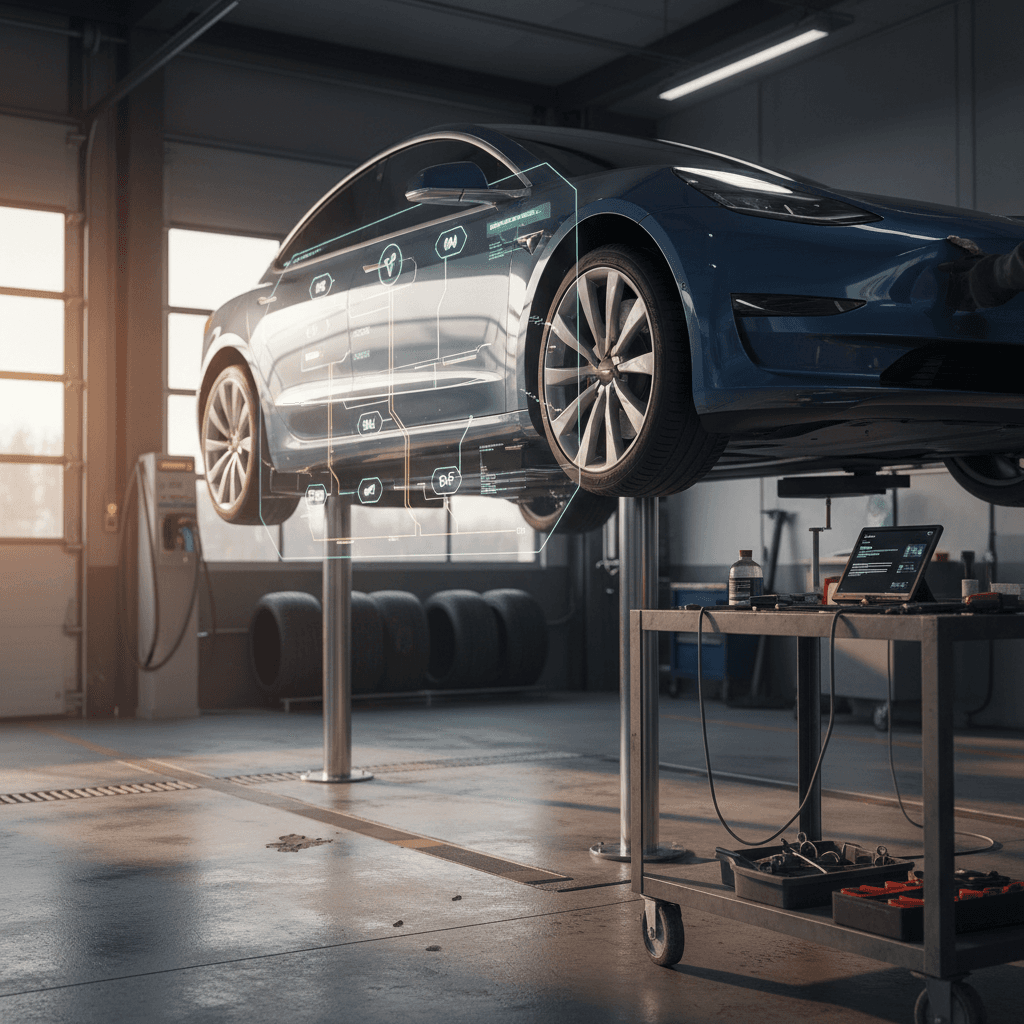
The official Tesla Model Y maintenance schedule looks surprisingly short compared with a gas SUV. There’s no engine oil, no transmission fluid, and far fewer moving parts. But that doesn’t mean you can skip maintenance altogether, especially if you plan to keep your Model Y long term or you’re shopping for a used one.
Tesla’s evolving approach to service
Why the Tesla Model Y Maintenance Schedule Matters
Tesla markets the Model Y as a low‑maintenance vehicle, and compared with an internal‑combustion crossover, it is. But tires, brakes, suspension components, and HVAC filters all still wear out. If you ignore them, you can end up with uneven tire wear, reduced range, noisy brakes, or a cabin that smells musty, issues that hurt both your driving experience and resale value.
- Preserve range and performance by keeping tires and brakes in top shape.
- Avoid safety issues like long stopping distances or poor wet‑weather grip.
- Keep your cabin comfortable with clean filters and working A/C.
- Protect resale value, especially if you plan to sell or trade in through a marketplace like Recharged.
Used Model Y owners: maintenance history is money
How Tesla Model Y Maintenance Differs From Gas Cars
What your Model Y doesn’t need
- No engine oil or oil filter changes.
- No spark plugs, timing belts, or fuel filters.
- No traditional automatic transmission fluid exchanges.
- Fewer exhaust and emissions components to fail.
What your Model Y still needs
- Regular tire rotations and eventual tire replacement.
- Brake fluid inspection and possible replacement.
- Cabin air filter changes and periodic A/C service.
- Suspension, wiper blade, and brake hardware checks.
And of course, software updates, Tesla treats those as a core part of maintaining performance and safety.
Tesla Model Y Maintenance Schedule at a Glance
Tesla no longer publishes a traditional, page‑long table the way many automakers do. Instead, it lists individual service items and typical intervals in the Model 3/Y manuals, and now mirrors those in the Maintenance section of the Tesla app. Below is a practical, owner‑friendly summary based on those recommendations and current repair‑shop best practices as of early 2026.
Model Y Maintenance Schedule Overview
Typical service intervals for a Tesla Model Y under normal driving in the U.S. Always confirm against your in‑car Service screen and owner’s manual for your specific model year and options.
| Item | Typical Interval | Notes |
|---|---|---|
| Tire rotation | Every 6,250 miles (10,000 km) or when tread differs by 2/32 in | More often with aggressive driving or 21" wheels. |
| Brake fluid inspection | Every 2 years | Replace only if contamination is found. |
| Brake caliper clean & lube | Every 12,500 miles or annually in salted‑road regions | Important for cold climates to prevent seized calipers. |
| Cabin air filter | About every 3 years for Model 3/Y | Sooner if air flow or odors worsen. |
| A/C desiccant / service | Every 4 years for Model 3/Y | Helps the battery and cabin cooling systems stay efficient. |
| Wiper blades | About once a year | Replace at first signs of streaking or chatter. |
| Battery coolant | Typically not required for life of vehicle under normal conditions | Check only through Tesla or a qualified EV shop. |
| General inspection | Annually or every 12,000–15,000 miles | Suspension, steering, tires, lights, underbody, leaks. |
Intervals are approximate; climate, driving style, and wheel/tire choice can shorten or extend them.
Always check your specific owner’s manual
Tire Rotation and Tire Care
Tires are the single biggest ongoing maintenance cost on a Tesla Model Y. The instant torque and relatively heavy curb weight can wear tires faster than on a comparable gas SUV, especially with 20" or 21" wheels.
Model Y Tire Maintenance in Numbers
Tesla’s service documentation recommends rotating Model Y tires every 6,250 miles (about 10,000 km) or if tread depth differs by 2/32 inch (1.5 mm) or more between front and rear. On staggered setups or performance models, the allowed rotation patterns may be limited, so always follow the pattern in the owner’s manual.
Tire Care Checklist for Your Model Y
1. Rotate every 6,000–7,000 miles
Set a reminder around 6,000 miles and stick to it. Consistent rotation usually pays for itself by extending tire life.
2. Watch tread depth, not just mileage
Use a tread‑depth gauge or the built‑in wear bars. Replace tires when tread reaches 4/32 in for best wet traction, and definitely by 2/32 in.
3. Check pressures monthly
Even with TPMS, pop into the Service screen or use a handheld gauge. Proper pressure improves range, ride, and tire life.
4. Be extra diligent with 20"/21" wheels
Low‑profile performance tires can wear faster and are more prone to damage. Budget for earlier replacement on Performance and bigger‑wheel trims.
5. Align when you see uneven wear
If you notice feathering, inner‑edge wear, or a pull to one side, ask for a four‑wheel alignment when you rotate tires or install a new set.
Use the in‑car tire service tracker
Brakes, Brake Fluid, and Caliper Service
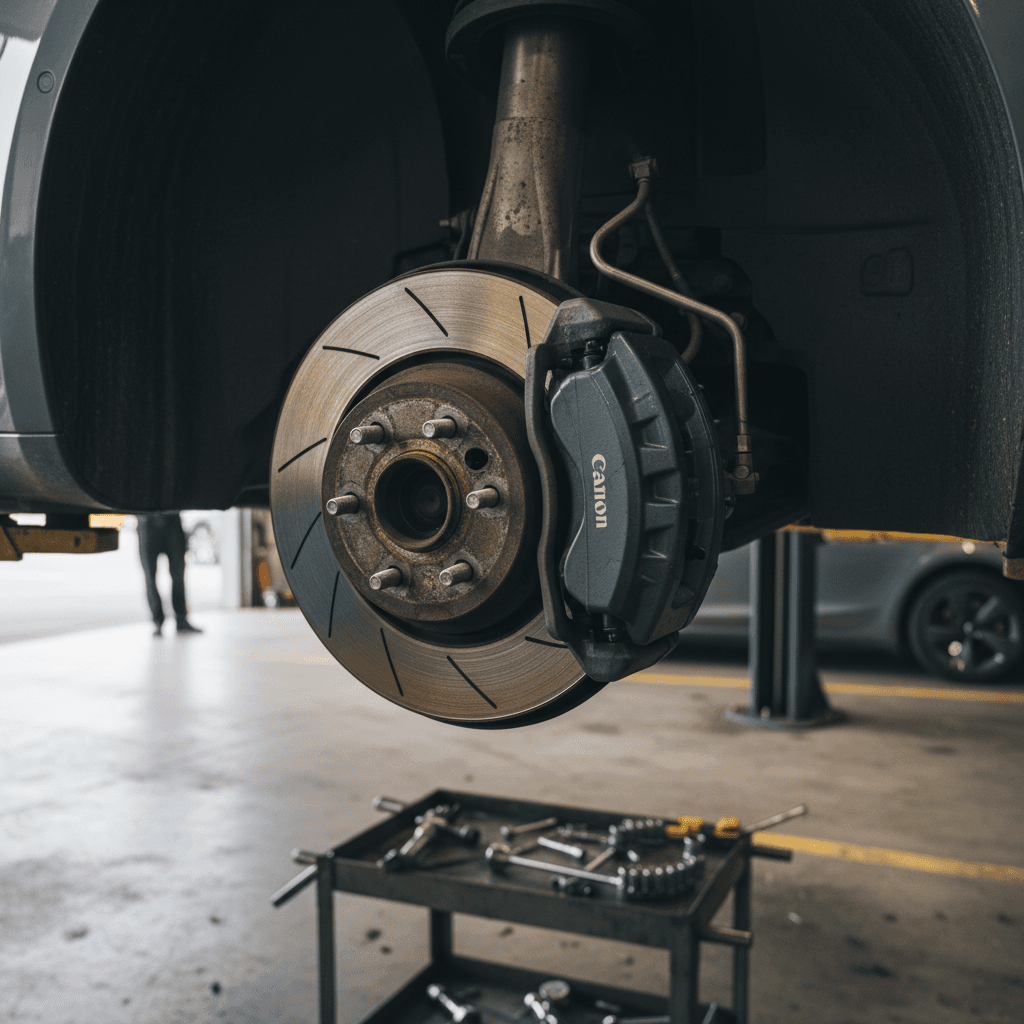
Because the Model Y relies heavily on regenerative braking, its physical brake pads often last a very long time. But the hydraulic brake system, fluid, calipers, and lines, still needs attention on a schedule that’s similar to many gas vehicles.
Model Y Brake System Maintenance
Key brake‑related items and intervals for the Tesla Model Y.
| Item | Typical Interval | What’s Involved |
|---|---|---|
| Brake fluid inspection | Every 2 years | Test fluid for contamination and moisture; replace only if needed. |
| Caliper clean & lube (salted roads) | Every 12,500 miles or yearly | Disassemble sliding calipers, clean hardware, and apply correct high‑temp lubricant. |
| Pad & rotor inspection | At each tire rotation | Check thickness, wear pattern, and rotor condition. |
| Parking brake check | Every 2–3 years | Verify proper function and absence of corrosion or binding. |
Intervals may tighten with frequent towing, mountain driving, or track use.
Don’t open the brake system casually
Tesla’s current manuals recommend that brake fluid be inspected every two years and replaced only if contamination is detected. Many third‑party Tesla specialists will still suggest a full fluid exchange at a similar cadence, especially in humid or coastal climates, because brake fluid absorbs moisture over time.
In areas where roads are salted in winter, Tesla also recommends cleaning and lubricating brake calipers yearly or every 12,500 miles. That simple step can prevent sticking calipers, uneven pad wear, and dragging brakes that hurt efficiency.
Cabin Air Filters and A/C Service
Your Model Y has one or more cabin air filters that remove dust, pollen, and other particles from the air entering the cabin. While Tesla’s guidance has evolved, the current rule of thumb for Model 3/Y is replacement roughly every three years under normal conditions.
- If you notice reduced airflow or persistent odors, change the filter sooner.
- Driving in dusty, polluted, or wildfire‑prone areas can shorten the interval.
- Cabin filters are a popular DIY job but can also be handled by Tesla or an EV‑savvy independent shop.
A/C and battery cooling service
Other Fluids and Battery Coolant
Good news: the Model Y has far fewer fluids to worry about than a traditional SUV. That said, some owners are surprised to learn that coolant still exists, it just lives in a closed loop around the battery and drive units.
Fluids in a Tesla Model Y
What’s in there and what you actually need to do.
Battery Coolant
Tesla states that battery coolant doesn’t require replacement for the life of the vehicle under most circumstances. There’s no reservoir you should be opening at home.
Gearbox Lubricant
The Model Y’s drive units use sealed lubricants, not serviceable like a traditional transmission. There’s no scheduled change interval for normal use.
Washer Fluid
The one fluid you’ll top up yourself. Use winter‑rated washer fluid in colder climates and keep it above the minimum line.
Don’t open the coolant reservoir
Annual Tesla Model Y Maintenance Checklist by Mileage
Because Tesla doesn’t force you into fixed 10k, 20k, 30k packages, it helps to think about Model Y maintenance in terms of what you should look at each year or every 12,000–15,000 miles. Here’s a practical mileage‑based view that blends Tesla guidance with real‑world ownership experience.
Model Y Maintenance by Time & Mileage
Typical items to consider as the miles add up.
| Odometer / Time | Key Items | Notes |
|---|---|---|
| Every 6,250 miles (~6 months) | Tire rotation; basic brake and tread check | Reset tire service in Controls → Service; note any uneven wear. |
| Year 1 or ~12,000–15,000 miles | General inspection; wiper blades; detailed brake check | Look over suspension, steering, lights, underbody, and seals. |
| Year 2 | Brake fluid inspection; tire rotation; general inspection | Plan for brake caliper service if you’re in a salt‑road region. |
| Years 3–4 | Cabin air filter replacement; A/C service; brake fluid re‑check | Good time to address any HVAC odors or ventilation concerns. |
| 50,000–60,000 miles | Likely first full tire set; brake caliper service; alignment | Budget ahead, tires are the biggest single maintenance cost. |
| Beyond 6 years / 100,000+ miles | Repeat pattern; watch suspension bushings, links, and shocks | An inspection‑based strategy works well on higher‑mileage Model Ys. |
Use this as a planning tool alongside the Service section in your Tesla app.
Real‑World Costs and How to Save
Overall, a Model Y will usually cost you less to maintain than a similar gas crossover, but the costs tend to clump: tires all at once, a larger brake or suspension job later in life, and the occasional surprise. The good news is that most routine items are predictable and can be budgeted for.
Typical routine costs
- Tire rotation: Often $60–$120 at Tesla or an independent shop; some tire retailers include it free with tire purchase.
- Cabin air filter & A/C service: Commonly in the $150–$300 range, depending on labor rates and whether ozone or evaporator cleaning is included.
- Brake fluid inspection/service: Around $120–$250 when a full fluid flush is needed.
Ways to save on maintenance
- Bundle services (for example, tire rotation + brake inspection + wipers) in a single visit.
- Use an EV‑specialist independent shop for out‑of‑warranty work, many are very familiar with Tesla procedures.
- DIY low‑risk items like wiper blades and cabin filters if you’re comfortable with basic tools.
- If you’re buying a used Model Y, choose a seller that provides a battery health report and maintenance history. Recharged includes this as part of its Recharged Score, which can avoid expensive surprises later.
Leaning on transparent marketplaces
Ready to find your next EV?
Browse VehiclesMaintenance Tips for Used Model Y Buyers
If you’re stepping into a used Tesla Model Y, especially a 2020–2022 vehicle now stacking up years and miles, the maintenance schedule isn’t just theory. It’s your checklist for evaluating whether the car you’re considering has been cared for properly.
Used Model Y Maintenance Checklist
1. Verify tire history
Ask when the tires were last rotated and replaced. Uneven wear or mismatched brands front to rear can hint at skipped maintenance or alignment issues.
2. Ask about brake fluid and caliper service
See if there’s documentation of a brake fluid check or flush every ~2 years and caliper lubrication in cold/salted regions.
3. Check cabin filter and A/C performance
Weak airflow or persistent odors can indicate neglected filters or A/C service, good to address early after purchase.
4. Review service records in the Tesla app
If the seller still has the car in their Tesla account, they can show completed services on the touchscreen or mobile app.
5. Get a pre‑purchase EV inspection
Use a shop that understands Teslas or an EV‑focused retailer like Recharged, which already runs diagnostics and battery health checks before listing a vehicle.
6. Plan your first year of service
Based on what’s been done, map out your next tire rotation, brake fluid check, and cabin filter change so you’re not reacting to issues after they appear.
FAQ: Tesla Model Y Maintenance Schedule
Frequently Asked Questions About Model Y Maintenance
Bottom Line: Planning Model Y Maintenance With Confidence
The Tesla Model Y doesn’t need the constant stream of oil changes and tune‑ups that you may be used to with gas vehicles. But it does have a clear, predictable maintenance rhythm built around tire rotation, brake care, cabin filters, and periodic inspections. If you follow the 6,250‑mile tire rotation rule, check brake fluid every two years, refresh your cabin filter and A/C system on schedule, and let software updates install promptly, you’ll be well ahead of the curve.
Whether you’re driving a brand‑new Model Y or considering a used one, having a concrete maintenance plan turns ownership from guesswork into a routine. And if you’re shopping used, choosing a seller that provides verified battery health and maintenance transparency, like the Recharged Score on Recharged, can make the difference between a worry‑free EV and an expensive science project.