If you drive or are considering a GM EV, you’ve probably wondered: can GM use Tesla chargers, and how does the Tesla Supercharger connector fit into the picture? As of late 2024 and into 2025, the answer is finally clear, and it’s good news for GM drivers who want easier road trips and more fast-charging options.
Why this matters
Can GM Use Tesla Chargers? The Short Answer
Yes, with the right connector or port
Here’s the quick breakdown before we dive into details
Current GM EVs (CCS port)
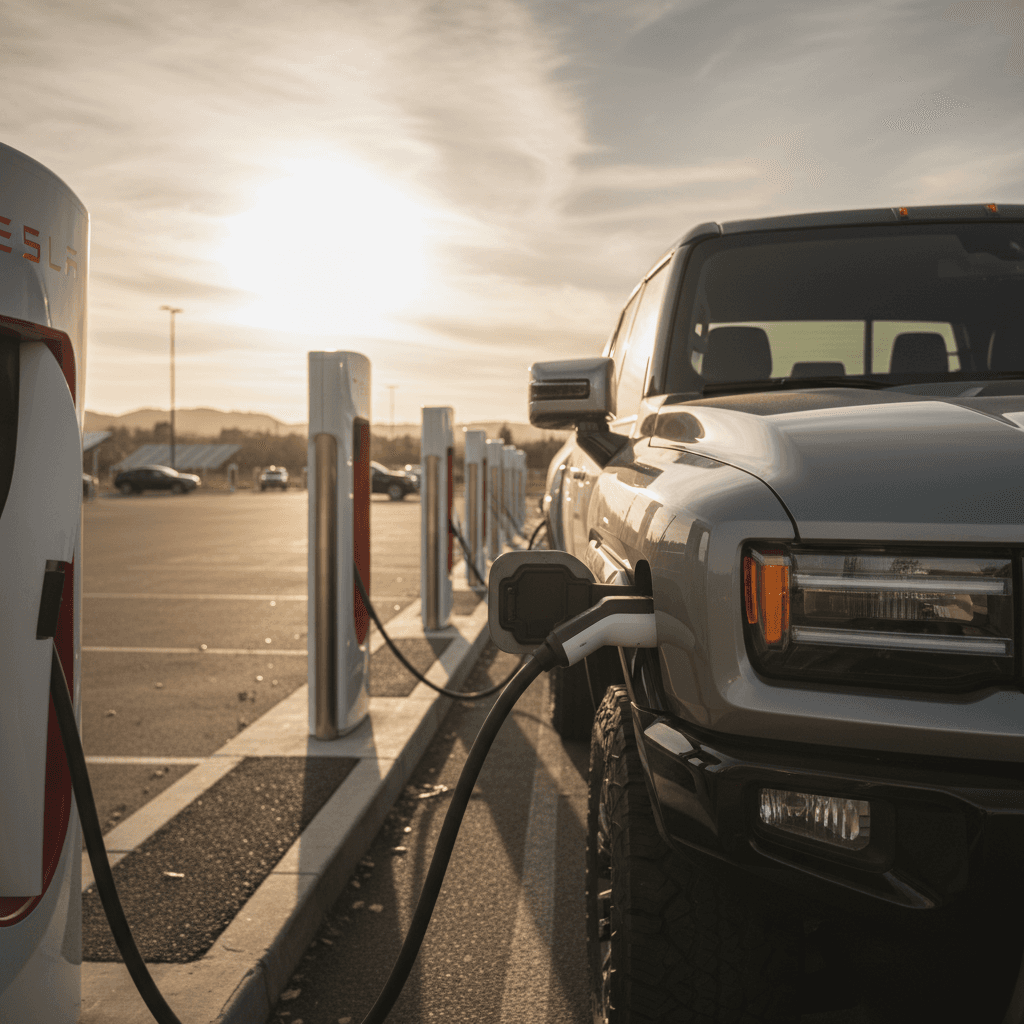
Most GM EVs on the road today use a CCS1 fast‑charging inlet. To use a Tesla Supercharger, you need a GM‑approved NACS DC adapter and to activate access in your GM brand app.
Future GM EVs (NACS port)
Starting with select 2025+ models, GM is building the Tesla-style NACS connector into the car. These vehicles can plug into compatible Superchargers without an adapter.
Not every Tesla plug
GM access is for DC fast Tesla Superchargers (V3 and newer). The adapter does not work on most Tesla Level 2 "Destination" chargers, and older V2 Superchargers may be excluded.
So yes, you can charge a GM EV on Tesla’s network, but whether you need an adapter, which stations you can use, and how seamless the experience will feel all depend on your specific model and model year.
Tesla Supercharger Connector (NACS) Explained
Tesla’s plug in North America is now branded the North American Charging Standard (NACS). It’s the slim connector you see on every Tesla Supercharger cable, and it’s rapidly becoming the default fast‑charging interface for new EVs from GM and many other brands.
NACS: The Tesla Supercharger connector
- Compact design for both AC and DC fast charging in one port.
- Supports very high DC charging power (hundreds of kW) on modern Superchargers.
- Originally proprietary, but now being adopted across the industry.
- Runs on Tesla’s network logic (stall reservations, load sharing, etc.) in the background.
CCS1: What most GM EVs use today
- Bulkier plug with an AC section (top) and two extra DC pins (bottom).
- Standard on most North American non‑Tesla EVs sold before the NACS shift.
- Works at Electrify America, EVgo, ChargePoint DC, and other third‑party networks.
- Needs a CCS–to–NACS adapter to talk to Tesla Superchargers.
Think of NACS like USB‑C
How GM EVs Use Tesla Superchargers Today
Key facts about GM access to Tesla Superchargers
In September 2024 GM finally flipped the switch: all GM EVs with CCS fast‑charge ports can, in principle, use Tesla Superchargers via a GM‑approved NACS DC adapter. Access is managed through GM’s own brand apps rather than the Tesla app.
- You purchase a GM‑approved NACS DC adapter (typically via myChevrolet, myGMC, myCadillac, or the GM accessories sites).
- You enable Tesla charging and set up a payment method in your GM brand app’s public charging section.
- You navigate to a compatible Tesla Supercharger (V3 or newer) shown as available in the GM app or Google Maps in the car.
- You plug the Supercharger cable into your NACS adapter, and the adapter into your car’s CCS port, then start the session from the GM app.
No free adapter from GM
Which GM Models Can Use Tesla Superchargers?
Broadly, there are two buckets of GM EVs when it comes to the Tesla Supercharger connector: CCS‑port vehicles that need an adapter, and newer NACS‑port vehicles that plug in directly.
GM EV compatibility with Tesla Superchargers
High‑level view by connector type. Always verify your specific car and software version in the GM app before a long trip.
| GM EV group | Connector on car | Tesla Supercharger use | What you need |
|---|---|---|---|
| Bolt EV / Bolt EUV (all years) | CCS1 | Supported with caveats (older MY Bolts may need a software update) | GM‑approved NACS DC adapter + GM app |
| Ultium SUVs & trucks (Lyriq, Equinox EV, Blazer EV, Hummer EV, Sierra/ Silverado EV, etc.) | CCS1 (through early–mid 2020s) | Supported at compatible V3+ Superchargers | GM‑approved NACS DC adapter + GM app |
| Future GM EVs starting 2025+ (select trims) | NACS (Tesla‑style) | Direct plug‑in at compatible Superchargers | No adapter for Tesla; CCS adapter needed for legacy fast chargers |
| Cadillac Optiq‑V & later NACS‑equipped trims | Factory NACS | Native Supercharger access once software and network integration are live | GM app + potentially a CCS adapter for non‑Tesla fast chargers |
Model availability and behavior can change with software updates or policy changes. When in doubt, trust what your GM app or owner resources say for your VIN.
Check your specific VIN
Step-by-Step: How to Charge a GM EV at a Tesla Supercharger
From adapter to paid session in 8 steps
1. Get a GM‑approved NACS DC adapter
Order the adapter via the myChevrolet, myGMC, or myCadillac app, or the GM accessories website. Avoid cheap third‑party adapters, if something goes wrong, you don’t want to be in a warranty fight.
2. Set up public charging in your GM app
Open your brand app, add a payment method, and enable Tesla Supercharger access if prompted. This is how sessions will be authorized and billed.
3. Find a compatible Supercharger
Use your GM app or, in some vehicles, Google Maps on the center display. Filter for Tesla or NACS stations and make sure they’re tagged as compatible for your car.
4. Arrive and choose an open stall
Prefer stalls that are not sharing power with a heavily‑drawn neighbor when possible (for example, avoiding stalls marked 1A/1B next to a nearly empty battery already charging at full tilt).
5. Attach the adapter to the Tesla cable
With the vehicle stopped and in Park, plug the Supercharger handle firmly into your NACS adapter first. Then plug the adapter into your car’s CCS inlet.
6. Start the session in the GM app
Most GM implementations use a "charge‑by‑app" flow. Confirm the stall ID (if required) and tap to begin charging. The car and charger should handshake within seconds.
7. Monitor speed and taper
Watch initial kW, state of charge, and estimated time in either the vehicle’s display or your app. Expect the fastest speeds between roughly 10–60% state of charge, then a taper.
8. End the session cleanly
Stop charging in the app or at the car, wait for the connector to unlock, then remove the adapter and the Tesla handle. Keep the adapter off the ground and stow it safely.
When it works, it feels native
Limits and Gotchas When Using Tesla Chargers with GM EVs
The promise of “Supercharger access for everyone” is compelling, but there are still some real‑world constraints and fine print GM owners should understand before they bet a road trip on it.
Common pain points GM drivers report
None are deal‑breakers, but they’re worth planning around
Not every Tesla plug is open
GM EVs typically get access to select V3 (and newer) Superchargers only. Older V2 sites often remain Tesla‑only, and some newer sites may be slow to show up in GM’s app or might be flagged as incompatible.
Adapter is DC‑fast only
GM’s NACS DC adapter is meant for high‑power DC fast charging. It generally does not support older Tesla AC "Destination" chargers, which remain much more Tesla‑centric.
Cable reach & parking dance
Supercharger stalls were designed around Tesla’s rear‑left charge port. GM ports are in different places, so you may have to back in creatively, hug the pedestal, or skip certain stalls so the cable reaches without strain.
Warranty & third‑party adapters
GM and Tesla both discourage unapproved high‑power adapters. If you use an off‑brand CCS–to–NACS gadget and something overheats, you could find yourself outside warranty coverage on expensive components.
Respect the "no adapters" fine print
Tesla Connector vs CCS: What It Means for GM Owners
The industry is converging on the Tesla Supercharger connector (NACS), but the legacy CCS network isn’t going away overnight. If you own, or are shopping for, a GM EV, the trade‑offs vary depending on when your car was built.
If your GM EV has CCS today
- You can already use most non‑Tesla DC fast chargers, plus Level 2 J1772 stations.
- With a GM NACS adapter, you add Tesla Superchargers to your toolkit.
- You’ll carry at least one adapter for the foreseeable future (potentially two if you later add a NACS–to–CCS adapter).
- Resale value may benefit from having dual‑network access during the transition years.
If your future GM EV has NACS
- You’ll plug directly into Tesla Superchargers and new NACS DC sites with no adapter.
- To use older CCS‑only fast chargers, you’ll rely on a different adapter going the other way (NACS–to–CCS).
- Charging will feel simpler day‑to‑day, but legacy CCS coverage could still matter in some regions for a few years.
- Long term, NACS becomes the native language of your car, and, increasingly, the market.
Think timeline, not snapshot
Planning Road Trips: GM EV + Tesla Superchargers
From a road‑tripping standpoint, the ability to use the Tesla Supercharger connector is transformative for many GM owners, but only if you plan with the right assumptions. Here’s how to approach it pragmatically.
Road‑trip planning checklist for GM drivers
Confirm adapter in hand, before you leave
Don’t assume the adapter will ship instantly. Order it well ahead of a big trip and take a quick test charge at a nearby Supercharger so there are no surprises on the road.
Map both Tesla and CCS options
Use the GM brand app plus apps like A Better Routeplanner or PlugShare to see both Superchargers and CCS stations. That redundancy is your safety net if a station is full or offline.
Target 10–60% SOC fast‑charge windows
For most GM packs, you’ll get the best blend of speed and battery health when you arrive at fast chargers low (but not empty) and unplug somewhere around 60–70% instead of topping all the way to 100%.
Mind stall layout and cable reach
When choosing a Supercharger stall, think about where your port is and how the cable will hang. Avoid stretching or sharply bending the cable, if it doesn’t reach comfortably, pick a different stall.
Have a non‑Tesla plan B at each stop
Even with high uptime, no network is perfect. For long trips, know which non‑Tesla DC fast chargers or even reliable Level 2 sites are within a few miles of every major stop.
Watch pricing and idle fees
Tesla locations often post per‑kWh or per‑minute pricing and may include idle fees if you stay plugged in after you’re done. Don’t treat a Supercharger like a free parking spot.
Canada and rural gaps
FAQ: GM EVs and the Tesla Supercharger Connector
Frequently asked questions about GM and Tesla charging
How Recharged Helps You Shop Smarter for a Used GM EV
If you’re weighing a used GM EV against a used Tesla, or a Ford, Hyundai, or Rivian, the charging story is now much more competitive than it was a few years ago. With GM + Tesla Supercharger access, the right GM EV can deliver most of the practical charging experience people used to associate exclusively with Tesla ownership.
Why it pays to sanity‑check charging before you buy
Recharged focuses on the stuff that actually shapes daily ownership
Verified battery health
Every vehicle on Recharged comes with a Recharged Score Report that includes battery diagnostics. That matters because fast‑charging (Tesla or otherwise) is easier on a healthy pack, and range estimates stay trustworthy longer.
Real‑world cost picture
We surface fair market pricing and help you compare financing for used GM EVs versus alternatives. With Supercharger access, the total value of a GM EV is about more than MSRP, it’s about how flexibly you can actually use the car.
Charging fit for your life
Recharged’s EV‑specialist team can walk you through how Superchargers, CCS, and home charging fit your specific commute and road‑trip habits, so you’re not buying an EV that only works on paper.
The bottom line: yes, GM can use Tesla chargers, either through a GM‑approved NACS adapter on today’s CCS‑based models or natively on the NACS‑equipped GM EVs arriving from 2025 onward. For you as a driver, that means more charging options, better coverage on road trips, and one less reason to feel locked into a single brand just for its network. If you’re considering a used GM EV, pairing that broader charging access with clear battery health data and fair pricing, exactly what Recharged was built to provide, can make the switch to electric both smarter and less stressful.