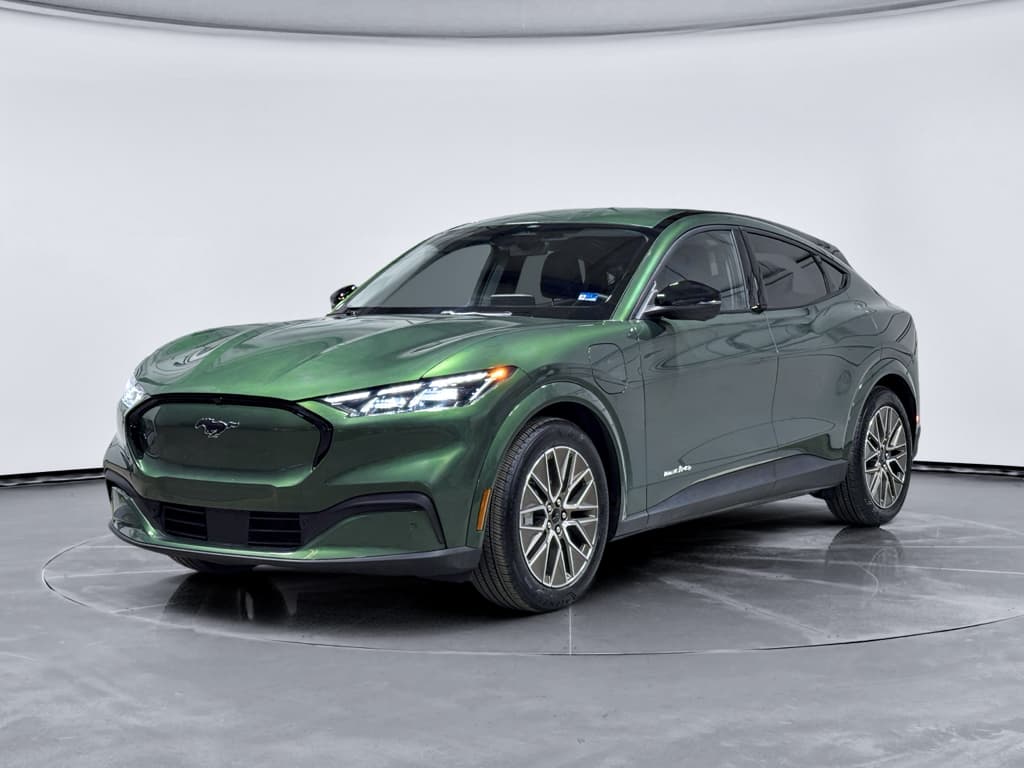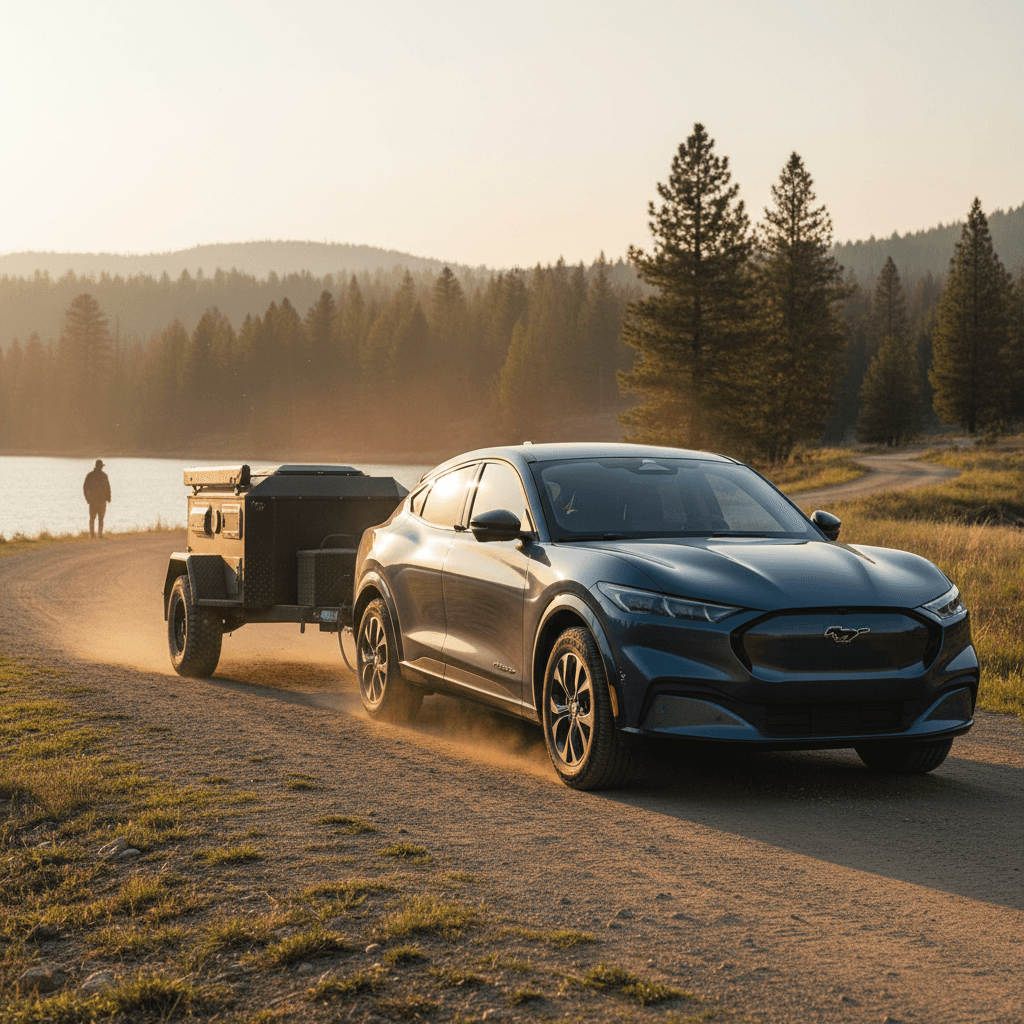
If you own or are shopping for a Ford Mustang Mach‑E, it’s natural to wonder: can a Mustang Mach‑E tow a trailer for bikes, a small camper, or Home Depot runs? The short answer is: it depends where the car was sold, what you plan to tow, and how much risk you’re comfortable with. This guide walks you through the official numbers, the real‑world experiences, and how to decide whether towing with a Mach‑E is smart for you.
Key takeaway up front
Quick answer: can a Mustang Mach‑E tow a trailer?
- U.S. and Canada: Official answer is no. Ford does not approve trailer towing with the Mustang Mach‑E here, and towing could put you at odds with the owner’s manual and potentially your warranty.
- Europe: Many extended‑range Mach‑E models (both RWD and AWD) are rated to tow a braked trailer of roughly 1,000–1,500 kg, enough for a small boat, pop‑up camper, or utility trailer.
- Reality: The vehicle clearly has the power and structure to move a light trailer, and some owners in every region do it with aftermarket hitches. The real question is whether it’s wise to do so, given safety, range, and liability.
If you’re in North America…
Why the answer is different in Europe vs. the U.S.
One confusing part of the "can a Ford Mustang Mach‑E tow a trailer" question is that the same basic vehicle is treated very differently on each side of the Atlantic.
Mach‑E towing: Europe vs. North America
Same basic hardware, different regulations and ratings
Europe (EU/UK/others)
- Ford has type‑approved certain extended‑range Mach‑E trims to tow up to about 1,000–1,500 kg braked.
- Ford’s own media materials have highlighted this, touting the ability to pull a small boat or compact camper.
- European models can be ordered with a factory towbar and are engineered, tested, and certified for towing loads within that rating.
U.S. & Canada
- Ford’s U.S. specs and towing guides list the Mach‑E with “not recommended” or “N/A” towing capacity.
- Owner’s manuals for North American Mach‑Es explicitly say to never tow a trailer with the vehicle.
- Ford does not sell a factory trailer‑tow package for the Mach‑E here, and U.S. towing guides don’t quote a tow rating for it.
Why the split? It often comes down to regulations, liability standards, and how much testing an automaker wants to pay for in a given market. U.S. towing expectations are high, owners routinely haul heavy, high‑speed loads, so some vehicles that tow modestly in Europe simply aren’t rated for towing here.
European rating doesn’t automatically apply in the U.S.
Official Ford guidance: what the manual actually says
No matter what you see on forums or hitch maker websites, your first stop should always be the Ford owner’s manual for your exact model year and market. For North American Mustang Mach‑Es, multiple recent manuals include clear language along the lines of: “Never tow a trailer with your Mustang Mach‑E.” That’s the baseline Ford wants you to follow.
How to confirm what your Mach‑E is rated to tow
1. Look up your exact manual
Access the digital owner’s manual for your model year on Ford’s support site or in the car’s infotainment system, not just a generic PDF you find online.
2. Search for “towing” and “trailer”
Use the search function to locate sections on “Trailer Towing,” “Towing Your Vehicle,” and “Trailer Sway Control.” These clarify whether towing is permitted and in what contexts.
3. Check regional notes
Manuals often have region‑specific statements. If your car is a U.S. model, ignore guidance clearly marked for other markets such as “enGBR” (UK) or “Europe only.”
4. Look for a tow rating table
Vehicles that are approved to tow usually have a clear table listing maximum trailer weight, tongue weight, and whether the rating assumes a braked trailer.
5. Treat silence as a red flag
If there’s no tow rating table and the general guidance says not to tow, assume your car is <strong>not approved</strong> to pull a trailer, regardless of what it can physically do.
Manual beats marketing
Aftermarket hitches: what they can and can’t change
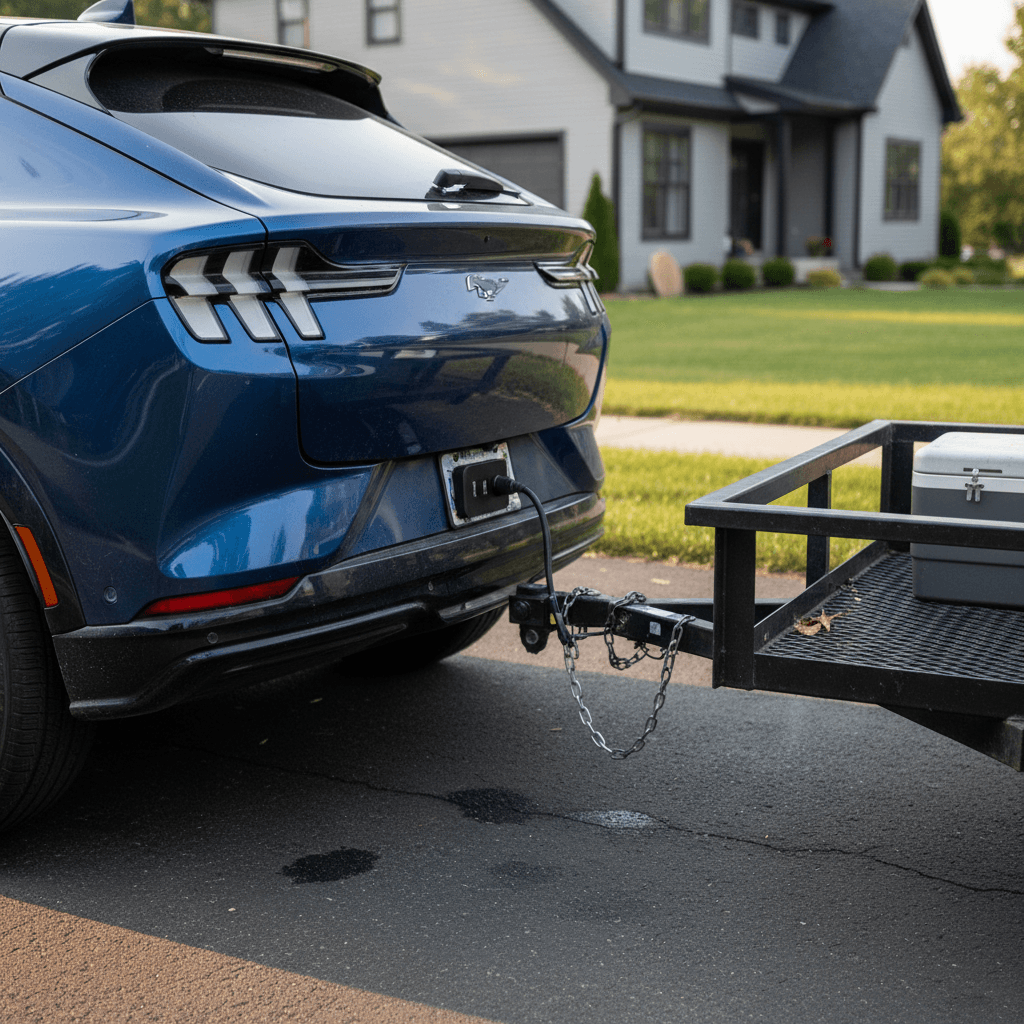
Search for “Mustang Mach‑E trailer hitch” and you’ll find reputable manufacturers advertising bolt‑on hitches for 2021–2026 Mach‑E models, often claiming up to around 3,500 lb towing capacity and 500+ lb tongue weight when installed properly. That’s the hardware limit of their product, not the vehicle’s official tow rating.
What an aftermarket hitch does give you
- Bike racks and cargo carriers: Perfectly reasonable use cases that keep heavy, awkward loads out of the cabin.
- Recovery and utility options: A solid mounting point for small cargo trays or recovery accessories within the hitch’s and vehicle’s limits.
- Towing, mechanically speaking: The car has the power and structure to move a light trailer, and a good hitch can handle that load.
What a hitch does not change
- Ford’s official rating: If Ford lists towing as “not recommended” or “N/A,” a hitch doesn’t magically grant an OEM tow capacity.
- Your legal obligations: You’re still responsible for safe loading, braking distances, and compliance with local laws.
- Warranty and insurance risk: If a towing‑related incident occurs, Ford and your insurer can look closely at whether you operated the vehicle outside its stated limits.
Smart use of a hitch on a Mach‑E
How much range do you lose towing with an EV?
Even if you treat your Mach‑E as a light‑duty tow vehicle, you need to know how badly a trailer will hit your range. Across EVs, real‑world testing and owner reports consistently show that towing makes your usable range drop sharply.
Typical EV range loss when towing
For context, a Mach‑E trim with an EPA rating around 250–300 miles might realistically see 120–180 miles between charges with a light, aerodynamic trailer at highway speeds, and far less with a big, square camper. That’s before you factor in cold weather, headwinds, or mountain grades.
Plan using “usable” range, not the window sticker
What size trailer makes sense behind a Mach‑E?
Let’s talk practical scenarios. If you’re still asking whether a Ford Mustang Mach‑E can tow a trailer, chances are you have a specific use in mind, yard work, bikes, a teardrop camper, or a fishing boat. Here’s how to think about those options, especially if you’re in North America where Ford doesn’t officially rate the car for towing.
Common trailer scenarios and how they fit the Mach‑E
These are general guidelines, not official ratings. Always check your specific vehicle documentation and local laws.
| Use case | Typical loaded weight | How it fits a Mach‑E | Key concerns |
|---|---|---|---|
| Small utility trailer with yard waste or hardware store runs | 500–1,500 lb | Mechanically easy for the Mach‑E to move, especially at low speeds and short distances. | No official U.S. tow rating; be conservative on weight, braking distance, and hitch selection. |
| Two bikes on a hitch rack or small cargo platform | <250 lb on the hitch | Excellent fit; removes bulky items from the cabin without significantly affecting range. | Stay within the hitch’s tongue‑weight limit and avoid blocking taillights. |
| Light teardrop or compact camping trailer | 1,500–2,500 lb | Feasible in EU with tow‑rated trims; in North America this is firmly outside Ford’s stated guidance. | Range can fall by 40–60%; legal, warranty, and safety risks in non‑tow‑rated markets. |
| Small fiberglass fishing boat on trailer | 2,000–3,000 lb | Within some European ratings; borderline or out‑of‑bounds for U.S. cars with no tow rating. | High aerodynamic drag at speed, increased stopping distances, and strong dependence on trailer brakes. |
| Tall, full‑size travel trailer | 3,500+ lb | Better suited to dedicated tow‑rated EVs or trucks, not a Mach‑E. | Major range loss, crosswind sensitivity, and braking demands; a mismatch for most Mach‑E setups. |
When in doubt, err on the side of a lighter, lower, and shorter trailer, or choose a tow‑rated EV instead.
Mind trailer height even more than weight
Safety and warranty risks you should weigh
From years of talking with buyers and reading the fine print, I can tell you this: the question isn’t just “can a Ford Mustang Mach‑E tow a trailer,” it’s “what happens if something goes wrong while you’re towing?” That’s where safety systems, liability, and warranty coverage come into sharp focus.
Risks to consider before towing with a Mach‑E
Braking distance and control
Even with strong regenerative braking, you’re now managing the momentum of <strong>two vehicles</strong>. Without a properly braked trailer and trailer sway control, emergency stops get much longer and riskier.
Hitch and structure loads
Hitches bolt into specific areas of the body structure. If those points weren’t engineered for towing loads in your market, over‑stressing them can lead to damage you might not see until it’s costly to fix.
Drivetrain and thermal limits
Long grades with a trailer load generate heat in motors, inverters, and brakes. Tow‑rated vehicles are tested and cooled for that; non‑rated ones may not be.
Warranty interpretation
If Ford can reasonably claim that towing contributed to a failure on a vehicle <strong>they told you not to tow with</strong>, it may complicate a warranty claim. That doesn’t guarantee denial, but it adds friction.
Insurance and liability
In a crash, investigators can look at whether the vehicle was used within its stated limits. A non‑rated car pulling a heavy trailer could raise uncomfortable questions if there’s injury or property damage.
Err on the conservative side
When a different EV is a better fit
For plenty of drivers, the honest answer to “can my Ford Mustang Mach‑E tow a trailer?” is: “it might, but the compromises aren’t worth it.” That’s especially true if you dream of regular camping trips, boat launches, or long‑distance towing.
Situations where you should shop a tow‑rated EV
Match the vehicle to the job instead of forcing the Mach‑E to do it all
You tow often or far
You’re shopping used today
You’re already near GVWR
At Recharged, we see this pattern all the time: a buyer loves the drive and tech of a particular EV but quietly needs it to tow more than the platform was ever designed to handle. In those cases, the most satisfying long‑term move is usually to choose a different EV that fits the towing brief from day one.
How Recharged can help if towing matters to you
If you’re weighing whether to buy a Mustang Mach‑E or a different EV for towing, you don’t have to figure it out alone. This is exactly where Recharged’s tools and specialists shine.
Use Recharged to match your EV to your trailer plans
From battery health to real‑world towing advice
Understand real capability, not just specs
Talk to EV‑savvy specialists
Ready to find your next EV?
Browse VehiclesFlexible ways to get into the right EV
- Financing and pre‑qualification: Explore payment options for tow‑capable EVs without impacting your credit up front.
- Trade‑in or instant offer: Move out of a non‑tow‑rated vehicle into something that matches your camping or boating plans.
- Nationwide delivery: The right tow‑rated EV isn’t always in your backyard; Recharged can bring it to you.
Hands‑on help if you’re near Virginia
If you’re close to Richmond, VA, you can visit the Recharged Experience Center, test‑drive EVs, and talk through how towing, charging, and daily commuting all fit together for you.
Ford Mustang Mach‑E towing FAQ
Frequently asked questions about towing with a Mustang Mach‑E
So, can a Ford Mustang Mach‑E tow a trailer? In Europe, certain trims can, within clearly defined limits. In North America, Ford’s own documentation says it shouldn’t. In the real world, the Mach‑E has the muscle to move a light trailer, but that doesn’t mean it’s the right tool for frequent or heavy towing. If the occasional hardware‑store run or bike rack is all you need, the Mach‑E can serve you well. If your lifestyle revolves around campers and boats, you’ll be happier, and safer, choosing a tow‑rated EV from the start, and that’s exactly where a platform like Recharged can help you make a confident choice.