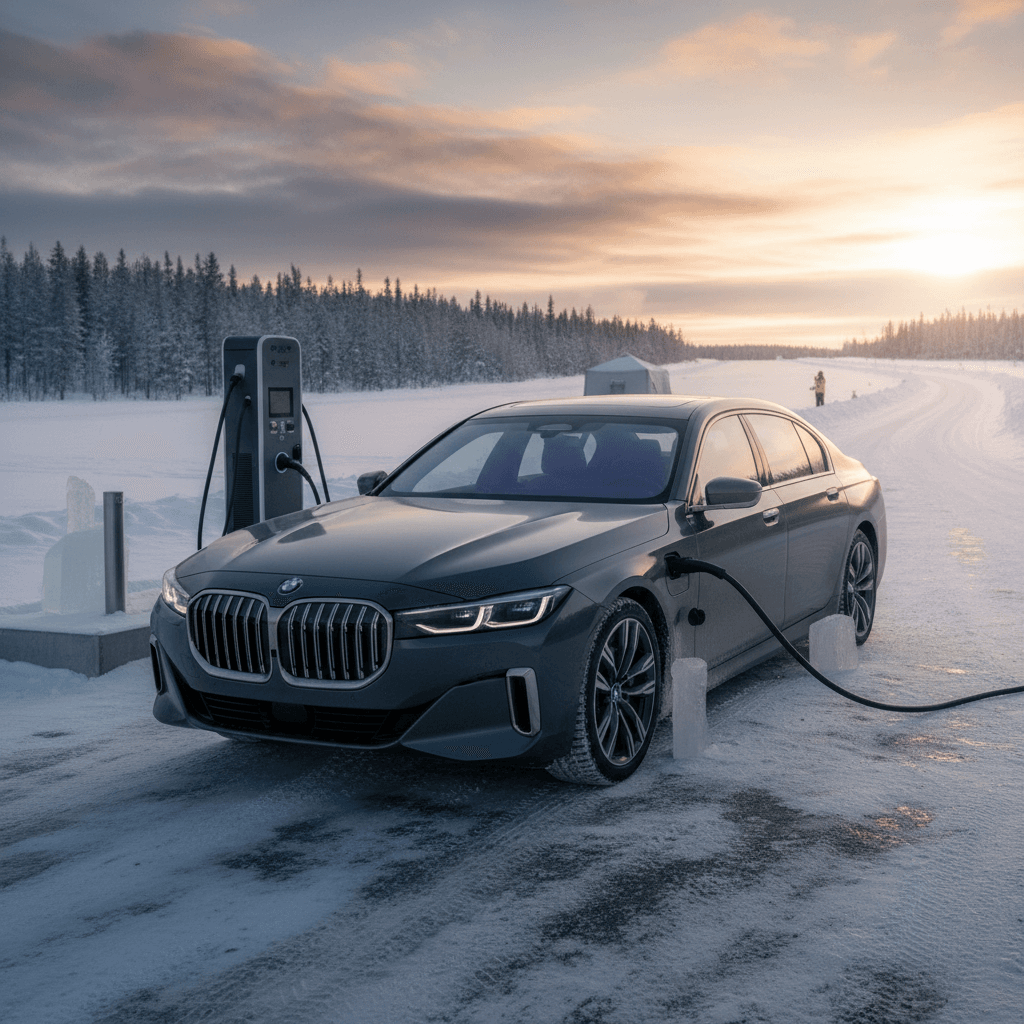
The BMW i7 is one of the most comfortable electric luxury sedans on the road, but if you live where snow, ice, and freezing temps are normal, you’re probably wondering how much the BMW i7 range in cold weather really drops. The short answer: expect noticeably less range in winter than the EPA sticker suggests, but with a few smart habits you can keep the i7 very usable year‑round.
What this guide covers
BMW i7 range in cold weather: quick overview
BMW i7 winter range at a glance
On paper, recent BMW i7 models offer EPA‑estimated ranges of roughly around 300 miles per charge for the eDrive50 and xDrive60, and a bit less for the M70, depending on wheels and options. In real winter use, think repeated trips in 20–30°F weather with the heat running, many owners report seeing something closer to 200–240 miles on a full charge, with harsher cold able to drag that down into the 180‑mile neighborhood on highway drives.
Don’t panic about the dash estimate
Official BMW i7 EPA range by trim
Before we talk about winter, it’s important to anchor on the official EPA range ratings. These are what BMW and the window sticker advertise under mixed conditions on standard test cycles. Numbers vary slightly by model year, wheel size, and options, but for current U.S.‑market cars you can think in these ballpark terms:
Approximate EPA range ratings for recent BMW i7 models
Representative combined EPA range estimates for current BMW i7 trims on efficient wheel options. Always verify the exact rating for your model year and configuration.
| BMW i7 trim | Drivetrain | Approx. EPA range (mi) | Notes |
|---|---|---|---|
| i7 eDrive50 | RWD | ~301–321 | Best efficiency; single‑motor rear‑drive |
| i7 xDrive60 | AWD | ~298–317 | Similar battery, dual‑motor all‑wheel drive |
| i7 M70 xDrive | Performance AWD | ~268–291 | More power, slightly less range |
EPA figures give you a best‑case baseline in mild conditions, not guaranteed winter range.
EPA vs. WLTP vs. your driveway
How much range the BMW i7 loses in winter
All EVs lose some range when temperatures drop, and the i7 is no exception. Thanks to its large battery and sophisticated thermal management, it copes better than many smaller EVs, but you should still plan around a meaningful winter penalty.
Typical BMW i7 winter range loss by scenario
These are realistic planning numbers, not guarantees.
Cool weather (40–55°F)
Expected loss: 5–15%
- Short‑trip city driving: range display may jump around but real loss is modest.
- Highway cruising: you’ll usually stay within 10–15% of EPA if you keep speeds reasonable.
Cold weather (20–35°F)
Expected loss: 15–30%
- Heater and seat/steering heat are running most of the time.
- Short trips hurt efficiency more than long highway stints.
Deep freeze (below 10°F)
Expected loss: 25–40%+
- Battery is harder to warm; cabin demands more energy.
- High speeds and strong headwinds can push losses higher.
A simple planning rule of thumb
Real-world BMW i7 winter range examples
Owner reports and instrumented tests tell a more nuanced story than any single number. Here’s how different i7 trims tend to behave in cold weather when driven at normal U.S. highway speeds (65–75 mph) with the cabin comfortably heated.
i7 eDrive50 (RWD)
- EPA baseline: roughly 300–320 miles depending on spec.
- Typical winter highway range: about 210–250 miles on a full charge in the 20–30°F range when you start with a preconditioned battery.
- Urban/suburban winter use: Stop‑and‑go plus regen can help; many owners see rated‑minus‑20% in mixed driving if they avoid lots of short, cold starts.
With fewer driven wheels and very good aero, the eDrive50 is the i7 sweet spot for efficiency, especially if you run the smaller wheel options.
i7 xDrive60 (AWD)
- EPA baseline: upper‑200s to low‑300s depending on wheels.
- Typical winter highway range: about 200–240 miles at sustained interstate speeds around freezing.
- Mixed driving: AWD traction is a big confidence boost in snow but costs a bit of efficiency vs. the eDrive50.
If you live where winter really means winter, the xDrive60 is often the preferred trim: you trade a small amount of range for much better traction and performance.
i7 M70 xDrive (performance)
- EPA baseline: roughly 270–290 miles depending on wheel choice.
- Typical winter highway range: about 180–220 miles on a full charge in sub‑freezing conditions.
- Driving style sensitive: Leaning into the car’s huge power noticeably shrinks range; gentle driving closes the gap to the xDrive60.
The M70’s tremendous performance and wide tires make it the least efficient i7 in winter, but the underlying pack is the same size, so you still have useful real‑world range if you plan your stops.
Extreme cold case study
- In severe cold snaps, single‑digit temps with snow and wind, owners report efficiency dropping into the low‑2 mi/kWh range.
- On a ~100‑kWh pack, that translates to roughly 200–220 miles of real‑world range, even if the official estimate is closer to 280–300.
- Short, back‑to‑back trips can exaggerate the hit because the car keeps reheating a cold cabin and battery.
The lesson: the i7 still works in extreme cold, but you should plan more frequent charging stops and lean on preconditioning whenever possible.
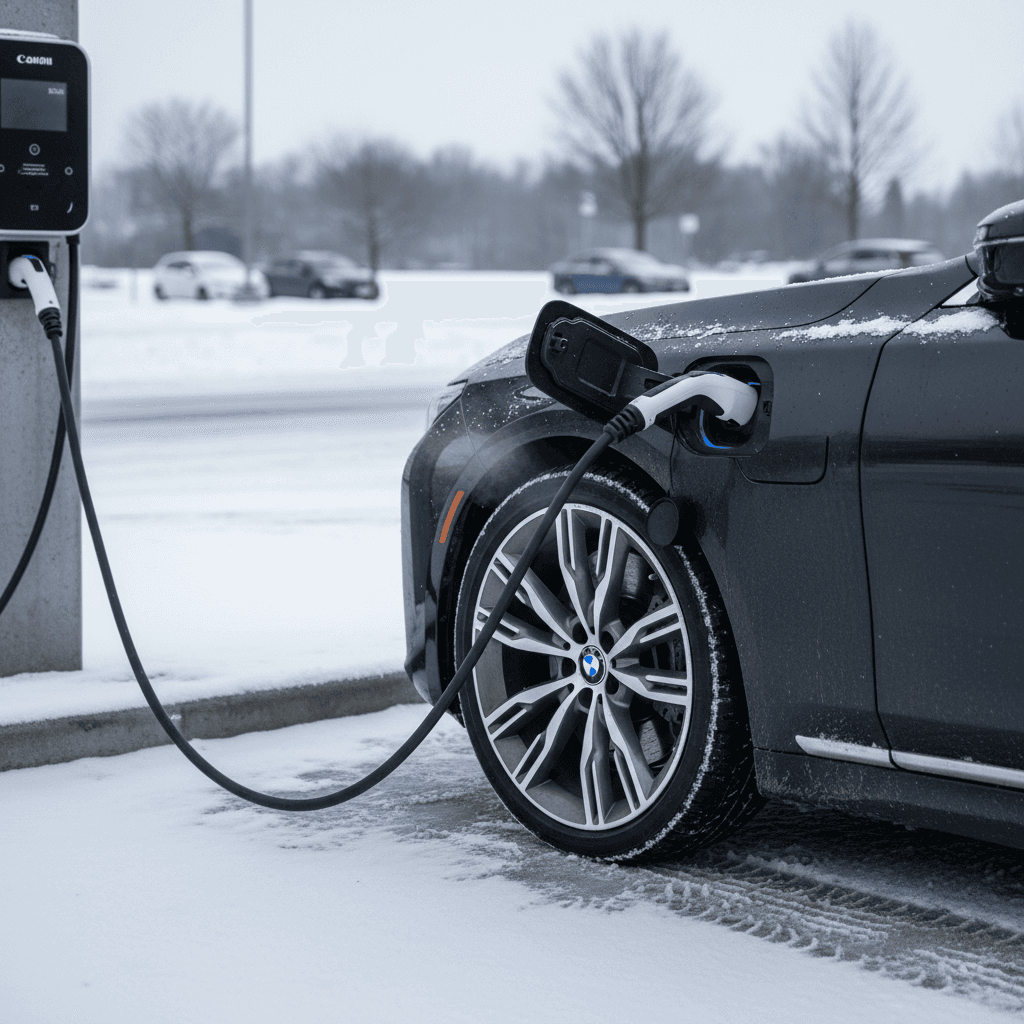
Why the BMW i7 loses range in cold weather
Cold‑weather range loss isn’t a BMW quirk, it’s basic physics that affects every EV. The i7’s large battery and thermal system actually make it one of the better winter EVs, but the same fundamentals apply.
- Battery chemistry slows down in the cold. Lithium‑ion cells are happiest in a moderate temperature window. When it’s cold, internal resistance goes up and you can’t pull energy out as efficiently, hurting both power and usable capacity until the pack warms up.
- Cabin heating uses a lot of energy. In a gas car, you’re using waste heat from the engine. In an EV like the i7, the climate system pulls energy straight from the battery. The i7’s heat pump helps, but keeping a big cabin warm in sub‑freezing weather is still a serious draw.
- Higher rolling resistance. Cold tires and cold road surfaces increase rolling resistance, especially on winter compounds. Soft snow or slush adds even more drag.
- Aero and drivetrain losses. Denser cold air increases aerodynamic drag at highway speeds. Thickened lubricants in driveline components can also add a small penalty until everything warms up.
Beware repeated short trips
How to improve BMW i7 range in cold weather
The good news is that you can claw back a surprising amount of winter range in your BMW i7 without turning it into a penalty box. A few habit changes and smart use of the car’s tech can make a big difference.
Practical ways to stretch BMW i7 range in cold weather
1. Precondition while plugged in
Use the BMW app or in‑car settings to <strong>precondition the cabin and battery while the i7 is still charging</strong>. That way, the grid, not your battery, does most of the heavy lifting, and you start driving with a warm pack that’s ready to deliver full power and regen.
2. Rely on seat and wheel heaters
Resist the temptation to crank the cabin temp into the 70s. Instead, set the climate a bit lower and use the <strong>heated seats and heated steering wheel</strong>, which use less energy and still keep you comfortable.
3. Choose Eco Pro for winter cruising
Eco Pro mode softens accelerator response and optimizes climate settings. It’s a simple way to trim 5–10% off consumption on longer drives without feeling like you’re fighting the car.
4. Keep highway speeds in check
Above about 70 mph, aerodynamic drag rises quickly. Dropping from 78 mph to 68 mph can be worth <strong>dozens of miles of range</strong> over a long winter leg, often more impactful than any other single change.
5. Minimize rooftop and trunk clutter
Ski boxes, roof racks, and a packed trunk all add drag or weight. Remove unused roof accessories in the off‑season and pack thoughtfully for trips; the i7 already weighs a lot, so every bit of unnecessary mass or drag hurts.
6. Plan your stops around fast chargers
Instead of charging to 100% at home and hoping for the best, <strong>plan a mid‑route DC fast‑charging stop</strong> where you can arrive with 10–30% remaining and charge back into the i7’s fastest charging window.
Comfort doesn’t have to suffer
Winter charging strategy for the BMW i7
Cold weather doesn’t just affect how far you can go, it also changes how fast and how easily you can charge. The BMW i7’s big battery and DC fast‑charging capability are excellent tools, but you’ll want to adjust your approach a bit once temperatures drop.
Home charging in winter
- Use scheduled charging: If your utility offers off‑peak rates, schedule charging so the car finishes shortly before you leave. That keeps the battery warm and ready for best performance.
- Avoid relying on Level 1: A standard 120V outlet may add just 2–4 miles of range per hour in cold weather. Whenever possible, install or use a Level 2 (240V) solution that can comfortably refill the i7 overnight.
- Garage helps, even unheated: Keeping the car out of the wind and extreme cold moderates temperature swings and makes both range and charging a bit more predictable.
DC fast charging on road trips
- Precondition before arrival: Use the navigation to route to a DC fast charger so the i7 can warm the battery on the way. You’ll see much closer to peak charging speeds, even in winter.
- Live in the fast zone: The i7 charges fastest between roughly 10% and 60–70% state of charge. On winter road trips, it’s often quicker to make two short stops in that window than one deep, slow charge to 100%.
- Expect slower starts in deep cold: If the pack is very cold and you didn’t precondition, the car may initially charge more slowly to protect the battery. Give it a few minutes; as the pack warms, speeds typically improve.
Leaning on fast‑charging perks
Protecting your BMW i7 battery long-term
Winter doesn’t just affect today’s range; over years of use, your habits can influence how the i7’s battery ages. The good news is that BMW engineered a generous buffer into the pack, and real‑world degradation on recent EVs has generally been modest when owners follow a few best practices.
- Avoid living at 100%. It’s fine to charge to full for a long winter trip, but day‑to‑day you’re better off living in the 20–80% window when possible. Use charge‑limit settings to make this automatic.
- Don’t obsess about brief fast‑charge sessions. Occasional DC fast charging, even in winter, won’t ruin a healthy pack. Problems tend to arise from constant hard use at very high states of charge and temperature, which typical owners rarely approach.
- Let the thermal system work. The i7 manages its battery temperature aggressively. You may hear pumps or fans running after shutdown in extreme conditions; that’s normal and part of protecting the pack.
- Store with some charge, not empty. If you’re parking the i7 for weeks in cold weather, aim to leave it with 40–60% charge rather than nearly empty or completely full.
How Recharged evaluates i7 batteries
BMW i7 winter range and buying used
If you’re considering a used BMW i7 and you live in a cold‑weather state, it’s smart to think about winter performance before you sign. The same factors that affect a new i7’s range in January, battery health, wheel choice, charging access, and your route, matter just as much on a pre‑owned example.
Key winter-friendly questions to ask when buying a used BMW i7
These checks help you match the car to your climate and driving patterns.
1. Where has it lived?
Ask where the car spent most of its life. A car that has already survived multiple northern winters isn’t a red flag by itself, but you’ll want objective battery health data instead of relying on the dash estimate alone.
2. What’s the real battery health?
Request a recent independent battery test or a Recharged Score Report. Healthy packs tend to lose only modest usable capacity over the first several years, but you don’t want unpleasant surprises the first time a cold snap hits.
3. Is it equipped for snow?
Check for appropriate tires, wheel size, and whether the i7 has the features you care about in winter, heated steering wheel, rear heated seats, and driver assistance systems that work well in bad weather.
Buying through a platform that specializes in EVs can simplify this. At Recharged, every i7 we list includes verified battery health information, expert EV guidance, financing options, and nationwide delivery, so you can shop for a winter‑ready luxury EV without needing to be a battery engineer yourself.
FAQ: BMW i7 range in cold weather
Frequently asked questions about BMW i7 winter range
Bottom line: living with a BMW i7 in winter
If you’re cross‑shopping high‑end electric sedans, the BMW i7 range in cold weather is competitive, and in many ways, its huge battery and thoughtful thermal management make it easier to live with than smaller‑pack EVs. You should fully expect winter conditions to trim your usable range, especially on short trips and fast highway runs, but with preconditioning, smart charging habits, and realistic trip planning, the i7 remains a comfortable, confidence‑inspiring four‑season luxury car.
Whether you’re considering a new build or shopping for a used BMW i7, taking the time to understand how winter affects range will pay off in peace of mind. And if you’d like help finding an i7 whose battery health and equipment match your climate, Recharged can pair you with EV specialists, transparent Recharged Score Reports, and nationwide delivery so your next winter commute feels more like a first‑class flight than a compromise.