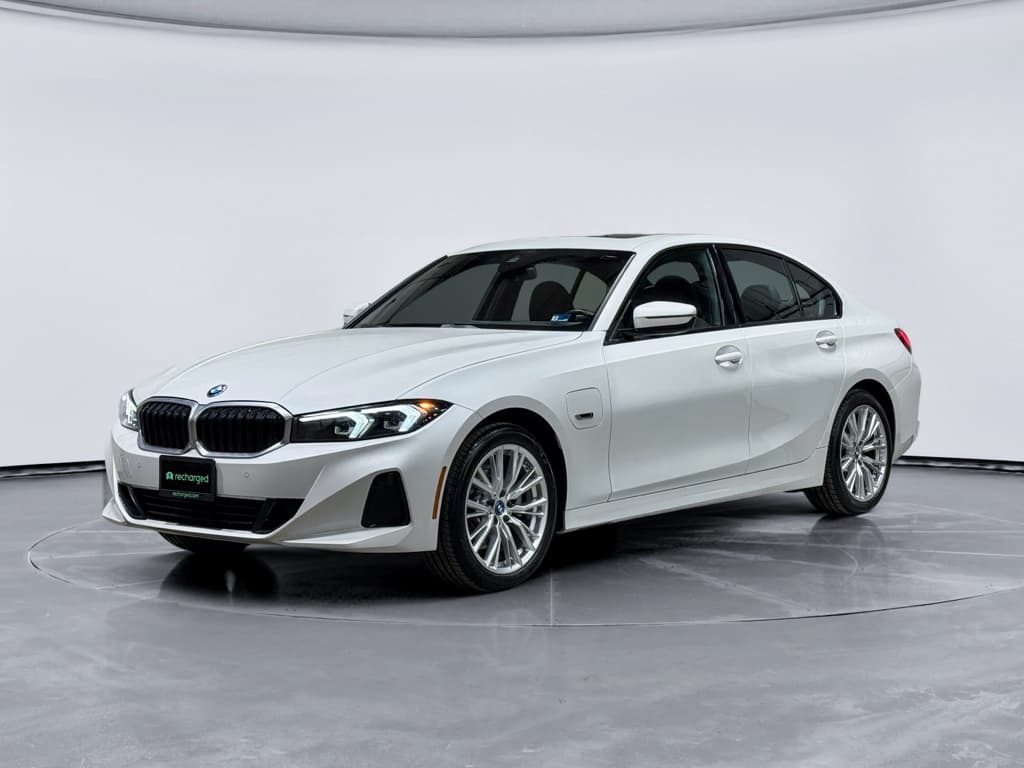
You absolutely can tow a trailer with a BMW i5, but only if you respect some very specific limits. BMW does rate the i5 for towing in many markets, yet not every model and region gets the same numbers, hardware, or legal green light. If you’re wondering, “can a BMW i5 tow a trailer for bikes, a small camper, or a utility load?”, the answer is yes in principle, as long as you stay within BMW’s official ratings and understand what towing does to range and battery health.
Key takeaway
BMW i5 towing: the short answer
- Most i5 variants sold in Europe and other towing‑friendly markets are rated to tow around 1,500–2,000 kg (≈3,300–4,400 lb) braked, depending on exact model and spec.
- Typical maximum nose/tongue weight is 80 kg (176 lb), which limits how heavy and front‑loaded your trailer can be.
- In North America, BMW has historically been cautious about publishing towing ratings on sedans; availability of an official factory tow package for the i5 will depend on market and model year.
- Even when rated, towing with an EV like the i5 can cut real‑world range roughly in half, depending on speed, trailer size, and terrain.
- For light duty, small utility trailers, lightweight campers, and bike trailers, the i5 can be a perfectly capable tow vehicle when properly equipped.
Always check your own car’s paperwork
Official BMW i5 towing specs: how much can it pull?
BMW’s towing figures for the i5 are clearest today in Europe, Australia, and New Zealand, where sedans commonly tow. If you look at official spec sheets and regional guides, you’ll see broadly similar numbers across rear‑drive and all‑wheel‑drive i5 variants.
Typical BMW i5 towing ratings by variant (non‑US markets)
Representative values from BMW regional specs and independent EV spec databases. Always confirm against your specific car’s documentation.
| Model / drivetrain | Trailer (braked) | Trailer (unbraked) | Max tongue weight |
|---|---|---|---|
| i5 eDrive40 (sedan) | up to 2,000 kg (≈4,409 lb) | 750 kg (≈1,653 lb) | 80 kg (176 lb) |
| i5 M60 xDrive (sedan) | similar 2,000 kg class | 750 kg | 80 kg (176 lb) |
| i5 Touring eDrive40 (wagon) | 1,500 kg (≈3,307 lb) at launch | 750 kg | 80 kg (176 lb) |
| i5 Touring xDrive40 / M60 | varies by spec; often 1,500–2,000 kg | 750 kg | 80 kg (176 lb) |
These figures describe what the car can legally tow when equipped with an approved towbar and trailer brakes.
Braked vs. unbraked trailers
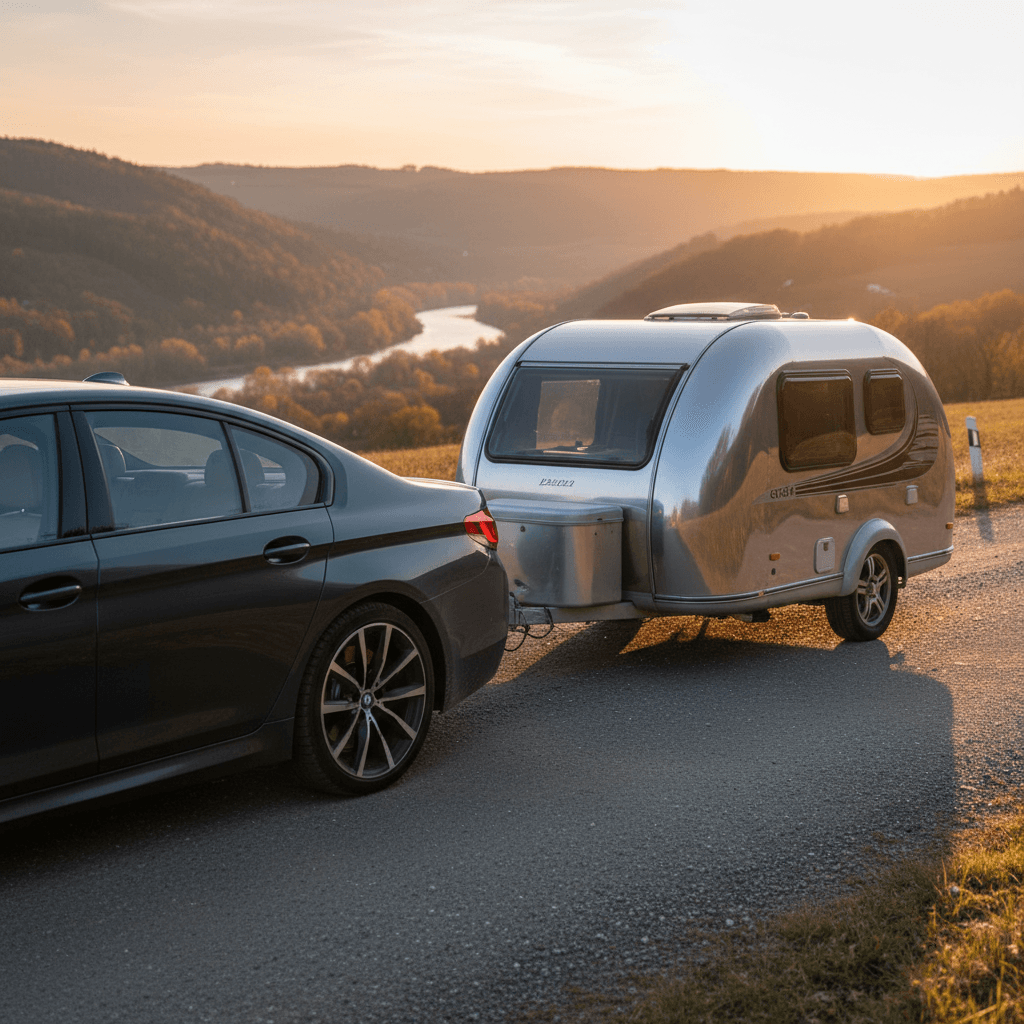
In practical terms, those numbers put the BMW i5 in the same towing class as many midsize crossovers: perfectly comfortable with a small camper or a couple of jet skis, but not the right tool for a big Airstream or car hauler.
Which BMW i5 models can actually tow a trailer?
Whether your specific BMW i5 can tow comes down to two questions: market and hardware. The underlying platform is capable, but BMW only approves towing when the right equipment is fitted and tested.
How to tell if your BMW i5 is tow‑ready
Look beyond the badge, market and equipment matter more than battery size.
1. Market & documentation
In Europe, Australia, and New Zealand, i5 sedans and Tourings are typically officially rated to tow with published braked/unbraked limits.
In the US and Canada, BMW has historically skipped towing ratings on many sedans. Check:
- Owner’s manual
- Door jamb / VIN sticker
- Window sticker or build sheet
2. Factory or approved towbar
A car is only considered tow‑rated if it has an approved towbar / hitch system tied into the crash structure and electronics.
- Factory‑installed detachable towbar (common in EU)
- Dealer‑installed OEM kit
- In some regions, a certified aftermarket kit that meets BMW’s spec
3. Model‑ & spec‑specific limits
Tow ratings can change with:
- Drivetrain (eDrive40 vs xDrive vs M60)
- Wheel/tire size and load index
- Suspension options
Never assume your i5 has the same rating as another trim; always verify printed limits for your VIN.
US‑spec caveat
What kind of trailer can a BMW i5 safely tow?
Assuming your BMW i5 is officially tow‑rated and equipped with an approved hitch, the real‑world question becomes: what kind of trailer actually makes sense? With a ~1,500–2,000 kg braked rating and modest 80 kg tongue‑weight limit, you’re in light‑ to medium‑duty territory.
Good vs. bad trailer matches for a BMW i5
Stay well within the ratings and keep aerodynamics in mind.
Good matches (when within weight limits)
- Small utility trailer with yard waste, building materials, or furniture
- Lightweight teardrop or micro‑camper (often 750–1,200 kg loaded)
- Compact cargo trailer for bikes, skis, or track gear
- Small boat or pair of jet skis on a braked trailer
- Bike racks / cargo platforms that respect the 80 kg tongue‑weight max
Poor matches (even if technically within rating)
- Tall, boxy RVs with huge frontal area, range penalty can be extreme
- Long car haulers or heavy equipment trailers
- Multi‑axle toy haulers with high tongue weight
- Any trailer that pushes you near the GVWR or rear axle load of the car
For those loads, a body‑on‑frame truck or large SUV with higher ratings is the safer, saner choice.
Aim for 50–70% of the rating
How towing affects BMW i5 range and battery health
Towing is where EVs behave very differently from combustion cars. The BMW i5 has plenty of torque for the job, but moving a heavier, less aerodynamic combination takes more energy. The impact shows up in three main ways: range, temperature, and long‑term wear.
Typical effects of towing with an EV like the BMW i5
Range: your trip planning changes
Towing turns any EV into a short‑range vehicle relative to its solo capabilities. If your i5 typically returns 250–300 miles of real‑world highway range, hitching up a modest camper can drop that to 120–180 miles between fast‑charge stops.
Wind resistance matters as much as weight. A low teardrop trailer at 1,000 kg can be easier on range than a tall box trailer at the same weight.
Battery health: mostly about heat and fast‑charging
Occasional towing within spec isn’t inherently bad for an EV battery. The bigger risk is repeatedly combining:
- Heavy loads and high speeds
- High ambient temperatures
- Frequent DC fast‑charging from low state of charge
Keep an eye on temperature warnings, avoid repeated 0–100% fast‑charge cycles on road‑trip days, and your i5’s pack should handle towing just fine.
If the car complains, listen
Hitches, wiring, and brakes: what your i5 needs to tow
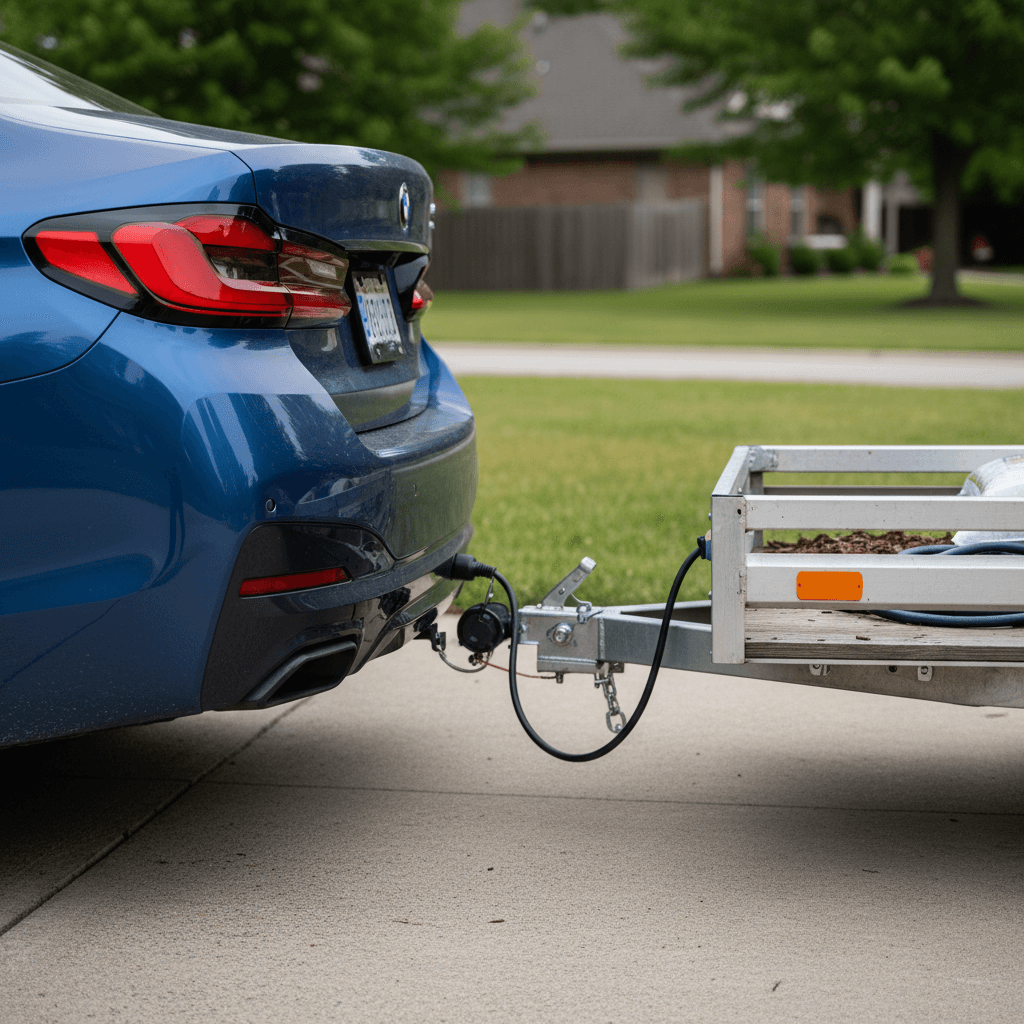
BMW doesn’t just bolt on a generic receiver and call it good. On the i5, the tow system is part of an engineered package that includes the physical hitch, wiring, stability logic, and sometimes suspension tuning. To tow safely, you need all of the pieces in place.
Essential towing hardware for a BMW i5
Factory or approved towbar system
Use a <strong>BMW‑approved detachable towbar</strong> or a high‑quality system that specifically lists the i5 and its rating. The bar must mount to reinforced points in the rear structure, not just the bodywork.
Trailer wiring & control module
Modern EVs like the i5 use a dedicated trailer module to manage lighting, detect a connected trailer, and adjust stability control. A proper kit will integrate with the car’s CAN bus rather than Scotch‑locking into tail‑light wires.
Brake controller (if required)
In regions where electric trailer brakes are common, you may need a <strong>brake controller</strong>. Some European‑spec systems are designed for overrun brakes instead, so requirements are highly regional, check your local rules and your trailer’s hardware.
Correct ball size and rated hardware
Your hitch ball, ball mount, and any adapters must be rated for at least the <strong>maximum trailer weight</strong> you plan to tow. Never exceed the lowest rating in the chain: car, hitch, ball mount, or trailer.
Properly rated tires
Verify that your i5’s tires have sufficient <strong>load index</strong> for the extra tongue weight and cargo. Low‑profile performance tires may not be ideal if you’re anywhere near the car’s GVWR while towing.
Aftermarket hitch on a non‑rated i5? Think twice.
Towing with a BMW i5: step-by-step checklist
Once you’ve confirmed your i5 is tow‑rated and properly equipped, the process of hitching up is straightforward, but worth doing methodically. Here’s a practical checklist you can follow every time you tow.
Step‑by‑step: from driveway to highway
1. Confirm ratings and weights
Check your i5’s <strong>permitted trailer load</strong> and tongue‑weight limit. Weigh or estimate your trailer fully loaded, water, gear, passengers, and cargo count.
2. Distribute load correctly
Aim for <strong>10–12% of total trailer weight</strong> on the tongue, without exceeding the ~80 kg (176 lb) limit typical for the i5. Too little tongue weight can cause sway; too much overloads the rear axle.
3. Attach and secure the hitch
Fit the detachable towbar (if used), then mount the ball and ensure all locking mechanisms click fully home. Cross the safety chains under the tongue and latch the coupler securely.
4. Plug in trailer lights and check
Connect the wiring plug, then test <strong>running lights, turn signals, brake lights, and reverse lights</strong>. If your i5 supports a trailer mode, make sure it recognizes the connection.
5. Adjust mirrors and regen
Set your mirrors to minimize blind spots around the trailer. Consider using a slightly lower regen setting at first, strong lift‑off regen with a heavy trailer can feel abrupt until you’re used to it.
6. Drive slower and leave space
When you’re rolling, stick to the right lane where possible, keep speeds moderate, and leave extra distance for braking. Plan charging stops earlier than you would without a trailer.
Is towing with an EV like the BMW i5 a good idea?
Towing is one of those use cases that exposes the trade‑offs of electric drivetrains. The BMW i5 can absolutely tow, but whether it’s a good idea for you depends on how often you tow, what you tow, and how far you need to go.
Where the BMW i5 shines at towing
- Instant torque makes pulling away with a trailer smooth and effortless.
- Low center of gravity from the battery pack helps stability.
- Regenerative braking can recover some energy on descents and reduce brake wear.
- Quiet, refined drivetrain makes short‑ to medium‑distance towing surprisingly relaxing.
Where a traditional tow rig is better
- Long highway road trips with a camper are constrained by charging stops and range.
- Very heavy or high‑drag trailers are better matched to trucks and large SUVs.
- Rough terrain or boat ramps may favor higher‑clearance, body‑on‑frame vehicles.
If you tow a lightweight trailer a few times a year, an i5 is more than adequate. If towing defines your lifestyle, you’ll likely want a dedicated tow vehicle.
Buying a used i5 for occasional towing?
Ready to find your next EV?
Browse VehiclesBMW i5 towing FAQ
Common questions about towing with a BMW i5
A BMW i5 can absolutely tow a trailer, just not the same kind of trailer you’d put behind a three‑quarter‑ton pickup. Stay well within the official trailer and tongue‑weight limits for your particular car, choose compact, aerodynamic trailers, and accept that range will drop significantly on highway runs. If you’re shopping for a used i5 that can handle the occasional camping trip or utility run, working with a specialist like Recharged, who can validate battery health and help you interpret manufacturer towing specs, makes it much easier to end up with the right car for both your commute and your weekend projects.