If you care about the climate and your budget, buying a used electric vehicle can be a sweet spot. The environmental benefits of buying a used EV go beyond “no tailpipe emissions”, you’re stretching the value of the battery, lowering lifecycle carbon, and delaying the need for new resource‑intensive manufacturing. The key is understanding how those benefits stack up, and how to pick a car that still fits your range and reliability needs.
Big picture
Why buying a used EV is so environmentally powerful
From a sustainability standpoint, every vehicle has two main buckets of impact: manufacturing (building the car and battery) and use (what comes out of the tailpipe or power plant over years of driving). EVs front‑load more of their emissions in manufacturing, then pay that “carbon debt” back over time because driving on electricity is much cleaner than burning gasoline, especially as the U.S. grid adds more wind and solar.
EV lifecycle impact vs. gas cars
When you buy new, that break‑even period matters. When you buy used, the original owner has already done the heavy lifting, the car’s manufacturing emissions are in the past. Your decision is simply: “Do I want my next miles powered by gasoline or electricity?” That’s where used EVs shine.
How EVs create – and then pay off – their carbon debt
1. Manufacturing: higher upfront impact
Building an EV, especially its lithium‑ion battery, is energy intensive. Studies estimate that manufacturing an EV can emit 30–60% more CO₂ than producing a comparable gas car. Most of that is locked into the battery pack and supply chain for critical minerals like lithium, nickel and cobalt.
On paper, that looks like a disadvantage. But it only tells half the story.
2. Use phase: dramatically lower emissions
Once the car is on the road, the equation flips. A gasoline car emits CO₂ every mile, forever. An EV has no tailpipe, and its emissions depend on the electricity mix where you charge. In the U.S., that mix is already cleaner than gasoline and getting cleaner every year.
Recent modeling shows that in typical U.S. conditions, an EV’s extra manufacturing emissions are usually “paid back” in under two years of average driving. After that, every mile you drive in the EV is a net climate win over a gas car.
Think in miles, not model years
Why buying used amplifies the environmental benefits
When you choose a used electric vehicle instead of a new car, whether gas or electric, you’re making that original manufacturing footprint work harder. You’re getting more years of low‑emission driving without commissioning a brand‑new battery pack and body shell.
Key environmental advantages of buying a used EV
How your shopping decision ripples through the lifecycle
1. No new manufacturing emissions
A used EV already exists. Choosing it over a new vehicle avoids the large CO₂ hit tied to new battery and vehicle production. You’re stretching the environmental "investment" already made in that car.
2. Lower local air pollution
EVs eliminate tailpipe emissions where you live and drive. Picking a used EV over a used gas car cuts local NOx and particulate pollution that harms public health, especially in dense or disadvantaged communities.
3. Better use of critical minerals
Every battery cell contains mined materials. Keeping used EVs on the road longer means less urgent demand for new mining, while recyclers scale up to recover lithium, nickel and cobalt at the end of pack life.
There’s also a subtle but important market signal. Every time a used EV sells quickly and at a solid price, it supports stronger residual values. That, in turn, makes new EV leases and financing more attractive, which helps grow the overall EV fleet and compounds the climate benefits.
Battery longevity: what the data really shows
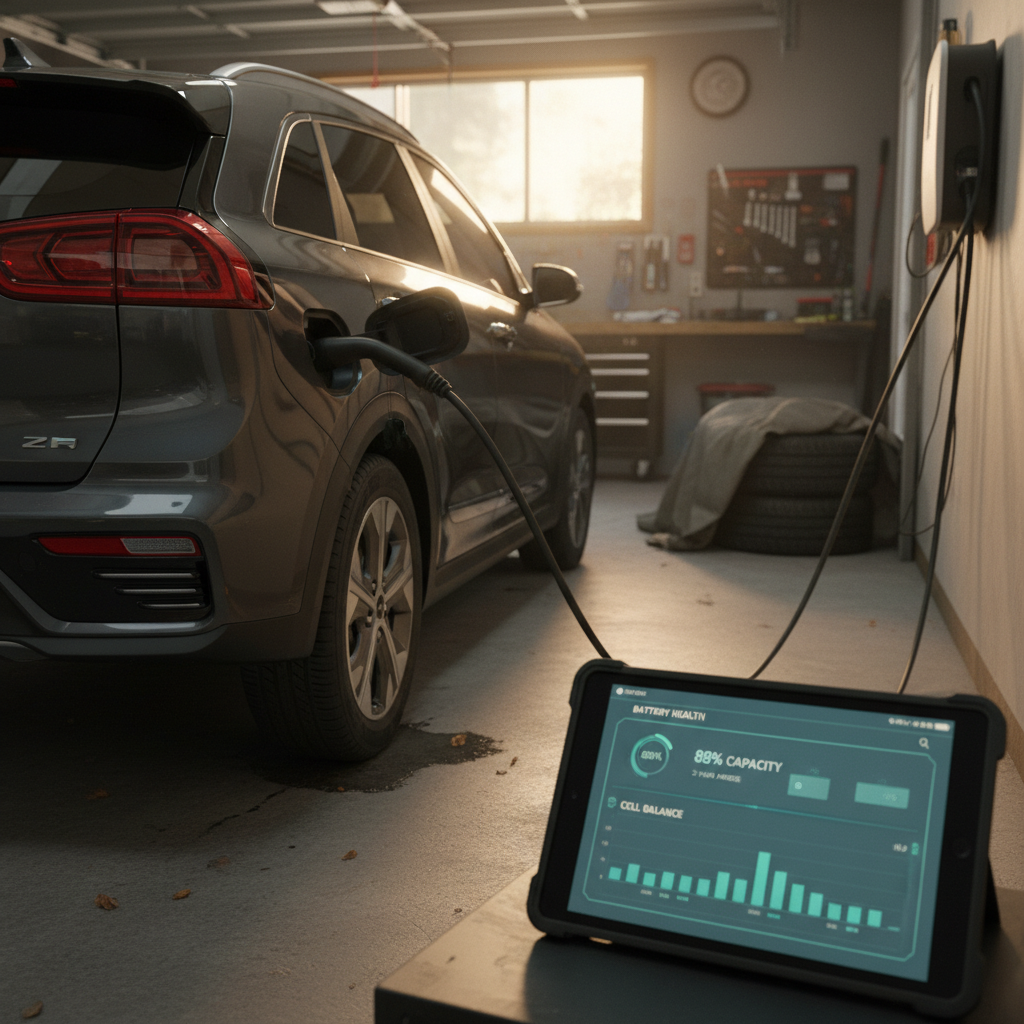
If you’re considering a used EV, battery health is probably your first question: “Am I just inheriting someone else’s worn‑out pack?” New research suggests that fear is often overblown. Large studies of tens of thousands of EVs now show average degradation around 1.8–2.3% per year, with many packs still above 85–90% of original capacity after 8–10 years of use.
Real-world EV battery performance
There is variation by model, climate, and charging behavior, of course. A car that’s been fast‑charged all the time in Phoenix will look different than one that lived on Level 2 charging in Portland. That’s why a data‑driven health report is so valuable when you’re shopping used.
Don’t rely on mileage alone
Second life and recycling: what happens after the car
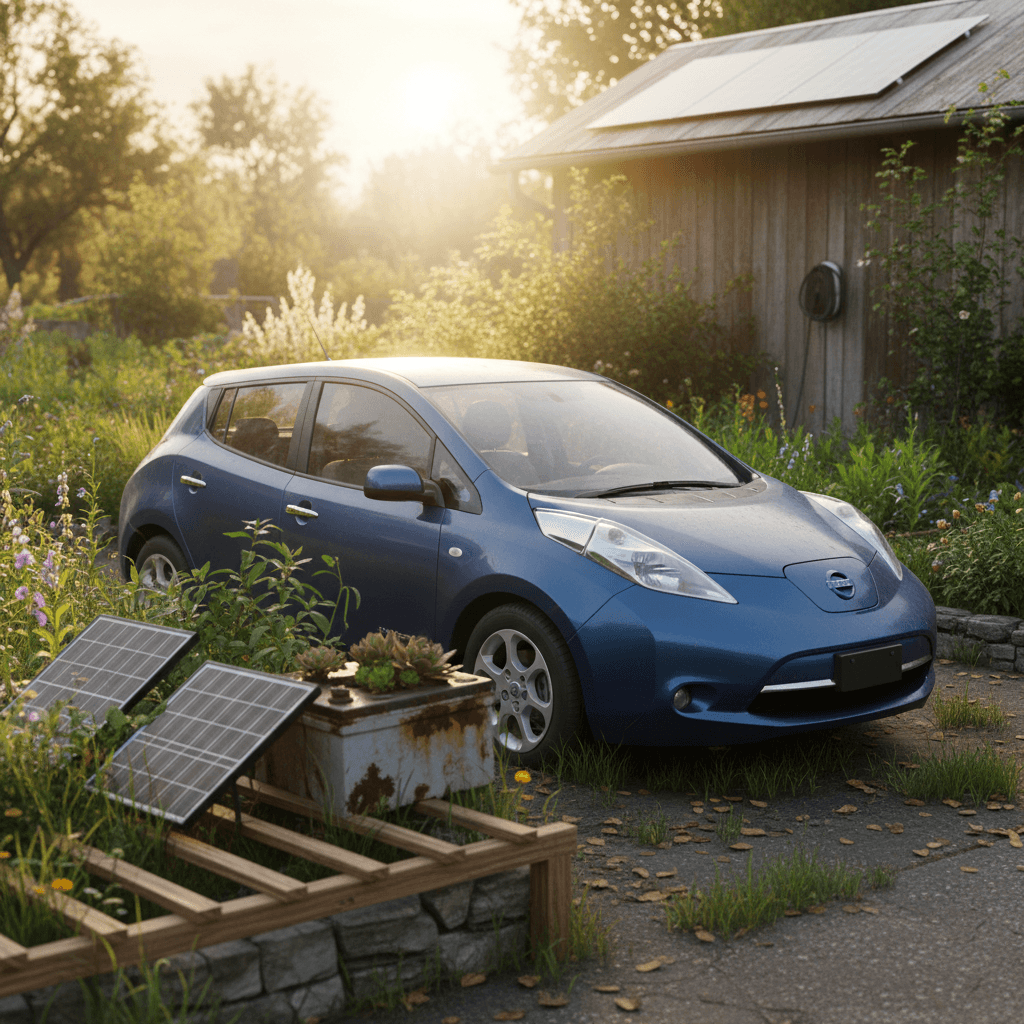
One under‑appreciated environmental benefit of buying a used EV is that it extends the pathway to a second life for that battery. Even when a pack no longer offers the range drivers want, usually around 70–80% of original capacity, it’s still valuable for stationary energy storage, and eventually as feedstock for recycling.

The later chapters of a used EV battery
Your purchase today shapes what’s possible tomorrow
Second-life storage
Packs retired from vehicles can be bundled into stationary systems that store solar or wind energy, back up buildings, or support microgrids. They don’t need full automotive range to be useful.
Grid flexibility
Second‑life batteries help utilities smooth peaks and soak up renewable power that would otherwise be wasted. That makes every kWh your EV ever used more climate‑friendly in hindsight.
High‑value recycling
Modern recyclers can recover a high share of critical materials like lithium, nickel and cobalt. As volumes grow, your used EV becomes part of a loop that steadily reduces mining pressure.
Your role in a circular system
Comparing used EVs vs used gas cars for the planet
From a climate perspective, the fairest comparison for most shoppers isn’t a new EV vs a new gas car. It’s a used EV vs a used gas car at a similar price point. In that head‑to‑head, the EV starts with an advantage: its manufacturing impact is already “sunk,” and its ongoing emissions are far lower.
Used EV vs used gas car: environmental comparison
How typical vehicles in each category stack up over the next 5–8 years of ownership.
| Factor | Used EV | Used Gas Car |
|---|---|---|
| Tailpipe emissions | None (zero at point of use) | High and continuous every mile |
| Upstream energy emissions | From electricity generation; declining as grid adds renewables | From oil extraction, refining, and fuel transport |
| Local air quality | Much cleaner; no exhaust in neighborhoods | Contributes to smog and particulate pollution |
| Noise pollution | Quieter at low speeds | Louder engine and exhaust noise |
| Lifecycle impact of your purchase | Extends life of existing EV; delays new manufacturing | Continues demand for gasoline and ICE maintenance ecosystem |
| End-of-life pathway | Battery can be reused, then recycled for materials | Engine and fuel system mostly scrapped; fewer high‑value materials recovered |
Assumes U.S. average grid mix continuing to decarbonize and similar annual mileage.
When a used gas car might still be the better choice
How to choose a used EV with both range and sustainability
Maximizing the environmental benefits of buying a used EV doesn’t mean you have to compromise on practicality. It does mean paying attention to the right details instead of just hunting for the lowest price or newest model year.
Checklist: making your used EV choice as green as possible
1. Confirm your real daily range needs
Add up your typical weekday mileage, plus errands and weather headroom. Many drivers discover they need far less range than they assumed, which opens the door to older, more affordable EVs that still cover their real‑world needs.
2. Prioritize verified battery health
Ask for objective battery diagnostics, not just a dashboard bar graph. A report like the <strong>Recharged Score</strong> uses professional battery health testing to show remaining capacity and how it compares to similar vehicles.
3. Look at charging history and climate
If possible, review whether the car lived in extreme heat or relied heavily on DC fast charging. These factors affect long‑term health more than mileage alone. A moderate‑climate, mostly Level 2–charged car is often the greener long‑term bet.
4. Check software and efficiency updates
Many EVs receive updates that improve efficiency, charging curves, or battery management. A used EV that’s fully updated can deliver more efficient miles, and more environmental benefit, than the same car on old software.
5. Match the car to your charging reality
If you have home or workplace Level 2 charging, you’ll extract the most benefit from an EV. If you’re relying entirely on fast charging, look for models with strong thermal management and plan to keep state of charge mostly between 20–80%.
6. Think about your ownership horizon
If you plan to drive the car for 5–8 years, you’re in a sweet spot to harvest the remaining low‑emission miles from a healthy used battery. If you only need it for a year or two, consider how easily you can resell it to another EV driver and keep the cycle going.
How Recharged helps you make a greener used EV choice
One of the biggest barriers to realizing the full environmental benefits of buying a used EV is uncertainty. Shoppers worry about hidden battery issues, fair pricing, and whether the car they’re considering will still meet their needs a few winters from now. That’s exactly the gap Recharged is built to close.
What Recharged does differently for used EV shoppers
Environmental benefits, made practical
Verified battery health with Recharged Score
Every vehicle on Recharged comes with a Recharged Score Report that includes professional battery health diagnostics. You see real capacity, charging history indicators, and how that vehicle compares to similar EVs, so you can choose the car that will keep delivering low‑carbon miles.
Fair market pricing and financing
Transparent, data‑backed pricing helps align cost with actual battery condition and market demand. Financing options and trade‑in support make it easier to step into a used EV instead of another gas car, amplifying your environmental impact.
Nationwide EV‑specialist experience
From the digital retail experience to EV‑focused support and nationwide delivery, Recharged is set up around electric vehicles from the ground up. That means guidance on range, charging, and total cost of ownership, all through a sustainability lens.
Ready to find your next EV?
Browse VehiclesWant to see a used EV in person?
FAQ: Used EV environmental benefits
Frequently asked questions about buying a used EV for the planet
Bottom line: Is a used EV right for you and the planet?
If you’re weighing your next car purchase through an environmental lens, a well‑chosen used EV is hard to beat. The car’s manufacturing footprint is already “baked in,” batteries are proving more durable than early skeptics predicted, and second‑life plus recycling pathways are rapidly maturing. That means every additional mile you put on a healthy used EV tilts the scales further away from gasoline and toward a cleaner grid.
The key is buying with good information. Understanding your real range needs, how battery health works, and what the data on a specific vehicle says will help you lock in both practicality and sustainability. Platforms like Recharged, with verified battery diagnostics, fair market pricing, EV‑specialist support, and nationwide delivery, are designed to make that decision simpler, more transparent, and more climate‑positive from the first test drive to the last mile.