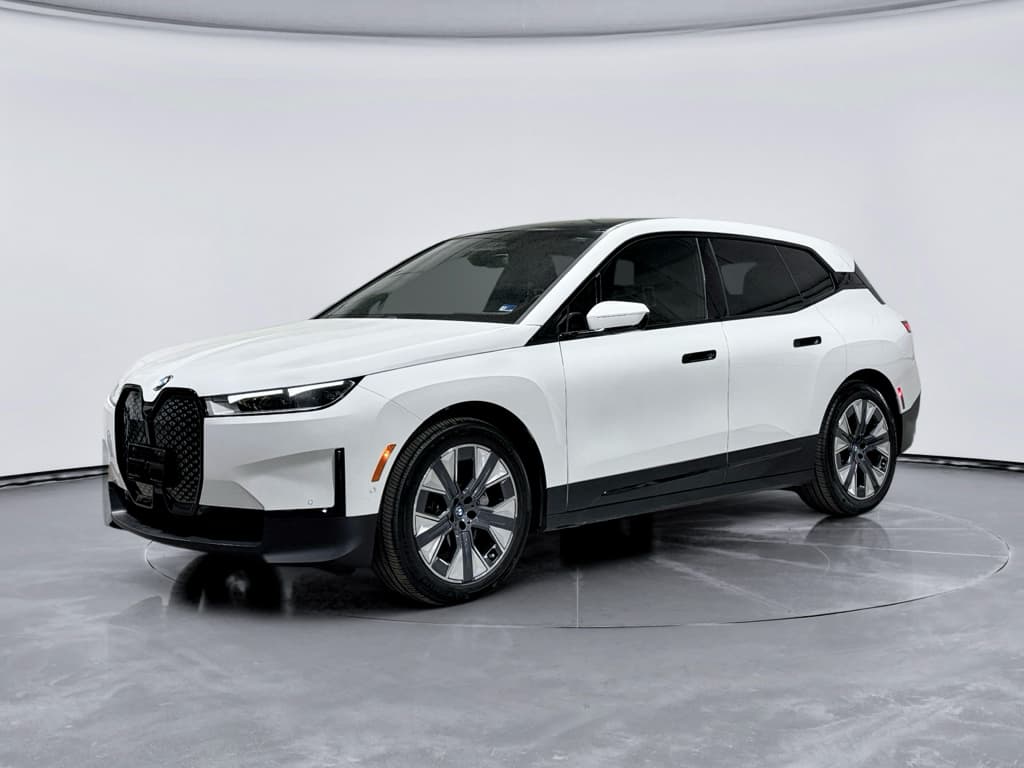
If you’re considering a BMW i7, or eyeing a used one, you’re probably wondering how much the BMW i7 battery degrades per year and what that means for range, warranty coverage, and long‑term value. Luxury EV or not, a worn‑out battery can turn a flagship sedan into a very expensive headache.
Short answer
BMW i7 battery basics and why degradation matters
The BMW i7 rides on a large, high‑voltage lithium‑ion pack, about 101–102 kWh of usable capacity depending on trim, tucked deep in the floor. That big, flat pack is what gives you 300‑plus miles of rated range when it’s new, and it’s also the single most expensive component in the car.
Key BMW i7 battery facts
Like every modern EV, the i7’s battery slowly loses capacity as it ages. That capacity loss, called degradation, shows up as reduced range, slower fast‑charging at high states of charge, and more frequent charging stops on trips. You’ll never see a perfectly flat line; chemistry, climate, and driving habits all tug at the curve.
Degradation vs. failure
So how much does a BMW i7 battery degrade per year?
BMW doesn’t publish an official “BMW i7 battery degradation per year” number, and the i7 hasn’t been on the road long enough to build a decade‑long data set. But we can triangulate from three places: BMW’s warranty threshold, real‑world owner reports from BMW’s other modern EVs, and broader EV fleet studies.
Estimated BMW i7 battery degradation timeline
What’s realistic for a well‑cared‑for i7 pack?
Years 0–2
~0–5% total loss. A little "early life" drop is common as the pack settles. Most owners won’t notice it unless they track data obsessively.
Years 3–6
~1–3% per year for many drivers. At this point you might see 5–10% below the original rated range, especially in harsh climates or heavy fast‑charge use.
Years 7–10
~10–20% total loss is a reasonable expectation by year 8–10 if the car has been used normally, which still leaves plenty of range for daily driving.
In other words, if you start with roughly 300 miles of rated range, it’s reasonable to expect something like 270–285 miles by year 5, and perhaps 240–270 miles by year 8–10 in typical use. High‑mileage cars, extreme heat, or constant 100% fast charges can push you toward the higher end of that loss; gentle use can keep you near the lower end.
What BMW trainers are saying
BMW i7 battery warranty and the 70% capacity rule
The clearest clue to how BMW expects the i7 battery to age is its high‑voltage battery warranty. On U.S.‑spec BMW EVs like the i4, i5, iX and i7, BMW backs the pack for 8 years or 100,000 miles (whichever comes first), and ties that to a capacity guarantee.
- If a BMW i7’s high‑voltage battery capacity falls below about 70% of its original usable capacity during the warranty period, BMW considers that excessive degradation.
- In that case, and assuming there’s no excluded abuse or damage, BMW will typically repair or replace modules or the entire pack to restore capacity to at least that threshold.
- The exact testing procedure uses BMW’s own diagnostic tools, not a third‑party app or your dash range estimate.
Rule of thumb for the 70% floor
For you, that means BMW expects most i7 packs to stay comfortably above 70% state of health (SoH) for at least eight years under typical use. If they thought the average i7 would limp across that line in year six, they wouldn’t have written the warranty this way.
What actually speeds up or slows down BMW i7 battery degradation?
The i7’s battery chemistry and thermal management are advanced, but physics is still physics. The same core factors that chew on any lithium‑ion pack apply here, BMW just does a better job than most at controlling them.
Main drivers of BMW i7 battery degradation
Four habits matter more than any spec sheet
Heat and cold
High heat is the battery’s enemy. Regularly parking your i7 in blazing sun at high state of charge is harder on the pack than a cool garage. Extreme cold doesn’t damage cells the same way, but it temporarily reduces range and can increase wear if you fast‑charge a cold pack often.
Fast‑charging behavior
DC fast charging is safe in moderation, BMW built the i7 for it. But hammering the pack from low to 100% via fast chargers several times a week can accelerate wear compared with mostly Level 2 home charging and partial charges.
High state of charge
Living at near‑full charge is harder on lithium‑ion. Keeping your daily target at 70–80% instead of 100% when you don’t need full range can materially slow degradation over the life of the car.
Mileage & driving style
More miles mean more cycles, and hard driving generates more heat. An i7 that does 25,000 highway miles a year in Phoenix will age differently than one that cruises 8,000 miles a year in coastal New England.
What voids help from BMW
Real-world signs your BMW i7 battery is degrading
You won’t wake up one morning and find your i7 suddenly lost 30% of its range unless there’s a defect or a fault. Degradation usually creeps in around the edges. Here’s what to watch for over the years:
Subtle clues your i7 battery isn’t brand new anymore
Shorter real‑world range on familiar routes
If you used to get home with 25% remaining on your commute and now you regularly pull into the driveway at 10% in similar weather and speeds, that’s an early sign of capacity loss.
Lower displayed miles at 100% charge
Compare a full charge reading today to screenshots or notes from year one. A drop of 10–20 miles over several years is normal; big swings may point to either degradation or a software estimate change.
Fast charging tapers sooner
Healthy packs accept higher DC fast‑charge power for longer. If your i7 drops to low power earlier in the session than it used to, and at the same station, temperature, and starting charge, that can indicate aging.
Bigger range hit in cold weather
All EVs hate the cold, but as a pack ages, its winter penalty can grow. Pay attention if your i7 suddenly feels much more sensitive to cold than it was in its first couple of winters.
Don’t confuse software updates with degradation
How to measure BMW i7 battery health in the real world
Unlike some early‑generation EVs, the i7 doesn’t hand you a neat little “battery health: 92%” readout. BMW’s diagnostic tools can see deeper into the pack, but at home you’re mostly inferring health from how the car behaves. For most owners, that’s good enough.
1. Range‑based sanity checks
A simple way to keep tabs on your pack is to repeat the same test once a year:
- Charge to 100% on Level 2 at similar ambient temperature.
- Drive a familiar highway loop at a steady speed.
- Note miles driven and % battery used.
If your range per percentage point has barely changed over several years, your degradation is likely modest.
2. Dealer or specialist diagnostic test
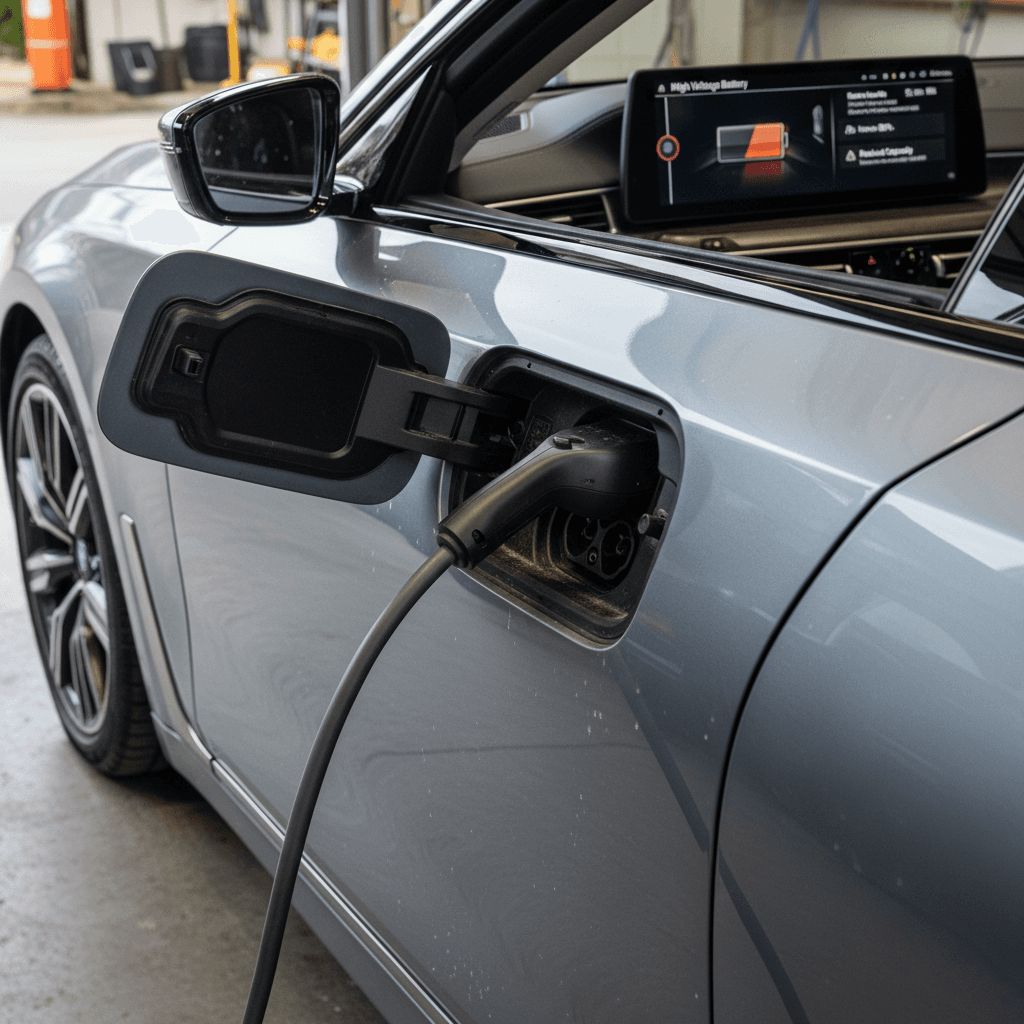
If you’re worried, or nearing the end of the 8‑year window, ask a BMW dealer or independent EV specialist to run a high‑voltage battery capacity test. That’s what BMW leans on when deciding warranty claims.
At Recharged, our Recharged Score battery health diagnostics use specialized tools and drive‑cycle analysis to estimate usable capacity on used EVs, including the i7.
Shopping tip for used i7 buyers
Practical tips to minimize BMW i7 battery degradation
You can’t stop degradation, but you can absolutely shape the curve. The good news: you don’t have to baby your i7 to keep the battery happy. A handful of easy habits make the most difference.
Five habits that help your i7 battery age gracefully
1. Don’t live at 100%
Use BMW’s charge limit to cap daily charging at 70–80% when you’re not road‑tripping. Save full charges for the night before long drives.
2. Avoid deep discharges
Running the battery down into the single digits occasionally is fine; doing it constantly isn’t. Try to plug in when you’re around 10–20% instead of 0%.
3. Favor Level 2 at home
DC fast charging is fantastic for trips, but slower Level 2 charging at home is gentler on the pack day‑to‑day. Think of fast charging as your espresso shot, not your morning drip.
4. Keep it cool when you can
If you live in a hot climate, prioritize shaded parking or a garage, especially when the car is sitting at a high state of charge. The i7’s thermal system helps, but it can’t fight physics alone.
5. Update software and fix faults promptly
Battery management updates can improve longevity and charging behavior. If you see warnings related to the high‑voltage system, don’t ignore them, get the car checked before a small issue becomes a big one.
Designed to be boring, in a good way
Battery degradation, resale value, and buying a used i7
Luxury sedans have always lost value quickly, and the i7 layers battery questions on top of traditional depreciation. That’s exactly why understanding BMW i7 battery degradation per year matters so much if you’re buying used, or planning to sell in a few years.
How BMW i7 battery health shapes used value
These aren’t hard rules, but they reflect how shoppers (and lenders) increasingly think about used EVs.
| Battery health (SoH) | Typical age/miles | Buyer perception | Impact on value |
|---|---|---|---|
| 90–100% | 0–4 years / under 40k miles | Like‑new pack, full range | Baseline pricing; any discount is about mileage and cosmetics |
| 80–90% | 4–8 years / 40k–90k miles | Normal, healthy EV aging | Small discount vs. similar‑spec cars with stronger battery reports |
| 70–80% | 6–10 years / 80k–130k miles | Noticeable range loss; still usable but buyers get cautious | Meaningful discount; battery report and price must make sense together |
| Below 70% (in‑warranty) | Under 8 years / 100k miles | Likely warrants BMW intervention | Buyer should expect resolution under warranty or steep discount |
| Below 70% (out of warranty) | Older / high miles | Potential pack replacement territory | Major price haircut; only attractive if priced for future battery work |
Battery health is becoming as important to EV pricing as mileage and option packages.
At Recharged, we bake this into every used EV listing. Our Recharged Score Report includes verified battery health, pricing that reflects actual capacity, and expert guidance so you’re not left guessing how much life is left in that big floor‑mounted pack.
Why “cheap” can be expensive
FAQ: BMW i7 battery degradation per year
Frequently asked questions about BMW i7 battery degradation
Bottom line: Should you worry about BMW i7 battery degradation?
If you’re drawn to the i7’s silent thrust and opulent cabin, its battery shouldn’t scare you off. For most owners, BMW i7 battery degradation per year will be slow, predictable, and well inside BMW’s 8‑year/100,000‑mile, ~70% capacity warranty guardrails. Treat the pack with basic respect, avoid living at 100%, don’t abuse fast chargers, keep it cool when you can, and you’re likely to see a decade of strong, usable range.
Where things get interesting is in the used market. That’s where two i7s with the same paint and mileage can have very different stories hiding in the battery. If you’re selling, documented battery health is your best defense against lowball offers. If you’re buying, it’s your safety net against overpaying. Every vehicle on Recharged comes with a Recharged Score Report that puts that story in black and white, battery health, pricing, and expert guidance all in one place, so you can enjoy the i7 experience without guessing what’s happening beneath the floor.